• About
  • Privacy Policy
  • Terms of Use
  • Donation
  • Contact
No Result
View All Result
Archaeology News
  • Home
  • News
    • Archaeology
    • Anthropology
    • Paleontology
  • Academic
    • Books
    • Conferences
    • Universities
  • Articles
  • VR Tours
  • Quiz & Game
  • Download
  • Encyclopedia
  • Forum
Archaeology News
No Result
View All Result
Home News Anthropology

Chopped-up human remains in Guatemala’s ‘blood cave’ reveal ancient Maya sacrificial rituals

by Dario Radley
May 12, 2025

In a flooded cave in the north of Guatemala, archaeologists discovered gruesome evidence of human sacrifice rituals among the ancient Maya. Under the ancient city of Dos Pilas, the location known as Cueva de Sangre, or “Blood Cave,” contains over a hundred fragments of human remains—a significant number of which show traces of violent trauma—dating to nearly 2,000 years ago.
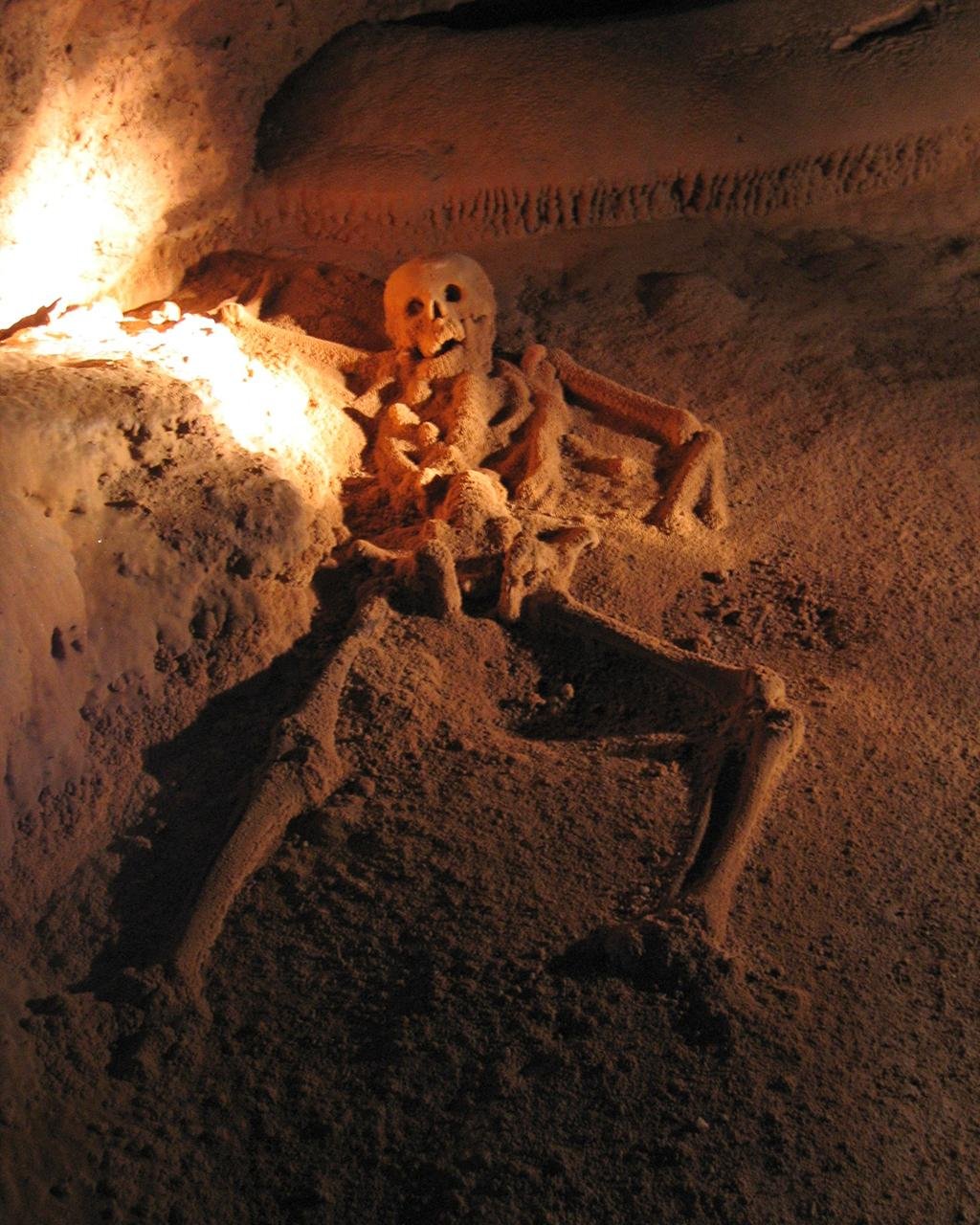
Chopped-up human remains in Guatemala’s ‘blood cave’ reveal ancient Maya sacrificial rituals
Photo of a Maya sacrificial victim inside Actun Tunichil Muknal cave in Belize. The skeleton is popularly known as the “Crystal Maiden.” Credit: Peter Andersen, CC BY-SA 3.0

The cave was first documented in the early 1990s as part of a broader survey of underground chambers used by the Maya between 400 BCE and  250 CE. But only recently has serious research begun to analyze the macabre remains that lie scattered across its floor. Archaeologists now believe the cave was a ritual center for sacrificial offerings intended to appease the Maya rain god, Chaac.

In a recent presentation at the Society for American Archaeology’s yearly meeting, California State University, Los Angeles bioarchaeologist Michele Bleuze unveiled new data from her team’s ongoing research. “The emerging pattern that we’re seeing is that there are body parts and not bodies,” Bleuze told Live Science. “In Maya ritual, body parts are just as valuable as the whole body.”

Chopped-up human remains in Guatemala’s ‘blood cave’ reveal ancient Maya sacrificial rituals
View of the Dos Pilas, a Late Classic Maya archaeological site in Guatemala, central plaza. Credit: Simon Burchell, CC BY-SA 3.0

Rather than traditional burials, the adult and juvenile bones appear to have been purposefully dismembered and placed in specific arrangements. For instance, researchers discovered four neatly stacked skull caps in one of the cave chambers. The presence of ritualistic objects such as red ochre and obsidian blades—commonly used in Maya rites—also suggests the spiritual purpose of the site.

Forensic anthropologist Ellen Fricano of Western University of Health Sciences analyzed some of the bones and confirmed multiple instances of trauma that occurred around the time of death. A forehead fragment had sharp-force marks, which were likely made with a beveled-edged weapon like a hatchet. A child’s hip bone had a nearly identical wound, again suggesting intentional violence.

RelatedStories

Ancient Maya traded live dogs across hundreds of miles, isotope study finds

Ancient Maya traded live dogs across hundreds of miles, isotope study finds

May 9, 2026
Council houses reveal shift from royal rule to collective governance in Terminal Classic Maya society

Council houses reveal shift from royal rule to collective governance in Terminal Classic Maya society

April 11, 2026
Chopped-up human remains in Guatemala’s ‘blood cave’ reveal ancient Maya sacrificial rituals
Earthenware effigy urn (incense burner) depicting the Maya rain god Chaac, 12th–14th century. Credit: Leonard G

The physical layout of the cave also plays a significant role in its ritual importance. Open only during Guatemala’s dry season, March to May, Cueva de Sangre is usually underwater for the rest of the year. This periodic availability coincides with a special date on the Maya ritual calendar: May 3, the Day of the Holy Cross. Still celebrated by modern Maya communities, this day involves rain prayers and a prosperous harvest, conducted in caves regarded as sacred openings to the spiritual world.

Scholars believe the timing of the sacrifices was no coincidence. With the rainy season approaching, the Maya likely invoked Chaac, offering human body parts in an attempt to ensure rainfall and agricultural abundance.

Chopped-up human remains in Guatemala’s ‘blood cave’ reveal ancient Maya sacrificial rituals
Entrance to one of the caves used by the Maya at the Dos Pilas archaeological site. Credit: Noche de la pena, CC BY-SA 3.0

Although human sacrifice has long been known in Maya society, this site gives us a vivid and well-preserved glimpse of how these rituals were performed. Unlike respectful burials elsewhere in the Maya world, the bones here suggest that sacrifice was a performative ritual, meant to be seen by gods, not hidden from human eyes.

Research into the bones continues. Bleuze and her team plan to conduct ancient DNA and isotope analysis to determine the people’s origins, health, and affiliations.
Share:

Share on Facebook Share on X (Twitter) Share on LinkedIn Share on Pinterest Share on WhatsApp Share on Email

You May Also Like...

Neanderthals gathered shellfish like modern humans 115,000 years ago, study finds
Anthropology

Neanderthals gathered shellfish like modern humans 115,000 years ago, study finds

May 21, 2026
Ancient pigeons were already living alongside humans 3,400 years ago, study finds
Archaeology

Ancient pigeons were already living alongside humans 3,400 years ago, study finds

May 21, 2026
Ancient Venetic sanctuary with rare inscriptions unearthed beneath road project in Italy
Archaeology

Ancient Venetic sanctuary with rare inscriptions unearthed beneath road project in Italy

May 21, 2026
1,000-year-old dingo burial in Australia reveals deep ties between Barkindji people and dingoes
Archaeology

1,000-year-old ritually buried dingo in Australia reveals deep ties between Barkindji people and dingoes

May 20, 2026
Ancient texts reveal how Persian and Greek rule shaped language in Central Asia
Archaeology

Ancient texts reveal how Persian and Greek rule shaped language in Central Asia

May 20, 2026
World War II mass grave in Poland reveals remains of German officer killed during Battle of Lauban
Anthropology

World War II mass grave in Poland reveals remains of German officer killed during Battle of Lauban

May 19, 2026

Follow us


Instagram
242K

Facebook
117K

Threads
46K

LinkedIn
14K

Twitter
6K

YouTube
1K
Neanderthals gathered shellfish like modern humans 115,000 years ago, study finds

Neanderthals gathered shellfish like modern humans 115,000 years ago, study finds

May 21, 2026
Ancient pigeons were already living alongside humans 3,400 years ago, study finds

Ancient pigeons were already living alongside humans 3,400 years ago, study finds

May 21, 2026
Ancient Venetic sanctuary with rare inscriptions unearthed beneath road project in Italy

Ancient Venetic sanctuary with rare inscriptions unearthed beneath road project in Italy

May 21, 2026
1,000-year-old dingo burial in Australia reveals deep ties between Barkindji people and dingoes

1,000-year-old ritually buried dingo in Australia reveals deep ties between Barkindji people and dingoes

May 20, 2026

Archaeology News online magazine

Archaeology News is an international online magazine that covers all aspects of archaeology.


Categories

  • Academics
    • Books
    • Conferences
    • Universities
  • Articles
  • Download
  • Game
  • News
    • Anthropology
    • Archaeology
    • Paleontology
  • Quiz
  • Tours

Subscribe to our newsletter

© 2024 - Archaeology News Online Magazine. All Rights Reserved.

  • About
  • Privacy Policy
  • Terms of Use
  • Donation
  • Contact

Manage Consent
To provide the best experiences, we use technologies like cookies to store and/or access device information. Consenting to these technologies will allow us to process data such as browsing behavior or unique IDs on this site. Not consenting or withdrawing consent, may adversely affect certain features and functions.
Functional Always active
The technical storage or access is strictly necessary for the legitimate purpose of enabling the use of a specific service explicitly requested by the subscriber or user, or for the sole purpose of carrying out the transmission of a communication over an electronic communications network.
Preferences
The technical storage or access is necessary for the legitimate purpose of storing preferences that are not requested by the subscriber or user.
Statistics
The technical storage or access that is used exclusively for statistical purposes. The technical storage or access that is used exclusively for anonymous statistical purposes. Without a subpoena, voluntary compliance on the part of your Internet Service Provider, or additional records from a third party, information stored or retrieved for this purpose alone cannot usually be used to identify you.
Marketing
The technical storage or access is required to create user profiles to send advertising, or to track the user on a website or across several websites for similar marketing purposes.
  • Manage options
  • Manage services
  • Manage {vendor_count} vendors
  • Read more about these purposes
View preferences
  • {title}
  • {title}
  • {title}
  • Home
  • News
    • Archaeology
    • Anthropology
    • Paleontology
  • Academic
    • Books
    • Conferences
    • Universities
  • Articles
  • VR Tours
  • Quiz & Game
  • Download
  • Encyclopedia
  • Forum

About  .  Contact  .  Donation

© 2024 - Archaeology News Online Magazine. All Rights Reserved