• About
  • Privacy Policy
  • Terms of Use
  • Donation
  • Contact
No Result
View All Result
Archaeology News
  • Home
  • News
    • Archaeology
    • Anthropology
    • Paleontology
  • Academic
    • Books
    • Conferences
    • Universities
  • Articles
  • VR Tours
  • Quiz & Game
  • Download
  • Encyclopedia
  • Forum
Archaeology News
No Result
View All Result
Home News Archaeology

Easter Island was not isolated: new study reveals Rapa Nui’s role in Polynesian culture

by Dario Radley
July 8, 2025

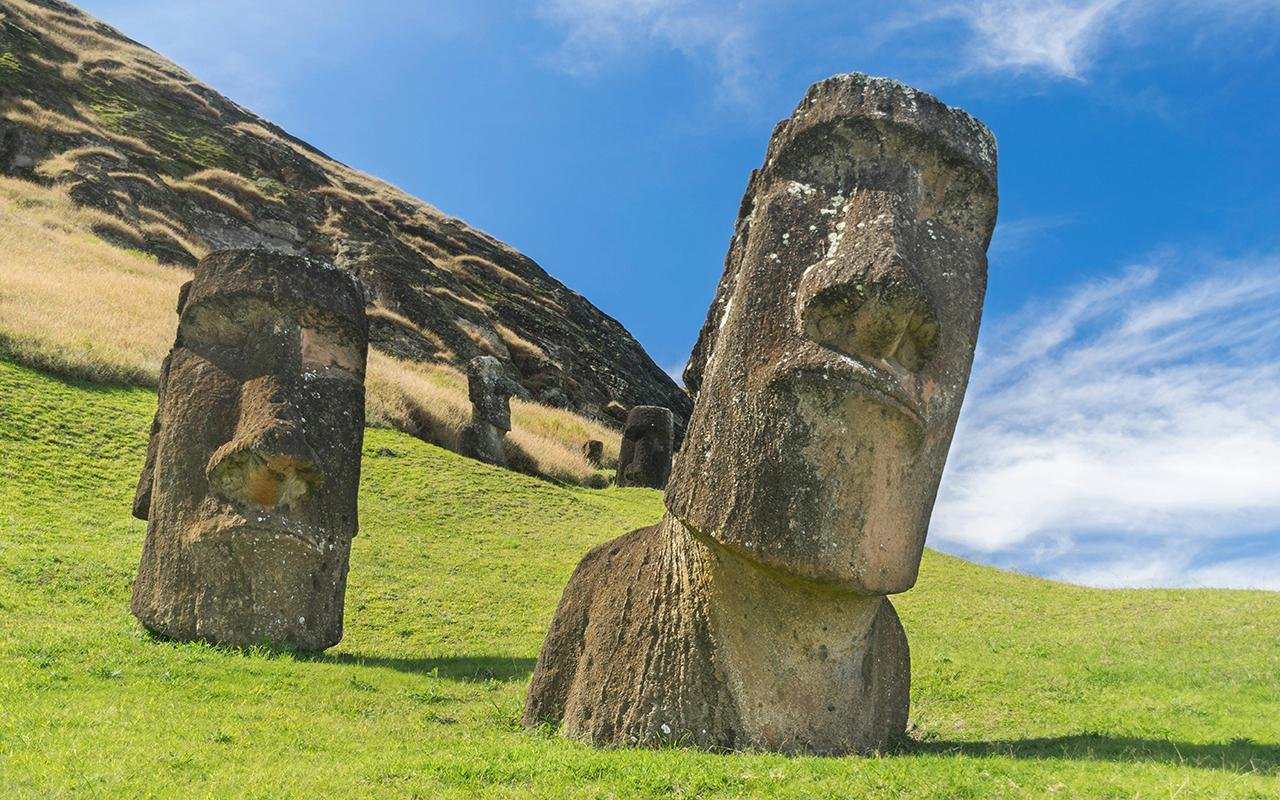
Easter Island (Rapa Nui) has for decades been characterized as one of Polynesian culture’s most isolated and remote outposts, where the giant moai statues are located and were assumed to have developed in isolation after being settled around CE 1200.
New study debunks myth of Easter Island's ecological collapse
Moai statue on Easter Island. Credit: Diego Gonzalez

This history is being rewritten by new Uppsala University research published in Antiquity, with evidence that Rapa Nui was not a passive recipient of cultural traditions, but an active participant in the molding of ritual architecture in East Polynesia.

Led by Professors Paul Wallin and Helene Martinsson-Wallin, Swedish researchers analyzed archaeological data and radiocarbon dates from ritual sites, settlements, and monumental structures throughout Polynesia. Their findings challenge the belief that cultural development followed a simple west-to-east trajectory from Tonga and Samoa to the outermost reaches of Polynesia, including Hawaiʻi, New Zealand, and Rapa Nui.

Easter Island was not isolated: new study reveals Rapa Nui’s role in Polynesian culture
Marae with ahu on Mo’orea, Windward Society Islands (photograph by P. Wallin). Credit: Wallin, P., & Martinsson-Wallin, H. Antiquity (2025)

“The migration process from West Polynesian core areas such as Tonga and Samoa to East Polynesia is not disputed here,” the researchers wrote. “Still, the static west-to-east colonization and dispersal suggested for East Polynesia, and the idea that Rapa Nui was only colonized once in the past and developed in isolation, are challenged.”

Easter Island was not isolated: new study reveals Rapa Nui’s role in Polynesian culture
Late megalithic marae called Taputapuatea, Raiatea, Leeward Society Islands (photograph by P. Wallin). Credit: Wallin, P., & Martinsson-Wallin, H. Antiquity (2025)

Instead, the researchers identified three distinct phases in the development of ritual spaces:

RelatedStories

New 3D reconstruction reveals how Rapa Nui’s iconic moai were carved at the Rano Raraku quarry

New 3D reconstruction reveals how Rapa Nui’s iconic moai were carved at the Rano Raraku quarry

November 27, 2025
New study debunks myth of Easter Island's ecological collapse

Rats and the fall of Rapa Nui’s forests: invasive species, not humans, drove the island’s deforestation

November 9, 2025

Early Expansion (c. CE 1000–1300): This phase is similar to the traditional west-to-east movement when settlers established simple ritual sites marked by stone uprights. These were associated with burial and communal feasting, suggesting far-reaching ideological continuity borne by early voyagers.

Formalization and Reverse Diffusion (c. CE 1300–1600): More complex ritual architecture—like the marae and ahu temple platforms—emerged first on Rapa Nui, rather than in the central Polynesian islands. The ritual complexes then diffused back westward through established maritime networks, a reversal of the cultural flow previously assumed.

Easter Island was not isolated: new study reveals Rapa Nui’s role in Polynesian culture
Easter Island was not isolated: new study reveals Rapa Nui’s role in Polynesian culture. Public Domain

Hierarchical Monumentalism (c. CE 1350–1800): During this last phase, social stratification on islands like Rapa Nui, Tahiti, and Hawaiʻi fueled the development of gigantic stone structures used to symbolize power and authority. The moai statues of Rapa Nui—giant human figures made of volcanic rock and erected on sacred platforms—became characteristic of this period.

The authors further note that ahu—rectangular stone platforms on which the moai were placed—are found across other Polynesian islands under the broader term marae, which is further evidence of a shared ritual foundation that emerged dynamically and in a multidirectional fashion.
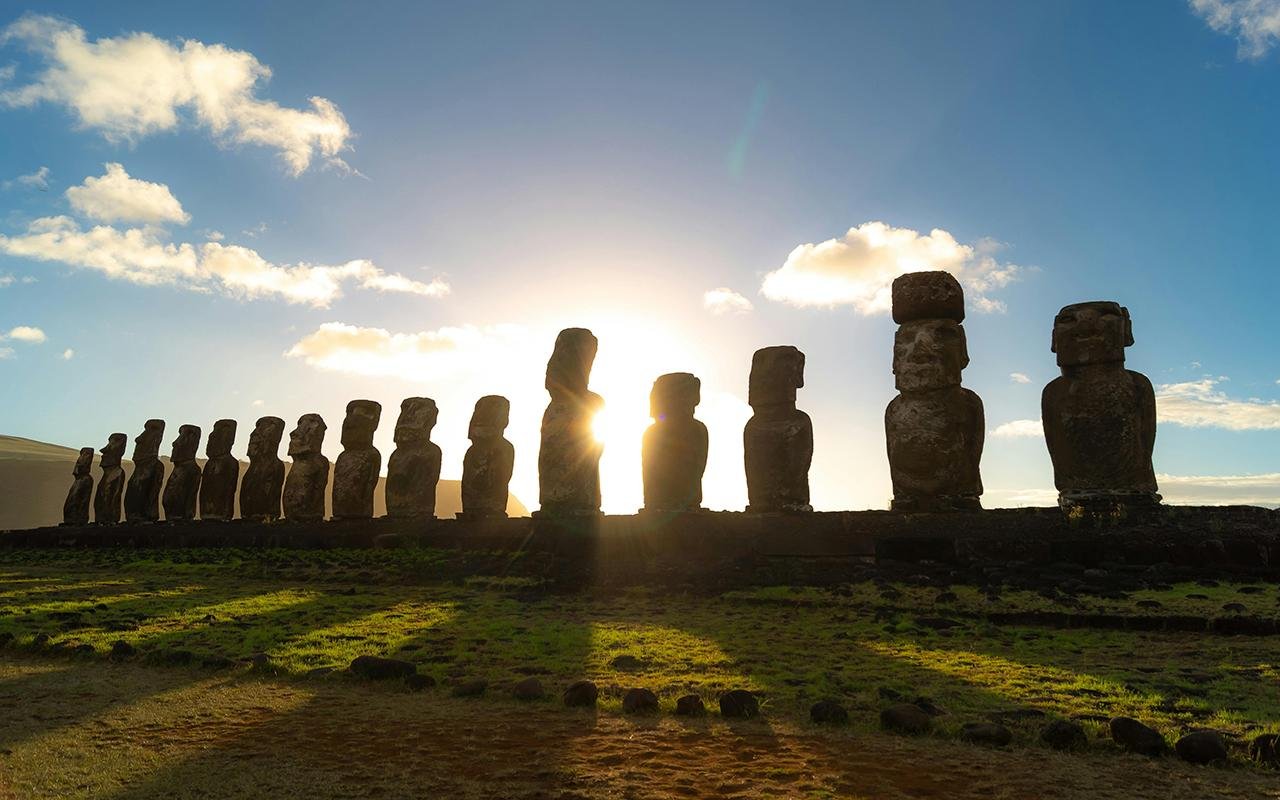
New study debunks myth of Easter Island's ecological collapse
Credit: Andrea Vera Sasso

This study stands in stark contrast to the general presumption that Rapa Nui developed in isolation after a single wave of settlement. Instead, there are signs of multiple settlements and ongoing cultural exchange through seafaring networks. The researchers note that the Polynesians were skilled sailors.

These great “interaction networks” not only allowed for the migration of people but also the transmission of ideas, traditions, and monumental architectural styles over thousands of miles of ocean. The emergence of sacred temple complexes on Easter Island, once thought to be unique and isolated, now appears to be a strong influence that rippled back across East Polynesia.

Easter Island is now a UNESCO World Heritage Site, well known for its moai statues. But thanks to this research, it can now be hailed as a cultural innovator.
More information: Wallin, P., & Martinsson-Wallin, H. (2025). From ritual spaces to monumental expressions: rethinking East Polynesian ritual practices. Antiquity, 1–16. doi:10.15184/aqy.2025.10096

Share:

Share on Facebook Share on X (Twitter) Share on LinkedIn Share on Pinterest Share on WhatsApp Share on Email

You May Also Like...

2,300-year-old Iron Age riverside structure discovered beneath German city astonishes archaeologists
Archaeology

2,300-year-old Iron Age riverside structure discovered beneath German city

May 22, 2026
100 Abbasid-era gold jewelry pieces found at ancient Dariyah site in Saudi Arabia
Archaeology

100 Abbasid-era gold jewelry pieces found at ancient Dariyah site in Saudi Arabia

May 22, 2026
Neanderthals gathered shellfish like modern humans 115,000 years ago, study finds
Anthropology

Neanderthals gathered shellfish like modern humans 115,000 years ago, study finds

May 21, 2026
Ancient pigeons were already living alongside humans 3,400 years ago, study finds
Archaeology

Ancient pigeons were already living alongside humans 3,400 years ago, study finds

May 21, 2026
Ancient Venetic sanctuary with rare inscriptions unearthed beneath road project in Italy
Archaeology

Ancient Venetic sanctuary with rare inscriptions unearthed beneath road project in Italy

May 21, 2026
1,000-year-old dingo burial in Australia reveals deep ties between Barkindji people and dingoes
Archaeology

1,000-year-old ritually buried dingo in Australia reveals deep ties between Barkindji people and dingoes

May 20, 2026

Follow us


Instagram
242K

Facebook
117K

Threads
46K

LinkedIn
14K

Twitter
6K

YouTube
1K
2,300-year-old Iron Age riverside structure discovered beneath German city astonishes archaeologists

2,300-year-old Iron Age riverside structure discovered beneath German city

May 22, 2026
100 Abbasid-era gold jewelry pieces found at ancient Dariyah site in Saudi Arabia

100 Abbasid-era gold jewelry pieces found at ancient Dariyah site in Saudi Arabia

May 22, 2026
Neanderthals gathered shellfish like modern humans 115,000 years ago, study finds

Neanderthals gathered shellfish like modern humans 115,000 years ago, study finds

May 21, 2026
Ancient pigeons were already living alongside humans 3,400 years ago, study finds

Ancient pigeons were already living alongside humans 3,400 years ago, study finds

May 21, 2026

Archaeology News online magazine

Archaeology News is an international online magazine that covers all aspects of archaeology.


Categories

  • Academics
    • Books
    • Conferences
    • Universities
  • Articles
  • Download
  • Game
  • News
    • Anthropology
    • Archaeology
    • Paleontology
  • Quiz
  • Tours

Subscribe to our newsletter

© 2024 - Archaeology News Online Magazine. All Rights Reserved.

  • About
  • Privacy Policy
  • Terms of Use
  • Donation
  • Contact

Manage Consent
To provide the best experiences, we use technologies like cookies to store and/or access device information. Consenting to these technologies will allow us to process data such as browsing behavior or unique IDs on this site. Not consenting or withdrawing consent, may adversely affect certain features and functions.
Functional Always active
The technical storage or access is strictly necessary for the legitimate purpose of enabling the use of a specific service explicitly requested by the subscriber or user, or for the sole purpose of carrying out the transmission of a communication over an electronic communications network.
Preferences
The technical storage or access is necessary for the legitimate purpose of storing preferences that are not requested by the subscriber or user.
Statistics
The technical storage or access that is used exclusively for statistical purposes. The technical storage or access that is used exclusively for anonymous statistical purposes. Without a subpoena, voluntary compliance on the part of your Internet Service Provider, or additional records from a third party, information stored or retrieved for this purpose alone cannot usually be used to identify you.
Marketing
The technical storage or access is required to create user profiles to send advertising, or to track the user on a website or across several websites for similar marketing purposes.
  • Manage options
  • Manage services
  • Manage {vendor_count} vendors
  • Read more about these purposes
View preferences
  • {title}
  • {title}
  • {title}
  • Home
  • News
    • Archaeology
    • Anthropology
    • Paleontology
  • Academic
    • Books
    • Conferences
    • Universities
  • Articles
  • VR Tours
  • Quiz & Game
  • Download
  • Encyclopedia
  • Forum

About  .  Contact  .  Donation

© 2024 - Archaeology News Online Magazine. All Rights Reserved