• About
  • Privacy Policy
  • Terms of Use
  • Donation
  • Contact
No Result
View All Result
Archaeology News
  • Home
  • News
    • Archaeology
    • Anthropology
    • Paleontology
  • Academic
    • Books
    • Conferences
    • Universities
  • Articles
  • VR Tours
  • Quiz & Game
  • Download
  • Encyclopedia
  • Forum
Archaeology News
No Result
View All Result
Home News Anthropology

4,000-year-old teeth reveal earliest evidence of betel nut chewing in Southeast Asia

by Dario Radley
August 4, 2025

A recent study uncovered the oldest direct biochemical evidence of betel nut chewing in Southeast Asia, dating back 4,000 years. Researchers used advanced chemical analysis on ancient dental plaque to detect traces of the psychoactive plant, gaining new insight into the cultural practices of early Thai societies.
4,000-year-old teeth reveal earliest evidence of betel nut chewing in Southeast Asia
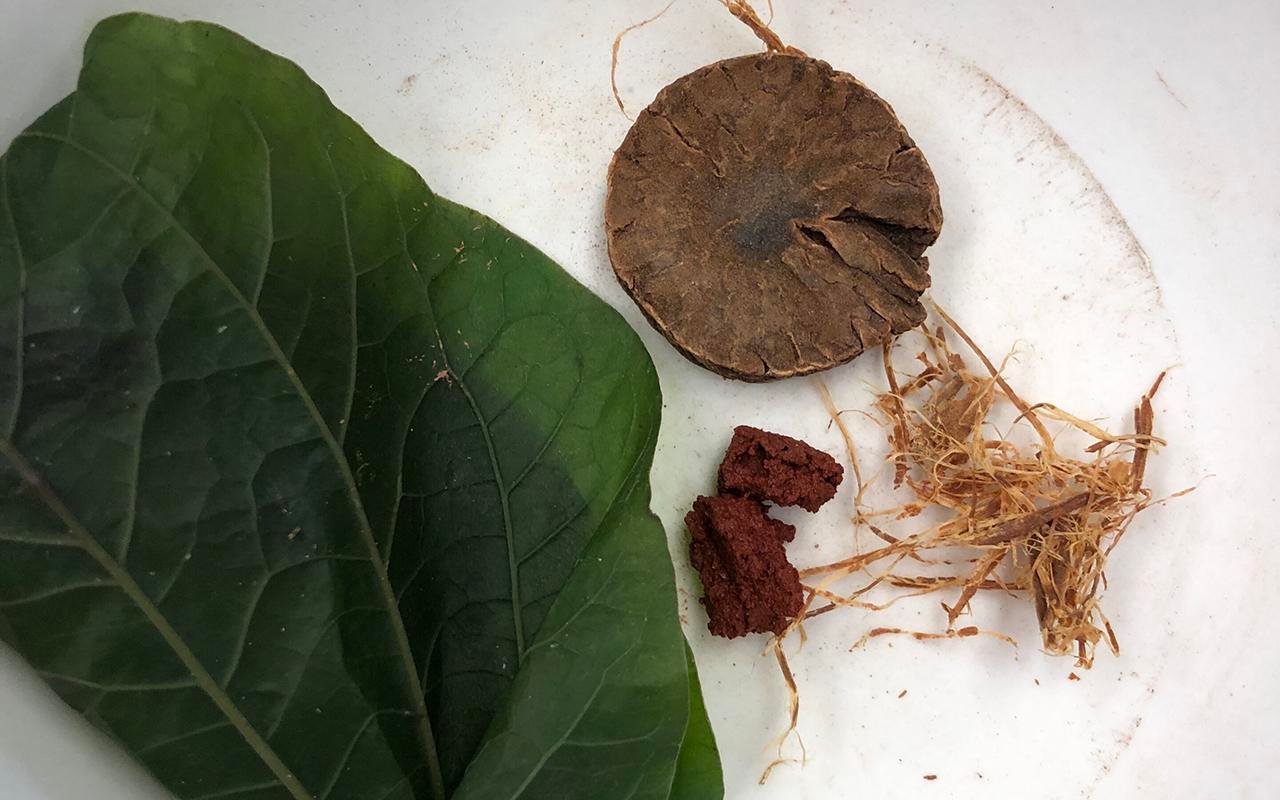
Modern betel quid ingredients: Piper betle leaf, areca nut (Areca catechu L.), limestone paste, tobacco (Nicotiana tabacum L.), and Senegalia catechu bark filaments. Credit: Piyawit Moonkham

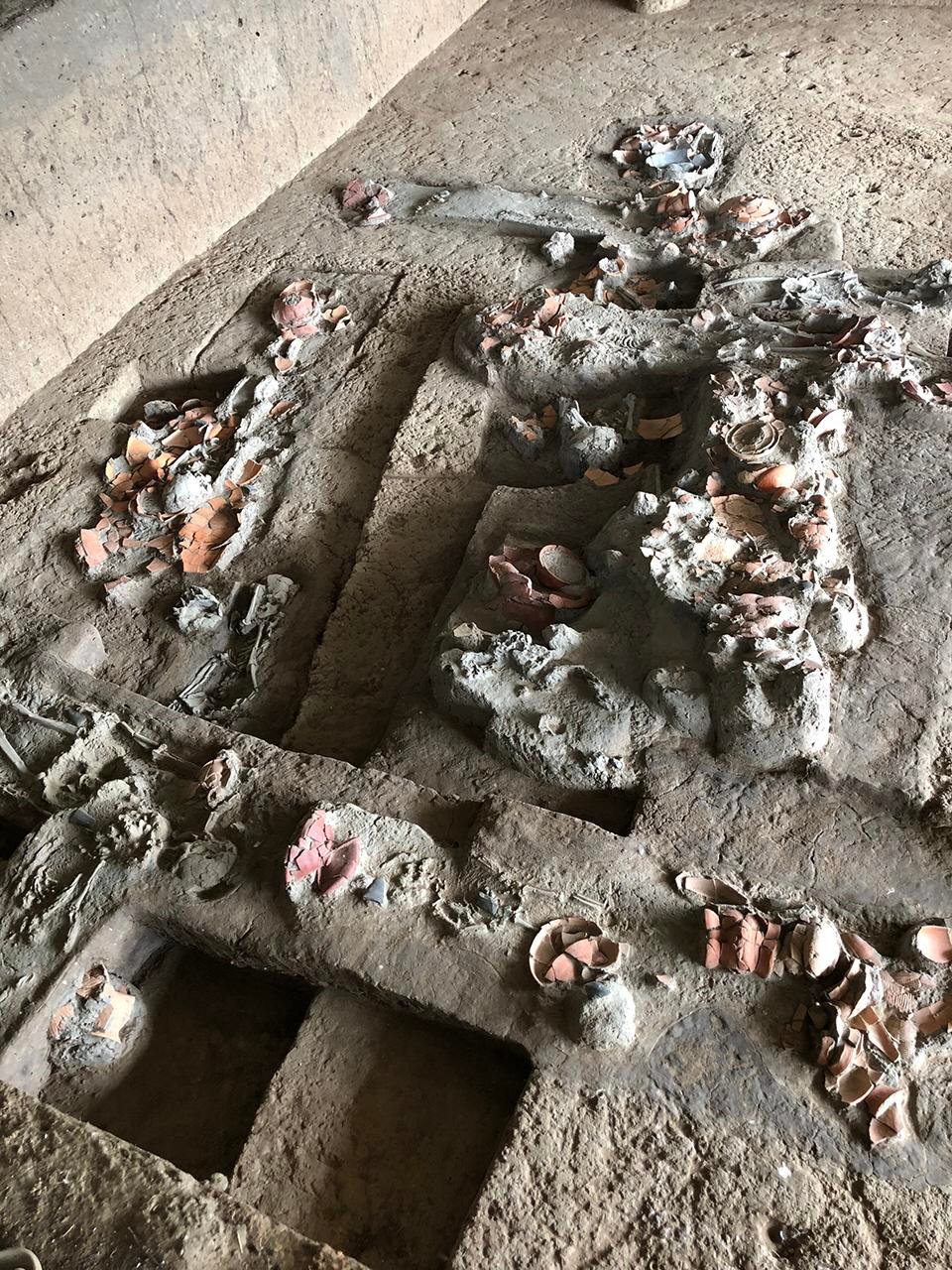
The discovery was made at the Bronze Age burial site of Nong Ratchawat in central Thailand, where 156 human burials have been excavated since 2003. Researchers analyzed 36 samples of dental calculus—mineralized plaque—from six individuals. Using liquid chromatography-mass spectrometry (LC-MS), they detected compounds of betel nut in the molars of one individual, a young woman known as “Burial 11.”

The chemicals—arecoline and arecaidine—are major psychoactive compounds found in the areca nut, known as betel nut. While normal chewing stains teeth red or black, this individual had none of these visible markers, demonstrating that ancient practices can leave no identifiable trace. The study, published in Frontiers in Environmental Archaeology, is the first direct chemical evidence confirming the use of betel nut from this period.

Betel nut chewing has a long tradition in the Pacific and Asia, typically linked to social, medicinal, and ceremonial contexts. The consumer typically chews the nut together with betel leaf and slaked lime—sometimes with tobacco—producing what is referred to as a “quid.” The stimulant induces feelings of alertness, relaxation, and mild euphoria.
4,000-year-old teeth reveal earliest evidence of betel nut chewing in Southeast Asia
Archaeological burials with associated artifacts at Nong Ratchawat. Credit: Piyawit Moonkham

In order to validate their findings, the scientists first created experimental quids from traditional ingredients mixed with human saliva, mimicking real chewing. The control samples were used to validate the chemical signature of the betel nut in the ancient calculus.

RelatedStories

Bronze Age loom found inside ancient Spanish home reveals early textile production

Bronze Age loom found inside ancient Spanish home reveals early textile production

April 8, 2026
How ancient communities adapted their diets and farming strategies in prehistoric Poland

How ancient communities adapted their diets and farming strategies in prehistoric Poland

February 26, 2026

Even though chewing evidence was discovered in only one burial, the researchers state that the absence in others doesn’t rule out broader use. Preservation conditions, frequency of consumption, and post-mortem changes can all affect detection. Grave goods, including stone beads, found with Burial 11 may indicate personal or cultural significance, but there is no suggestion she had special status.

4,000-year-old teeth reveal earliest evidence of betel nut chewing in Southeast Asia
A woman with the characteristic red-stained teeth and gums from long-term use of paan, a preparation combining betel leaf with areca nut and tobacco. Credit: Basile Morin / CC BY-SA 4.0

The technique used in the study is minimally invasive and makes skeletal materials accessible for future research. Specialists say that it has the potential to revolutionize archaeology through the revelation of behaviors that don’t leave visible traces, such as medicinal practices and plant consumption.

In Thailand, betel chewing declined sharply following mid-20th-century government campaigns against the habit due to health concerns, including links with oral cancer. However, in the majority of rural societies, the habit persists as a part of cultural tradition.

The team plans to investigate other burials at the site, potentially unearthing other clues about betel nut consumption in ancient times, and more secrets of early Southeast Asian lifeways.

More information: Moonkham, P., Tushingham, S., Zimmermann, M., Brownstein, K. J., Devanwaropakorn, C., Duangsakul, S., & Gang, D. R. (2025). Earliest direct evidence of bronze age betel nut use: biomolecular analysis of dental calculus from Nong Ratchawat, Thailand. Frontiers in Environmental Archaeology, 4(1622935). doi:10.3389/fearc.2025.1622935
Share25Tweet16Share4ShareSend

You May Also Like...

Roman cemetery in Egypt reveals golden tongues, mummies, and rare Iliad papyrus
Anthropology

Roman cemetery in Egypt reveals golden tongues, mummies, and rare Iliad papyrus

April 19, 2026
Basel plague study finds young workers had highest death rates in 17th century outbreak
Anthropology

Basel plague study finds young workers had highest death rates in 17th century outbreak

April 17, 2026
Ancient DNA reveals male lineage and family ties in Neolithic Scotland tombs
Anthropology

Ancient DNA reveals male lineage and family ties in Neolithic Scotland tombs

April 16, 2026
Council houses reveal shift from royal rule to collective governance in Terminal Classic Maya society
Archaeology

Council houses reveal shift from royal rule to collective governance in Terminal Classic Maya society

April 11, 2026
Bronze Age loom found inside ancient Spanish home reveals early textile production
Archaeology

Bronze Age loom found inside ancient Spanish home reveals early textile production

April 8, 2026
Pompeii ash analysis reveals Romans burned wine and imported frankincense in household rituals
Archaeology

Pompeii ash analysis reveals Romans burned wine and imported frankincense in household rituals

April 3, 2026

Follow us


Instagram
244K

Facebook
118K

Threads
46K

LinkedIn
14K

Twitter
6K

YouTube
1K
  • Trending
  • Comments
  • Latest
Shipwreck Salvage. Credit: rawpixel.com / Public Domain

2,000-year-old shipwreck discovered off Turkish coast with remarkably preserved stacked ceramics

July 2, 2025
Viking age DNA reveals 9,000-year-old HIV-resistant gene originating near the Black Sea

Viking age DNA reveals 9,000-year-old HIV-resistant gene originating near the Black Sea

May 18, 2025
A new study suggests the mysterious Voynich Manuscript may be a medieval cipher

A new study suggests the mysterious Voynich Manuscript may be a medieval cipher

January 3, 2026
3D analysis reveals Shroud of Turin image likely came from sculpture, not Jesus’ body

3D analysis reveals Shroud of Turin image likely came from sculpture, not Jesus’ body

August 3, 2025
Moses may be named in ancient Egyptian mine inscriptions, sparking debate over earliest biblical references

Moses may be named in ancient Egyptian mine inscriptions, sparking debate over earliest biblical references

July 31, 2025
3D analysis reveals Shroud of Turin image likely came from sculpture, not Jesus’ body

3D analysis reveals Shroud of Turin image likely came from sculpture, not Jesus’ body

Moses may be named in ancient Egyptian mine inscriptions, sparking debate over earliest biblical references

Moses may be named in ancient Egyptian mine inscriptions, sparking debate over earliest biblical references

$1 million prize offered to decipher 5,300-year-old Indus Valley script

$1 million prize offered to decipher 5,300-year-old Indus Valley script

Oldest ever genetic data from a human relative found in 2-million-year-old fossilized teeth

Oldest ever genetic data from a human relative found in 2-million-year-old fossilized teeth

Exceptionally large Roman shoes discovered at Magna fort near Hadrian’s Wall

Exceptionally large Roman shoes discovered at Magna fort near Hadrian’s Wall

Roman cemetery in Egypt reveals golden tongues, mummies, and rare Iliad papyrus

Roman cemetery in Egypt reveals golden tongues, mummies, and rare Iliad papyrus

April 19, 2026
Basel plague study finds young workers had highest death rates in 17th century outbreak

Basel plague study finds young workers had highest death rates in 17th century outbreak

April 17, 2026
Ancient DNA reveals male lineage and family ties in Neolithic Scotland tombs

Ancient DNA reveals male lineage and family ties in Neolithic Scotland tombs

April 16, 2026
Council houses reveal shift from royal rule to collective governance in Terminal Classic Maya society

Council houses reveal shift from royal rule to collective governance in Terminal Classic Maya society

April 11, 2026
Bronze Age loom found inside ancient Spanish home reveals early textile production

Bronze Age loom found inside ancient Spanish home reveals early textile production

April 8, 2026

Archaeology News online magazine

Archaeology News is an international online magazine that covers all aspects of archaeology.


Categories

  • Academics
    • Books
    • Conferences
    • Universities
  • Articles
  • Download
  • Game
  • News
    • Anthropology
    • Archaeology
    • Paleontology
  • Quiz
  • Tours

Subscribe to our newsletter

© 2024 - Archaeology News Online Magazine. All Rights Reserved.

  • About
  • Privacy Policy
  • Terms of Use
  • Donation
  • Contact

Manage Consent
To provide the best experiences, we use technologies like cookies to store and/or access device information. Consenting to these technologies will allow us to process data such as browsing behavior or unique IDs on this site. Not consenting or withdrawing consent, may adversely affect certain features and functions.
Functional Always active
The technical storage or access is strictly necessary for the legitimate purpose of enabling the use of a specific service explicitly requested by the subscriber or user, or for the sole purpose of carrying out the transmission of a communication over an electronic communications network.
Preferences
The technical storage or access is necessary for the legitimate purpose of storing preferences that are not requested by the subscriber or user.
Statistics
The technical storage or access that is used exclusively for statistical purposes. The technical storage or access that is used exclusively for anonymous statistical purposes. Without a subpoena, voluntary compliance on the part of your Internet Service Provider, or additional records from a third party, information stored or retrieved for this purpose alone cannot usually be used to identify you.
Marketing
The technical storage or access is required to create user profiles to send advertising, or to track the user on a website or across several websites for similar marketing purposes.
  • Manage options
  • Manage services
  • Manage {vendor_count} vendors
  • Read more about these purposes
View preferences
  • {title}
  • {title}
  • {title}
  • Home
  • News
    • Archaeology
    • Anthropology
    • Paleontology
  • Academic
    • Books
    • Conferences
    • Universities
  • Articles
  • VR Tours
  • Quiz & Game
  • Download
  • Encyclopedia
  • Forum

About  .  Contact  .  Donation

© 2024 - Archaeology News Online Magazine. All Rights Reserved