• About
  • Privacy Policy
  • Terms of Use
  • Donation
  • Contact
No Result
View All Result
Archaeology News
  • Home
  • News
    • Archaeology
    • Anthropology
    • Paleontology
  • Academic
    • Books
    • Conferences
    • Universities
  • Articles
  • VR Tours
  • Quiz & Game
  • Download
  • Encyclopedia
  • Forum
Archaeology News
No Result
View All Result
Home News Anthropology

Circle of Lost Children: Hittite infant burials discovered in ritual structure at Uşaklı Höyük

by Dario Radley
August 25, 2025

Excavations at the prominent mound of Uşaklı Höyük on the central Anatolian plateau have produced finds that may rewrite the known history of Hittite ritual life. In the eighteenth season of the Italian Archaeological Mission in Central Anatolia, led by University of Pisa professor Anacleto D’Agostino in partnership with Turkish and British scholars, researchers discovered the remains of at least seven infants arranged around a monumental stone structure whose purpose had long stumped experts.
Circle of Lost Children: Hittite infant burials discovered in ritual structure at Uşaklı Höyük
A floor covered in ash in Area K. Credit: Uşaklı Höyük Archaeological Project / University of Pisa

The find, which the team has appropriately dubbed the “Circle of Lost Children,” consists of partial and nearly complete skeletons, a remarkably well-preserved infant tooth, and delicate newborn remains. Unlike traditional burials in the ancient Near East, these were not placed in pits or jars. Instead, the bones were discovered in ash layers, with animal bones and ceramic pieces, which point towards ritual rather than funerary contexts.

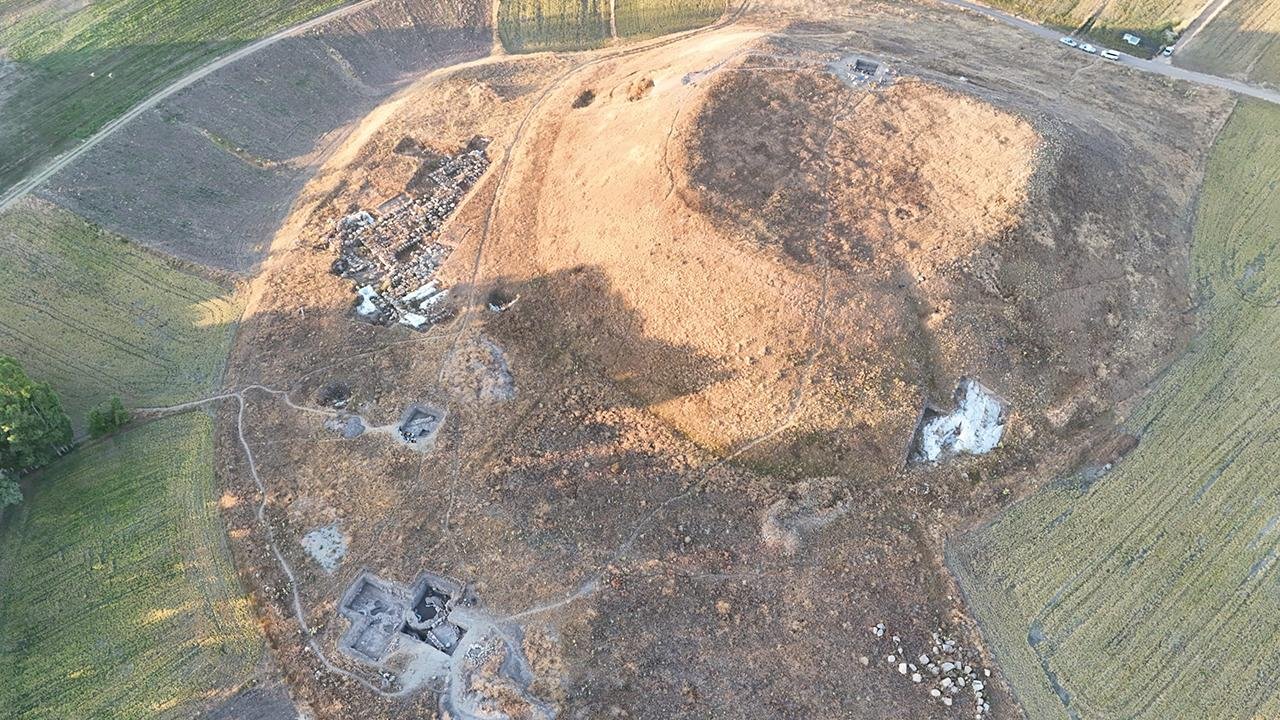
Remains were uncovered along with the so-called Circular Structure, which was first discovered in 2021. Built from meticulously arranged stones on a terrace north of the citadel, this enigmatic structure has long been a subject of debate regarding its purpose. Recent excavations revealed successive phases of use and repaving, emphasizing its long-held sacred status.
Circle of Lost Children: Hittite infant burials discovered in ritual structure at Uşaklı Höyük
Uşaklı Höyük, the mound and terrace viewed from the north. Area F with the Circular Structure is visible at the bottom, while Area A with the large Building II appears at the top. Credit: Uşaklı Höyük Archaeological Project / University of Pisa

The atypical arrangement has been compared to Phoenician and Punic tophets—sanctified spaces into which babies were deposited—though no urns were found at Uşaklı. The researchers said that while in the Near East infant burials took place under houses or in jars, this context is different and points to a distinctive ritual sphere. Many scholars now suspect the building to have been a sanctuary of the Storm God, the central god of Hittite religion. This interpretation is consistent with records of the ancient holy city of Zippalanda, which many researchers link to Uşaklı Höyük.
Circle of Lost Children: Hittite infant burials discovered in ritual structure at Uşaklı Höyük
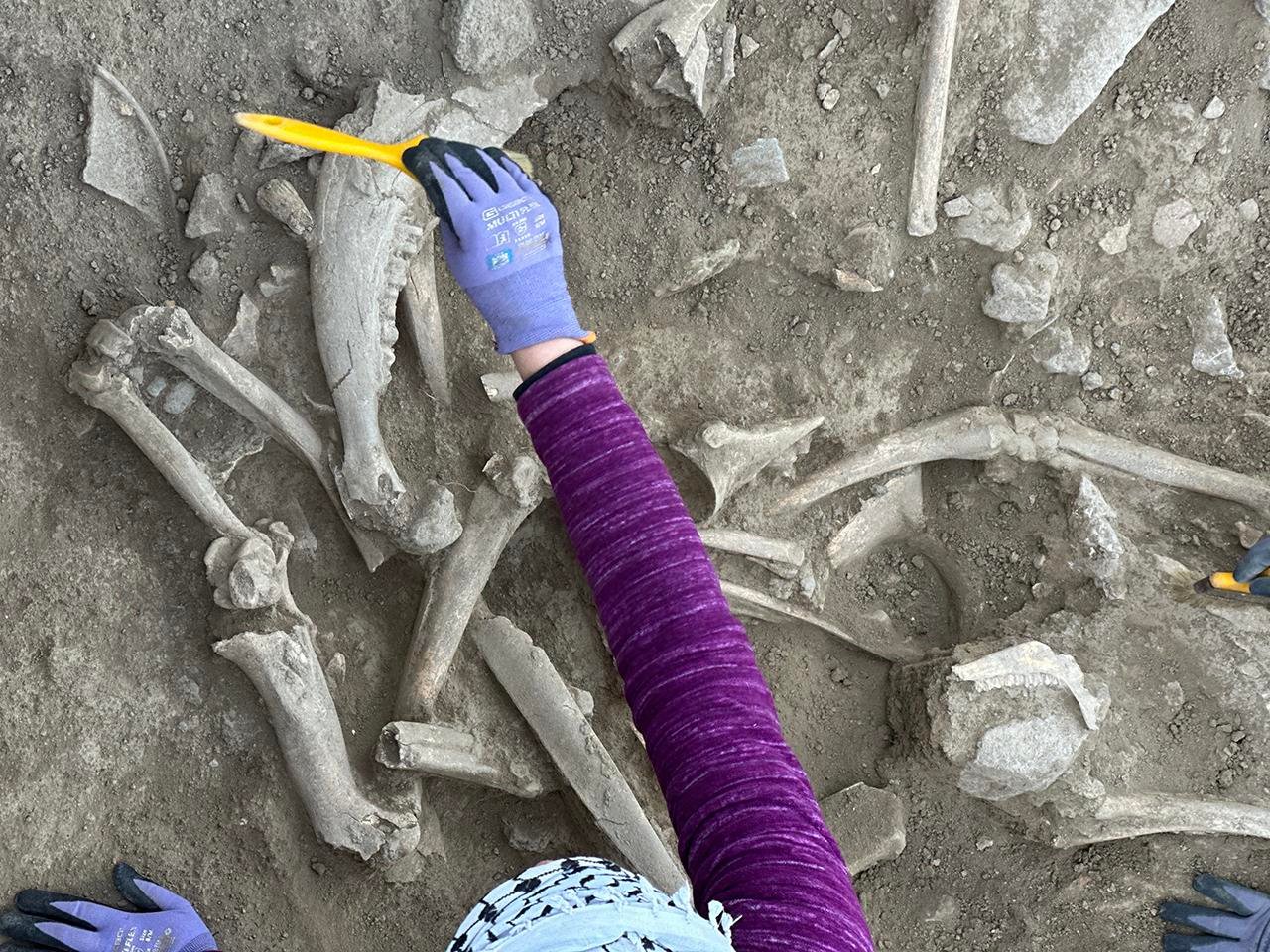
Animal remains recovered from a large late-period pit in Area F. Credit: Uşaklı Höyük Archaeological Project / University of Pisa

The discovery is of scientific interest apart from its ritual relevance. The infant tooth, which is now being examined by the Human_Genome Laboratory in Ankara at Hacettepe University, might provide radiocarbon dating and genetic data on the Hittite population.

RelatedStories

Neanderthal infants grew twice as fast as modern humans, study finds

Neanderthal infants grew twice as fast as modern humans, study finds

May 2, 2026
Roman York infants buried in rare purple and gold cloth linked to elite families, study finds

Roman York infants buried in rare purple and gold cloth linked to elite families, study finds

May 2, 2026

Faunal remains of horses, donkeys, deer, and cattle were also found through excavations, most likely connected with sacrificial ceremonies. Researchers noted that ceramic residues show evidence of meat and cereal consumption, indicating banquets or ritual feasts. Together with the infant burial deposits, these findings indicate that ceremonies were connected with death, fertility, and divine appeasement.
Circle of Lost Children: Hittite infant burials discovered in ritual structure at Uşaklı Höyük
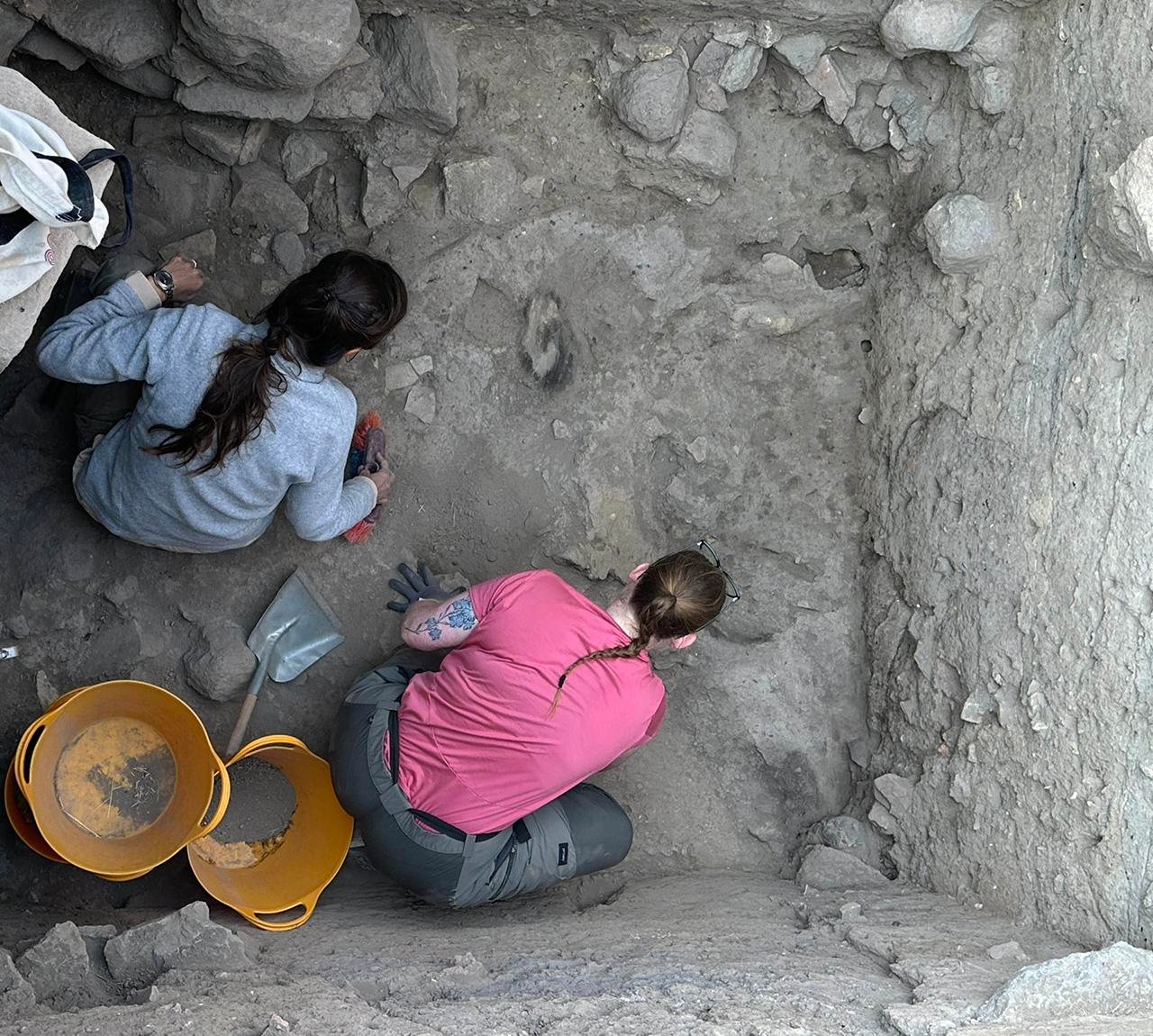
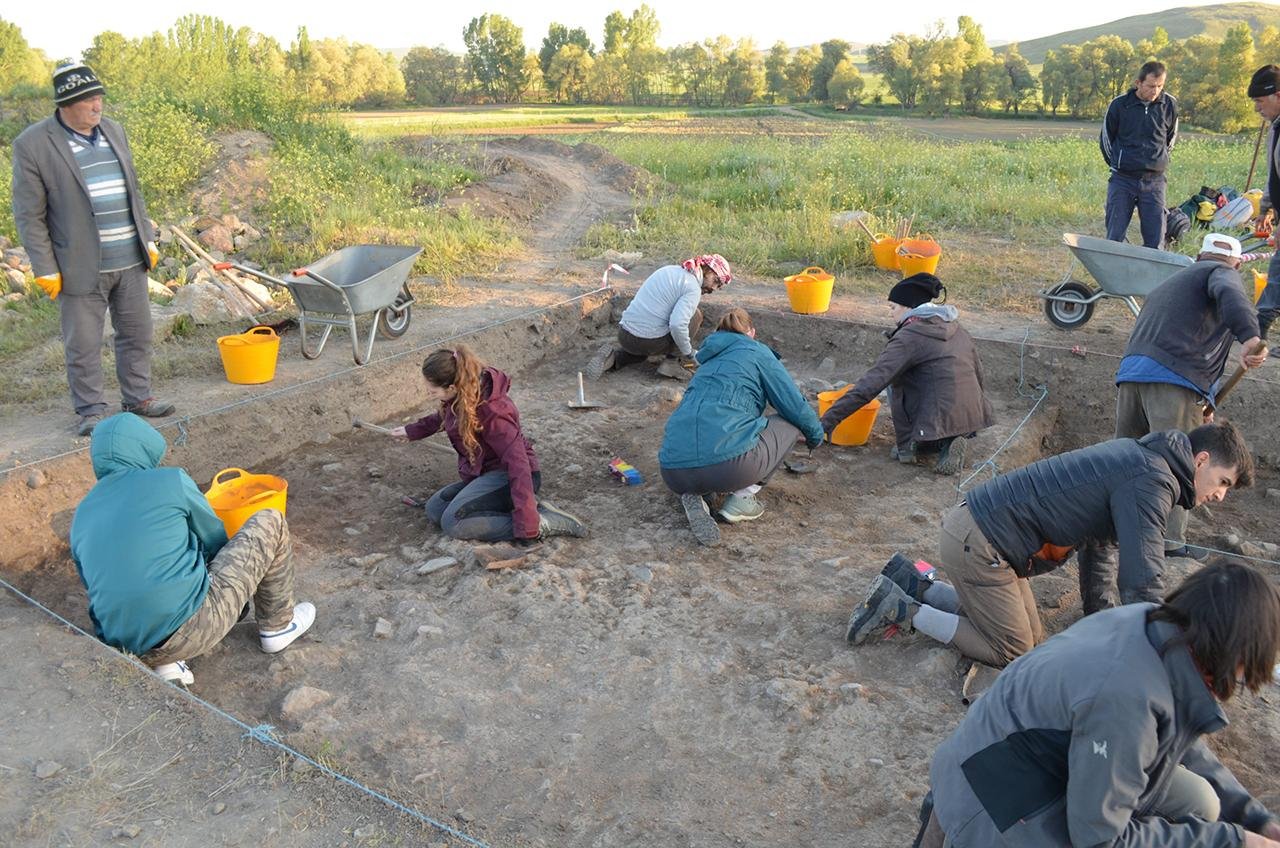
Students, workers, and archaeologists during the early stages of excavating a new square in Area F. Credit: Uşaklı Höyük Archaeological Project / University of Pisa

Outside the ritual space, acropolis excavation revealed occupation layers spanning the Iron Age to the Hellenistic era, along with destructive evidence associated with mid-first millennium BCE upheavals. A medieval necropolis on the lower terrace contained family graves that might shed light on the demographic impacts of the 1071 CE Battle of Manzikert.

Scholars have argued for years that Uşaklı Höyük was actually Zippalanda, a Hittite cult center where kings made pilgrimages to worship the Storm God. Findings such as the monumental granite structures, a fragment of a cuneiform tablet, and now the “Circle of Lost Children” reinforce that identification.

More information: Università di Pisa
Share:

Share on Facebook Share on X (Twitter) Share on LinkedIn Share on Pinterest Share on WhatsApp Share on Email

You May Also Like...

First shipwrecks linked to Pirates of the Caribbean discovered in Nassau Harbor, The Bahamas
Archaeology

First shipwrecks linked to Pirates of the Caribbean discovered in Nassau Harbor, The Bahamas

May 27, 2026
Neanderthals and early humans reshaped Europe’s landscapes long before the rise of farming, study finds
Anthropology

Payre fossil teeth reveal regional diversity among Europe’s earliest Neanderthals

May 27, 2026
Ancient DNA links 400-year-old Finland burial to Sámi ancestry and possible Iceland journey
Anthropology

Ancient DNA links 400-year-old Finland burial to Sámi ancestry and possible Iceland journey

May 27, 2026
Ming Dynasty surgical tools reveal traces of toxic herbal anesthetic used 600 years ago
Archaeology

Ming Dynasty surgical tools reveal traces of toxic herbal anesthetic used 600 years ago

May 26, 2026
Greek theatrical mask found in Croatian cave points to ancient Illyrian sanctuary rituals
Archaeology

Greek theatrical mask found in Croatian cave points to ancient Illyrian sanctuary rituals

May 26, 2026
Oldest known rock art dated to 67,800 years discovered in Sulawesi cave
Archaeology

Scientist questions dating of world’s oldest cave art and Neanderthal paintings

May 26, 2026

Follow us


Instagram
242K

Facebook
117K

Threads
46K

LinkedIn
14K

Twitter
6K

YouTube
1K
First shipwrecks linked to Pirates of the Caribbean discovered in Nassau Harbor, The Bahamas

First shipwrecks linked to Pirates of the Caribbean discovered in Nassau Harbor, The Bahamas

May 27, 2026
Neanderthals and early humans reshaped Europe’s landscapes long before the rise of farming, study finds

Payre fossil teeth reveal regional diversity among Europe’s earliest Neanderthals

May 27, 2026
Ancient DNA links 400-year-old Finland burial to Sámi ancestry and possible Iceland journey

Ancient DNA links 400-year-old Finland burial to Sámi ancestry and possible Iceland journey

May 27, 2026
Ming Dynasty surgical tools reveal traces of toxic herbal anesthetic used 600 years ago

Ming Dynasty surgical tools reveal traces of toxic herbal anesthetic used 600 years ago

May 26, 2026

Archaeology News online magazine

Archaeology News is an international online magazine that covers all aspects of archaeology.


Categories

  • Academics
    • Books
    • Conferences
    • Universities
  • Articles
  • Download
  • Game
  • News
    • Anthropology
    • Archaeology
    • Paleontology
  • Quiz
  • Tours

Subscribe to our newsletter

© 2024 - Archaeology News Online Magazine. All Rights Reserved.

  • About
  • Privacy Policy
  • Terms of Use
  • Donation
  • Contact

Manage Consent
To provide the best experiences, we use technologies like cookies to store and/or access device information. Consenting to these technologies will allow us to process data such as browsing behavior or unique IDs on this site. Not consenting or withdrawing consent, may adversely affect certain features and functions.
Functional Always active
The technical storage or access is strictly necessary for the legitimate purpose of enabling the use of a specific service explicitly requested by the subscriber or user, or for the sole purpose of carrying out the transmission of a communication over an electronic communications network.
Preferences
The technical storage or access is necessary for the legitimate purpose of storing preferences that are not requested by the subscriber or user.
Statistics
The technical storage or access that is used exclusively for statistical purposes. The technical storage or access that is used exclusively for anonymous statistical purposes. Without a subpoena, voluntary compliance on the part of your Internet Service Provider, or additional records from a third party, information stored or retrieved for this purpose alone cannot usually be used to identify you.
Marketing
The technical storage or access is required to create user profiles to send advertising, or to track the user on a website or across several websites for similar marketing purposes.
  • Manage options
  • Manage services
  • Manage {vendor_count} vendors
  • Read more about these purposes
View preferences
  • {title}
  • {title}
  • {title}
  • Home
  • News
    • Archaeology
    • Anthropology
    • Paleontology
  • Academic
    • Books
    • Conferences
    • Universities
  • Articles
  • VR Tours
  • Quiz & Game
  • Download
  • Encyclopedia
  • Forum

About  .  Contact  .  Donation

© 2024 - Archaeology News Online Magazine. All Rights Reserved