• About
  • Privacy Policy
  • Terms of Use
  • Donation
  • Contact
No Result
View All Result
Archaeology News
  • Home
  • News
    • Archaeology
    • Anthropology
    • Paleontology
  • Academic
    • Books
    • Conferences
    • Universities
  • Articles
  • VR Tours
  • Quiz & Game
  • Download
  • Encyclopedia
  • Forum
Archaeology News
No Result
View All Result
Home News Archaeology

Excavations reveal a Maya mission town’s defiant stand in early colonial era

by Dario Radley
August 30, 2025

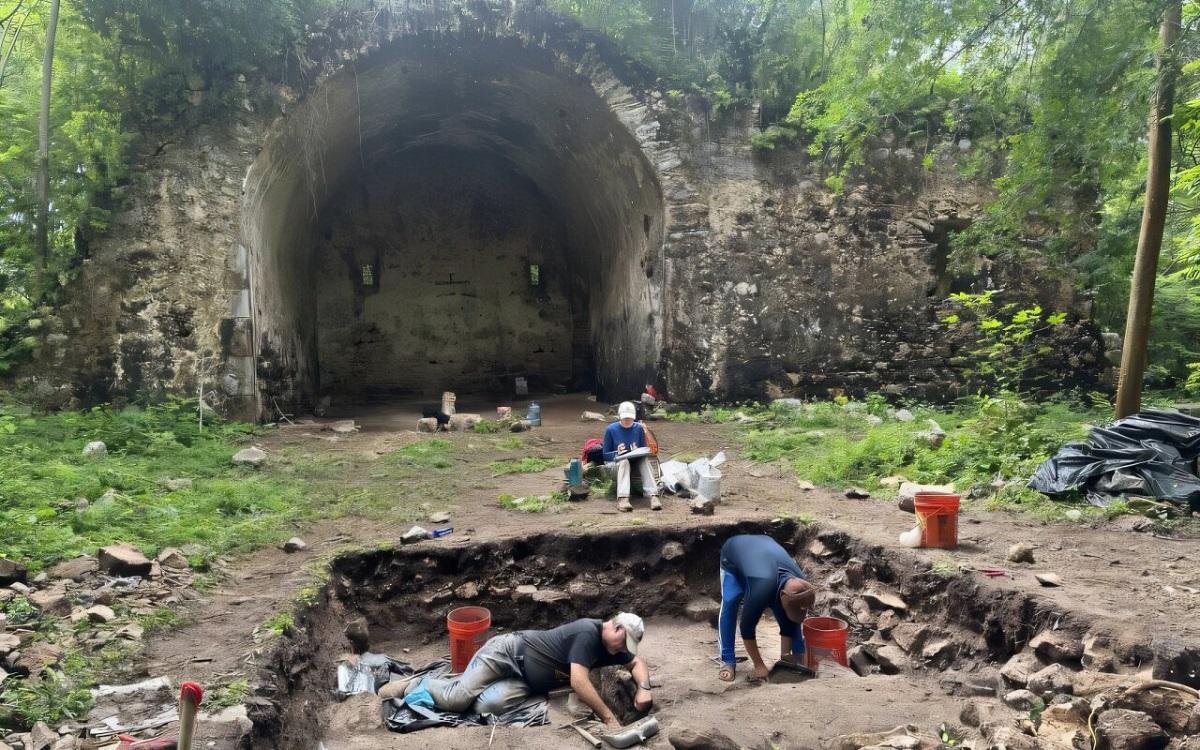
In the countryside of northern Yucatán, archaeologists uncovered the remnants of Hunacti. This short-lived 16th-century mission town tells a complicated story of cooperation, resistance, and cultural survival in the early years of Spanish colonial rule.
Excavations reveal a Maya mission town’s defiant stand in early colonial era
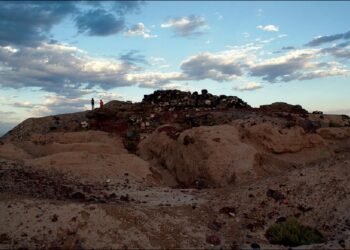
A team of archaeologists works at the site of a Colonial-era church amid the ruins of the former Maya town known as Hunacti in northern Yucatán, Mexico. Credit: Marilyn Masson/University at Albany

The abandoned town, founded in 1557 and deserted by 1572, was the subject of a cooperative research project directed by UAlbany anthropologist Marilyn A. Masson, in conjunction with researchers from Mexico’s Instituto Nacional de Antropología e Historia, Morehead State University, and the University of South Wales. Their results, published in Latin American Antiquity, reveal how the inhabitants of Hunacti managed to endure the upheavals of colonization while maintaining Maya traditions quietly under the cover of Spanish-style architecture.

“Hunacti is a paradox,” Masson said. “It was grandly built, with cooperative leaders at first, yet it became known for ongoing resistance, even when the costs were high.”

Hunacti originated as a visita mission — a smaller settlement visited periodically by Franciscan friars from nearby convent centers. It was laid out in a colonial style: grid streets radiating from the central plaza, a T-shaped church, and three elite dwellings with plastered walls, arched windows, and niches. Historical records suggest its founders enjoyed rare privileges under colonial rule, including horse ownership, a cacao orchard, and construction labor.

But beneath this veneer of privilege, tensions soon erupted. In 1561, a ghastly event drew Franciscan notice when town leader Juan Xiu reported a stillborn infant with marks resembling crucifixion. The following year, Xiu and eight others were accused of human sacrifice; he died under torture. Successive leaders were later punished for idolatry, including public whipping, in the following decades. In 1572, famine struck and the settlement was abandoned, with residents likely relocating to Tixmehuac.

RelatedStories

How coral buildings are helping archaeologists date colonial-era sites in French Polynesia

How coral buildings are helping archaeologists date colonial-era sites in French Polynesia

April 30, 2026
Donkey bones reveal Jamestown colonists brought donkeys to North America

Donkey bones reveal Jamestown colonists brought donkeys to North America

October 8, 2025

Archaeological excavations tell a story that colonial chronicles only hint at. Inside the church and high-status residences, researchers discovered ceramic effigy censers — incense burners depicting Maya deities — several of them located on the last colonial floors, showing that Maya religious traditions persisted to the end despite Franciscan prohibitions.

The material record tells a story of continuity and resistance. Excavations revealed reliance on local chert and limestone tools, with only one imported European metal item, a hatchet, discovered. Imported goods were scarce, and faunal remains consisted primarily of native animals like deer, peccary, and iguana, though the presence of a horse showed elite status. Unlike other mission towns such as Tiquibalon and Tahcabo, Hunacti yielded minimal evidence of European items or surplus production for colonial markets, and is closer to smaller, more isolated visitas such as Yacman.

These patterns represent Hunacti’s leaders shifting from early cooperation to self-sufficiency and quiet resistance, according to the research team. By limiting engagement with Spanish trade networks and preserving traditional religious life, they preserved local autonomy at the expense of long-term stability and access to colonial commodities.

For archaeologists, Hunacti is a strong example of the different responses of Maya communities under colonial rule. Although some towns adopted Christianity and Spanish rule for material gain, others, such as Hunacti, took on the risks of persecution to maintain pre-Hispanic traditions.

The project, funded by the National Geographic Society, highlights the significance of household archaeology in rewriting past narratives that frame Indigenous peoples as passive victims of colonialism. Rather, the story of Hunacti is one of agency, resilience, and the high costs of defiance.
More information: University at Albany
Publication: Masson, M. A., Lope, C. P., Russell, B. W., Hare, T. S., Alvarado, W. C., Serafin, S., … Ojeda, B. E. (2025). Archaeological perspectives on confronting social change at the sixteenth-century Visita town of Hunacti, Yucatán. Latin American Antiquity, 1–20. doi:10.1017/laq.2025.1

Share:

Share on Facebook Share on X (Twitter) Share on LinkedIn Share on Pinterest Share on WhatsApp Share on Email

You May Also Like...

Medieval bone study identifies microbial communities driving archaeological bone degradation and preservation
Anthropology

Medieval bone study identifies microbial communities driving archaeological bone degradation and preservation

May 28, 2026
A large hidden hydraulic system mapped around the Urartian fortress of Argishtikhinili in Armenia
Archaeology

A large hidden hydraulic system mapped around the Urartian fortress of Argishtikhinili in Armenia

May 28, 2026
Sasanian military helmets reveal advanced brass technology across the Persian Empire
Archaeology

Sasanian military helmets reveal advanced brass technology across the Persian Empire

May 28, 2026
Neanderthals and early humans reshaped Europe’s landscapes long before the rise of farming, study finds
Anthropology

Payre fossil teeth reveal regional diversity among Europe’s earliest Neanderthals

May 27, 2026
Ancient DNA links 400-year-old Finland burial to Sámi ancestry and possible Iceland journey
Anthropology

Ancient DNA links 400-year-old Finland burial to Sámi ancestry and possible Iceland journey

May 27, 2026
Ming Dynasty surgical tools reveal traces of toxic herbal anesthetic used 600 years ago
Archaeology

Ming Dynasty surgical tools reveal traces of toxic herbal anesthetic used 600 years ago

May 26, 2026

Follow us


Instagram
242K

Facebook
117K

Threads
47K

LinkedIn
15K

Twitter
6K

YouTube
1K
Medieval bone study identifies microbial communities driving archaeological bone degradation and preservation

Medieval bone study identifies microbial communities driving archaeological bone degradation and preservation

May 28, 2026
A large hidden hydraulic system mapped around the Urartian fortress of Argishtikhinili in Armenia

A large hidden hydraulic system mapped around the Urartian fortress of Argishtikhinili in Armenia

May 28, 2026
Sasanian military helmets reveal advanced brass technology across the Persian Empire

Sasanian military helmets reveal advanced brass technology across the Persian Empire

May 28, 2026
Neanderthals and early humans reshaped Europe’s landscapes long before the rise of farming, study finds

Payre fossil teeth reveal regional diversity among Europe’s earliest Neanderthals

May 27, 2026

Archaeology News online magazine

Archaeology News is an international online magazine that covers all aspects of archaeology.


Categories

  • Academics
    • Books
    • Conferences
    • Universities
  • Articles
  • Download
  • Game
  • News
    • Anthropology
    • Archaeology
    • Paleontology
  • Quiz
  • Tours

Subscribe to our newsletter

© 2024 - Archaeology News Online Magazine. All Rights Reserved.

  • About
  • Privacy Policy
  • Terms of Use
  • Donation
  • Contact

Manage Consent
To provide the best experiences, we use technologies like cookies to store and/or access device information. Consenting to these technologies will allow us to process data such as browsing behavior or unique IDs on this site. Not consenting or withdrawing consent, may adversely affect certain features and functions.
Functional Always active
The technical storage or access is strictly necessary for the legitimate purpose of enabling the use of a specific service explicitly requested by the subscriber or user, or for the sole purpose of carrying out the transmission of a communication over an electronic communications network.
Preferences
The technical storage or access is necessary for the legitimate purpose of storing preferences that are not requested by the subscriber or user.
Statistics
The technical storage or access that is used exclusively for statistical purposes. The technical storage or access that is used exclusively for anonymous statistical purposes. Without a subpoena, voluntary compliance on the part of your Internet Service Provider, or additional records from a third party, information stored or retrieved for this purpose alone cannot usually be used to identify you.
Marketing
The technical storage or access is required to create user profiles to send advertising, or to track the user on a website or across several websites for similar marketing purposes.
  • Manage options
  • Manage services
  • Manage {vendor_count} vendors
  • Read more about these purposes
View preferences
  • {title}
  • {title}
  • {title}
  • Home
  • News
    • Archaeology
    • Anthropology
    • Paleontology
  • Academic
    • Books
    • Conferences
    • Universities
  • Articles
  • VR Tours
  • Quiz & Game
  • Download
  • Encyclopedia
  • Forum

About  .  Contact  .  Donation

© 2024 - Archaeology News Online Magazine. All Rights Reserved