• About
  • Privacy Policy
  • Terms of Use
  • Donation
  • Contact
No Result
View All Result
Archaeology News
  • Home
  • News
    • Archaeology
    • Anthropology
    • Paleontology
  • Academic
    • Books
    • Conferences
    • Universities
  • Articles
  • VR Tours
  • Quiz & Game
  • Download
  • Encyclopedia
  • Forum
Archaeology News
No Result
View All Result
Home News Archaeology

Phoenician oil bottles reveal the role of scent in identity and cultural exchange across the Mediterranean

by Dario Radley
August 26, 2025

Archaeologists routinely uncover pottery, coins, and bones, but the scents of the past are much more elusive. An innovative interdisciplinary study has now traced fragrances that were once at the heart of Phoenician culture. Through the analysis of 51 ceramic oil vessels from the site of Motya, a small island off Sicily’s coast, researchers have uncovered how fragrant oils contributed to identity, memory, and cultural exchange in the Iron Age Mediterranean. The research was published in the Journal of Archaeological Method and Theory.
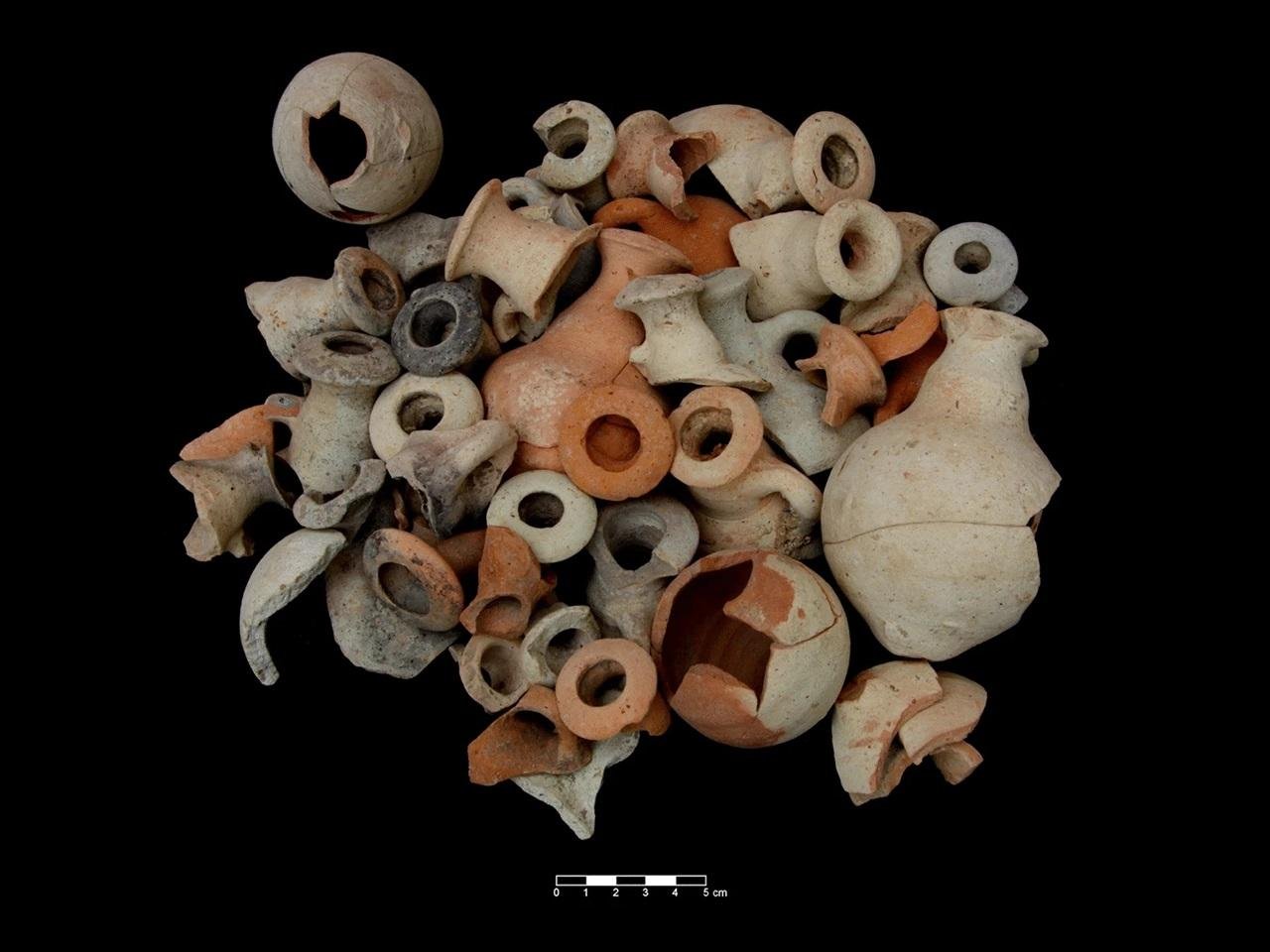
Phoenician oil bottles reveal the role of scent in identity and cultural exchange across the Mediterranean
Motya, Area V: a selection of “Phoenician oil bottles”, c. 750/740–550/530 BCE. Credit: Adriano Orsingher et al., J Archaeol Method Theory (2025)

The vessels—plain, narrow bottles between 15 and 18 centimeters high—were used from the 8th to the 6th centuries BCE. They were discovered in domestic locations, cemeteries, and sacred areas, demonstrating that they were used for various purposes over a wide geographic area. Analytical tests of the ceramic material indicate that their production began in southern Phoenicia, in a region stretching from modern Beirut to the Carmel coast.

The organic residue analysis offered further information. Eight of the vessels examined contained traces of plant oils combined with pine and mastic resin, substances long associated with perfume and preservation. This is a strong indication that these vessels carried aromatic unguents. These oils were more than commodities to be traded; they embodied connections to homeland traditions. For Phoenician settlers establishing communities across the Mediterranean, these scented oils would have acted as sensory links to their place of origin, consolidating shared practices among dispersed peoples while also being exchanged with local populations.

The Phoenicians, renowned seafarers and merchants, were also innovators in the migration of cultural practices. Aromatic materials held a central position in both everyday life and ritual practice, and their exchange facilitated the creation of links between migrant and indigenous groups. At Motya, the ongoing appearance of oil bottles over more than two centuries implies a consistent supply of what was perhaps a recognizable product tradition, one that possessed both practical and symbolic value.
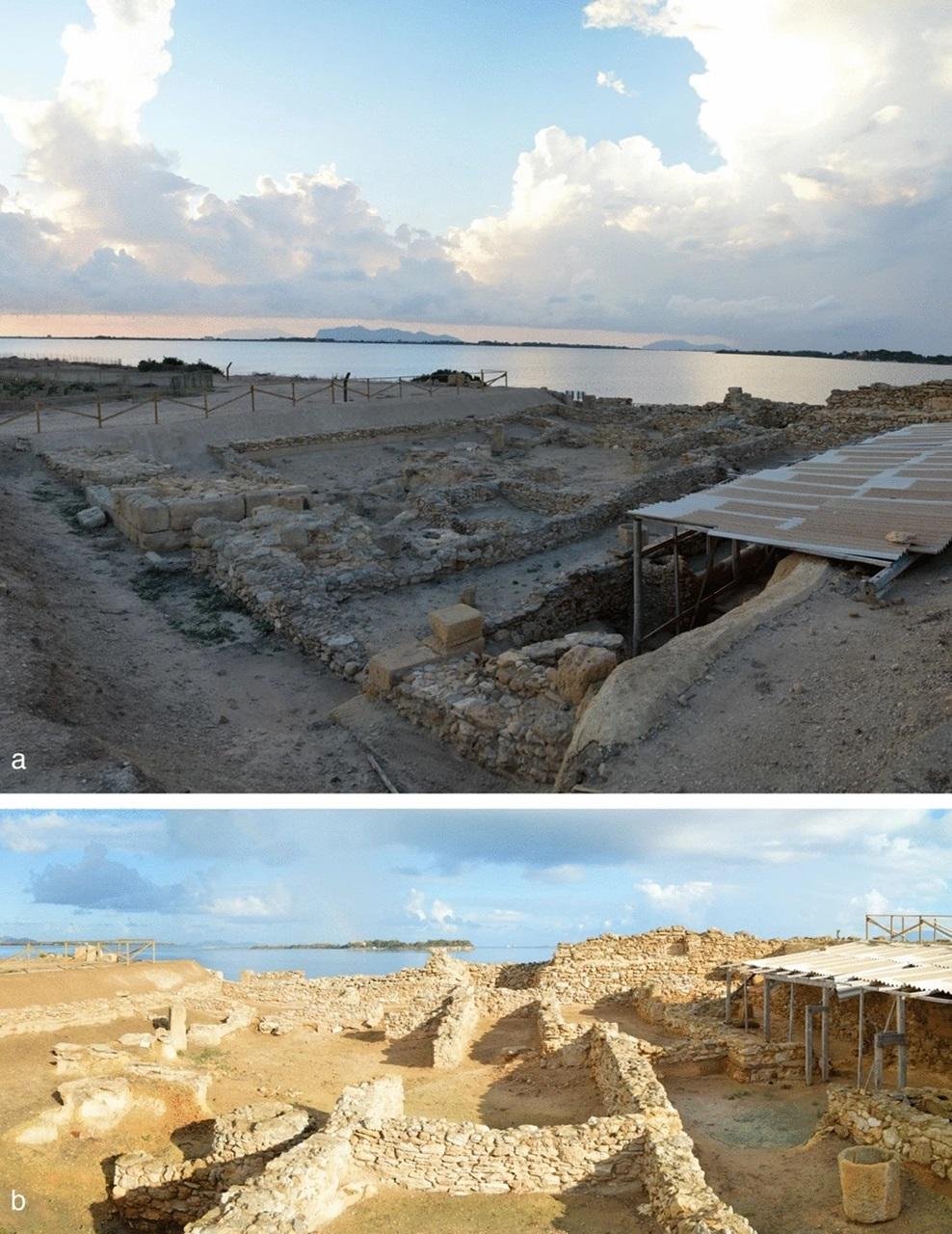
Phoenician oil bottles reveal the role of scent in identity and cultural exchange across the Mediterranean
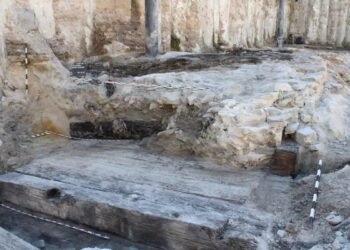
Motya: a view of Area V from the southeast; b view of Area V from the south. Credit: Adriano Orsingher et al., J Archaeol Method Theory (2025)

These vessels were used not only in Phoenician communities but also appeared in elite contexts among non-Phoenician peoples. Their presence in these contexts indicates that scented oils became part of the strategies for building alliances and projecting influence outside of their own communities. Thus, the use of perfume was instrumental in cross-cultural interactions and helped spread Phoenician practices throughout the western Mediterranean world.
RelatedStories

2,300-year-old Iron Age riverside structure discovered beneath German city astonishes archaeologists

2,300-year-old Iron Age riverside structure discovered beneath German city

May 22, 2026
massive jar in Laos contained remains of 37 people, revealing ancient burial rituals and Asian trade links

Massive jar in Laos contained remains of 37 people, revealing ancient burial rituals and Asian trade links

May 19, 2026

The study places these findings in the larger framework of Iron Age history. The disappearance of the bottles has often been linked to the rise of Carthage, but researchers now suggest that instability in the Levant, particularly during the Neo-Babylonian period, could have disrupted both production and exchange. These changes in political and economic conditions might explain the reduction in the circulation of these bottles by the end of the 6th century BCE.

Beyond the immediate findings, the study illustrates the value of exploring the sensory aspects of the past. Migration and cultural exchange were not just matters of people and goods moving but also of the spread of more intangible factors, such as smell, memory, and sensory experience. Scents—elusive to preserve but potent in identity-shaping—were part of how communities brought their heritage to new lands.

By applying advanced scientific methods, archaeologists have shed light on a previously overlooked aspect of ancient life. The Motya artifacts provide an evocative reminder that the past was not only seen and heard, but also smelled, with perfumes acting as an invisible thread binding distant places and peoples across the Mediterranean.

More information: Orsingher, A., Solard, B., Bertelli, I. et al. (2025). Scents of Home: Phoenician Oil Bottles from Motya. J Archaeol Method Theory 32, 59. doi:10.1007/s10816-025-09719-3

Share:

Share on Facebook Share on X (Twitter) Share on LinkedIn Share on Pinterest Share on WhatsApp Share on Email

You May Also Like...

Nondestructive DNA sampling uncovers 1,300 years of history preserved in ancient parchments
Archaeology

Nondestructive DNA sampling uncovers 1,300 years of history preserved in ancient parchments

May 22, 2026
2,300-year-old Iron Age riverside structure discovered beneath German city astonishes archaeologists
Archaeology

2,300-year-old Iron Age riverside structure discovered beneath German city

May 22, 2026
100 Abbasid-era gold jewelry pieces found at ancient Dariyah site in Saudi Arabia
Archaeology

100 Abbasid-era gold jewelry pieces found at ancient Dariyah site in Saudi Arabia

May 22, 2026
Neanderthals gathered shellfish like modern humans 115,000 years ago, study finds
Anthropology

Neanderthals gathered shellfish like modern humans 115,000 years ago, study finds

May 21, 2026
Ancient pigeons were already living alongside humans 3,400 years ago, study finds
Archaeology

Ancient pigeons were already living alongside humans 3,400 years ago, study finds

May 21, 2026
Ancient Venetic sanctuary with rare inscriptions unearthed beneath road project in Italy
Archaeology

Ancient Venetic sanctuary with rare inscriptions unearthed beneath road project in Italy

May 21, 2026

Follow us


Instagram
242K

Facebook
117K

Threads
46K

LinkedIn
14K

Twitter
6K

YouTube
1K
Nondestructive DNA sampling uncovers 1,300 years of history preserved in ancient parchments

Nondestructive DNA sampling uncovers 1,300 years of history preserved in ancient parchments

May 22, 2026
2,300-year-old Iron Age riverside structure discovered beneath German city astonishes archaeologists

2,300-year-old Iron Age riverside structure discovered beneath German city

May 22, 2026
100 Abbasid-era gold jewelry pieces found at ancient Dariyah site in Saudi Arabia

100 Abbasid-era gold jewelry pieces found at ancient Dariyah site in Saudi Arabia

May 22, 2026
Neanderthals gathered shellfish like modern humans 115,000 years ago, study finds

Neanderthals gathered shellfish like modern humans 115,000 years ago, study finds

May 21, 2026

Archaeology News online magazine

Archaeology News is an international online magazine that covers all aspects of archaeology.


Categories

  • Academics
    • Books
    • Conferences
    • Universities
  • Articles
  • Download
  • Game
  • News
    • Anthropology
    • Archaeology
    • Paleontology
  • Quiz
  • Tours

Subscribe to our newsletter

© 2024 - Archaeology News Online Magazine. All Rights Reserved.

  • About
  • Privacy Policy
  • Terms of Use
  • Donation
  • Contact

Manage Consent
To provide the best experiences, we use technologies like cookies to store and/or access device information. Consenting to these technologies will allow us to process data such as browsing behavior or unique IDs on this site. Not consenting or withdrawing consent, may adversely affect certain features and functions.
Functional Always active
The technical storage or access is strictly necessary for the legitimate purpose of enabling the use of a specific service explicitly requested by the subscriber or user, or for the sole purpose of carrying out the transmission of a communication over an electronic communications network.
Preferences
The technical storage or access is necessary for the legitimate purpose of storing preferences that are not requested by the subscriber or user.
Statistics
The technical storage or access that is used exclusively for statistical purposes. The technical storage or access that is used exclusively for anonymous statistical purposes. Without a subpoena, voluntary compliance on the part of your Internet Service Provider, or additional records from a third party, information stored or retrieved for this purpose alone cannot usually be used to identify you.
Marketing
The technical storage or access is required to create user profiles to send advertising, or to track the user on a website or across several websites for similar marketing purposes.
  • Manage options
  • Manage services
  • Manage {vendor_count} vendors
  • Read more about these purposes
View preferences
  • {title}
  • {title}
  • {title}
  • Home
  • News
    • Archaeology
    • Anthropology
    • Paleontology
  • Academic
    • Books
    • Conferences
    • Universities
  • Articles
  • VR Tours
  • Quiz & Game
  • Download
  • Encyclopedia
  • Forum

About  .  Contact  .  Donation

© 2024 - Archaeology News Online Magazine. All Rights Reserved