• About
  • Privacy Policy
  • Terms of Use
  • Donation
  • Contact
No Result
View All Result
Archaeology News
  • Home
  • News
    • Archaeology
    • Anthropology
    • Paleontology
  • Academic
    • Books
    • Conferences
    • Universities
  • Articles
  • VR Tours
  • Quiz & Game
  • Download
  • Encyclopedia
  • Forum
Archaeology News
No Result
View All Result
Home News Archaeology

Rare medieval hair-styling tool unearthed at Eilean Donan Castle reveals personal grooming practices in Scotland

by Dario Radley
September 30, 2025

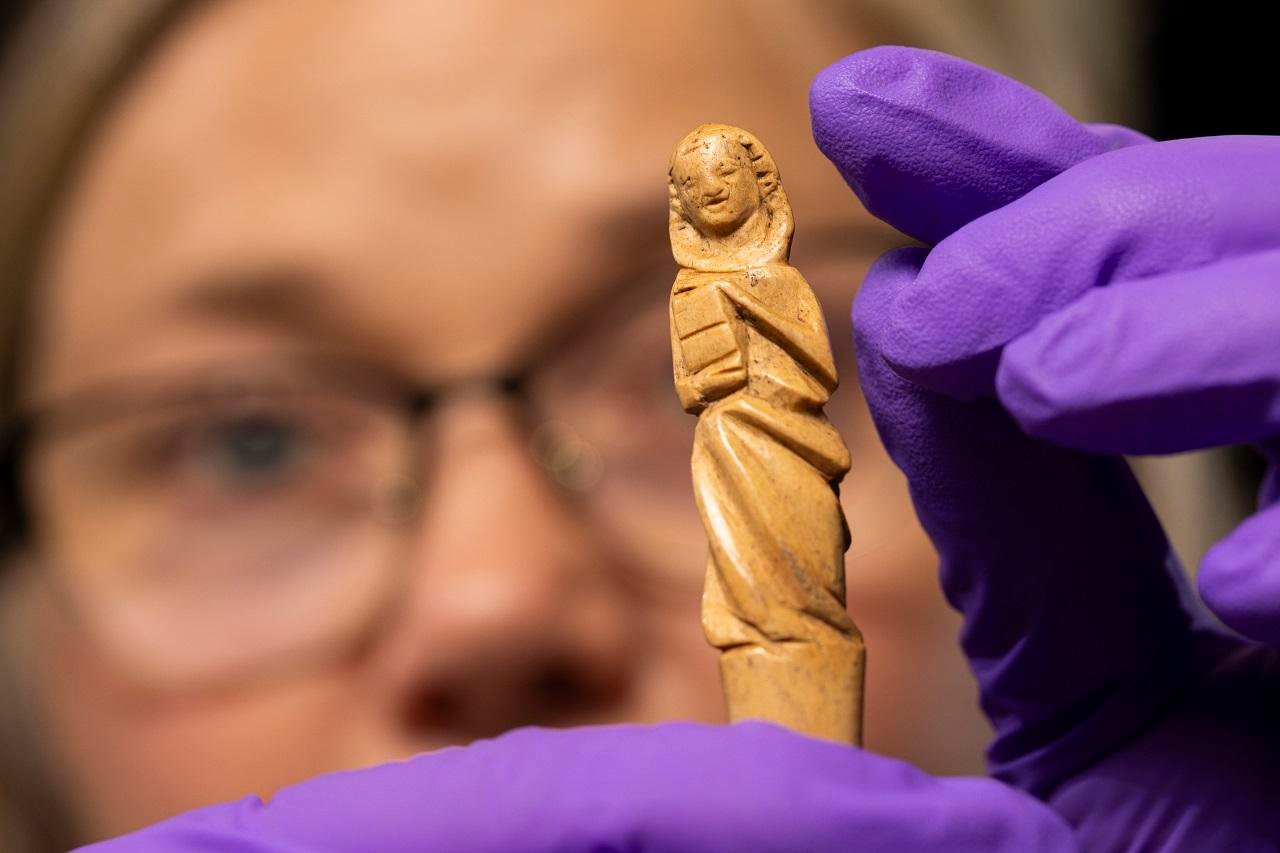
A rare 13th-century hair-styling implement has been unearthed at Eilean Donan Castle in the Scottish Highlands and is housed in the National Museums Scotland collection. The object, known as a gravoir, is the first of its kind ever found in Scotland and one of just three known in the whole of the United Kingdom.
Rare medieval hair-styling tool unearthed at Eilean Donan Castle reveals personal grooming practices in Scotland
Dr Alice Blackwell with the gravoir. Credit: Duncan McGlynn

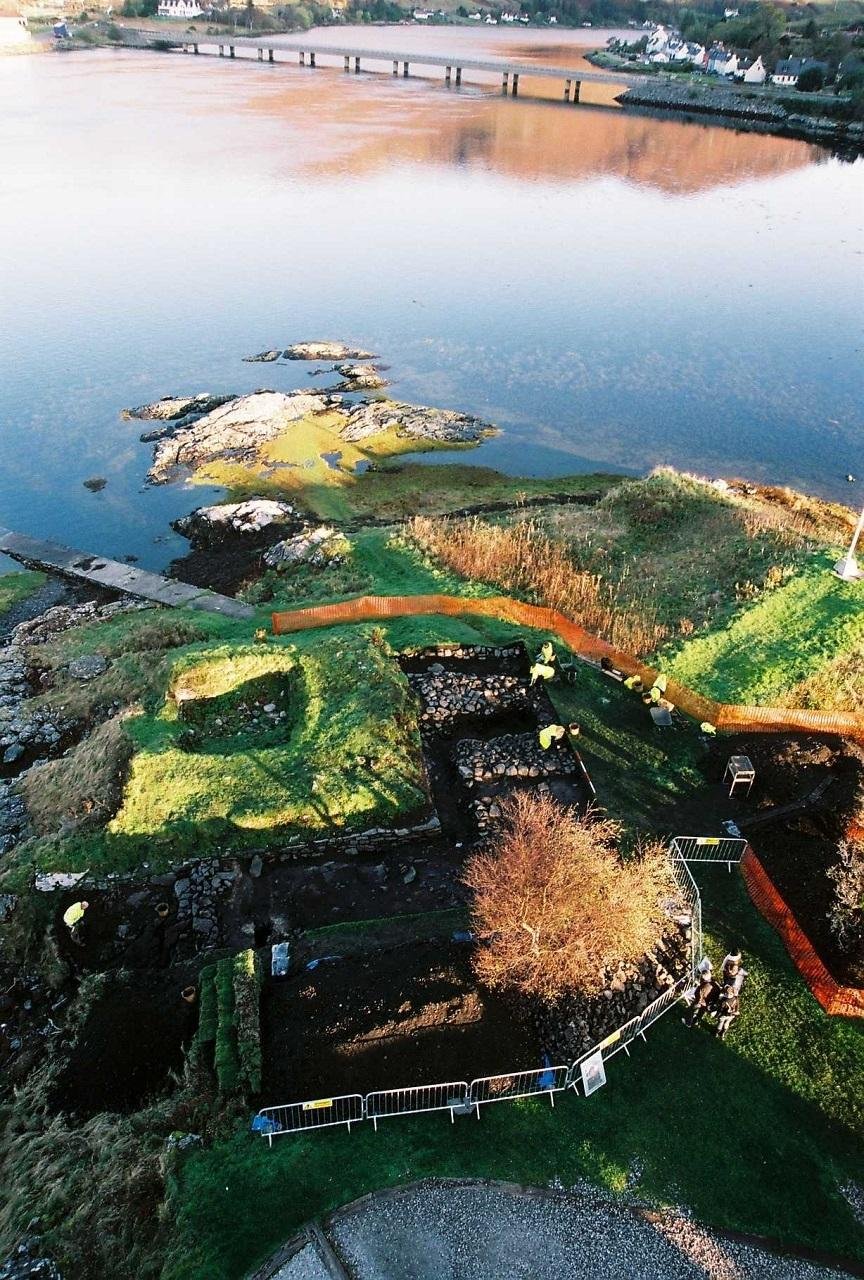
It was revealed during excavations led by FAS Heritage, which were commissioned to shed light on medieval life at one of Scotland’s best-known castles. Perched where three sea lochs meet at the gateway to Skye, Eilean Donan is a world-renowned symbol of Scotland and has featured in films such as Highlander and The World Is Not Enough. Despite its status, little was known about the role of the castle during the 13th and 14th centuries until these investigations were initiated.

The gravoir, crafted from local red deer antler, contrasts with better-known ivory types found throughout Europe. The piece is decorated with an incised representation of a figure wearing a hood and holding a book, reflecting continental fashions in personal grooming, where elite men and women styled hair into intricate arrangements. Such an artifact suggests that the occupants of the castle were not simply engaged in politics and conflict but were also active in broader cultural trends that connected the Highlands with the rest of Europe.
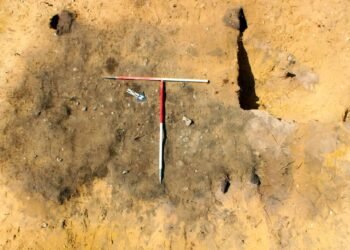
Rare medieval hair-styling tool unearthed at Eilean Donan Castle reveals personal grooming practices in Scotland
Eilean Donan Castle NW Tower excavation. Credit: FAS Heritage

The tool is among hundreds of artifacts from the medieval heyday of the castle that are currently housed in approximately 80 boxes at the National Museums Collection Centre in Edinburgh. The assemblage illustrates daily life within the fortress. Finds include brooches, dress pins, crucibles containing traces of gold and silver, and other metalwork objects that demonstrate how anything from buckles to swords could have been produced on-site. Collectively, they form one of Britain’s most significant collections of medieval metalworking.
Rare medieval hair-styling tool unearthed at Eilean Donan Castle reveals personal grooming practices in Scotland
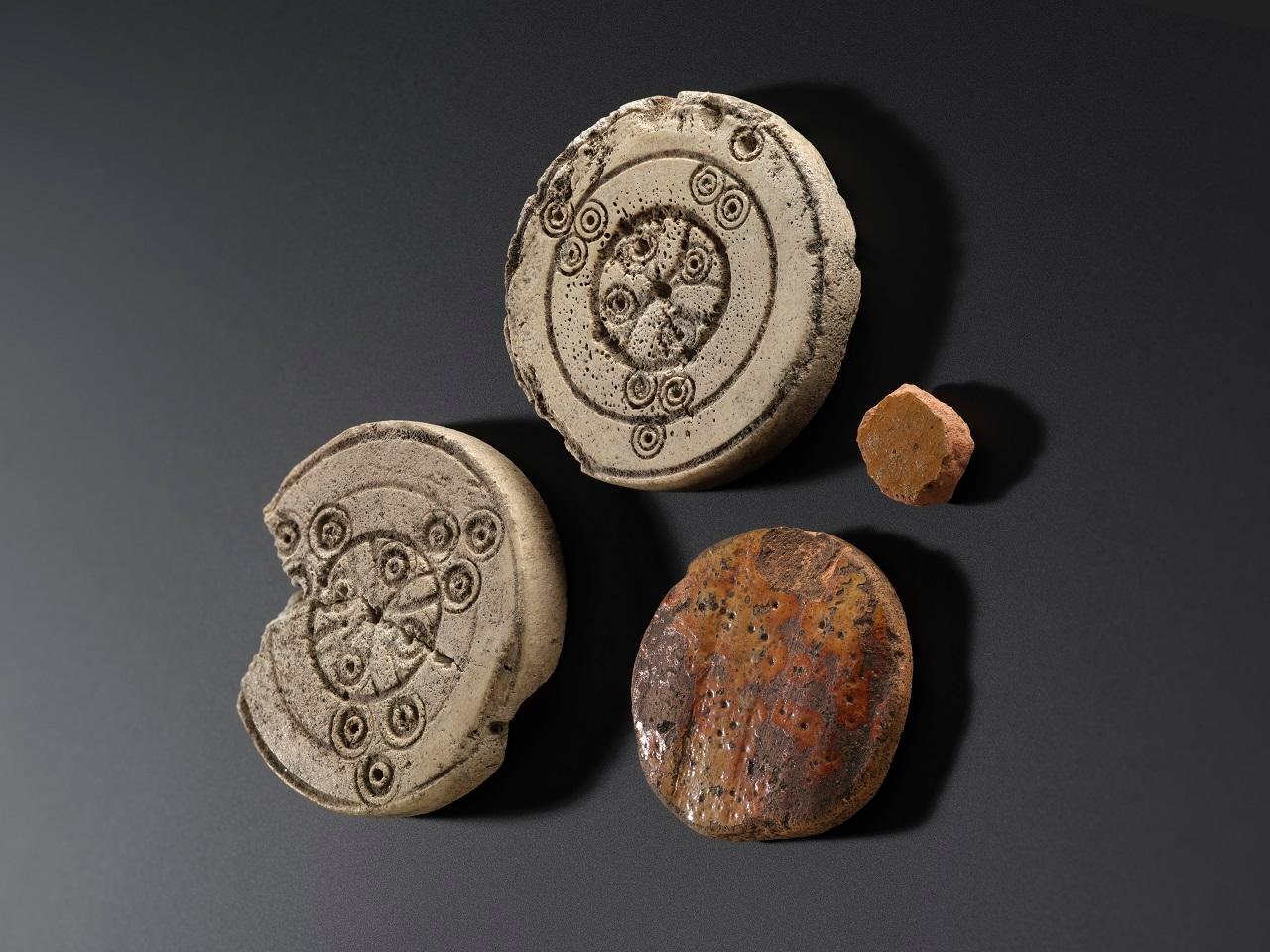
Gaming pieces. Credit: National Museums Scotland

Other than ornament and craftsmanship, the collection also presents the social and recreational life of the castle. Game pieces carved from bone, pottery fragments, an iron jaw harp, and “buzz bones”—animal bones with holes drilled into them and spun to create sound—reveal adults and children engaged in play and entertainment. The finds allow historians to look at the lives of people across the social spectrum, from the smiths at the forge to the children playing with simple toys.

RelatedStories

Medieval well hidden beneath Sheffield Castle surveyed with drone technology

Medieval well hidden beneath Sheffield Castle surveyed with drone technology

May 23, 2026
Nondestructive DNA sampling uncovers 1,300 years of history preserved in ancient parchments

Nondestructive DNA sampling uncovers 1,300 years of history preserved in ancient parchments

May 22, 2026

Eilean Donan itself has a dramatic history. It was once a fortress of Highland Gaelic lordship, but after the 15th century, it lost significance. In the early 18th century, it had fallen into ruin and was abandoned, and it was later destroyed in the Jacobite uprisings of 1719. The castle remained derelict until the early 20th century, when it was reconstructed to form the picturesque monument that attracts thousands of visitors every year.

The newly acquired collection ensures that Eilean Donan is not merely remembered as a romantic ruin or tourist attraction but as a thriving medieval community. The gravoir itself, however, demonstrates how its inhabitants were influenced by European trends while adapting them with local materials.

More information: National Museums Scotland
Share:

Share on Facebook Share on X (Twitter) Share on LinkedIn Share on Pinterest Share on WhatsApp Share on Email

You May Also Like...

Svalbard whalers show scurvy and extreme labor stress in “corpse point” cemetery
Anthropology

Svalbard whalers show scurvy and extreme labor stress in “corpse point” cemetery

May 25, 2026
'Patchwork families' lived in Europe over 5,000 years ago, Neolithic DNA study finds
Anthropology

‘Patchwork families’ lived in Europe over 5,000 years ago, Neolithic DNA study finds

May 25, 2026
100,000-year-old Homo sapiens bones from Ethiopia may preserve earliest evidence of human cremation
Anthropology

100,000-year-old Homo sapiens bones from Ethiopia may preserve earliest evidence of human cremation

May 24, 2026
Ancient Peruvian hairless dogs buried with Wari elites 1,200 years ago
Archaeology

Ancient Peruvian hairless dogs buried with Wari elites 1,200 years ago

May 24, 2026
4,000-year-old Mohenjo-daro study finds ancient city grew more equal over time
Archaeology

4,000-year-old Mohenjo-daro study finds ancient city grew more equal over time

May 24, 2026
Bronze Age towers in Sardinia remained centers of worship and ritual in the Iron Age
Archaeology

Bronze Age towers in Sardinia remained centers of worship and ritual in the Iron Age

May 23, 2026

Comments 1

  1. Editorial Team says:
    1 second ago

    Disclaimer: This website is a science-focused magazine that welcomes both academic and non-academic audiences. Comments are written by users and may include personal opinions or unverified claims. They do not necessarily reflect the views of our editorial team or rely on scientific evidence.

    Comment Policy: We kindly ask all commenters to engage respectfully. Comments that contain offensive, insulting, degrading, discriminatory, or racist content will be automatically removed.

    Reply
  2. Mrs Alexandra Poulter says:
    8 months ago

    Oh my days! How interesting & fascinating to read these facts. Please keep them coming. We are always able to learn new facts & increase our knowledge. I have always had an interest in archaeology & every new discovery brings so much enjoyment to me, even at 59 yrs young! I am disabled & reading about such discoveries brings so many different places to my front room! Thank you.

    Reply

Leave a Reply Cancel reply

Your email address will not be published. Required fields are marked *

Follow us


Instagram
242K

Facebook
117K

Threads
46K

LinkedIn
14K

Twitter
6K

YouTube
1K
Svalbard whalers show scurvy and extreme labor stress in “corpse point” cemetery

Svalbard whalers show scurvy and extreme labor stress in “corpse point” cemetery

May 25, 2026
'Patchwork families' lived in Europe over 5,000 years ago, Neolithic DNA study finds

‘Patchwork families’ lived in Europe over 5,000 years ago, Neolithic DNA study finds

May 25, 2026
100,000-year-old Homo sapiens bones from Ethiopia may preserve earliest evidence of human cremation

100,000-year-old Homo sapiens bones from Ethiopia may preserve earliest evidence of human cremation

May 24, 2026
Ancient Peruvian hairless dogs buried with Wari elites 1,200 years ago

Ancient Peruvian hairless dogs buried with Wari elites 1,200 years ago

May 24, 2026

Archaeology News online magazine

Archaeology News is an international online magazine that covers all aspects of archaeology.


Categories

  • Academics
    • Books
    • Conferences
    • Universities
  • Articles
  • Download
  • Game
  • News
    • Anthropology
    • Archaeology
    • Paleontology
  • Quiz
  • Tours

Subscribe to our newsletter

© 2024 - Archaeology News Online Magazine. All Rights Reserved.

  • About
  • Privacy Policy
  • Terms of Use
  • Donation
  • Contact

Manage Consent
To provide the best experiences, we use technologies like cookies to store and/or access device information. Consenting to these technologies will allow us to process data such as browsing behavior or unique IDs on this site. Not consenting or withdrawing consent, may adversely affect certain features and functions.
Functional Always active
The technical storage or access is strictly necessary for the legitimate purpose of enabling the use of a specific service explicitly requested by the subscriber or user, or for the sole purpose of carrying out the transmission of a communication over an electronic communications network.
Preferences
The technical storage or access is necessary for the legitimate purpose of storing preferences that are not requested by the subscriber or user.
Statistics
The technical storage or access that is used exclusively for statistical purposes. The technical storage or access that is used exclusively for anonymous statistical purposes. Without a subpoena, voluntary compliance on the part of your Internet Service Provider, or additional records from a third party, information stored or retrieved for this purpose alone cannot usually be used to identify you.
Marketing
The technical storage or access is required to create user profiles to send advertising, or to track the user on a website or across several websites for similar marketing purposes.
  • Manage options
  • Manage services
  • Manage {vendor_count} vendors
  • Read more about these purposes
View preferences
  • {title}
  • {title}
  • {title}
  • Home
  • News
    • Archaeology
    • Anthropology
    • Paleontology
  • Academic
    • Books
    • Conferences
    • Universities
  • Articles
  • VR Tours
  • Quiz & Game
  • Download
  • Encyclopedia
  • Forum

About  .  Contact  .  Donation

© 2024 - Archaeology News Online Magazine. All Rights Reserved