• About
  • Privacy Policy
  • Terms of Use
  • Donation
  • Contact
No Result
View All Result
Archaeology News
  • Home
  • News
    • Archaeology
    • Anthropology
    • Paleontology
  • Academics
    • Books
    • Conferences
    • Universities
  • Articles
  • VR Tours
  • Quiz & Game
  • Download
  • Encyclopedia
  • Forum
Archaeology News
No Result
View All Result
Home News Anthropology

Genetic incompatibility between Homo sapiens and Neanderthals may have contributed to Neanderthal extinction

by Dario Radley
October 28, 2025

A new study suggests that a hidden genetic mismatch between Neanderthals and early modern humans may have caused reproductive issues in their hybrid offspring—possibly contributing to the Neanderthals’ extinction around 40,000 years ago.
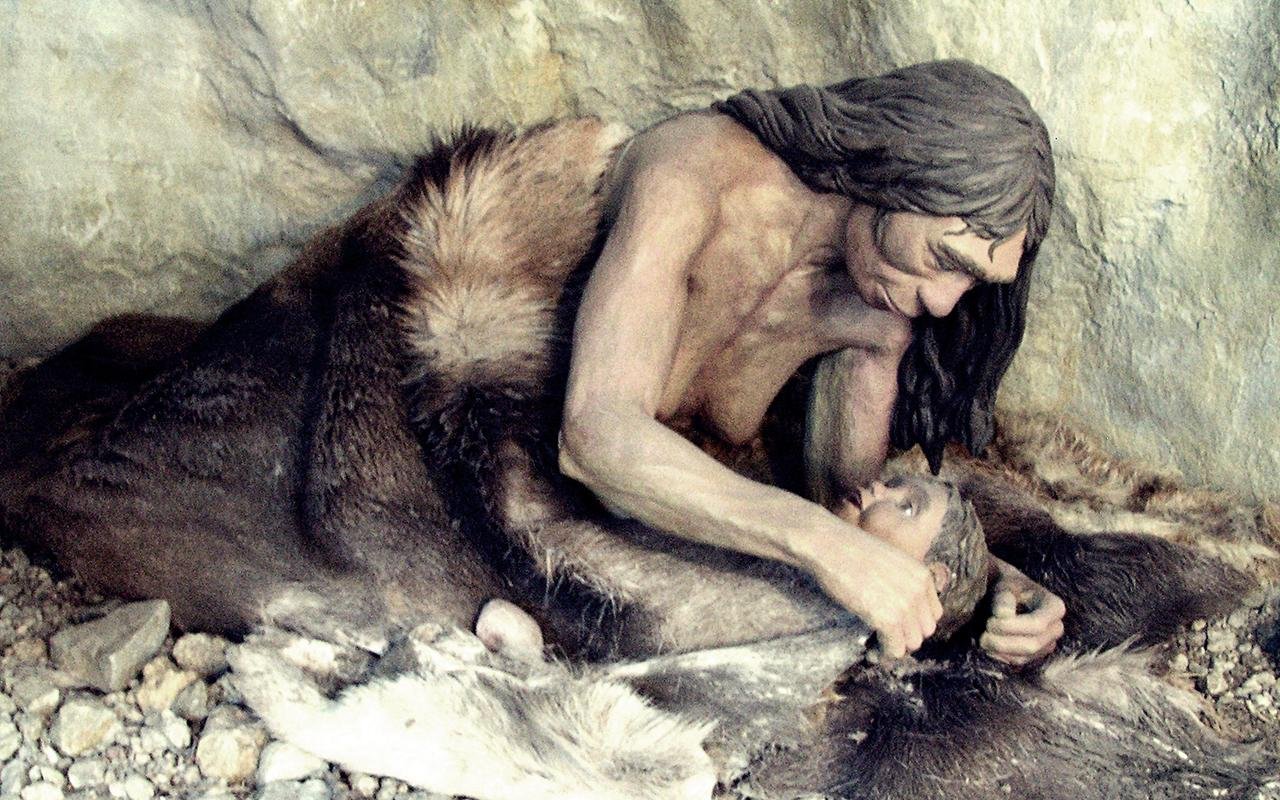
Genetic incompatibility between Homo sapiens and Neanderthals may have contributed to Neanderthal extinction
Reconstructed Neanderthal mother and her baby. Taken in the Anthropos Pavilion, Brno, Czech Republic. Credit: Jaroslav A. Polák

Researchers at the Institute of Evolutionary Medicine in Zurich examined the PIEZO1 gene, which affects how red blood cells transport oxygen. While both species carried versions of this gene, the scientists found significant differences that could have created problems when they interbred. The Neanderthal variant caused hemoglobin to bind to oxygen more tightly—an adaptation that could have helped them survive the freezing Ice Age conditions and food shortages. The modern human variant allowed oxygen to be released more efficiently into bodily tissues, enabling enhanced endurance and metabolism.

However, when these two forms met in hybrid pregnancies, they could have clashed. The researchers suspect that when a hybrid Neanderthal–human mother was pregnant with a fetus that had the modern human version of the gene, the placenta may have transferred less oxygen than required, causing hypoxia—a lack of oxygen that can result in fetal growth restriction or miscarriage. Laboratory tests validated this hypothesis: when PIEZO1 activity was increased in human red blood cells, oxygen binding was enhanced, replicating the Neanderthal-like effect.

Population genetics and computer models were also used in the study to examine the evolutionary consequences. Repeated maternal–fetal mismatches may have led to reduced fertility among hybrids, the simulations showed, which would gradually lower the Neanderthal allele frequency over generations. This process, known as frequency-dependent selection, could have silently weakened Neanderthal populations.
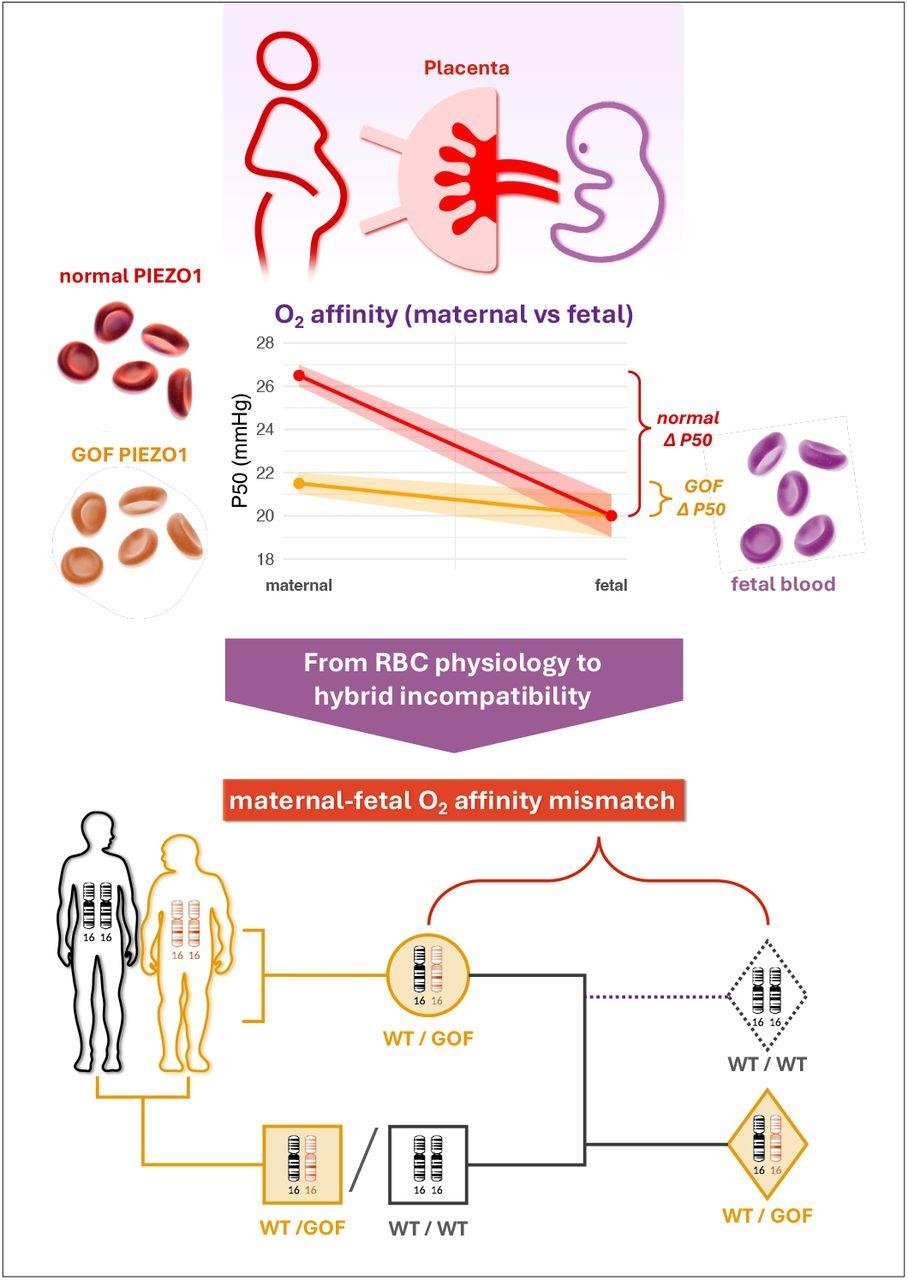
Genetic incompatibility between Homo sapiens and Neanderthals may have contributed to Neanderthal extinction
Conceptual model of maternal-fetal oxygen affinity mismatch caused by PIEZO1 gain-of-function (GOF) variants. Credit: A. Makhro et al. (2025)

Modern human genomes today show almost no trace of the Neanderthal PIEZO1 variant, which indicates that it was strongly selected against. This incompatibility, the researchers noted, would not have caused a sudden collapse but rather a slow, compounding decline—”more like rust weakening a structure than a single catastrophic blow.”
RelatedStories

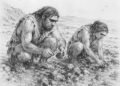
Reconstruction of a male Neanderthal with a child at the Natural History Museum, Vienna.

Were Neanderthals capable of making art?

October 31, 2025
42,000-year-old ochre crayons reveal Neanderthals engaged in symbolic behavior

42,000-year-old ochre crayons reveal Neanderthals engaged in symbolic behavior

October 30, 2025

The findings add another piece to the Neanderthal extinction puzzle, showing that subtle physiological factors, not just climate or competition, may have been involved. These genetic barriers would have reduced successful reproduction between humans and Neanderthals, limiting gene flow and undermining the survival of Neanderthals.

Significantly, the research also implies modern relevance. The same oxygen transfer issues with red blood cell function still underlie certain pregnancy complications today. By understanding how ancient genetic variants affected fetal oxygen delivery, scientists can potentially gain insights into maternal health risks in the modern day.

The study highlights how small genetic differences can have a profound influence on evolutionary outcomes. The PIEZO1 incompatibility may have been one of several hidden reproductive barriers that emerged when humans and Neanderthals first met in Eurasia some 45,000 years ago. While the two species shared genes, tools, and perhaps even cultures, their biology was not completely compatible.

In the end, such microscopic mismatches might have tipped the balance of survival. Homo sapiens proceeded to expand across the globe, while Neanderthals gradually vanished—leaving behind a genetic legacy that tells the story of connection and separation in the human family tree.

More information: Makhro, A., Bardh, S., Kaestner, L., Dorn, I., Bender, N., & Eppenberger, P. (2025). A maternal-fetal PIEZO1 incompatibility as a barrier to Neanderthal-modern human admixture. doi:10.1101/2025.09.29.679417
Share41Tweet26Share7ShareSend

You May Also Like...

Air-filled anomalies in the Menkaure Pyramid may point to a second entrance
Archaeology

Air-filled anomalies in the Menkaure Pyramid may point to a second entrance

November 11, 2025
Scientists uncover purpose of 5,200 mystery holes in Peru, revealing a lost Andean system of trade and record-keeping
Archaeology

Scientists uncover purpose of 5,200 mystery holes in Peru, revealing a lost Andean system of trade and record-keeping

November 10, 2025
Archaeologists uncover oldest and largest Maya monument built to represent the cosmos
Archaeology

Archaeologists uncover oldest and largest Maya monument built to represent the cosmos

November 10, 2025
Roman roads reimagined: new digital map expands the empire’s network to nearly 300,000 km
Archaeology

Roman roads reimagined: new digital map expands the empire’s network to nearly 300,000 km

November 9, 2025
New study debunks myth of Easter Island's ecological collapse
Archaeology

Rats and the fall of Rapa Nui’s forests: invasive species, not humans, drove the island’s deforestation

November 9, 2025
2.75-million-year-old stone tools in Kenya reveal 300,000 years of technological stability
Anthropology

2.75-million-year-old stone tools in Kenya reveal 300,000 years of technological stability

November 9, 2025

Comments 1

  1. Editorial Team says:
    1 second ago
    Disclaimer: This website is a science-focused magazine that welcomes both academic and non-academic audiences. Comments are written by users and may include personal opinions or unverified claims. They do not necessarily reflect the views of our editorial team or rely on scientific evidence.
    Reply
  2. BANG NGUYEN HAI TRAN says:
    6 days ago

    Hi.
    This is an interesting essay. But in my opinion, we have to consider the rate of interbreed between a male Neanderthal with a female modern human. I think it was just small percentage, and it couldn’t affect to the extinction of Neanderthal. It means the most percentage of Neanderthal kept interbreed inside their population during their existence.
    Thanks.

    Reply

Leave a Reply Cancel reply

Your email address will not be published. Required fields are marked *

Follow us


Instagram
245K

Facebook
117K

Threads
45K

LinkedIn
14K

Twitter
6K

YouTube
1K
  • Trending
  • Comments
  • Latest
Shipwreck Salvage. Credit: rawpixel.com / Public Domain

2,000-year-old shipwreck discovered off Turkish coast with remarkably preserved stacked ceramics

July 2, 2025
Viking age DNA reveals 9,000-year-old HIV-resistant gene originating near the Black Sea

Viking age DNA reveals 9,000-year-old HIV-resistant gene originating near the Black Sea

May 18, 2025
Complete copy of the Canopus Decree unearthed in Egypt after 150 years

Complete copy of the Canopus Decree unearthed in Egypt after 150 years

September 13, 2025
Mystery of Armenia’s 6,000-year-old dragon stones solved

Mystery of Armenia’s 6,000-year-old dragon stones solved

September 23, 2025
Moses may be named in ancient Egyptian mine inscriptions, sparking debate over earliest biblical references

Moses may be named in ancient Egyptian mine inscriptions, sparking debate over earliest biblical references

July 31, 2025
Moses may be named in ancient Egyptian mine inscriptions, sparking debate over earliest biblical references

Moses may be named in ancient Egyptian mine inscriptions, sparking debate over earliest biblical references

3D analysis reveals Shroud of Turin image likely came from sculpture, not Jesus’ body

3D analysis reveals Shroud of Turin image likely came from sculpture, not Jesus’ body

$1 million prize offered to decipher 5,300-year-old Indus Valley script

$1 million prize offered to decipher 5,300-year-old Indus Valley script

Oldest ever genetic data from a human relative found in 2-million-year-old fossilized teeth

Oldest ever genetic data from a human relative found in 2-million-year-old fossilized teeth

Exceptionally large Roman shoes discovered at Magna fort near Hadrian’s Wall

Exceptionally large Roman shoes discovered at Magna fort near Hadrian’s Wall

Air-filled anomalies in the Menkaure Pyramid may point to a second entrance

Air-filled anomalies in the Menkaure Pyramid may point to a second entrance

November 11, 2025
Scientists uncover purpose of 5,200 mystery holes in Peru, revealing a lost Andean system of trade and record-keeping

Scientists uncover purpose of 5,200 mystery holes in Peru, revealing a lost Andean system of trade and record-keeping

November 10, 2025
Archaeologists uncover oldest and largest Maya monument built to represent the cosmos

Archaeologists uncover oldest and largest Maya monument built to represent the cosmos

November 10, 2025
Roman roads reimagined: new digital map expands the empire’s network to nearly 300,000 km

Roman roads reimagined: new digital map expands the empire’s network to nearly 300,000 km

November 9, 2025
New study debunks myth of Easter Island's ecological collapse

Rats and the fall of Rapa Nui’s forests: invasive species, not humans, drove the island’s deforestation

November 9, 2025

Archaeology News online magazine

Archaeology News is an international online magazine that covers all aspects of archaeology.


Categories

  • Academics
    • Books
    • Conferences
    • Universities
  • Articles
  • Download
  • Game
  • News
    • Anthropology
    • Archaeology
    • Paleontology
  • Quiz
  • Tours

Subscribe to our newsletter

© 2024 - Archaeology News Online Magazine. All Rights Reserved.

  • About
  • Privacy Policy
  • Terms of Use
  • Donation
  • Contact

Welcome Back!

Login to your account below

Forgotten Password? Sign Up

Create New Account!

Fill the forms below to register

All fields are required. Log In

Retrieve your password

Please enter your username or email address to reset your password.

Log In

Add New Playlist

Manage Consent
To provide the best experiences, we use technologies like cookies to store and/or access device information. Consenting to these technologies will allow us to process data such as browsing behavior or unique IDs on this site. Not consenting or withdrawing consent, may adversely affect certain features and functions.
Functional Always active
The technical storage or access is strictly necessary for the legitimate purpose of enabling the use of a specific service explicitly requested by the subscriber or user, or for the sole purpose of carrying out the transmission of a communication over an electronic communications network.
Preferences
The technical storage or access is necessary for the legitimate purpose of storing preferences that are not requested by the subscriber or user.
Statistics
The technical storage or access that is used exclusively for statistical purposes. The technical storage or access that is used exclusively for anonymous statistical purposes. Without a subpoena, voluntary compliance on the part of your Internet Service Provider, or additional records from a third party, information stored or retrieved for this purpose alone cannot usually be used to identify you.
Marketing
The technical storage or access is required to create user profiles to send advertising, or to track the user on a website or across several websites for similar marketing purposes.
Manage options Manage services Manage {vendor_count} vendors Read more about these purposes
View preferences
{title} {title} {title}
  • Home
  • News
    • Archaeology
    • Anthropology
    • Paleontology
  • Academics
    • Books
    • Conferences
    • Universities
  • Articles
  • VR Tours
  • Quiz & Game
  • Download
  • Encyclopedia
  • Forum

About  .  Contact  .  Donation

© 2024 - Archaeology News Online Magazine. All Rights Reserved