• About
  • Privacy Policy
  • Terms of Use
  • Donation
  • Contact
No Result
View All Result
Archaeology News
  • Home
  • News
    • Archaeology
    • Anthropology
    • Paleontology
  • Academic
    • Books
    • Conferences
    • Universities
  • Articles
  • VR Tours
  • Quiz & Game
  • Download
  • Encyclopedia
  • Forum
Archaeology News
No Result
View All Result
Home News Anthropology

9,000-year-old Bad Dürrenberg woman shaman burial reveals a lasting ritual legacy

by Dario Radley
December 12, 2025

Archaeologists have discovered more about one of Central Europe’s most astonishing prehistoric burials: a 9,000-year-old grave belonging to a Mesolithic woman from Bad Dürrenberg in Germany, who had long been thought to be a shaman. The grave was first exposed in 1934 during emergency construction work. Renewed excavations beginning in 2019 finally allowed specialists to carry out more modern research on the grave, and the results are transforming what researchers know about this enigmatic figure.
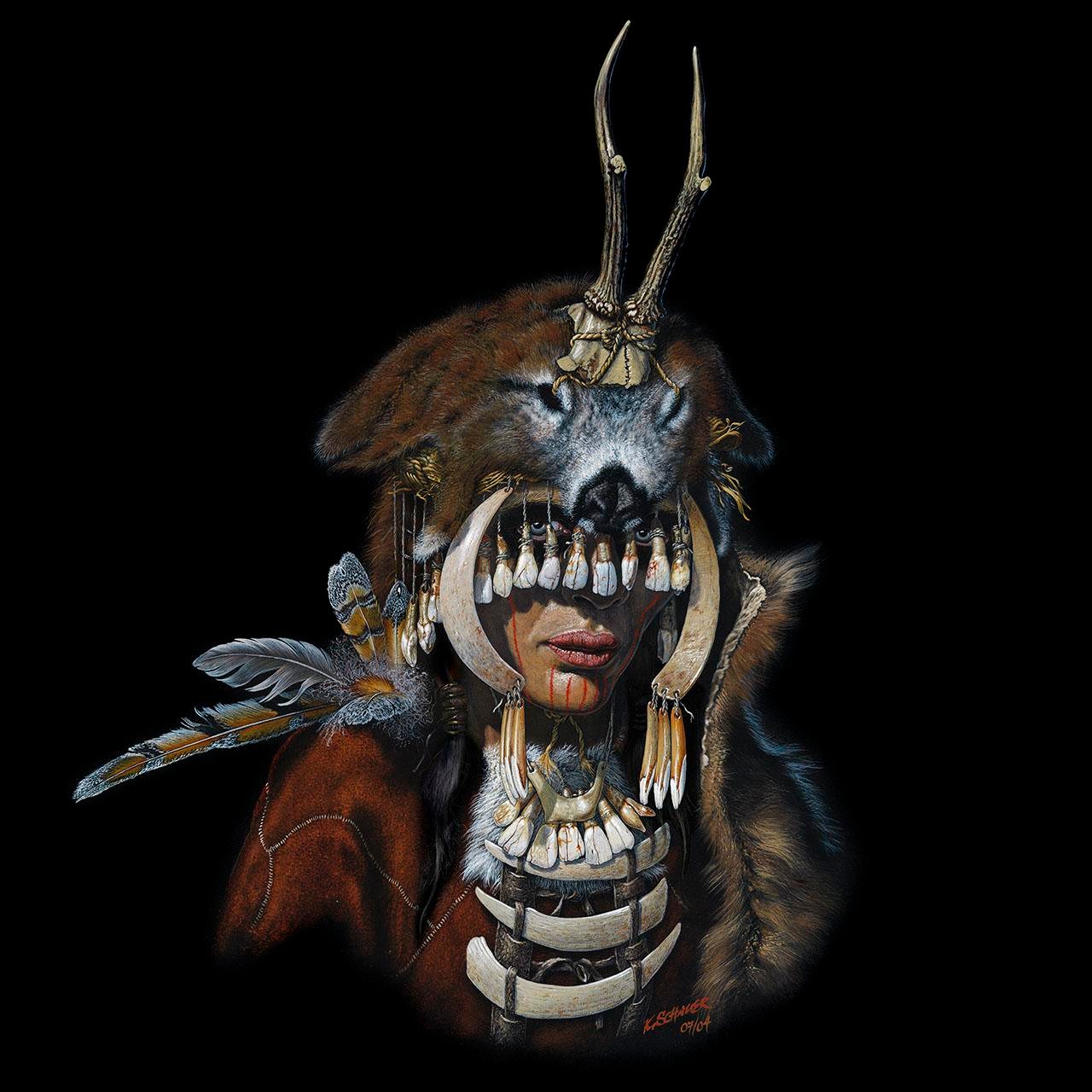
9,000-year-old Bad Dürrenberg woman shaman burial reveals a lasting ritual legacy
Artistic reconstruction of the Bad Dürrenberg shaman wearing her feather-decorated attire. Credit: Karol Schauer, State Office for Heritage Management and Archaeology Saxony-Anhalt

The burial contained the remains of a woman who would have been in her thirties or forties at the time of death, laid to rest with an infant who would have been about six months old. Artifacts recovered in 1934, including an antler headdress and animal-tooth pendants, suggested her ceremonial status. However, researchers had a sense that the original excavation had missed important details. Their hunch proved correct: undisturbed sections of the grave pit still included traces of red ochre, overlooked artifacts, and fragile materials rarely found in Mesolithic burials.

Perhaps among the most astonishing findings is the presence of microscopic feather fragments. While feathers would have decayed in soil, tiny structures known as barbules, measuring under a millimeter, might have been preserved under the right conditions. Analysis conducted on samples around the woman’s head confirmed goose feathers. This provided the first direct evidence that her headdress likely included an elaborate feather adornment. It aligns with earlier artistic reconstructions based on ethnographic comparisons, suggesting a feather-adorned headdress.

Feathers appeared in an unexpected area as well. During the recent excavations, researchers found that there was a separate pit directly in front of the burial that had been created approximately 600 years after the woman’s interment. It contained two masks made from deer antlers. Analysis revealed traces of songbird and grouse feathers, as well as remains of bast fibers, suggesting that these deer antlers were once part of a complex costume-like headgear. All of this clearly pointed to the fact that the shaman’s grave continued to serve as a ritual focal point long after her demise, with later groups leaving offerings that honored her enduring significance.
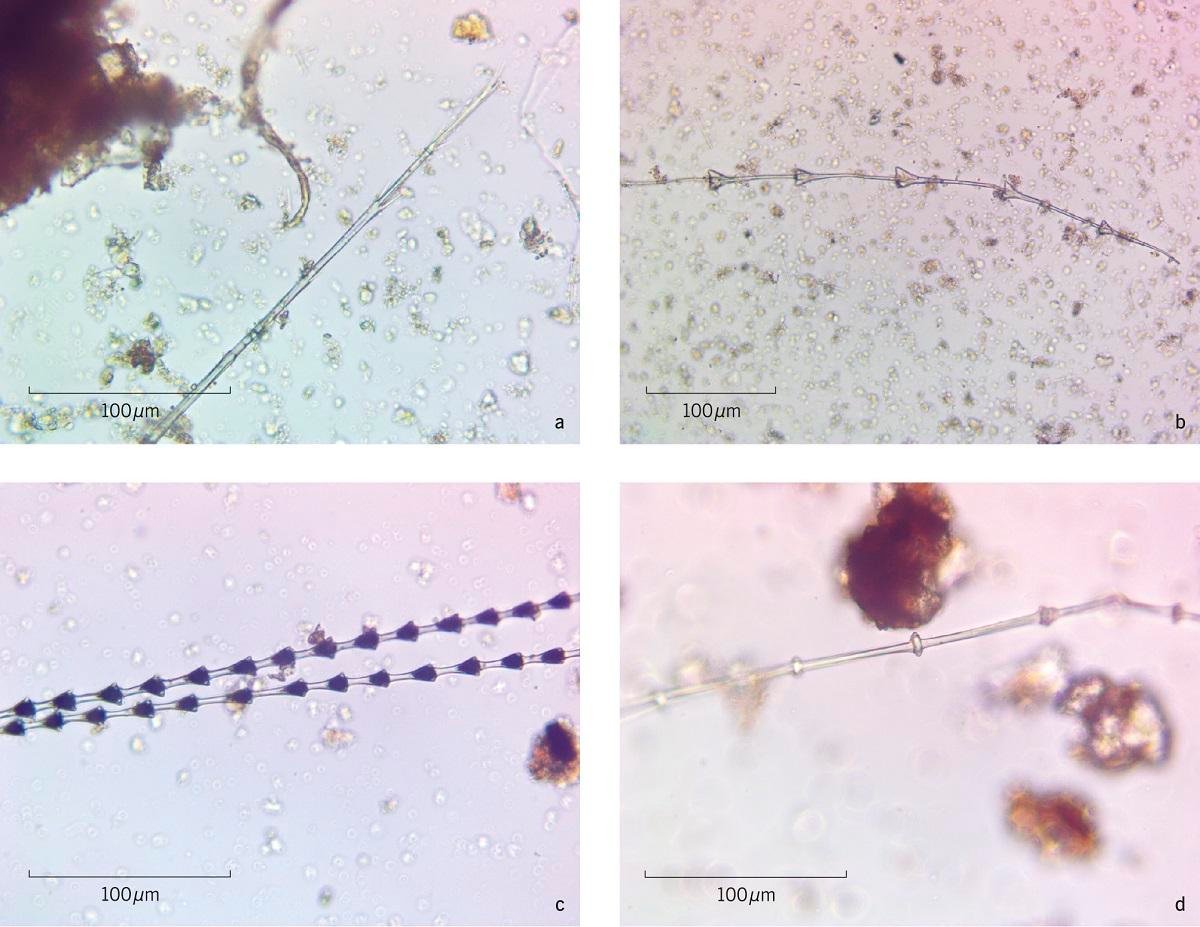
9,000-year-old Bad Dürrenberg woman shaman burial reveals a lasting ritual legacy
Feather fragments from Bad Dürrenberg: A) unidentified barbule; B) waterfowl—probably goose (Anserinae)—barbule with its diagnostic triangular nodes; C) songbird (Passeriformes) barbules; D) Galliformes-type barbule. Credit: Tuija Kirkinen

These findings contribute to an ever-expanding understanding of the woman as a highly respected ritual specialist within her society, whose spiritual role might have reverberated down through the generations. During the past several years, researchers have compiled a wealth of new data from the grave, making it perhaps the most intensively researched Mesolithic burial in Central Europe.

The findings from this ongoing research project will be shown at a major exhibition named “The Shamaness.” It will open at the State Museum of Prehistory in Halle on March 27, 2026. The event will present the most complete account yet of the Bad Dürrenberg shaman. Spanning hundreds of exceptional artifacts from Europe and beyond, the exhibition aims to offer an unprecedented look at the origins of ritual practice and the world in which this remarkable woman once lived.

More information: Landesamt für Denkmalpflege und Archäologie Sachsen-Anhalt – Landesmuseum für Vorgeschichte
A richly illustrated volume will be published in the Hirmer Verlag to accompany the exhibition: Harald Meller/Michael Schefzik/Anja Stadelbacher (Hrsg.), Die Schamanin. 216 Seiten, 180 Abbildungen, 25,5 x 30 cm, Klappenbroschur. ISBN: 978-3-7774-4674-5 / https://www.hirmerverlag.de/de/titel-89-89/die_schamanin-2797/

Original publication: Tuija Kirkinen, Remains of feathers in Mesolithic burials. In: Olaf Jöris/Oliver Dietrich/Roberto Risch/Harald Meller (Hrsg.), Zur Geschichte der Kleidung in der Steinzeit – A Stone Age history of clothing. 17. Mitteldeutscher Archäologentag vom 26. bis 28. September 2024 in Halle (Saale). Tagungen des Landesmuseums für Vorgeschichte Halle 33 (Halle [Saale]) pp. 159-169.
Share:

Share on Facebook Share on X (Twitter) Share on LinkedIn Share on Pinterest Share on WhatsApp Share on Email

You May Also Like...

Ancient city of Ihnasya reveals Aphrodite statue, Senusret III inscription, and Roman basilica remains in Egypt
Archaeology

Ancient city of Ihnasya reveals Aphrodite statue, Senusret III inscription, and Roman basilica remains in Egypt

June 2, 2026
Rare funerary cache discovered at ancient Heliopolis site
Archaeology

Rare funerary cache discovered at ancient Heliopolis site

June 2, 2026
Archaeologists find Queen Elisenda’s remains among 25 medieval skeletons, including individuals with unexplained stab wounds
Anthropology

Archaeologists find Queen Elisenda’s remains among 25 medieval skeletons, including individuals with unexplained stab wounds

June 1, 2026
Copper Age children in Spain suffered widespread respiratory disease, skeletal study suggests
Anthropology

Copper Age children in Spain suffered widespread respiratory disease, skeletal study suggests

June 1, 2026
Unknown World War II mass grave with 14 German soldiers uncovered at quarry site in Poland
Anthropology

Unknown World War II mass grave with 14 German soldiers uncovered at quarry site in Poland

May 31, 2026
Volunteers restore England’s mysterious Cerne Abbas Giant as climate and erosion threaten ancient landmark
Archaeology

Volunteers restore England’s mysterious Cerne Abbas Giant as climate and erosion threaten ancient landmark

May 31, 2026

Comments 1

  1. Editorial Team says:
    1 second ago

    Disclaimer: This website is a science-focused magazine that welcomes both academic and non-academic audiences. Comments are written by users and may include personal opinions or unverified claims. They do not necessarily reflect the views of our editorial team or rely on scientific evidence.

    Comment Policy: We kindly ask all commenters to engage respectfully. Comments that contain offensive, insulting, degrading, discriminatory, or racist content will be automatically removed.

    Reply
  2. Crystal Shultz says:
    6 months ago

    Love your stories most definitely a must read these days I enjoy all the good information

    Reply

Leave a Reply Cancel reply

Your email address will not be published. Required fields are marked *

Follow us


Instagram
242K

Facebook
117K

Threads
47K

LinkedIn
15K

Twitter
6K

YouTube
1K

Archaeology News online magazine

Archaeology News is an international online magazine that covers all aspects of archaeology.


Categories

  • Academics
    • Books
    • Conferences
    • Universities
  • Articles
  • Download
  • Game
  • News
    • Anthropology
    • Archaeology
    • Paleontology
  • Quiz
  • Tours

Subscribe to our newsletter

© 2024 - Archaeology News Online Magazine. All Rights Reserved.

  • About
  • Privacy Policy
  • Terms of Use
  • Donation
  • Contact

Manage Consent
To provide the best experiences, we use technologies like cookies to store and/or access device information. Consenting to these technologies will allow us to process data such as browsing behavior or unique IDs on this site. Not consenting or withdrawing consent, may adversely affect certain features and functions.
Functional Always active
The technical storage or access is strictly necessary for the legitimate purpose of enabling the use of a specific service explicitly requested by the subscriber or user, or for the sole purpose of carrying out the transmission of a communication over an electronic communications network.
Preferences
The technical storage or access is necessary for the legitimate purpose of storing preferences that are not requested by the subscriber or user.
Statistics
The technical storage or access that is used exclusively for statistical purposes. The technical storage or access that is used exclusively for anonymous statistical purposes. Without a subpoena, voluntary compliance on the part of your Internet Service Provider, or additional records from a third party, information stored or retrieved for this purpose alone cannot usually be used to identify you.
Marketing
The technical storage or access is required to create user profiles to send advertising, or to track the user on a website or across several websites for similar marketing purposes.
  • Manage options
  • Manage services
  • Manage {vendor_count} vendors
  • Read more about these purposes
View preferences
  • {title}
  • {title}
  • {title}
  • Home
  • News
    • Archaeology
    • Anthropology
    • Paleontology
  • Academic
    • Books
    • Conferences
    • Universities
  • Articles
  • VR Tours
  • Quiz & Game
  • Download
  • Encyclopedia
  • Forum

About  .  Contact  .  Donation

© 2024 - Archaeology News Online Magazine. All Rights Reserved