• About
  • Privacy Policy
  • Terms of Use
  • Donation
  • Contact
No Result
View All Result
Archaeology News
  • Home
  • News
    • Archaeology
    • Anthropology
    • Paleontology
  • Academic
    • Books
    • Conferences
    • Universities
  • Articles
  • VR Tours
  • Quiz & Game
  • Download
  • Encyclopedia
  • Forum
Archaeology News
No Result
View All Result
Home News Anthropology

New Dmanisi fossil study suggests multiple human species left Africa 1.8 million years ago

by Dario Radley
January 1, 2026

Recent studies on fossils found at the Dmanisi archaeological site in the Republic of Georgia are changing the way scientists have understood the initial migration out of Africa by humans. For decades, the commonly accepted theory about the earliest migration out of Africa was that one species of human, Homo erectus, migrated out of Africa approximately 1.8 million years ago. But the new study, which was published in PLOS ONE, now indicates that this pivotal migration could have involved more than one human species.

New Dmanisi fossil study suggests multiple human species left Africa 1.8 million years ago
This facial reconstruction represents a male individual from the Dmanisi excavation. Credit: Cicero Moraes et al. (Luca Bezzi, Nicola Carrara, Telmo Pievani) via Wikimedia / CC BY 4.0

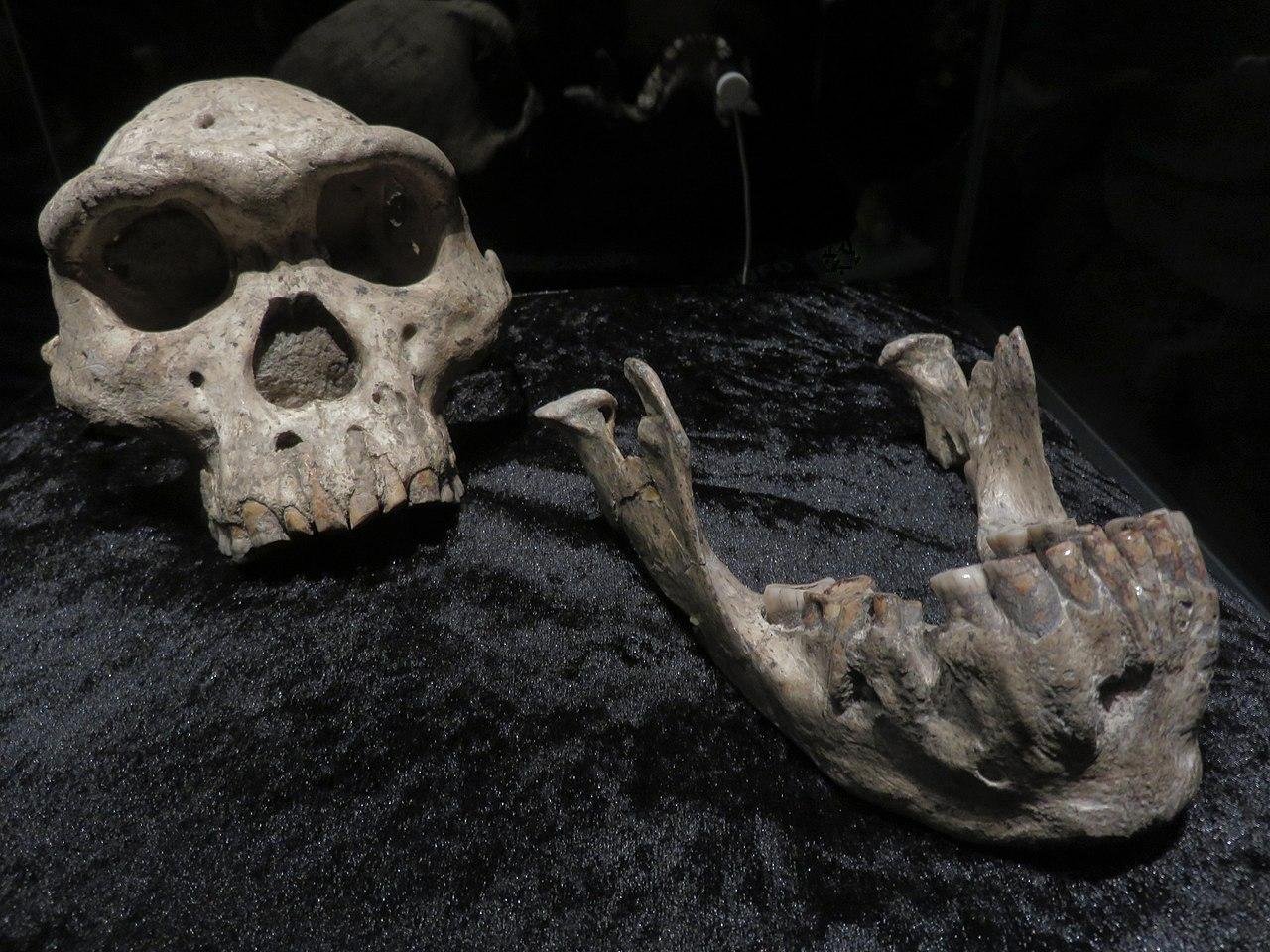
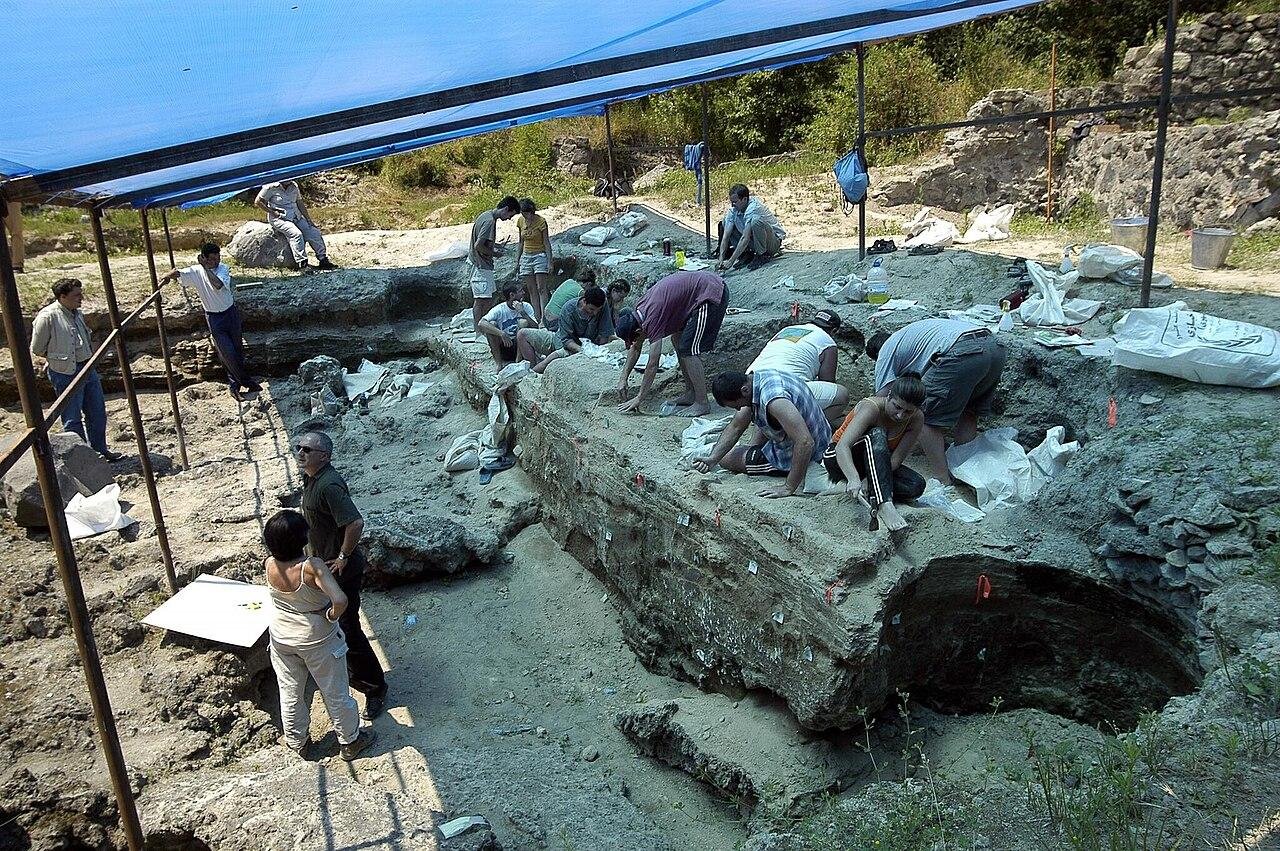
Dmanisi, located southwest of the city of Tbilisi, has given scientists the oldest known hominin remains found outside Africa. Archaeologists began excavations at the end of the 1990s and found stone tools, animal fossils, as well as five human skulls in a preserved state, dating back to the early Pleistocene era. From the outset of the research, the human skulls raised a series of questions among the scientists due to the extreme differences in their size and shape. Some skulls are relatively gracile and human-like, while others, most notably one specimen with a small braincase and a large face, look more primitive.

In order to help distinguish whether these variations represent differences between male and female members of a single species or evidence of more than one species living together, an international team of scientists studied more than just cranial shape. This includes teeth, particularly enamel, which is more resistant to distortion over time and provides valuable information about evolutionary relationships.

The team of scientists analyzed the crown surface area of premolars and molars of three Dmanisi individuals, which had enough dental material to be examined. A total of 583 fossil teeth, taken from the Dmanisi specimens, including australopiths and several early Homo species, were examined using statistical methods of classification. This large comparative framework allowed the researchers to determine whether the Georgian fossils clustered together or aligned with different branches of the human family tree.
New Dmanisi fossil study suggests multiple human species left Africa 1.8 million years ago
Dmanisi Skull 5: Skull of an adult individual. Skull 5 is the first completely preserved Early Pleistocene adult hominin skull found. Credit: Gerbil / CC BY-SA 4.0

The results of the analysis showed that there was a clear split. While one of the Dmanisi fossils was more closely related to the australopiths, earlier and more ape-like ancestors, the other two were more closely related to the early members of the genus Homo. The level of difference was too large to be explained by sexual dimorphism alone, even compared to highly dimorphic great apes, such as gorillas.

Based on these results, the researchers support the idea that at least two human species coexisted at Dmanisi sometime around 1.8 million years ago. These groups are often classified as Homo georgicus, representing the more primitive form, and Homo caucasi, representing the more human-like species.
New Dmanisi fossil study suggests multiple human species left Africa 1.8 million years ago
Dmanisi excavation site. Credit: Georgian National Museum / CC BY-SA 3.0

If confirmed, these findings would have major significance for human evolutionary history. Rather than one linear spread of humans from Africa led by Homo erectus, early migrations out of Africa could have involved several human species adapting in their own way to their new environments. This suggests that early human history could have been much more complex than was ever thought.

More information: Nery V, Neves W, Valota L, Hubbe M (2025) Testing the taxonomy of Dmanisi hominin fossils through dental crown area. PLoS One 20(12): e0336484. doi:10.1371/journal.pone.0336484

Share:

Share on Facebook Share on X (Twitter) Share on LinkedIn Share on Pinterest Share on WhatsApp Share on Email

You May Also Like...

4-million-year-old juvenile tapir skeleton unearthed in Spain is the most complete ever found in Europe
Paleontology

4-million-year-old juvenile tapir skeleton unearthed in Spain is the most complete ever found in Europe

June 3, 2026
Langobard woman with healed skull injuries challenges assumptions about violence in early medieval society
Anthropology

Langobard woman with healed skull injuries challenges assumptions about violence in early medieval society

June 2, 2026
Ancient city of Ihnasya reveals Aphrodite statue, Senusret III inscription, and Roman basilica remains in Egypt
Archaeology

Ancient city of Ihnasya reveals Aphrodite statue, Senusret III inscription, and Roman basilica remains in Egypt

June 2, 2026
Rare funerary cache discovered at ancient Heliopolis site
Archaeology

Rare funerary cache discovered at ancient Heliopolis site

June 2, 2026
Archaeologists find Queen Elisenda’s remains among 25 medieval skeletons, including individuals with unexplained stab wounds
Anthropology

Archaeologists find Queen Elisenda’s remains among 25 medieval skeletons, including individuals with unexplained stab wounds

June 1, 2026
Copper Age children in Spain suffered widespread respiratory disease, skeletal study suggests
Anthropology

Copper Age children in Spain suffered widespread respiratory disease, skeletal study suggests

June 1, 2026

Comments 0

  1. Editorial Team says:
    1 second ago

    Disclaimer: This website is a science-focused magazine that welcomes both academic and non-academic audiences. Comments are written by users and may include personal opinions or unverified claims. They do not necessarily reflect the views of our editorial team or rely on scientific evidence.

    Comment Policy: We kindly ask all commenters to engage respectfully. Comments that contain offensive, insulting, degrading, discriminatory, or racist content will be automatically removed.

    Reply

Leave a Reply Cancel reply

Your email address will not be published. Required fields are marked *

Follow us


Instagram
242K

Facebook
117K

Threads
47K

LinkedIn
15K

Twitter
6K

YouTube
1K

Archaeology News online magazine

Archaeology News is an international online magazine that covers all aspects of archaeology.


Categories

  • Academics
    • Books
    • Conferences
    • Universities
  • Articles
  • Download
  • Game
  • News
    • Anthropology
    • Archaeology
    • Paleontology
  • Quiz
  • Tours

Subscribe to our newsletter

© 2024 - Archaeology News Online Magazine. All Rights Reserved.

  • About
  • Privacy Policy
  • Terms of Use
  • Donation
  • Contact

Manage Consent
To provide the best experiences, we use technologies like cookies to store and/or access device information. Consenting to these technologies will allow us to process data such as browsing behavior or unique IDs on this site. Not consenting or withdrawing consent, may adversely affect certain features and functions.
Functional Always active
The technical storage or access is strictly necessary for the legitimate purpose of enabling the use of a specific service explicitly requested by the subscriber or user, or for the sole purpose of carrying out the transmission of a communication over an electronic communications network.
Preferences
The technical storage or access is necessary for the legitimate purpose of storing preferences that are not requested by the subscriber or user.
Statistics
The technical storage or access that is used exclusively for statistical purposes. The technical storage or access that is used exclusively for anonymous statistical purposes. Without a subpoena, voluntary compliance on the part of your Internet Service Provider, or additional records from a third party, information stored or retrieved for this purpose alone cannot usually be used to identify you.
Marketing
The technical storage or access is required to create user profiles to send advertising, or to track the user on a website or across several websites for similar marketing purposes.
  • Manage options
  • Manage services
  • Manage {vendor_count} vendors
  • Read more about these purposes
View preferences
  • {title}
  • {title}
  • {title}
  • Home
  • News
    • Archaeology
    • Anthropology
    • Paleontology
  • Academic
    • Books
    • Conferences
    • Universities
  • Articles
  • VR Tours
  • Quiz & Game
  • Download
  • Encyclopedia
  • Forum

About  .  Contact  .  Donation

© 2024 - Archaeology News Online Magazine. All Rights Reserved