
Archaeologists working at the Sizewell C excavation in Suffolk have uncovered the remains of an ancient cremation pyre at Goose Hill. Finds like this are uncommon because funeral pyres were built above ground and often disappeared after centuries of farming, erosion, and later activity.
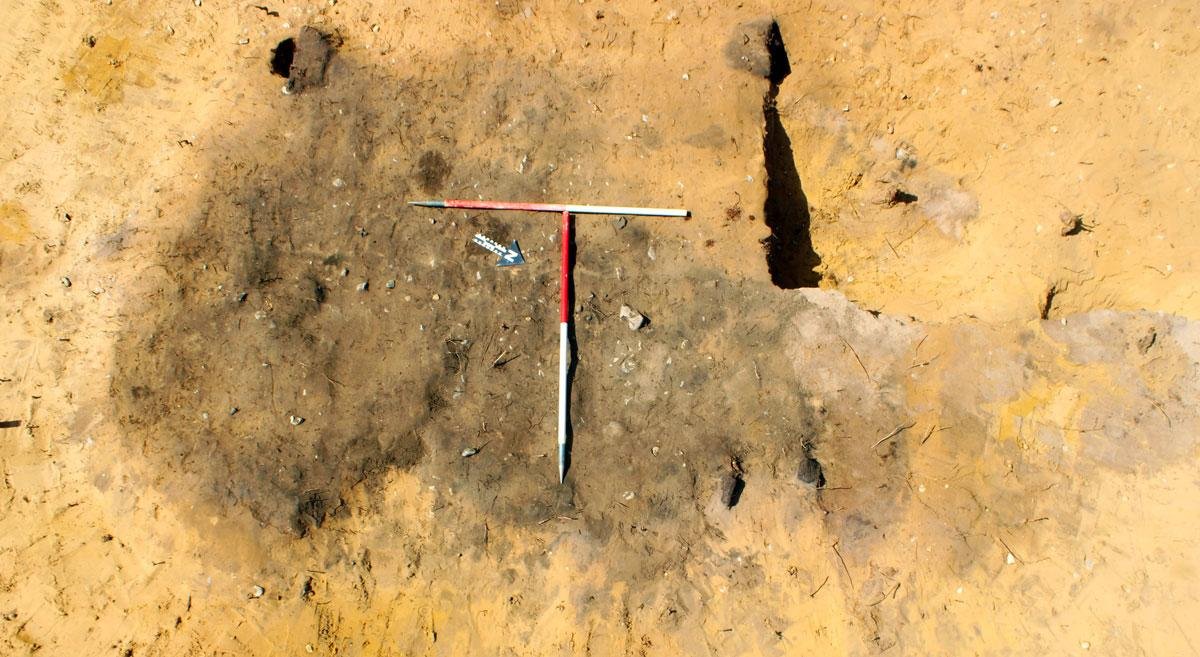
The structure stood on a slope with views toward today’s coastline. Researchers think the pyre measured about 3 meters by 2 meters. Builders arranged timber in a stacked lattice pattern, creating a platform around 1.5 meters high. They packed kindling and heath scrub inside to help feed the fire during cremation.
A body would have been placed on top of the wooden platform before the funeral ceremony began. Archaeologists also found evidence for upright posts around the edges, which likely helped support the structure.
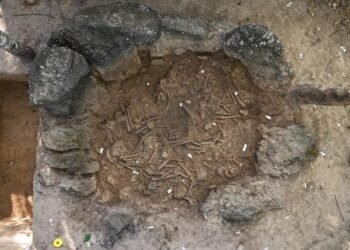
What survives now is only part of the original feature. Excavators uncovered a rectangular patch of dark soil filled with charcoal, along with small fragments of burnt bone. Some sandy patches beneath the pyre had turned pink from heat exposure. Around the edges, researchers recorded up to six postholes linked to the structure.
The site had already been disturbed during World War II, when the area served as a military training ground. Even with this damage, the pyre survived well enough to preserve key details.
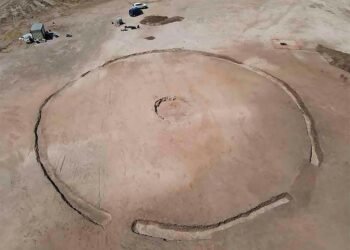
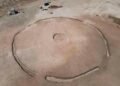
Pyres rarely survive because they sit on the surface rather than underground. Archaeologists think this one lasted because a mound once covered the area. The pyre lay off-center inside a ring ditch, which suggests the mound sealed and protected the remains for a long period. Later plowing removed the mound itself.
Researchers are still studying the relationship between the pyre and the surrounding ring ditch. No burial has been found in the center, even though ring ditches often surround burial mounds. A later ditch cut through the middle of the monument, which may have destroyed earlier evidence.
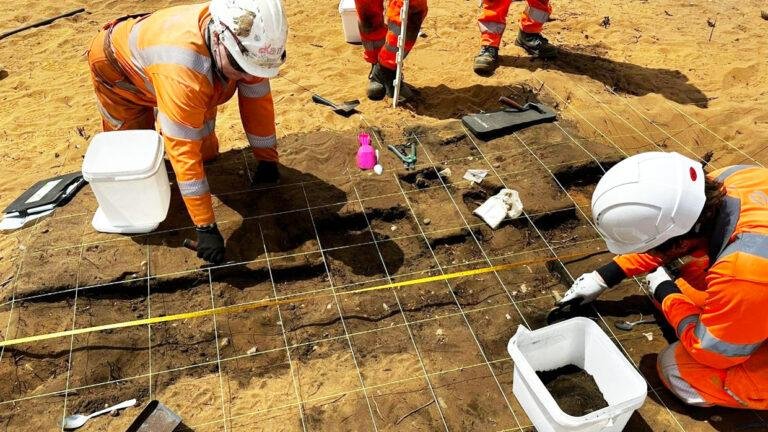
Dating the pyre remains difficult for now. Archaeologists think the feature is more likely prehistoric than Anglo-Saxon. Current evidence points toward the Bronze Age or Iron Age.
The ring ditch must date earlier than the Iron Age because an Iron Age pit later cut through its already filled ditch. Excavators also recovered a polished flint axe from the Early Neolithic in a later ditch. Researchers believe the object had already been old when people buried it there.
Only a small amount of bone remained inside the pyre. This suggests people removed most of the cremated remains after the ceremony, likely placing them in an urn for burial elsewhere. This practice was common in prehistoric cremation rituals.
Goose Hill has produced limited burial evidence so far. Archaeologists previously identified one confirmed Bronze Age cremation burial inside a Collared Urn dating from around 1950 to 1600 BC. Another possible urned cremation has also been recorded at the site.
Specialists will now analyze the bone fragments to confirm whether they are human. The study could provide information about the individual’s age, sex, and any disease or injury visible in the remains.
Researchers also plan to study charcoal, burnt plant material, and any objects placed on the pyre during the funeral. Bone and charcoal samples could later be dated using radiocarbon analysis.
The Goose Hill pyre offers a rare chance to study an ancient cremation ceremony at the place where people carried out the ritual thousands of years ago.
More information: Oxford Cotswold Archaeology

Disclaimer: This website is a science-focused magazine that welcomes both academic and non-academic audiences. Comments are written by users and may include personal opinions or unverified claims. They do not necessarily reflect the views of our editorial team or rely on scientific evidence.
Comment Policy: We kindly ask all commenters to engage respectfully. Comments that contain offensive, insulting, degrading, discriminatory, or racist content will be automatically removed.