• About
  • Privacy Policy
  • Terms of Use
  • Donation
  • Contact
No Result
View All Result
Archaeology News
  • Home
  • News
    • Archaeology
    • Anthropology
    • Paleontology
  • Academic
    • Books
    • Conferences
    • Universities
  • Articles
  • VR Tours
  • Quiz & Game
  • Download
  • Encyclopedia
  • Forum
Archaeology News
No Result
View All Result
Home News Archaeology

Archaeologists uncover rare 2,500-year-old votive statue bases at lost Apollo sanctuary in Cyprus

by Dario Radley
June 3, 2026

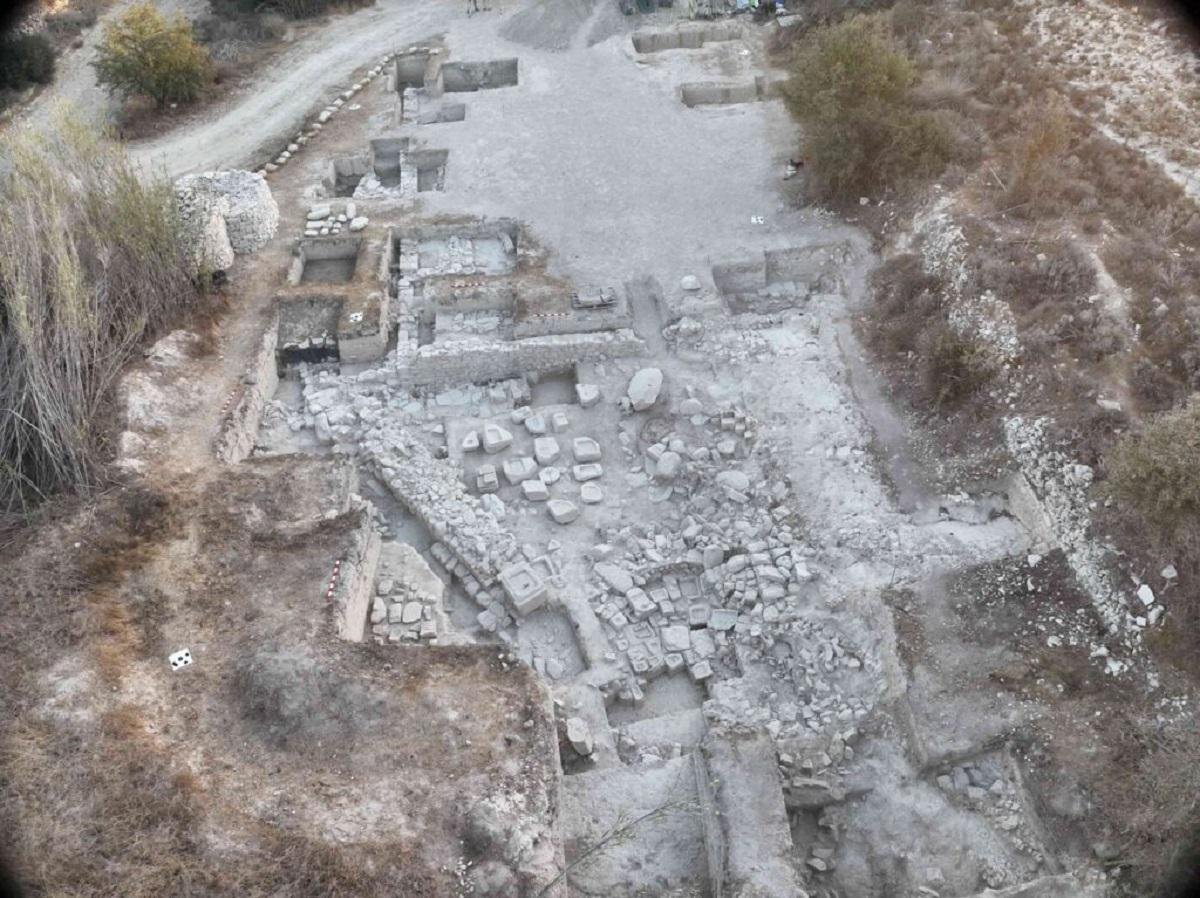
Archaeologists working at the Sanctuary of Apollo at Frangissa in Cyprus have uncovered more than 20 votive statue bases preserved in their original positions, offering rare evidence of how religious offerings accumulated inside an ancient sanctuary over centuries.
Archaeologists uncover rare 2,500-year-old votive statue bases at lost Apollo sanctuary in Cyprus
Credit: Cyprus Department of Antiquities, Deputy Ministry of Culture. Published with permission granted by the Director of the Department of Antiquities.

The sanctuary lies near the village of Pera Oreinis and has become the focus of renewed archaeological work led by Matthias Recke of Goethe University Frankfurt, with Philipp Kobusch of the University of Rostock serving as field director. The latest excavation season marked the fifth modern campaign at the site and produced some of the strongest evidence yet for the sanctuary’s Archaic phase.

The rural sanctuary was first excavated in 1885 by German archaeologist Max Ohnefalsch Richter. His work was only briefly documented, and the exact location of the sanctuary was eventually forgotten. Modern fieldwork relocated the site and allowed archaeologists to investigate both the old excavation areas and sections that had never been studied before.

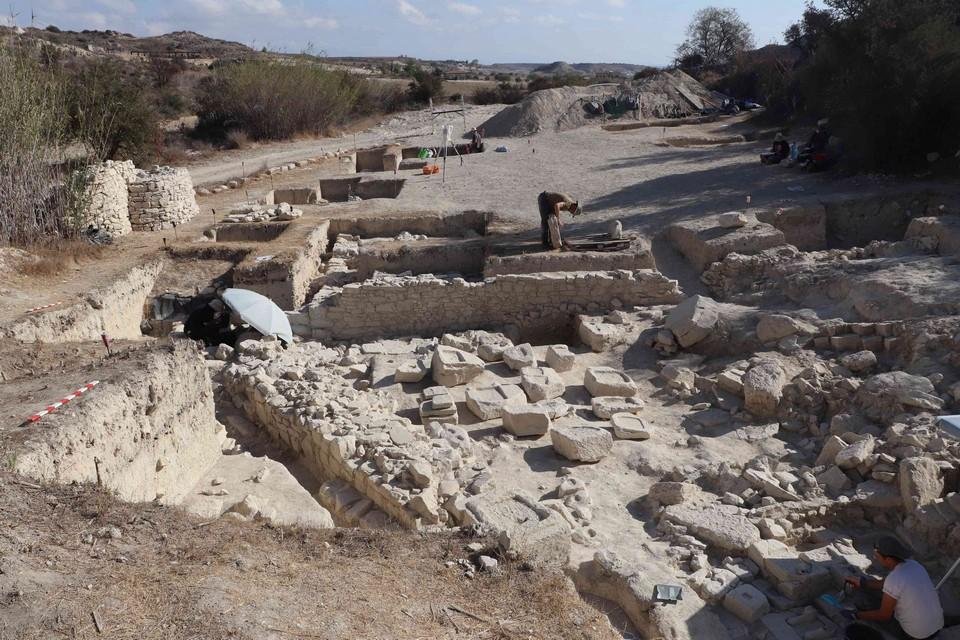
The newly uncovered statue bases stood out because many remained untouched since antiquity. Earlier excavations removed large numbers of bases and reused them as fill material when the site was covered again. Researchers involved in the current project recovered more than 100 fragments from those older excavations inside the backfill deposits.
Archaeologists uncover rare 2,500-year-old votive statue bases at lost Apollo sanctuary in Cyprus
Credit: Cyprus Department of Antiquities, Deputy Ministry of Culture. Published with permission granted by the Director of the Department of Antiquities.

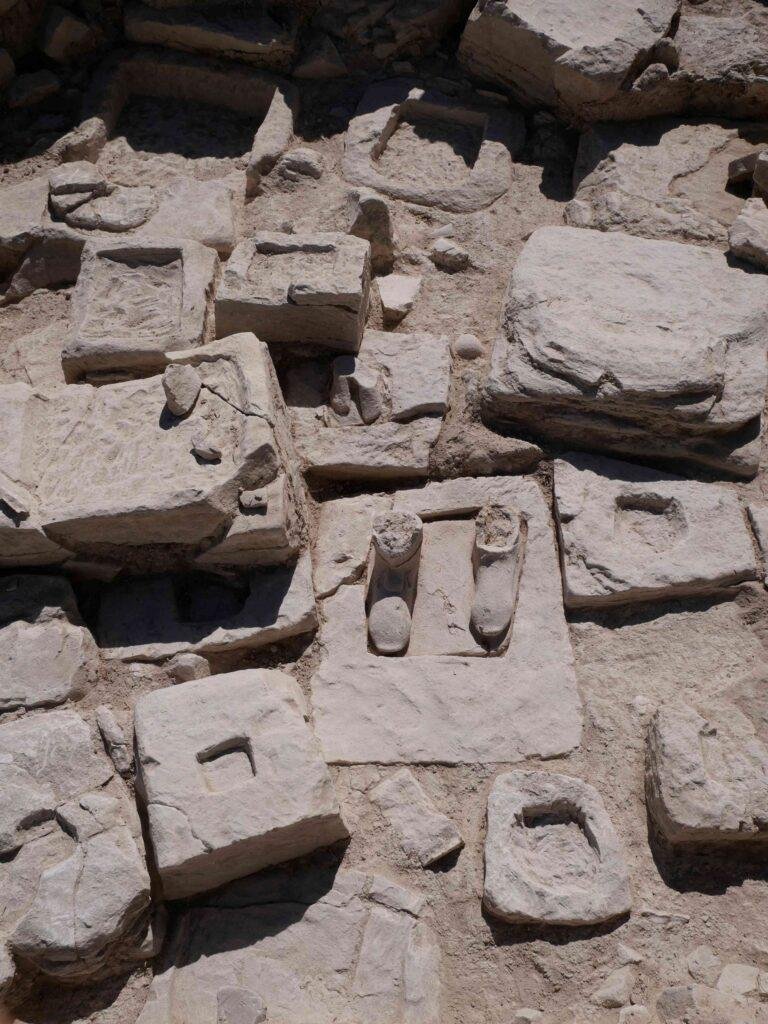
Several of the newly discovered limestone bases still preserved the feet of the statues that once stood on them. Archaeologists also recovered terracotta feet and fragments from clay figurines. The discovery carries particular importance because it provides the first archaeological evidence in Cyprus that terracotta votive figures were displayed on specially made limestone bases rather than being placed directly on the ground or inside rock cut niches.

The arrangement of the offerings also revealed how the sanctuary changed over time. In some places, the bases stood so closely together that they were stacked in layers while still allowing both statues to remain visible. Archaeologists say this is the clearest evidence yet for the gradual buildup of offerings inside the sanctuary.

Careful analysis of the soil layers showed that earlier groups of statue bases were deliberately buried beneath leveling deposits during antiquity. Workers then created a flat surface and installed a new set of offerings above the older layer. Researchers believe this major reorganization likely took place near the end of the Archaic period.
Archaeologists uncover rare 2,500-year-old votive statue bases at lost Apollo sanctuary in Cyprus
Credit: Cyprus Department of Antiquities, Deputy Ministry of Culture. Published with permission granted by the Director of the Department of Antiquities.

Excavators are now trying to determine why the sanctuary underwent such large-scale changes. Some evidence hints at destruction, though the rebuilding effort may also have been driven by a lack of space as more worshippers added offerings over time.

The latest discoveries also produced the first undisturbed deposits of Archaic pottery found since modern excavations began at the site. Until now, archaeologists only suspected the sanctuary’s early phase through scattered sculpture fragments recovered in earlier years. The newly uncovered statue bases and pottery deposits now provide direct archaeological proof for activity during the Archaic period.

Researchers believe the site offers an unusual opportunity to study how Cypriot sanctuaries developed from the Archaic into the Hellenistic period. The preserved arrangement of the offerings helps reconstruct the ritual practices and social behavior connected with worship at the sanctuary across several centuries.

The excavation project received support from the Amricha Foundation in Leipzig and Argo Frankfurt.

More information: Cyprus Department of Antiquities, Deputy Ministry of Culture
Share:

Share on Facebook Share on X (Twitter) Share on LinkedIn Share on Pinterest Share on WhatsApp Share on Email

You May Also Like...

17,000-year-old cave paintings in Wales confirmed as the oldest rock art in the British Isles
Archaeology

17,000-year-old cave paintings in Wales confirmed as the oldest rock art in the British Isles

June 3, 2026
4-million-year-old juvenile tapir skeleton unearthed in Spain is the most complete ever found in Europe
Paleontology

4-million-year-old juvenile tapir skeleton unearthed in Spain is the most complete ever found in Europe

June 3, 2026
Langobard woman with healed skull injuries challenges assumptions about violence in early medieval society
Anthropology

Langobard woman with healed skull injuries challenges assumptions about violence in early medieval society

June 2, 2026
Ancient city of Ihnasya reveals Aphrodite statue, Senusret III inscription, and Roman basilica remains in Egypt
Archaeology

Ancient city of Ihnasya reveals Aphrodite statue, Senusret III inscription, and Roman basilica remains in Egypt

June 2, 2026
Rare funerary cache discovered at ancient Heliopolis site
Archaeology

Rare funerary cache discovered at ancient Heliopolis site

June 2, 2026
Archaeologists find Queen Elisenda’s remains among 25 medieval skeletons, including individuals with unexplained stab wounds
Anthropology

Archaeologists find Queen Elisenda’s remains among 25 medieval skeletons, including individuals with unexplained stab wounds

June 1, 2026

Comments 0

  1. Editorial Team says:
    1 second ago

    Disclaimer: This website is a science-focused magazine that welcomes both academic and non-academic audiences. Comments are written by users and may include personal opinions or unverified claims. They do not necessarily reflect the views of our editorial team or rely on scientific evidence.

    Comment Policy: We kindly ask all commenters to engage respectfully. Comments that contain offensive, insulting, degrading, discriminatory, or racist content will be automatically removed.

    Reply

Leave a Reply Cancel reply

Your email address will not be published. Required fields are marked *

Follow us


Instagram
242K

Facebook
117K

Threads
47K

LinkedIn
15K

Twitter
6K

YouTube
1K

Archaeology News online magazine

Archaeology News is an international online magazine that covers all aspects of archaeology.


Categories

  • Academics
    • Books
    • Conferences
    • Universities
  • Articles
  • Download
  • Game
  • News
    • Anthropology
    • Archaeology
    • Paleontology
  • Quiz
  • Tours

Subscribe to our newsletter

© 2024 - Archaeology News Online Magazine. All Rights Reserved.

  • About
  • Privacy Policy
  • Terms of Use
  • Donation
  • Contact

Manage Consent
To provide the best experiences, we use technologies like cookies to store and/or access device information. Consenting to these technologies will allow us to process data such as browsing behavior or unique IDs on this site. Not consenting or withdrawing consent, may adversely affect certain features and functions.
Functional Always active
The technical storage or access is strictly necessary for the legitimate purpose of enabling the use of a specific service explicitly requested by the subscriber or user, or for the sole purpose of carrying out the transmission of a communication over an electronic communications network.
Preferences
The technical storage or access is necessary for the legitimate purpose of storing preferences that are not requested by the subscriber or user.
Statistics
The technical storage or access that is used exclusively for statistical purposes. The technical storage or access that is used exclusively for anonymous statistical purposes. Without a subpoena, voluntary compliance on the part of your Internet Service Provider, or additional records from a third party, information stored or retrieved for this purpose alone cannot usually be used to identify you.
Marketing
The technical storage or access is required to create user profiles to send advertising, or to track the user on a website or across several websites for similar marketing purposes.
  • Manage options
  • Manage services
  • Manage {vendor_count} vendors
  • Read more about these purposes
View preferences
  • {title}
  • {title}
  • {title}
  • Home
  • News
    • Archaeology
    • Anthropology
    • Paleontology
  • Academic
    • Books
    • Conferences
    • Universities
  • Articles
  • VR Tours
  • Quiz & Game
  • Download
  • Encyclopedia
  • Forum

About  .  Contact  .  Donation

© 2024 - Archaeology News Online Magazine. All Rights Reserved