• About
  • Privacy Policy
  • Terms of Use
  • Donation
  • Contact
No Result
View All Result
Archaeology News
  • Home
  • News
    • Archaeology
    • Anthropology
    • Paleontology
  • Academic
    • Books
    • Conferences
    • Universities
  • Articles
  • VR Tours
  • Quiz & Game
  • Download
  • Encyclopedia
  • Forum
Archaeology News
No Result
View All Result
Home News Archaeology

Neolithic stone circle in Dorset redated, possibly inspiring Stonehenge’s design

by Dario Radley
March 8, 2025

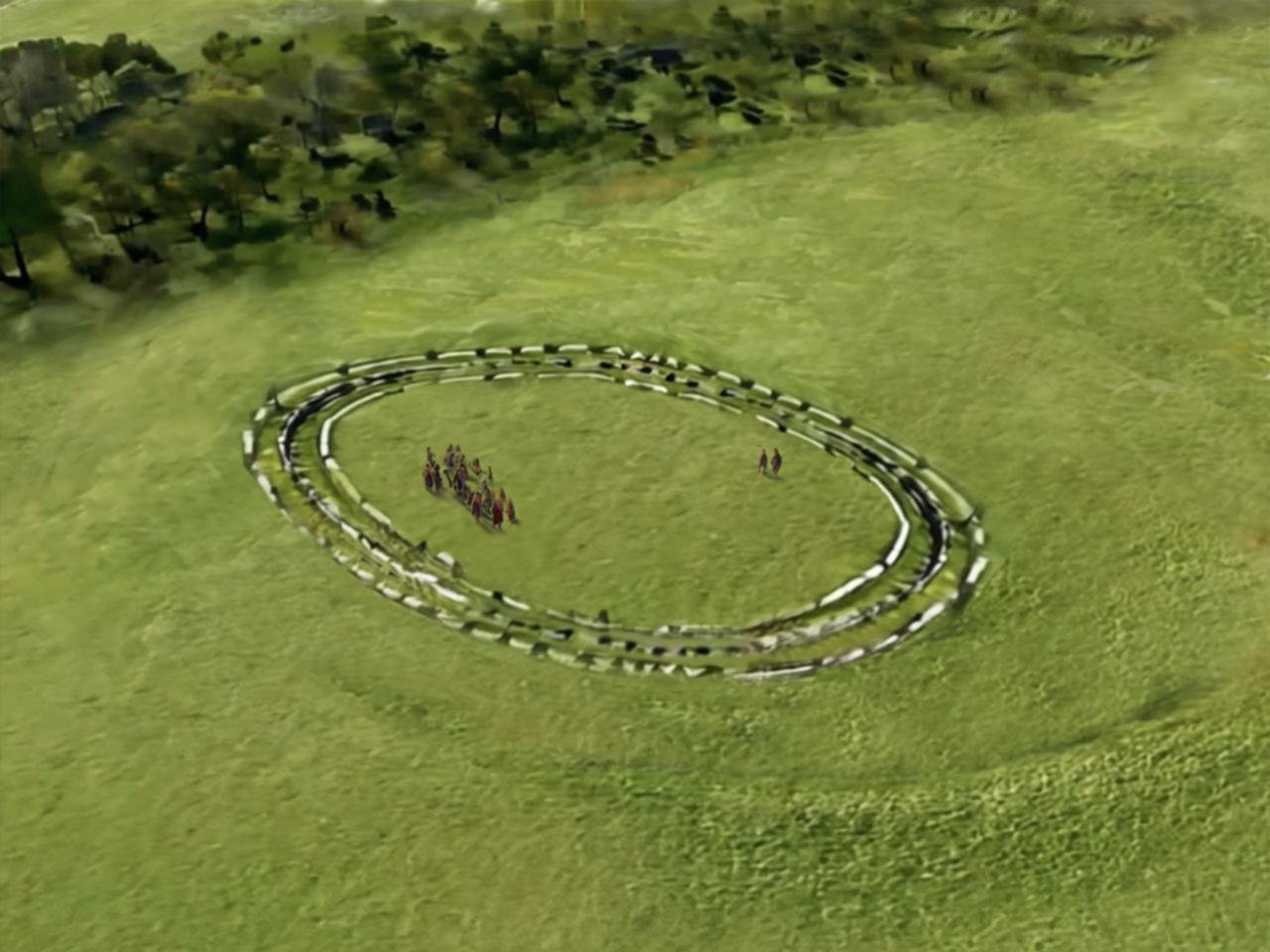
Recent archaeological research has revealed that the Flagstones monument near Dorchester, Dorset, is the earliest known circular enclosure in Britain. The results of advanced radiocarbon dating have placed it around two centuries older than previously estimated. Published in Antiquity by researchers from the University of Exeter and Historic England, these findings shed new light on the evolution of monumental architecture in Neolithic Britain.
Neolithic stone circle in Dorset redated, possibly inspiring Stonehenge’s design
The Flagstones monument may be one of the earliest circular monuments in Britain. Credit: Archaeology News Online Magazine

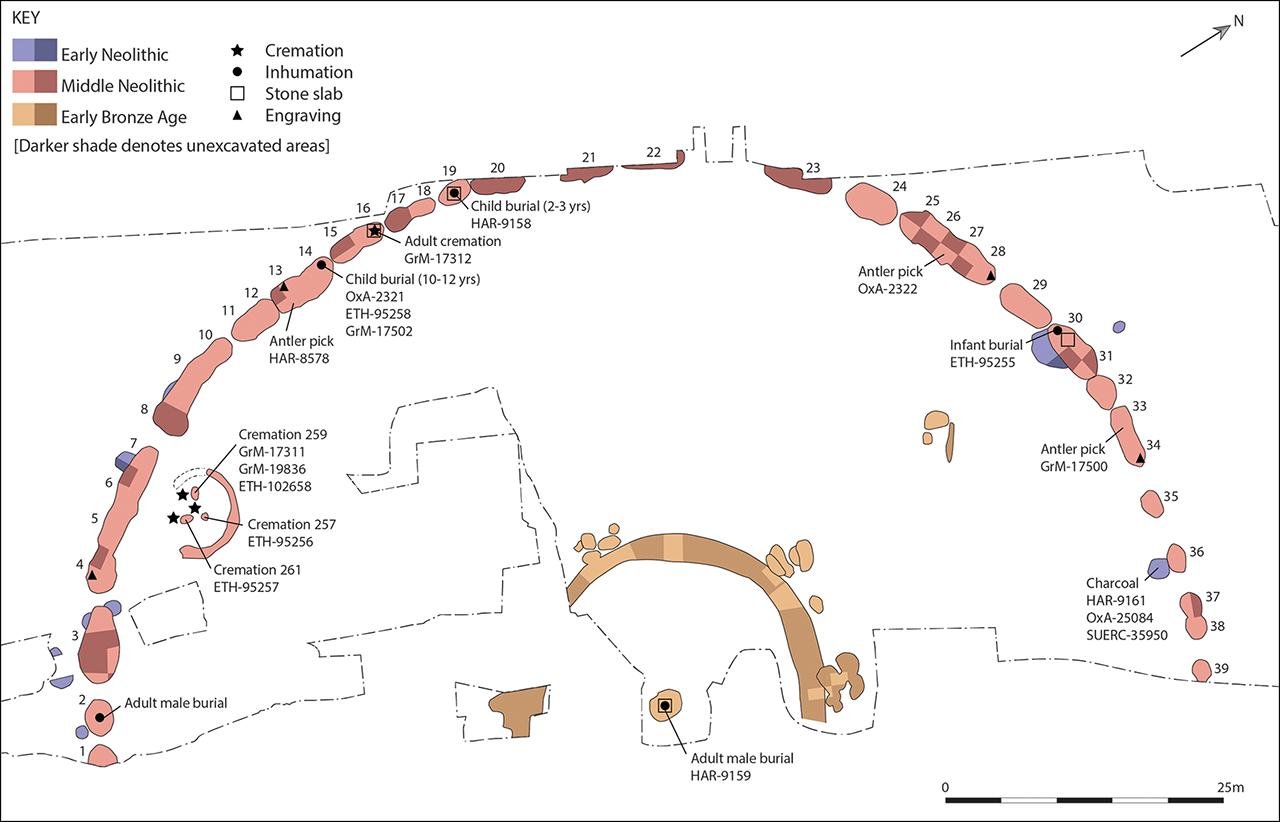
Discovered in the 1980s when the Dorchester bypass was being built, Flagstones is a nearly perfect circular enclosure, with an approximately 100-meter diameter ditch originally composed of intersecting pits and likely accompanied by an earthwork bank. The monument is now partly under the bypass, with the other half beneath Max Gate, which was once home to Thomas Hardy and is now managed by the National Trust.

Within the site, archaeologists discovered several significant artifacts, including human remains, red deer antlers, and charcoal, which underwent radiocarbon analysis at ETH Zürich and the University of Groningen. The findings suggest that early Neolithic use of the site, including pit digging, began around 3650 BCE. However, the circular enclosure was constructed around 3200 BCE, with burials placed in its pits shortly after.

Dr. Susan Greaney, a specialist in Neolithic and Bronze Age monuments at the University of Exeter, said: “Flagstones is an unusual monument; a perfectly circular ditched enclosure, with burials and cremations associated with it.” She added that we weren’t sure where it fit in the broader sequence of Neolithic monuments, but the new dating places it in a much earlier period than we had expected.”
Neolithic stone circle in Dorset redated, possibly inspiring Stonehenge’s design
Plan of the excavated, western half of the Flagstones enclosure (after Smith et al.1997: fig. 22; figure by Susan Greaney)

The new research has a fascinating connection to Stonehenge. The first phase of Stonehenge, from about 2900 BCE, features a circular ditch and burial practices similar to Flagstones. This has led some experts to suggest Stonehenge may have been inspired by Flagstones.
RelatedStories

6,000-year-old necropolis in Spain rewrites origins of Europe’s first megalithic tombs

6,000-year-old necropolis in Spain rewrites origins of Europe’s first megalithic tombs

May 18, 2026
Ancient Danes kept fishing for millennia after farming arrived, study finds

Ancient Danes kept fishing for millennia after farming arrived, study finds

May 14, 2026

“The chronology of Flagstones is essential for understanding the changing sequence of ceremonial and funeral monuments in Britain,” said Dr Greaney. “Could Stonehenge have been a copy of Flagstones? Or do these findings suggest our current dating of Stonehenge might need revision?”

Flagstones also shares similarities with other Stone Age sites, not just Stonehenge. It resembles Llandygái ‘Henge’ A in Gwynedd, Wales, and several locations in Ireland. Artifacts and burial customs found at these sites show that Neolithic communities across Britain and Ireland shared some cultural traits. This supports the idea that these prehistoric societies were not isolated but engaged in widespread exchanges of traditions.
4,000-year-old Stonehenge-like circle discovered in Denmark
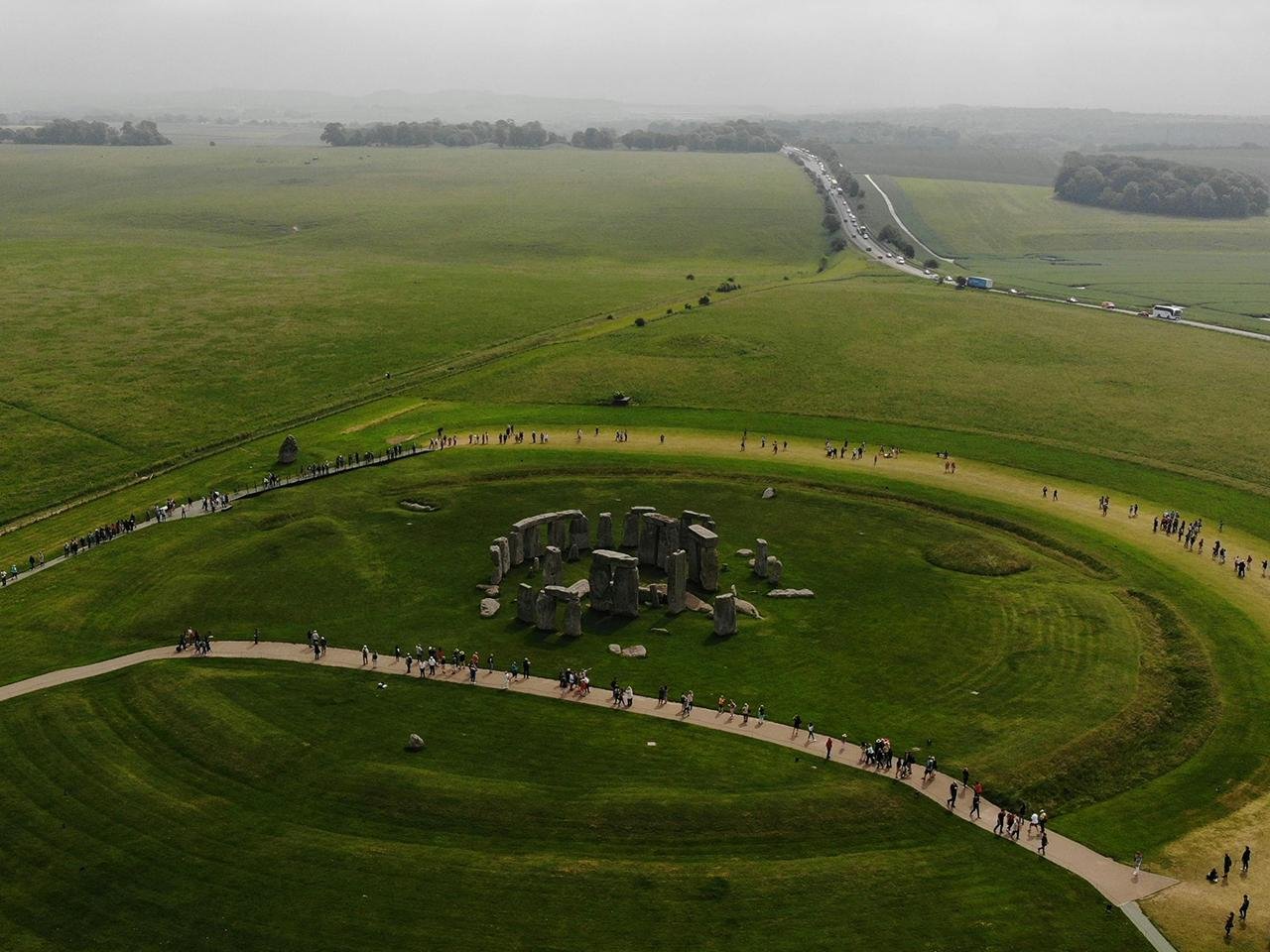
An aerial view of Stonehenge. Credit: Anthony Parkes

The exact function of Flagstones in Neolithic society is still debated. However, the burials found there suggest a more ceremonial role for the site, with at least four individuals buried within its enclosure pits: a cremated adult and three uncremated children, as well as three other partial cremations elsewhere. Around a thousand years later, a young adult male was buried under a large sarsen stone at the site’s center,
indicating that it remained in use for an extended period.

Similar patterns have been observed at Stonehenge, where archaeologists unearthed at least 64 cremations accompanied by evidence suggesting that maybe 150 individuals were buried there. This supports the theory that these kinds of monuments were multi-purpose ceremonial sites and not just burial grounds.

The discovery that Flagstones predates Stonehenge challenges historic narratives regarding the development of Neolithic monumental architecture in Britain. While Stonehenge has long been considered the pinnacle of Neolithic construction, Flagstones may reflect an earlier stage in the tradition of circular enclosures. The study highlights how interconnected Neolithic societies were, sharing architectural practices and ritual traditions across vast distances.

More information: University of Exeter
Greaney, S., Hajdas, I., Dee, M., & Marshall, P. (2025). Beginning of the circle? Revised chronologies for Flagstones and Alington Avenue, Dorchester, Dorset. Antiquity, 1–17. doi:10.15184/aqy.2025.28

Share:

Share on Facebook Share on X (Twitter) Share on LinkedIn Share on Pinterest Share on WhatsApp Share on Email

You May Also Like...

2,300-year-old Iron Age riverside structure discovered beneath German city astonishes archaeologists
Archaeology

2,300-year-old Iron Age riverside structure discovered beneath German city

May 22, 2026
100 Abbasid-era gold jewelry pieces found at ancient Dariyah site in Saudi Arabia
Archaeology

100 Abbasid-era gold jewelry pieces found at ancient Dariyah site in Saudi Arabia

May 22, 2026
Neanderthals gathered shellfish like modern humans 115,000 years ago, study finds
Anthropology

Neanderthals gathered shellfish like modern humans 115,000 years ago, study finds

May 21, 2026
Ancient pigeons were already living alongside humans 3,400 years ago, study finds
Archaeology

Ancient pigeons were already living alongside humans 3,400 years ago, study finds

May 21, 2026
Ancient Venetic sanctuary with rare inscriptions unearthed beneath road project in Italy
Archaeology

Ancient Venetic sanctuary with rare inscriptions unearthed beneath road project in Italy

May 21, 2026
1,000-year-old dingo burial in Australia reveals deep ties between Barkindji people and dingoes
Archaeology

1,000-year-old ritually buried dingo in Australia reveals deep ties between Barkindji people and dingoes

May 20, 2026

Comments 1

  1. Editorial Team says:
    1 second ago

    Disclaimer: This website is a science-focused magazine that welcomes both academic and non-academic audiences. Comments are written by users and may include personal opinions or unverified claims. They do not necessarily reflect the views of our editorial team or rely on scientific evidence.

    Comment Policy: We kindly ask all commenters to engage respectfully. Comments that contain offensive, insulting, degrading, discriminatory, or racist content will be automatically removed.

  2. Ed N Lewton says:
    1 year ago

    I am starting to conceptualize these circular stone monuments were in effect an ancient telephone system using very low frequencies as the carrier wave where half the wave would travel through the Earth and the other half through the air,The stones were set up in such a manner that peoples voices would be picked up and sent or received.

Follow us


Instagram
242K

Facebook
117K

Threads
46K

LinkedIn
14K

Twitter
6K

YouTube
1K
2,300-year-old Iron Age riverside structure discovered beneath German city astonishes archaeologists

2,300-year-old Iron Age riverside structure discovered beneath German city

May 22, 2026
100 Abbasid-era gold jewelry pieces found at ancient Dariyah site in Saudi Arabia

100 Abbasid-era gold jewelry pieces found at ancient Dariyah site in Saudi Arabia

May 22, 2026
Neanderthals gathered shellfish like modern humans 115,000 years ago, study finds

Neanderthals gathered shellfish like modern humans 115,000 years ago, study finds

May 21, 2026
Ancient pigeons were already living alongside humans 3,400 years ago, study finds

Ancient pigeons were already living alongside humans 3,400 years ago, study finds

May 21, 2026

Archaeology News online magazine

Archaeology News is an international online magazine that covers all aspects of archaeology.


Categories

  • Academics
    • Books
    • Conferences
    • Universities
  • Articles
  • Download
  • Game
  • News
    • Anthropology
    • Archaeology
    • Paleontology
  • Quiz
  • Tours

Subscribe to our newsletter

© 2024 - Archaeology News Online Magazine. All Rights Reserved.

  • About
  • Privacy Policy
  • Terms of Use
  • Donation
  • Contact

Manage Consent
To provide the best experiences, we use technologies like cookies to store and/or access device information. Consenting to these technologies will allow us to process data such as browsing behavior or unique IDs on this site. Not consenting or withdrawing consent, may adversely affect certain features and functions.
Functional Always active
The technical storage or access is strictly necessary for the legitimate purpose of enabling the use of a specific service explicitly requested by the subscriber or user, or for the sole purpose of carrying out the transmission of a communication over an electronic communications network.
Preferences
The technical storage or access is necessary for the legitimate purpose of storing preferences that are not requested by the subscriber or user.
Statistics
The technical storage or access that is used exclusively for statistical purposes. The technical storage or access that is used exclusively for anonymous statistical purposes. Without a subpoena, voluntary compliance on the part of your Internet Service Provider, or additional records from a third party, information stored or retrieved for this purpose alone cannot usually be used to identify you.
Marketing
The technical storage or access is required to create user profiles to send advertising, or to track the user on a website or across several websites for similar marketing purposes.
  • Manage options
  • Manage services
  • Manage {vendor_count} vendors
  • Read more about these purposes
View preferences
  • {title}
  • {title}
  • {title}
  • Home
  • News
    • Archaeology
    • Anthropology
    • Paleontology
  • Academic
    • Books
    • Conferences
    • Universities
  • Articles
  • VR Tours
  • Quiz & Game
  • Download
  • Encyclopedia
  • Forum

About  .  Contact  .  Donation

© 2024 - Archaeology News Online Magazine. All Rights Reserved