• About
  • Privacy Policy
  • Terms of Use
  • Donation
  • Contact
No Result
View All Result
Archaeology News
  • Home
  • News
    • Archaeology
    • Anthropology
    • Paleontology
  • Academic
    • Books
    • Conferences
    • Universities
  • Articles
  • VR Tours
  • Quiz & Game
  • Download
  • Encyclopedia
  • Forum
Archaeology News
No Result
View All Result
Home News Archaeology

Bronze Age Scandinavians braved open seas 3,000 years before the Vikings, new study reveals

by Dario Radley
April 6, 2025

Hundreds of years before the Viking Age, Nordic Bronze Age societies were likely proficient open-sea navigators who regularly crossed large tracts of ocean directly between what is now Denmark and Norway, suggests a new study published in PLOS ONE. Led by Boel Bengtsson of the University of Gothenburg and colleagues, the work helps clarify the sea-going abilities of Bronze Age peoples and contradicts the longstanding views of many experts who presumed Bronze Age societies only traveled along coastlines.
Bronze Age Scandinavians braved open seas 3,000 years before the Vikings, new study reveals
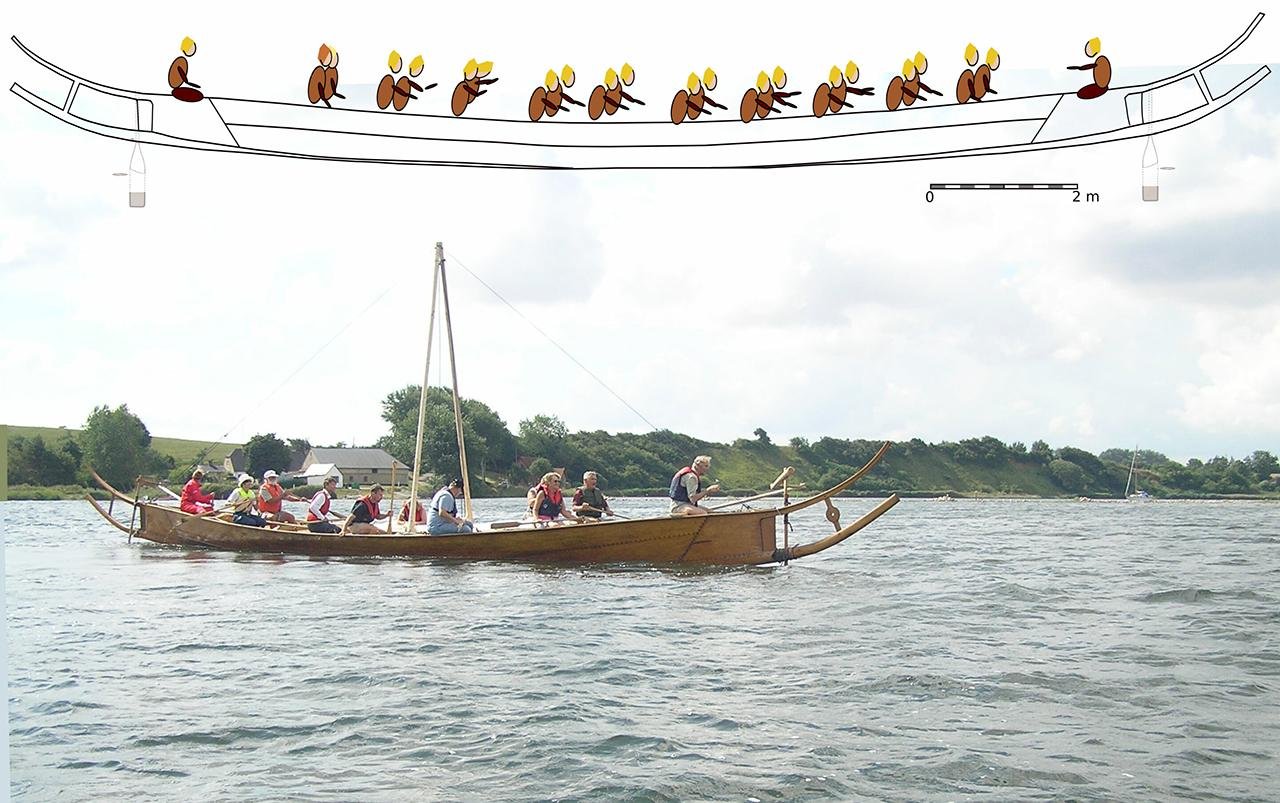
Sea trials in a reconstruction of the c. 350 BCE Hjortspring boat, akin to a Scandinavian Bronze Age type boat, with a side view drawing of the boat under full crew inserted above. Photo by Knut Valbjørn. Credit: Boel Bengtsson, CC-BY 4.0

Using a state-of-the-art computer simulation tool known as the “Voyage Optimization Tool,” the scientists combined archaeological data, simulated boat performance, and environmental modeling to test the feasibility of two sea routes: a longer coastal route of approximately 700 kilometers and a direct open-sea route of approximately 110 kilometers across the Skagerrak Strait. They sought to determine whether the people of the Bronze Age had the technical ability and navigational skills to travel long distances across the sea out of sight of land.

Central to the investigation was the use of performance data from experimental replicas of Bronze Age sewn-plank boats such as the Hjortspring and Ullerslev. These vessels, driven by paddle and constructed from planks sewn together with natural fibers, were assessed in various wind, wave height, and crew workload conditions. The simulations showed that in fine summer weather—with waves below a meter in height and winds below 10 knots—open-sea crossings were not only possible but considerably faster, cutting travel time by up to 25% compared with the safer but much longer coastal route.

“Regular open-sea crossings of the Skagerrak, including some 50 km of no visible land, likely commenced by 2300 BC, as indicated by archaeological evidence,” according to the researchers. These trips would have required not only seaworthy boats but experienced crews with detailed knowledge of maritime conditions. The researchers theorize that seafarers probably relied on techniques like solar orientation, landmark tracking, and possibly even animal behavior to guide their navigation—methods still used in some indigenous maritime cultures today.

Bronze Age Scandinavians braved open seas 3,000 years before the Vikings, new study reveals
A comparison between the Hjortspring boat and southern Scandinavian boat depictions. Photo of the Hjortspring boat taken by Boel Bengtsson. Credit: B. Bengtsson et al. PLoS ONE (2025) / CC BY 4.0

While the coastal route was safer and offered the chance to restock supplies, it also posed logistical challenges that may have made it impractical for time-sensitive or priority travel.

RelatedStories

Ancient Danes kept fishing for millennia after farming arrived, study finds

Ancient Danes kept fishing for millennia after farming arrived, study finds

May 14, 2026
Rare Bronze Age burial in Sweden reveals unusual pair of Wendel neck rings and complex ritual landscape near Norrköping

Rare Bronze Age burial in Sweden reveals unusual pair of Wendel neck rings and complex ritual landscape near Norrköping

May 12, 2026

The study not only adds to our understanding of Bronze Age maritime culture but also provides a powerful methodological tool for future research. The modeling system can be adapted for use with other modern and ancient vessels, providing researchers with a dynamic way of hypothesis-testing prehistoric seafaring across the globe. By combining decades of archaeological research with cutting-edge simulation technology, this study ushers maritime archaeology into a new era of evidence-based exploration.
Bronze Age Scandinavians braved open seas 3,000 years before the Vikings, new study reveals
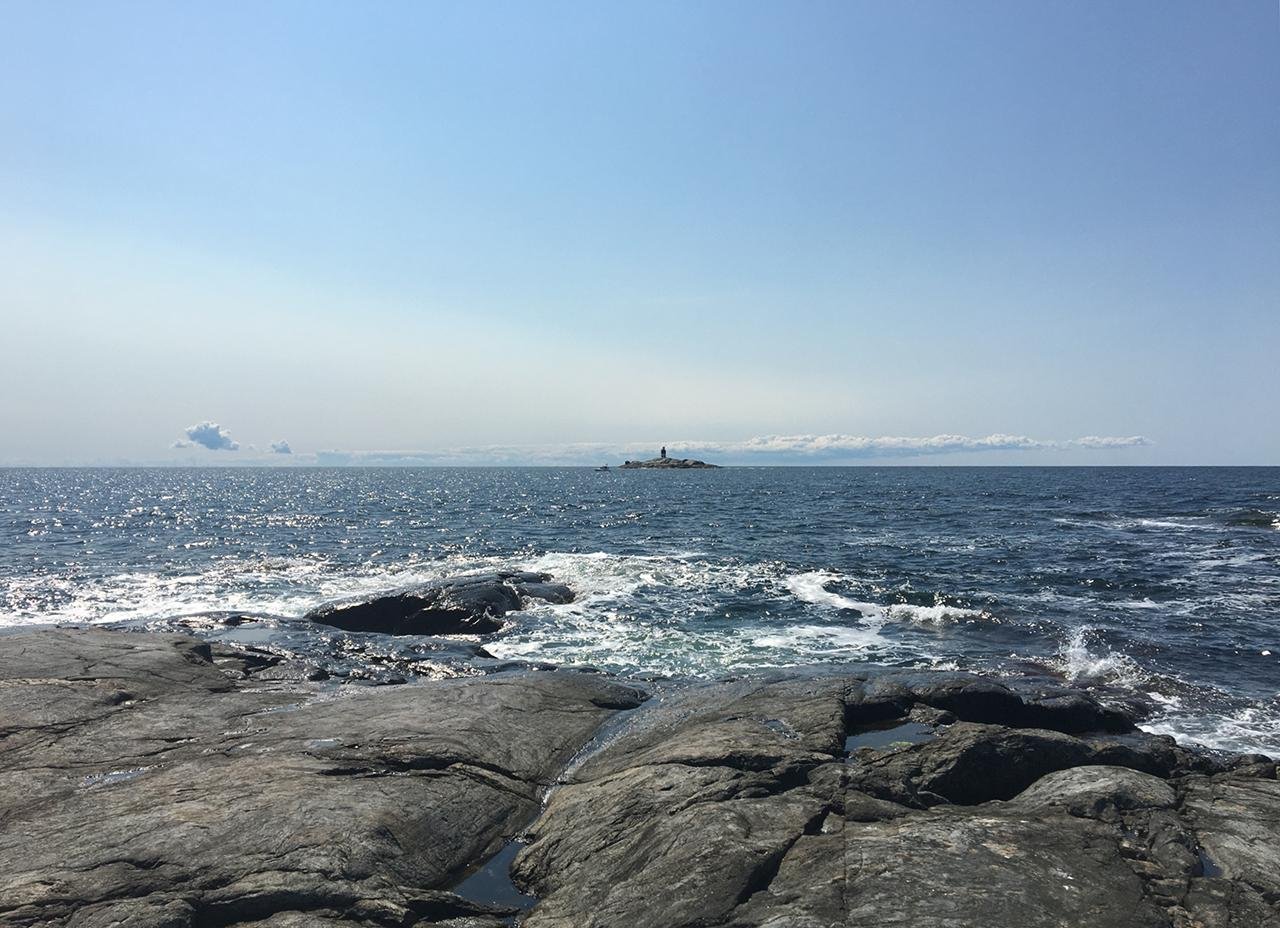
Cumulus clouds forming over northern Denmark, as viewed from Lilla Pölsan (4 km due west of the islands of Rörö/Hönö) in the northern Gothenburg archipelago with the light house on Stora Pölsan in the foreground. Credit: Boel Bengtsson

Apart from navigation, the findings also help to explain archaeological patterns observed across the Nordic region. The similarities in artifacts, burial practices, and architecture between northern Denmark and southwest Norway are indicative of frequent contact and exchange. Researchers argue that the similarities are a result of regular open-sea voyages, and not just coastal hopping as previously assumed.

More information: Bengtsson B, Montenegro A, Green A, Tomasini M, Prince M, Skärström VW, et al. (2025) Seafaring and navigation in the Nordic Bronze Age: The application of an ocean voyage tool and boat performance data for comparing direct open water crossings with sheltered coastal routes. PLoS ONE 20(4): e0320791. doi:10.1371/journal.pone.0320791

Share:

Share on Facebook Share on X (Twitter) Share on LinkedIn Share on Pinterest Share on WhatsApp Share on Email

You May Also Like...

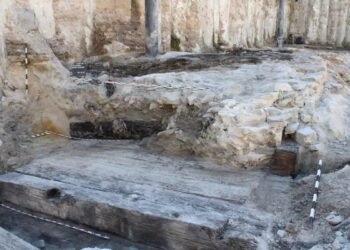
2,300-year-old Iron Age riverside structure discovered beneath German city astonishes archaeologists
Archaeology

2,300-year-old Iron Age riverside structure discovered beneath German city

May 22, 2026
100 Abbasid-era gold jewelry pieces found at ancient Dariyah site in Saudi Arabia
Archaeology

100 Abbasid-era gold jewelry pieces found at ancient Dariyah site in Saudi Arabia

May 22, 2026
Neanderthals gathered shellfish like modern humans 115,000 years ago, study finds
Anthropology

Neanderthals gathered shellfish like modern humans 115,000 years ago, study finds

May 21, 2026
Ancient pigeons were already living alongside humans 3,400 years ago, study finds
Archaeology

Ancient pigeons were already living alongside humans 3,400 years ago, study finds

May 21, 2026
Ancient Venetic sanctuary with rare inscriptions unearthed beneath road project in Italy
Archaeology

Ancient Venetic sanctuary with rare inscriptions unearthed beneath road project in Italy

May 21, 2026
1,000-year-old dingo burial in Australia reveals deep ties between Barkindji people and dingoes
Archaeology

1,000-year-old ritually buried dingo in Australia reveals deep ties between Barkindji people and dingoes

May 20, 2026

Follow us


Instagram
242K

Facebook
117K

Threads
46K

LinkedIn
14K

Twitter
6K

YouTube
1K
2,300-year-old Iron Age riverside structure discovered beneath German city astonishes archaeologists

2,300-year-old Iron Age riverside structure discovered beneath German city

May 22, 2026
100 Abbasid-era gold jewelry pieces found at ancient Dariyah site in Saudi Arabia

100 Abbasid-era gold jewelry pieces found at ancient Dariyah site in Saudi Arabia

May 22, 2026
Neanderthals gathered shellfish like modern humans 115,000 years ago, study finds

Neanderthals gathered shellfish like modern humans 115,000 years ago, study finds

May 21, 2026
Ancient pigeons were already living alongside humans 3,400 years ago, study finds

Ancient pigeons were already living alongside humans 3,400 years ago, study finds

May 21, 2026

Archaeology News online magazine

Archaeology News is an international online magazine that covers all aspects of archaeology.


Categories

  • Academics
    • Books
    • Conferences
    • Universities
  • Articles
  • Download
  • Game
  • News
    • Anthropology
    • Archaeology
    • Paleontology
  • Quiz
  • Tours

Subscribe to our newsletter

© 2024 - Archaeology News Online Magazine. All Rights Reserved.

  • About
  • Privacy Policy
  • Terms of Use
  • Donation
  • Contact

Manage Consent
To provide the best experiences, we use technologies like cookies to store and/or access device information. Consenting to these technologies will allow us to process data such as browsing behavior or unique IDs on this site. Not consenting or withdrawing consent, may adversely affect certain features and functions.
Functional Always active
The technical storage or access is strictly necessary for the legitimate purpose of enabling the use of a specific service explicitly requested by the subscriber or user, or for the sole purpose of carrying out the transmission of a communication over an electronic communications network.
Preferences
The technical storage or access is necessary for the legitimate purpose of storing preferences that are not requested by the subscriber or user.
Statistics
The technical storage or access that is used exclusively for statistical purposes. The technical storage or access that is used exclusively for anonymous statistical purposes. Without a subpoena, voluntary compliance on the part of your Internet Service Provider, or additional records from a third party, information stored or retrieved for this purpose alone cannot usually be used to identify you.
Marketing
The technical storage or access is required to create user profiles to send advertising, or to track the user on a website or across several websites for similar marketing purposes.
  • Manage options
  • Manage services
  • Manage {vendor_count} vendors
  • Read more about these purposes
View preferences
  • {title}
  • {title}
  • {title}
  • Home
  • News
    • Archaeology
    • Anthropology
    • Paleontology
  • Academic
    • Books
    • Conferences
    • Universities
  • Articles
  • VR Tours
  • Quiz & Game
  • Download
  • Encyclopedia
  • Forum

About  .  Contact  .  Donation

© 2024 - Archaeology News Online Magazine. All Rights Reserved