• About
  • Privacy Policy
  • Terms of Use
  • Donation
  • Contact
No Result
View All Result
Archaeology News
  • Home
  • News
    • Archaeology
    • Anthropology
    • Paleontology
  • Academic
    • Books
    • Conferences
    • Universities
  • Articles
  • VR Tours
  • Quiz & Game
  • Download
  • Encyclopedia
  • Forum
Archaeology News
No Result
View All Result
Home News Archaeology

First Roman bridgehead fort discovered in Austria solves ‘Deserted Castle’ mystery

by Dario Radley
April 15, 2025

Archaeologists have found the first confirmed Roman bridgehead fort ever discovered in Austria, positioned in the Danube floodplains near the site named “Ödes Schloss” close to Stopfenreuth in Lower Austria. The discovery, led by researchers at the Austrian Academy of Sciences (ÖAW) and the Carnuntum Archaeological Park, reveals interesting new insights into the Roman Empire’s northern defense line and its control over trade routes such as the Amber Road.

First Roman bridgehead fort discovered in Austria solves 'Deserted Castle' mystery
Visualisation of the excavations at the bridgehead fort in Stopfenreuth. Credit: H. Wraunek, Province of Lower Austria

For many decades, the ruins of stone walls commonly called the “Deserted Castle” mystified historians, who theorized whether they were a medieval castle, a First Turkish War fortress, or perhaps something different altogether. However, recent archaeological excavations established the history of the site as a Roman bridgehead fort constructed to secure crossings over rivers and monitor travel on the Danube—a natural boundary of the empire and a significant segment of the Danube Limes, a UNESCO World Heritage Site.

Bridgehead forts were normally constructed on the far side of border rivers as forward military outposts from which Roman troops could observe and control strategic areas. “Around 1850, the still-visible walls at the site known as ‘Ödes Schloss’ were investigated,” explained Christian Gugl, archaeologist and head of the ÖAW’s research group. “Based on discovered brick stamps, the structures were at that time interpreted as the remains of a fortified Roman bridgehead.”
First Roman bridgehead fort discovered in Austria solves 'Deserted Castle' mystery
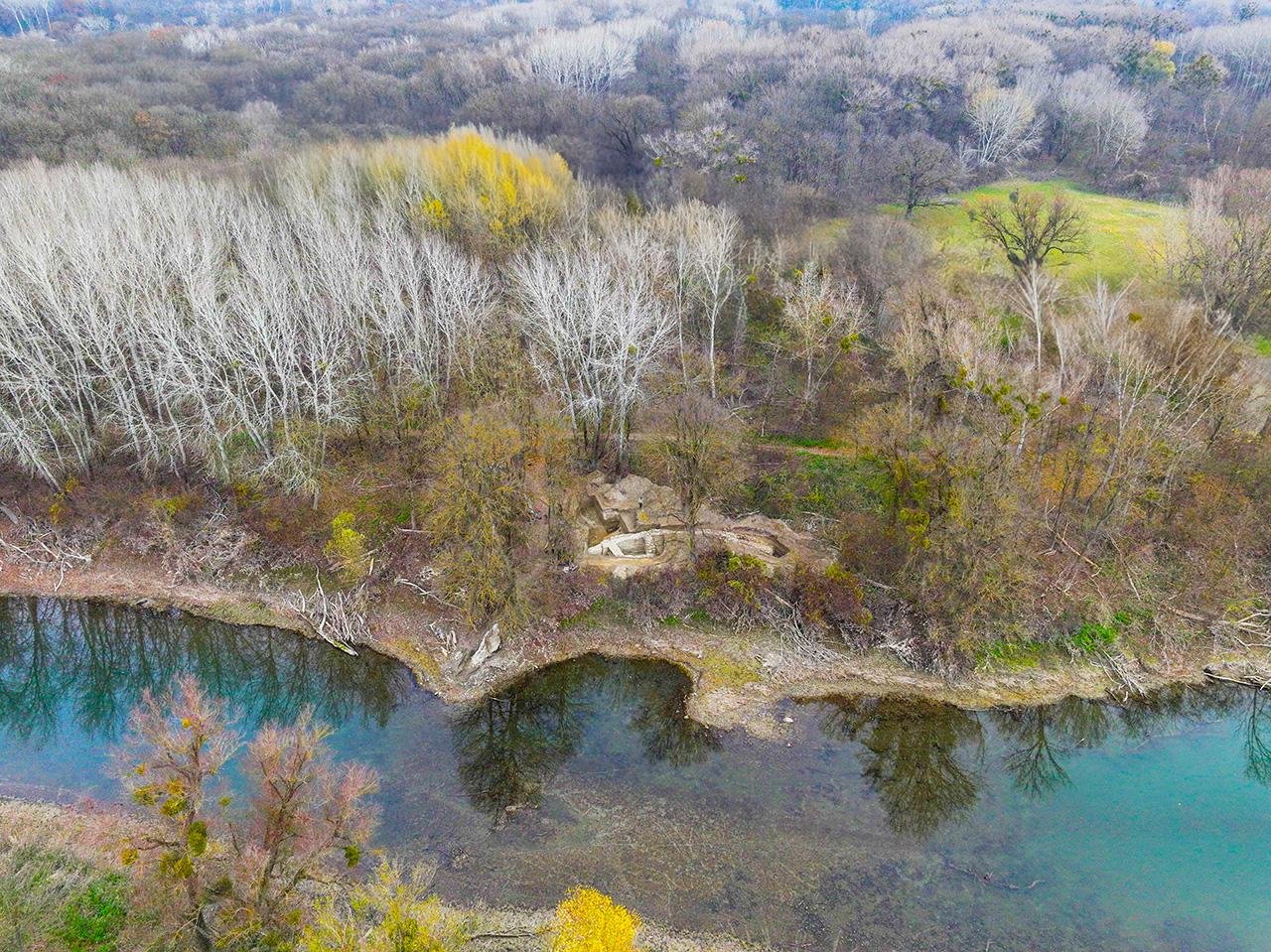
Aerial view of the excavation in the Hainburger Au (near Stopfenreuth) on one of the Danube tributaries in the Donauauen National Park. Credit: H. Wraunek, Province of Lower Austria

The recently completed excavations on the Hainburg wetlands revealed well-preserved sections of walls that measured up to 2.65 meters high. The fort was constructed in two major phases: the first phase, during circa 170–180 CE, during the Marcomannic Wars under Emperor Marcus Aurelius, was intended to secure the Roman border against Germanic invasions. A second phase around 260 CE under Emperor Gallienus saw reconstruction and perhaps the last military use of the fort prior to Carnuntum’s strategic importance beginning to decline.
First Roman bridgehead fort discovered in Austria solves 'Deserted Castle' mystery
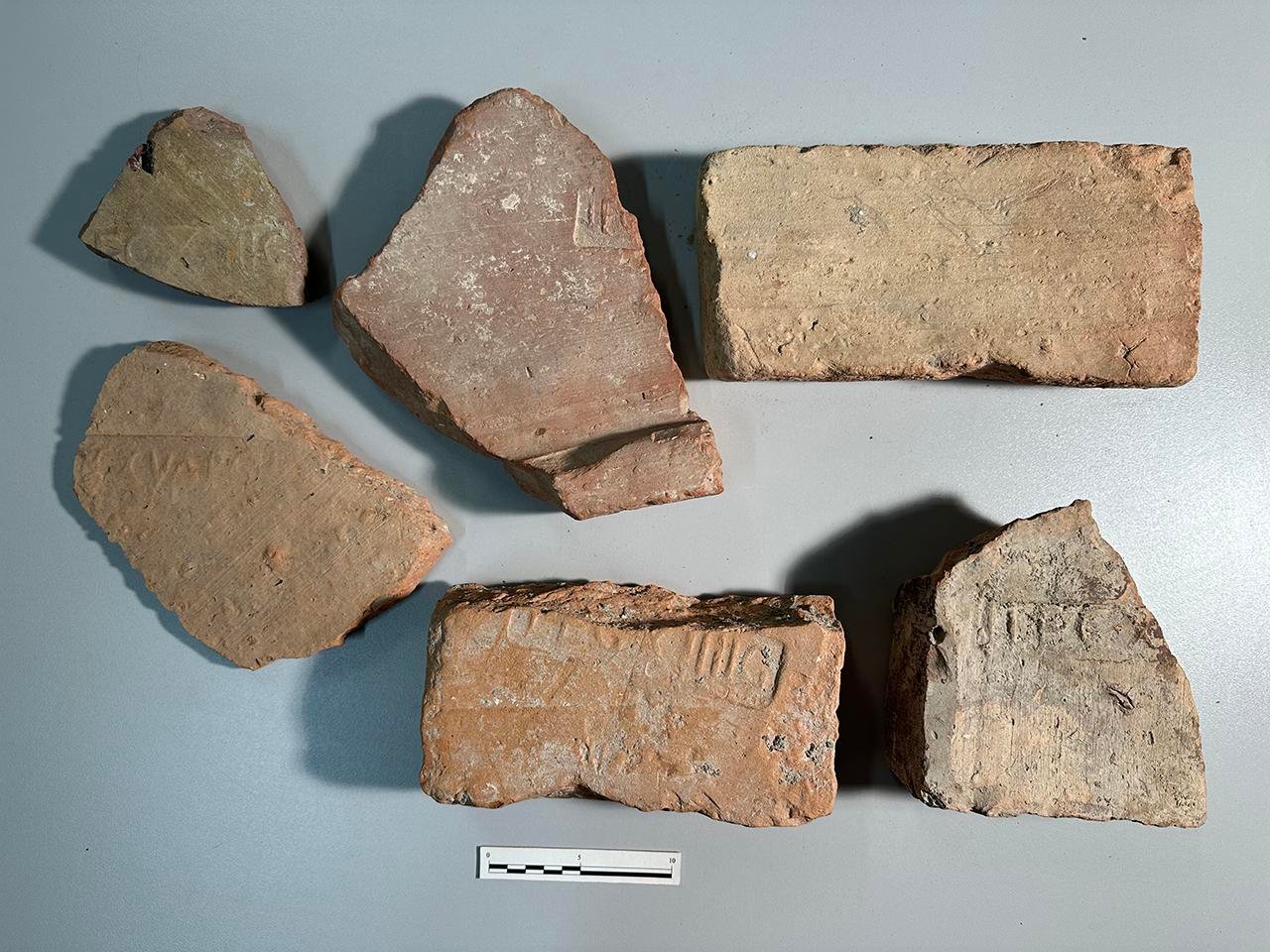
Stamped bricks from legionary units XIV and XV, found near Carnuntum at the Roman bridgehead fort Stopfenreuth. Credit: OeAW-OeAI

The recovered artifacts from the site include stamped bricks of Legio XIV and Legio XV Apollinaris—both of which are known to have been stationed in Carnuntum and the province of Pannonia—accompanied by coins, ceramics, and bronze objects. These finds further attest to the military importance of Carnuntum and its surrounding region.

RelatedStories

Drone surveys reveal Roman forum and previously unknown monumental theater at Fioccaglia

Drone surveys reveal Roman forum and previously unknown monumental theater at Fioccaglia

February 15, 2026
Rare Roman staircase and unique lararium discovered beneath Cologne’s MiQua Jewish Museum site

Rare Roman staircase and unique lararium discovered beneath Cologne’s MiQua Jewish Museum site

February 13, 2026

Four kilometers from Carnuntum—a former legionary stronghold and subsequent capital of the Roman province Pannonia Superior—the Stopfenreuth bridge fort completely alters our understanding of Roman presence north of the Danube. Gugl stated, “For a long time, it remained uncertain whether there had ever been a substantial Roman presence on this section of the north bank of the Danube. The discovery of additional stone forts—some evidently garrisoned by large military units—on this side of the Danube significantly reshapes our perception of the Roman Limes.”

First Roman bridgehead fort discovered in Austria solves 'Deserted Castle' mystery
Aerial view of the Roman town of Carnuntum, where completely reconstructed and functional buildings from Roman times can be visited today. Credit: Roman City of Carnuntum

Apart from its historical and military significance, the excavation is also contributing to environmental and geological research. Archaeologists, in collaboration with BOKU University and the University of Vienna, collected sediment samples from the Danube floodplain. The samples are helping scientists reconstruct ancient river patterns prior to the 16th century, giving a clearer picture of how the Danube evolved over the centuries and how these changes influenced settlement and fortification strategies.

Though the excavation phase concluded in 2024, intense scientific research is still ongoing.

More information: Austrian Archaeological Institute (ÖAI)
Share8Tweet5Share1ShareSend

You May Also Like...

10,000 years of rock art discovered at Umm Arak Plateau in Egypt’s southern Sinai
Archaeology

10,000 years of rock art discovered at Umm Arak Plateau in Egypt’s southern Sinai

February 15, 2026
Drone surveys reveal Roman forum and previously unknown monumental theater at Fioccaglia
Archaeology

Drone surveys reveal Roman forum and previously unknown monumental theater at Fioccaglia

February 15, 2026
Earliest known burial in Northern Britain identified as young girl through DNA analysis
Anthropology

Earliest known burial in Northern Britain identified as young girl through DNA analysis

February 14, 2026
3,400-year-old Nördlingen bronze sword reveals advanced metalworking techniques
Archaeology

3,400-year-old Nördlingen bronze sword reveals advanced metalworking techniques

February 14, 2026
4,000-year-old Kerma burial unearthed in Sudan’s Bayuda Desert
Anthropology

4,000-year-old Kerma burial unearthed in Sudan’s Bayuda Desert

February 13, 2026
2,000-year-old Vietnamese tooth blackening practice found in Iron Age burial
Anthropology

2,000-year-old Vietnamese tooth blackening practice found in Iron Age burial

February 13, 2026

Follow us


Instagram
244K

Facebook
118K

Threads
45K

LinkedIn
14K

Twitter
6K

YouTube
1K
  • Trending
  • Comments
  • Latest
Shipwreck Salvage. Credit: rawpixel.com / Public Domain

2,000-year-old shipwreck discovered off Turkish coast with remarkably preserved stacked ceramics

July 2, 2025
Viking age DNA reveals 9,000-year-old HIV-resistant gene originating near the Black Sea

Viking age DNA reveals 9,000-year-old HIV-resistant gene originating near the Black Sea

May 18, 2025
A new study suggests the mysterious Voynich Manuscript may be a medieval cipher

A new study suggests the mysterious Voynich Manuscript may be a medieval cipher

January 3, 2026
Moses may be named in ancient Egyptian mine inscriptions, sparking debate over earliest biblical references

Moses may be named in ancient Egyptian mine inscriptions, sparking debate over earliest biblical references

July 31, 2025
Mystery of Armenia’s 6,000-year-old dragon stones solved

Mystery of Armenia’s 6,000-year-old dragon stones solved

September 23, 2025
3D analysis reveals Shroud of Turin image likely came from sculpture, not Jesus’ body

3D analysis reveals Shroud of Turin image likely came from sculpture, not Jesus’ body

Moses may be named in ancient Egyptian mine inscriptions, sparking debate over earliest biblical references

Moses may be named in ancient Egyptian mine inscriptions, sparking debate over earliest biblical references

$1 million prize offered to decipher 5,300-year-old Indus Valley script

$1 million prize offered to decipher 5,300-year-old Indus Valley script

Oldest ever genetic data from a human relative found in 2-million-year-old fossilized teeth

Oldest ever genetic data from a human relative found in 2-million-year-old fossilized teeth

Exceptionally large Roman shoes discovered at Magna fort near Hadrian’s Wall

Exceptionally large Roman shoes discovered at Magna fort near Hadrian’s Wall

10,000 years of rock art discovered at Umm Arak Plateau in Egypt’s southern Sinai

10,000 years of rock art discovered at Umm Arak Plateau in Egypt’s southern Sinai

February 15, 2026
Drone surveys reveal Roman forum and previously unknown monumental theater at Fioccaglia

Drone surveys reveal Roman forum and previously unknown monumental theater at Fioccaglia

February 15, 2026
Earliest known burial in Northern Britain identified as young girl through DNA analysis

Earliest known burial in Northern Britain identified as young girl through DNA analysis

February 14, 2026
3,400-year-old Nördlingen bronze sword reveals advanced metalworking techniques

3,400-year-old Nördlingen bronze sword reveals advanced metalworking techniques

February 14, 2026
4,000-year-old Kerma burial unearthed in Sudan’s Bayuda Desert

4,000-year-old Kerma burial unearthed in Sudan’s Bayuda Desert

February 13, 2026

Archaeology News online magazine

Archaeology News is an international online magazine that covers all aspects of archaeology.


Categories

  • Academics
    • Books
    • Conferences
    • Universities
  • Articles
  • Download
  • Game
  • News
    • Anthropology
    • Archaeology
    • Paleontology
  • Quiz
  • Tours

Subscribe to our newsletter

© 2024 - Archaeology News Online Magazine. All Rights Reserved.

  • About
  • Privacy Policy
  • Terms of Use
  • Donation
  • Contact

Welcome Back!

Login to your account below

Forgotten Password? Sign Up

Create New Account!

Fill the forms below to register

All fields are required. Log In

Retrieve your password

Please enter your username or email address to reset your password.

Log In

Add New Playlist

Manage Consent
To provide the best experiences, we use technologies like cookies to store and/or access device information. Consenting to these technologies will allow us to process data such as browsing behavior or unique IDs on this site. Not consenting or withdrawing consent, may adversely affect certain features and functions.
Functional Always active
The technical storage or access is strictly necessary for the legitimate purpose of enabling the use of a specific service explicitly requested by the subscriber or user, or for the sole purpose of carrying out the transmission of a communication over an electronic communications network.
Preferences
The technical storage or access is necessary for the legitimate purpose of storing preferences that are not requested by the subscriber or user.
Statistics
The technical storage or access that is used exclusively for statistical purposes. The technical storage or access that is used exclusively for anonymous statistical purposes. Without a subpoena, voluntary compliance on the part of your Internet Service Provider, or additional records from a third party, information stored or retrieved for this purpose alone cannot usually be used to identify you.
Marketing
The technical storage or access is required to create user profiles to send advertising, or to track the user on a website or across several websites for similar marketing purposes.
  • Manage options
  • Manage services
  • Manage {vendor_count} vendors
  • Read more about these purposes
View preferences
  • {title}
  • {title}
  • {title}
  • Home
  • News
    • Archaeology
    • Anthropology
    • Paleontology
  • Academic
    • Books
    • Conferences
    • Universities
  • Articles
  • VR Tours
  • Quiz & Game
  • Download
  • Encyclopedia
  • Forum

About  .  Contact  .  Donation

© 2024 - Archaeology News Online Magazine. All Rights Reserved