• About
  • Privacy Policy
  • Terms of Use
  • Donation
  • Contact
No Result
View All Result
Archaeology News
  • Home
  • News
    • Archaeology
    • Anthropology
    • Paleontology
  • Academic
    • Books
    • Conferences
    • Universities
  • Articles
  • VR Tours
  • Quiz & Game
  • Download
  • Encyclopedia
  • Forum
Archaeology News
No Result
View All Result
Home News Anthropology

Ancient Roman toilets in Bulgaria reveal early spread of intestinal parasites

by Dario Radley
April 28, 2026

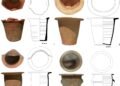
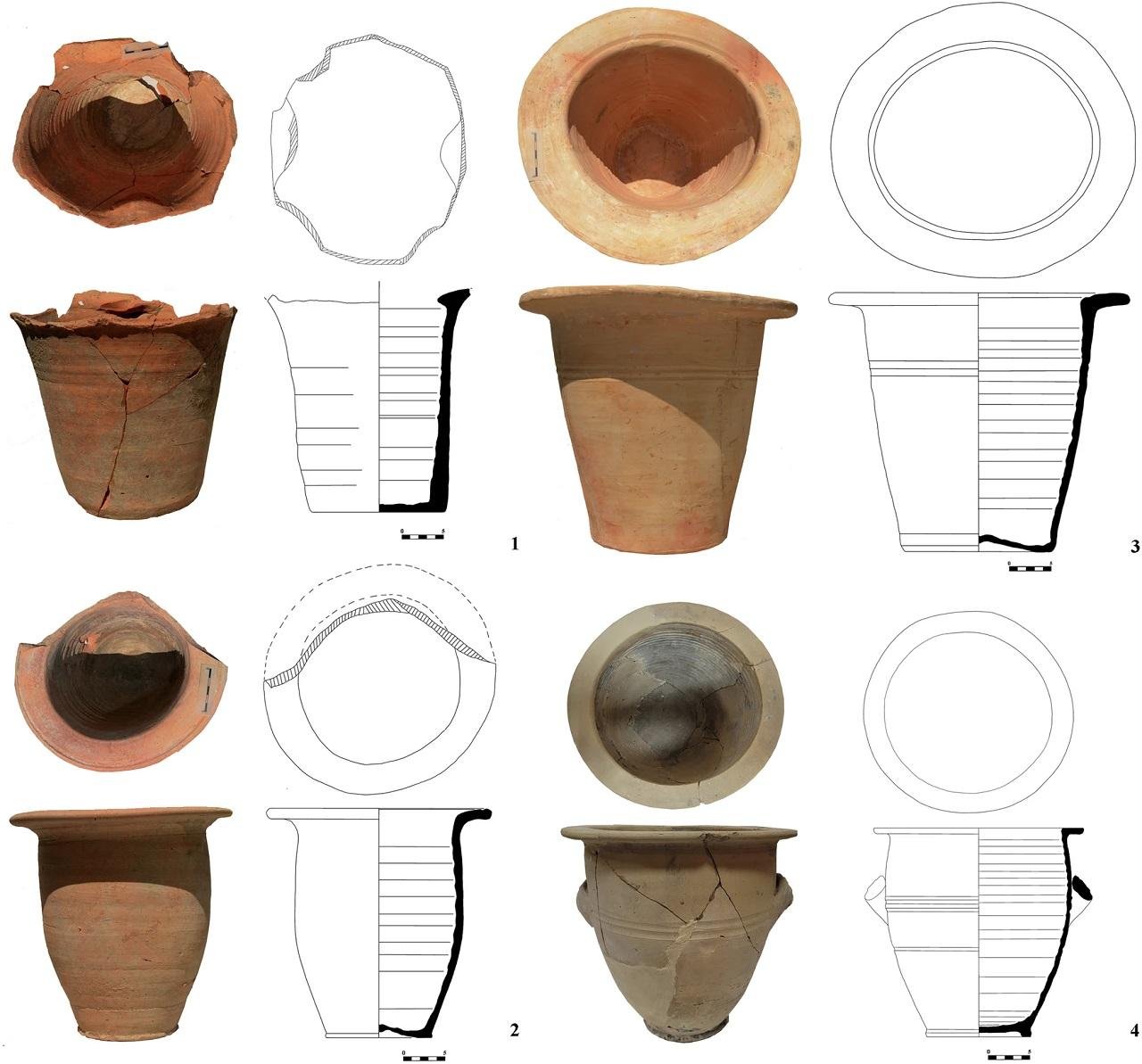
Researchers studying Roman life along the lower Danube have turned to an unusual source. Mineral deposits inside ancient chamber pots have preserved traces of human waste from nearly two thousand years ago. These remains come from Novae and Marcianopolis, two settlements in the province of Moesia Inferior, in present-day Bulgaria. The material dates from the 2nd to 4th centuries CE and offers direct evidence of health conditions in these communities.
Ancient Roman toilets in Bulgaria reveal early spread of intestinal parasites
Chamber pots: 1–3 Novae, 4 Marcianopolis. Credit: Photo by A. B. Biernacki; drawing by E. Klenina. npj Heritage Science (2026). CC BY-NC-ND 4.0

The deposits formed over time as urine and feces dried and hardened on ceramic surfaces. Scientists collected samples from the inner walls and the bottoms of the vessels, where residue built up in layers. They rehydrated the material and passed it through fine sieves to isolate microscopic remains. Under a microscope, they searched for parasite eggs and other biological traces linked to intestinal disease.

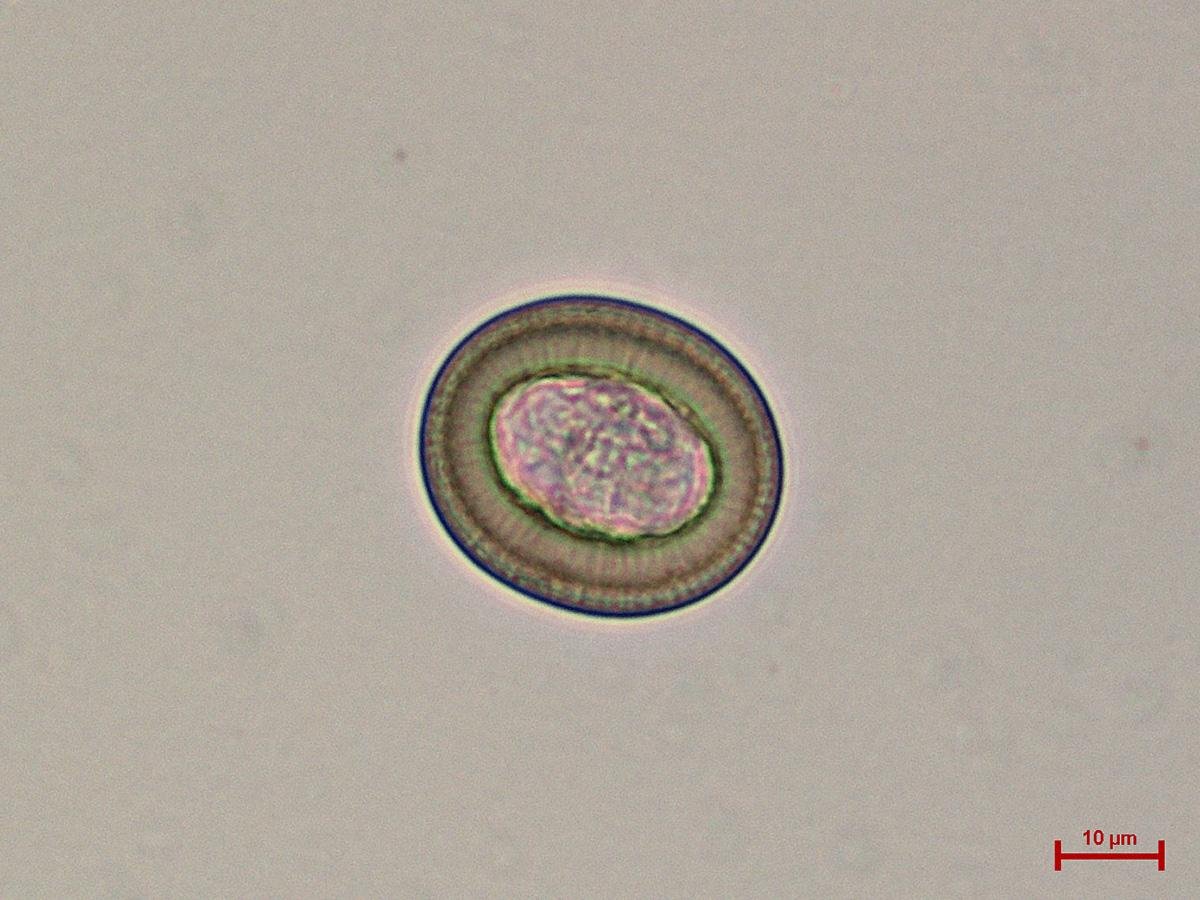
The first results came from visual analysis. Researchers identified eggs of Taenia, a type of tapeworm linked to the consumption of raw or undercooked meat. This finding points to dietary habits that exposed people to infection. Some parasites share similar shapes, so the team applied additional methods to confirm their identity. Ancient DNA analysis helped separate closely related species. They also used ELISA, a test in which antibodies bind to specific parasite proteins and trigger a color change when present.

The laboratory tests revealed a wider range of infections. Most samples contained traces of Cryptosporidium, a protozoan parasite that causes diarrhea and dehydration. This result stands out because previous research placed the early spread of this parasite outside the Mediterranean region. The same tests also identified Entamoeba histolytica, the organism responsible for amoebic dysentery, a severe intestinal illness.
Ancient Roman toilets in Bulgaria reveal early spread of intestinal parasites
Egg of Taenia saginata. Credit: Stefan Walkowski; CC BY-SA 4.0

The two sites show different patterns. Samples from Novae contain a high number of parasites. This pattern suggests poor sanitation or polluted water, possibly linked to the Danube or local water systems. In contrast, samples from a workshop area in Marcianopolis show no sign of infection. Access to cleaner water sources, such as nearby springs, or differences in diet and living conditions could explain this contrast.

RelatedStories

Ancient Roman shipwreck reveals hidden secrets of waterproofing and Mediterranean repairs

Ancient Roman shipwreck reveals hidden secrets of waterproofing and Mediterranean repairs

April 27, 2026
Rare 2,000-year-old Roman bread found at Vindonissa reveals early military life in Switzerland

Rare 2,000-year-old Roman bread found at Vindonissa reveals early military life in Switzerland

April 25, 2026

This study combines archaeological evidence with paleoparasitology, the study of ancient parasites. Advances in laboratory techniques have improved detection over the past two decades. In this case, immunological testing was applied in this regional context for the first time, strengthening the results.

The findings add detail to the study of daily life in the Roman world. They show how water quality, sanitation, and food preparation influenced health. Differences between nearby settlements point to uneven living conditions across the province. The evidence also traces the history of infectious diseases and their spread across time.

By examining preserved waste, researchers have reconstructed part of the disease burden faced by these communities. The results connect biological data with archaeological context and provide a clearer picture of health in Roman Moesia Inferior.

More information: Klenina, E., Biernacki, A.B., Welc-Falęciak, R. et al. (2026). Analysis of Roman chamber pots to understand the health of the lower Danube inhabitants. npj Herit. Sci. 14, 206. doi:10.1038/s40494-026-02475-x
ShareTweetShareShareSend

You May Also Like...

Ancient Roman shipwreck reveals hidden secrets of waterproofing and Mediterranean repairs
Archaeology

Ancient Roman shipwreck reveals hidden secrets of waterproofing and Mediterranean repairs

April 27, 2026
42 lost pages of Codex H recovered, revealing early New Testament structure and scribal practices
Archaeology

42 lost pages of Codex H recovered, revealing early New Testament structure and scribal practices

April 26, 2026
CT scans reveal hidden details of 2,300-year-old Egyptian mummies
Anthropology

CT scans reveal hidden details of 2,300-year-old Egyptian mummies

April 26, 2026
Rare 2,000-year-old Roman bread found at Vindonissa reveals early military life in Switzerland
Archaeology

Rare 2,000-year-old Roman bread found at Vindonissa reveals early military life in Switzerland

April 25, 2026
Over 1,000 archaeological features uncovered along Czech railway
Archaeology

Over 1,000 archaeological features uncovered along Czech railway

April 25, 2026
Ancient ship burial in Norway dates to CE 700, rewriting early Viking Age origins
Archaeology

Ancient ship burial in Norway dates to CE 700, rewriting early Viking Age origins

April 25, 2026

Comments 0

  1. Editorial Team says:
    1 second ago

    Disclaimer: This website is a science-focused magazine that welcomes both academic and non-academic audiences. Comments are written by users and may include personal opinions or unverified claims. They do not necessarily reflect the views of our editorial team or rely on scientific evidence.

    Comment Policy: We kindly ask all commenters to engage respectfully. Comments that contain offensive, insulting, degrading, discriminatory, or racist content will be automatically removed.

    Reply

Leave a Reply Cancel reply

Your email address will not be published. Required fields are marked *

Follow us


Instagram
244K

Facebook
118K

Threads
46K

LinkedIn
14K

Twitter
6K

YouTube
1K
  • Trending
  • Comments
  • Latest
Shipwreck Salvage. Credit: rawpixel.com / Public Domain

2,000-year-old shipwreck discovered off Turkish coast with remarkably preserved stacked ceramics

July 2, 2025
Viking age DNA reveals 9,000-year-old HIV-resistant gene originating near the Black Sea

Viking age DNA reveals 9,000-year-old HIV-resistant gene originating near the Black Sea

May 18, 2025
A new study suggests the mysterious Voynich Manuscript may be a medieval cipher

A new study suggests the mysterious Voynich Manuscript may be a medieval cipher

January 3, 2026
3D analysis reveals Shroud of Turin image likely came from sculpture, not Jesus’ body

3D analysis reveals Shroud of Turin image likely came from sculpture, not Jesus’ body

August 3, 2025
Moses may be named in ancient Egyptian mine inscriptions, sparking debate over earliest biblical references

Moses may be named in ancient Egyptian mine inscriptions, sparking debate over earliest biblical references

July 31, 2025
3D analysis reveals Shroud of Turin image likely came from sculpture, not Jesus’ body

3D analysis reveals Shroud of Turin image likely came from sculpture, not Jesus’ body

Moses may be named in ancient Egyptian mine inscriptions, sparking debate over earliest biblical references

Moses may be named in ancient Egyptian mine inscriptions, sparking debate over earliest biblical references

$1 million prize offered to decipher 5,300-year-old Indus Valley script

$1 million prize offered to decipher 5,300-year-old Indus Valley script

Oldest ever genetic data from a human relative found in 2-million-year-old fossilized teeth

Oldest ever genetic data from a human relative found in 2-million-year-old fossilized teeth

Exceptionally large Roman shoes discovered at Magna fort near Hadrian’s Wall

Exceptionally large Roman shoes discovered at Magna fort near Hadrian’s Wall

Ancient Roman toilets in Bulgaria reveal early spread of intestinal parasites

Ancient Roman toilets in Bulgaria reveal early spread of intestinal parasites

April 28, 2026
Ancient Roman shipwreck reveals hidden secrets of waterproofing and Mediterranean repairs

Ancient Roman shipwreck reveals hidden secrets of waterproofing and Mediterranean repairs

April 27, 2026
42 lost pages of Codex H recovered, revealing early New Testament structure and scribal practices

42 lost pages of Codex H recovered, revealing early New Testament structure and scribal practices

April 26, 2026
CT scans reveal hidden details of 2,300-year-old Egyptian mummies

CT scans reveal hidden details of 2,300-year-old Egyptian mummies

April 26, 2026
Rare 2,000-year-old Roman bread found at Vindonissa reveals early military life in Switzerland

Rare 2,000-year-old Roman bread found at Vindonissa reveals early military life in Switzerland

April 25, 2026

Archaeology News online magazine

Archaeology News is an international online magazine that covers all aspects of archaeology.


Categories

  • Academics
    • Books
    • Conferences
    • Universities
  • Articles
  • Download
  • Game
  • News
    • Anthropology
    • Archaeology
    • Paleontology
  • Quiz
  • Tours

Subscribe to our newsletter

© 2024 - Archaeology News Online Magazine. All Rights Reserved.

  • About
  • Privacy Policy
  • Terms of Use
  • Donation
  • Contact

Manage Consent
To provide the best experiences, we use technologies like cookies to store and/or access device information. Consenting to these technologies will allow us to process data such as browsing behavior or unique IDs on this site. Not consenting or withdrawing consent, may adversely affect certain features and functions.
Functional Always active
The technical storage or access is strictly necessary for the legitimate purpose of enabling the use of a specific service explicitly requested by the subscriber or user, or for the sole purpose of carrying out the transmission of a communication over an electronic communications network.
Preferences
The technical storage or access is necessary for the legitimate purpose of storing preferences that are not requested by the subscriber or user.
Statistics
The technical storage or access that is used exclusively for statistical purposes. The technical storage or access that is used exclusively for anonymous statistical purposes. Without a subpoena, voluntary compliance on the part of your Internet Service Provider, or additional records from a third party, information stored or retrieved for this purpose alone cannot usually be used to identify you.
Marketing
The technical storage or access is required to create user profiles to send advertising, or to track the user on a website or across several websites for similar marketing purposes.
  • Manage options
  • Manage services
  • Manage {vendor_count} vendors
  • Read more about these purposes
View preferences
  • {title}
  • {title}
  • {title}
  • Home
  • News
    • Archaeology
    • Anthropology
    • Paleontology
  • Academic
    • Books
    • Conferences
    • Universities
  • Articles
  • VR Tours
  • Quiz & Game
  • Download
  • Encyclopedia
  • Forum

About  .  Contact  .  Donation

© 2024 - Archaeology News Online Magazine. All Rights Reserved