• About
  • Privacy Policy
  • Terms of Use
  • Donation
  • Contact
No Result
View All Result
Archaeology News
  • Home
  • News
    • Archaeology
    • Anthropology
    • Paleontology
  • Academic
    • Books
    • Conferences
    • Universities
  • Articles
  • VR Tours
  • Quiz & Game
  • Download
  • Encyclopedia
  • Forum
Archaeology News
No Result
View All Result
Home News Archaeology

AI tool helps scholars restore and decode ancient Roman inscriptions with missing words

by Dario Radley
July 27, 2025

Every year, approximately 1,500 ancient Latin inscriptions are found within the territory of the former Roman Empire. These texts—carved on stone, painted on walls, or engraved on monuments—provide insight into the lives of everyday Romans. Time has reduced many of them to a damaged and incomplete form, making them hard to interpret.
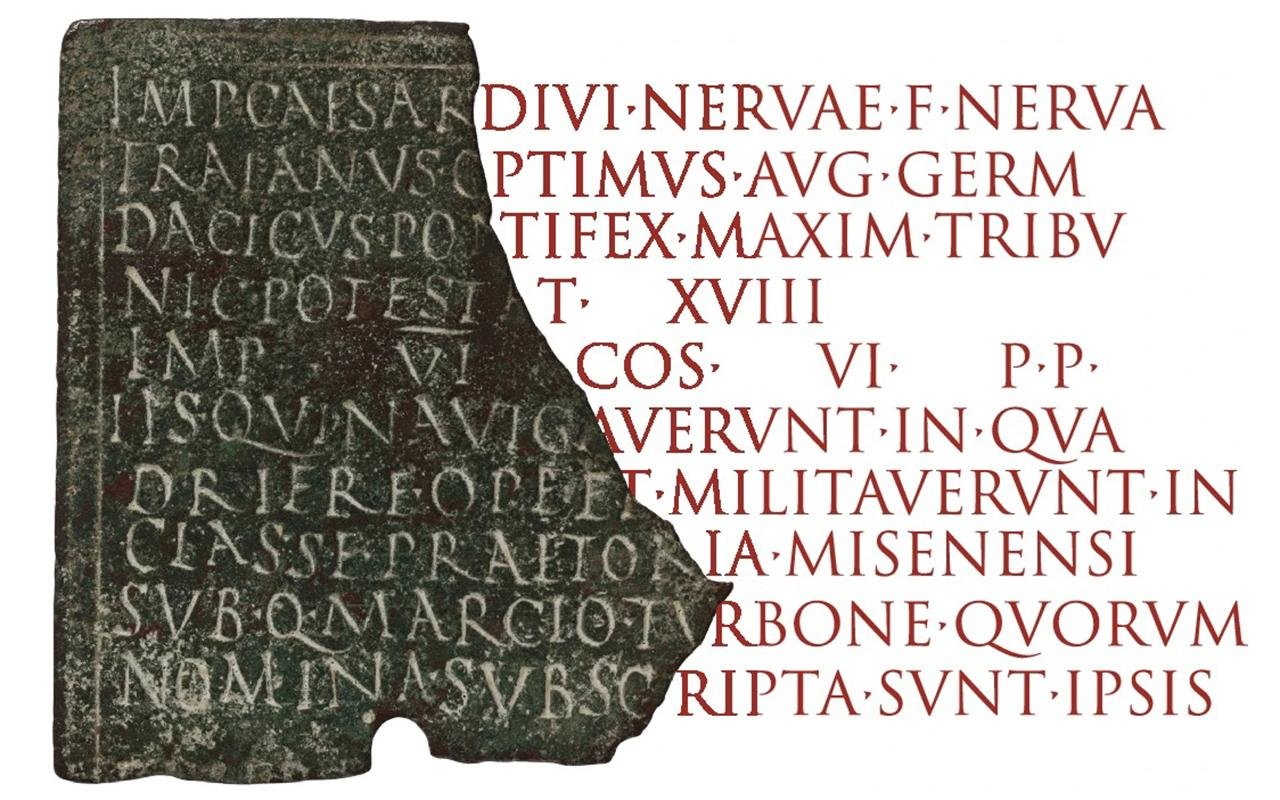
AI tool helps scholars restore and decode ancient Roman inscriptions with missing words
Fragment of a bronze military diploma from Sardinia, issued by Emperor Trajan to a sailor on a warship, dating to the second century CE. Public domain via the Metropolitan Museum of Art.

Now, researchers at Google DeepMind and their academic collaborators have developed Aeneas, an artificial intelligence tool named after the Trojan hero of Roman mythology. Aeneas can restore missing words, detect the date and place of writing, and seek parallels with other inscriptions within seconds.

Aeneas was trained on over 176,000 inscriptions from vast epigraphic databases such as EDR (Epigraphic Database Roma), Heidelberg, and Clauss-Slaby. That content includes both text and images and spans over 16 million characters. Aeneas doesn’t simply search for similar phrases—instead, it identifies historical patterns across time and geography.

“What makes them unique is that they are written by the ancient people themselves, across all social classes, on any subject,” said Yannis Assael, a Google DeepMind researcher and co-author of the study. “They’re not filtered by elite historians; they’re the real voices of the past.”
AI tool helps scholars restore and decode ancient Roman inscriptions with missing words
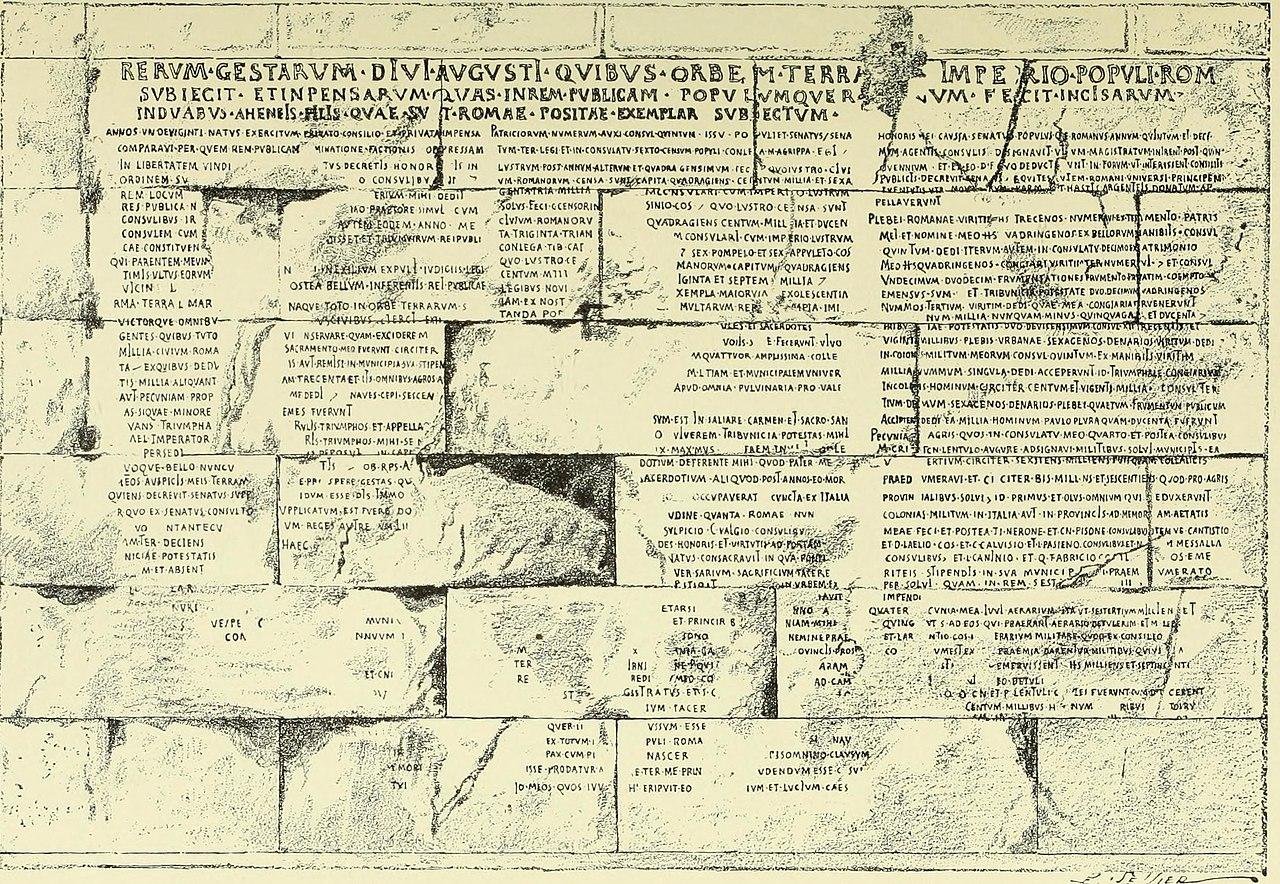
Drawing of the Res Gestae Divi Augusti. Public domain

But many of these inscriptions are fragmentary, and their definitive origins are uncertain. According to Thea Sommerschield, an epigrapher at the University of Nottingham who co-developed the AI model, “Studying history through inscriptions is like solving a gigantic jigsaw puzzle. You can’t solve the puzzle with a single isolated piece, even though you know information like its color or its shape.”

RelatedStories

Nondestructive DNA sampling uncovers 1,300 years of history preserved in ancient parchments

Nondestructive DNA sampling uncovers 1,300 years of history preserved in ancient parchments

May 22, 2026
Ancient Venetic sanctuary with rare inscriptions unearthed beneath road project in Italy

Ancient Venetic sanctuary with rare inscriptions unearthed beneath road project in Italy

May 21, 2026

Aeneas helps by comparing a new inscription with thousands of known examples and suggesting possible reconstructions. The model can recover missing Latin text with up to 73% accuracy when the gap is limited to ten characters. When the length is unknown, accuracy drops to 58%. It can also assign texts to one of the 62 provinces with 72% accuracy and estimate dates within approximately 13 years.

In one instance, Aeneas assessed the famous Res Gestae Divi Augusti, a victory inscription wherein Emperor Augustus listed his achievements. Historians continue to debate the date of the work. Aeneas suggested two probable date ranges—10 to 1 BCE and 10 to 20 CE—which match prevailing scholarly views.

The tool was found to be useful for historians. In a cooperative test, 23 experts utilized Aeneas to examine inscriptions and discovered its recommendations useful in 90% of cases. But although Aeneas offers powerful support, experts point out that it is no replacement for human expertise.

Aeneas builds on an earlier Google project, Ithaca, designed to aid in the interpretation of ancient Greek inscriptions. As with its predecessor, Aeneas is available to anyone: there’s an interactive version at predictingthepast.com, and the code and dataset have been open-sourced.
More information: Assael, Y., Sommerschield, T., Cooley, A. et al. (2025). Contextualizing ancient texts with generative neural networks. Nature. doi:10.1038/s41586-025-09292-5

Share:

Share on Facebook Share on X (Twitter) Share on LinkedIn Share on Pinterest Share on WhatsApp Share on Email

You May Also Like...

Ancient shipwreck with 300 amphorae found off Italy could reshape views of Mediterranean wine trade
Archaeology

Ancient shipwreck with 300 amphorae found off Italy could reshape views of Mediterranean wine trade

May 29, 2026
Ancient DNA reveals 700-kilometer migration along Peru’s coast before the Inca Empire
Anthropology

Ancient DNA reveals 700-kilometer migration along Peru’s coast before the Inca Empire

May 29, 2026
6,000-year-old mega-structure unearthed at prehistoric settlement in Romania
Archaeology

6,000-year-old mega-structure unearthed at prehistoric settlement in Romania

May 29, 2026
Medieval bone study identifies microbial communities driving archaeological bone degradation and preservation
Anthropology

Medieval bone study identifies microbial communities driving archaeological bone degradation and preservation

May 28, 2026
A large hidden hydraulic system mapped around the Urartian fortress of Argishtikhinili in Armenia
Archaeology

A large hidden hydraulic system mapped around the Urartian fortress of Argishtikhinili in Armenia

May 28, 2026
Sasanian military helmets reveal advanced brass technology across the Persian Empire
Archaeology

Sasanian military helmets reveal advanced brass technology across the Persian Empire

May 28, 2026

Follow us


Instagram
242K

Facebook
117K

Threads
47K

LinkedIn
15K

Twitter
6K

YouTube
1K
Ancient shipwreck with 300 amphorae found off Italy could reshape views of Mediterranean wine trade

Ancient shipwreck with 300 amphorae found off Italy could reshape views of Mediterranean wine trade

May 29, 2026
Ancient DNA reveals 700-kilometer migration along Peru’s coast before the Inca Empire

Ancient DNA reveals 700-kilometer migration along Peru’s coast before the Inca Empire

May 29, 2026
6,000-year-old mega-structure unearthed at prehistoric settlement in Romania

6,000-year-old mega-structure unearthed at prehistoric settlement in Romania

May 29, 2026
Medieval bone study identifies microbial communities driving archaeological bone degradation and preservation

Medieval bone study identifies microbial communities driving archaeological bone degradation and preservation

May 28, 2026

Archaeology News online magazine

Archaeology News is an international online magazine that covers all aspects of archaeology.


Categories

  • Academics
    • Books
    • Conferences
    • Universities
  • Articles
  • Download
  • Game
  • News
    • Anthropology
    • Archaeology
    • Paleontology
  • Quiz
  • Tours

Subscribe to our newsletter

© 2024 - Archaeology News Online Magazine. All Rights Reserved.

  • About
  • Privacy Policy
  • Terms of Use
  • Donation
  • Contact

Manage Consent
To provide the best experiences, we use technologies like cookies to store and/or access device information. Consenting to these technologies will allow us to process data such as browsing behavior or unique IDs on this site. Not consenting or withdrawing consent, may adversely affect certain features and functions.
Functional Always active
The technical storage or access is strictly necessary for the legitimate purpose of enabling the use of a specific service explicitly requested by the subscriber or user, or for the sole purpose of carrying out the transmission of a communication over an electronic communications network.
Preferences
The technical storage or access is necessary for the legitimate purpose of storing preferences that are not requested by the subscriber or user.
Statistics
The technical storage or access that is used exclusively for statistical purposes. The technical storage or access that is used exclusively for anonymous statistical purposes. Without a subpoena, voluntary compliance on the part of your Internet Service Provider, or additional records from a third party, information stored or retrieved for this purpose alone cannot usually be used to identify you.
Marketing
The technical storage or access is required to create user profiles to send advertising, or to track the user on a website or across several websites for similar marketing purposes.
  • Manage options
  • Manage services
  • Manage {vendor_count} vendors
  • Read more about these purposes
View preferences
  • {title}
  • {title}
  • {title}
  • Home
  • News
    • Archaeology
    • Anthropology
    • Paleontology
  • Academic
    • Books
    • Conferences
    • Universities
  • Articles
  • VR Tours
  • Quiz & Game
  • Download
  • Encyclopedia
  • Forum

About  .  Contact  .  Donation

© 2024 - Archaeology News Online Magazine. All Rights Reserved