• About
  • Privacy Policy
  • Terms of Use
  • Donation
  • Contact
No Result
View All Result
Archaeology News
  • Home
  • News
    • Archaeology
    • Anthropology
    • Paleontology
  • Academics
    • Books
    • Conferences
    • Universities
  • Articles
  • VR Tours
  • Quiz & Game
  • Download
  • Encyclopedia
  • Forum
Archaeology News
No Result
View All Result
Home News Anthropology

Çatalhöyük excavations uncover “House of the Dead” with evidence of ritual practices

by Dario Radley
August 31, 2025

Archaeologists at Çatalhöyük, one of the most important sites in central Türkiye, have unearthed new evidence of ritual activity that sheds light on early town life and spiritual practices. The site, located on the edge of the Konya Plain near the modern city of Konya, was occupied from 7100 to 5950 BCE and is commonly described as a proto-city. The population at its height was 3,000 to 8,000 residents who lived in tightly packed mud-brick houses on approximately 34 acres of land.
DNA reveals female-centered society in 9,000-year-old Neolithic city of Çatalhöyük
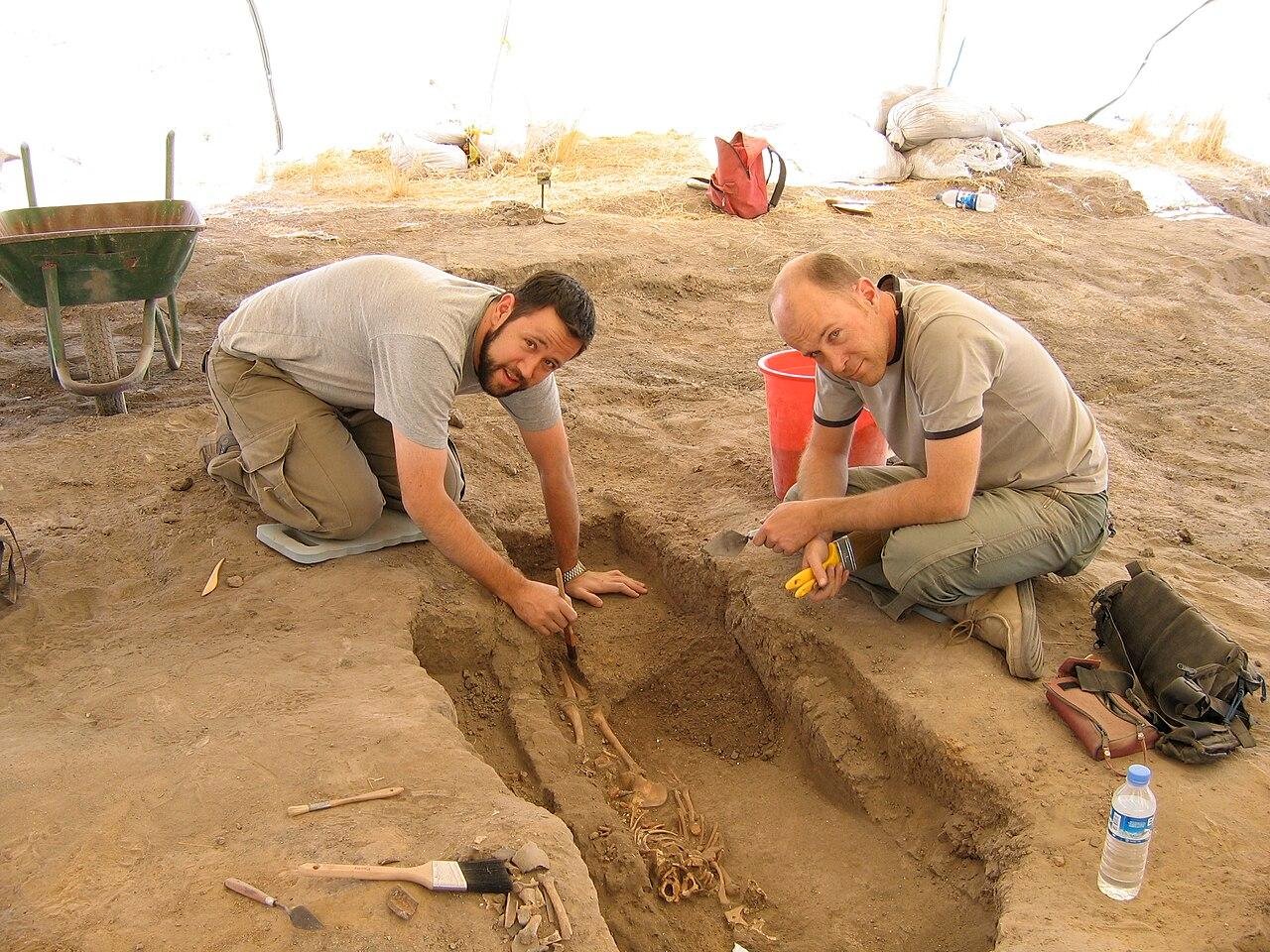
Catalhoyuk excavation, 2006: Archaeologists excavating a child burial. Credit: Dr. Colleen Morgan / CC BY 2.0

The settlement grew in cycles of building and rebuilding. Each house would be inhabited for roughly 80 years before being systematically dismantled. The walls were deconstructed and compacted to construct new foundations, eventually forming the large clay mounds that dominate the site today. At least eighteen layers of settlement have been discovered by archaeologists within these mounds, representing a long sequence of human use.

The most recent excavations, conducted under the direction of Prof. Dr. Arkadiusz Marciniak from the Poznań University Institute of Prehistory in Poland, focused on the settlement’s eastern part. There, researchers uncovered a complex of buildings arranged around a courtyard. Unlike dwellings, they do not appear to have had residential purposes.

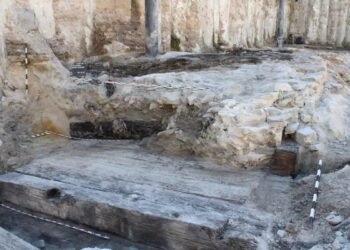
The most important structure is a building that archaeologists have named the “House of the Dead” or “Spiritual House.” Beneath its floor, the bodies of twenty people were deposited. According to the archaeologists, those people likely died elsewhere and were buried ceremonially in this house.
DNA reveals female-centered society in 9,000-year-old Neolithic city of Çatalhöyük
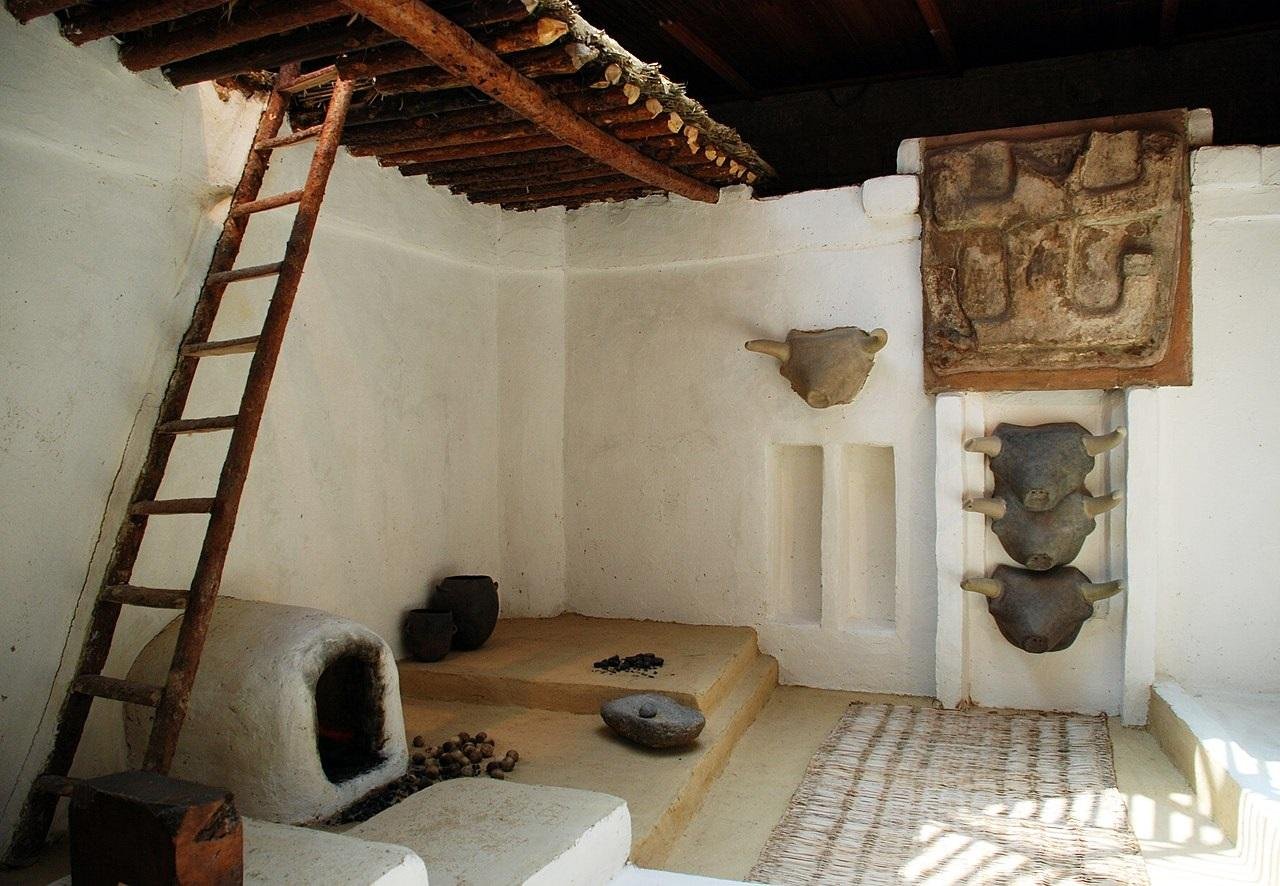
On-site restoration of a typical interior. Credit: Elelicht / CC BY-SA 3.0

In addition, excavators uncovered a massive ritual building with painted walls and fourteen platforms, to be excavated further during the coming season. A smaller plastered structure, occupied for a long time but not for domestic purposes, was unearthed as well. In one of the oldest structures within this area of the site, there were three burials beneath its platforms, though radiocarbon dating is needed to establish their date.
RelatedStories

Ancient birch tar reveals how Europe’s first farmers chewed, cooked, and crafted 6,000 years ago

Ancient birch tar reveals how Europe’s first farmers chewed, cooked, and crafted 6,000 years ago

October 15, 2025
Systematic human bone modification discovered in Neolithic Liangzhu civilization in China

Systematic human bone modification discovered in Neolithic Liangzhu civilization in China

October 4, 2025

These results illustrate how Çatalhöyük houses were used as shelters and also as sacred spaces. Ritual, burial, and symbolic wall painting indicate how religious and everyday life were connected. The “House of the Dead” provides new insight into funerary traditions and suggests that group memory and ceremonial practices played a central part in this early society.

A UNESCO World Heritage Site since 2012, Çatalhöyük continues to redefine our understanding of the transition process from hunter-gatherer to farmer, along with the emergence of urbanism and human belief systems.

To view the original image and learn more about this discovery, you can visit this page.
Share250Tweet156Share44ShareSend

You May Also Like...

Roman roads reimagined: new digital map expands the empire’s network to nearly 300,000 km
Archaeology

Roman roads reimagined: new digital map expands the empire’s network to nearly 300,000 km

November 9, 2025
New study debunks myth of Easter Island's ecological collapse
Archaeology

Rats and the fall of Rapa Nui’s forests: invasive species, not humans, drove the island’s deforestation

November 9, 2025
2.75-million-year-old stone tools in Kenya reveal 300,000 years of technological stability
Anthropology

2.75-million-year-old stone tools in Kenya reveal 300,000 years of technological stability

November 9, 2025
DNA confirms identity and violent death of Béla, the assassinated duke of Macsó
Anthropology

DNA confirms identity and violent death of Béla, the assassinated duke of Macsó

November 8, 2025
Archaeologists reveal the forgotten 16th-century city beneath modern Gothenburg
Archaeology

Archaeologists reveal the forgotten 16th-century city beneath modern Gothenburg

November 8, 2025
Misread medieval tale misled generations of historians about the Black Death's spread, study finds
Archaeology

Misread medieval tale misled generations of historians about the Black Death’s spread, study finds

November 7, 2025

Comments 2

  1. Editorial Team says:
    1 second ago
    Disclaimer: This website is a science-focused magazine that welcomes both academic and non-academic audiences. Comments are written by users and may include personal opinions or unverified claims. They do not necessarily reflect the views of our editorial team or rely on scientific evidence.
    Reply
  2. Craig Johnsrud says:
    2 months ago

    Very captivatig reporting. Realistic and responsible science. Well written,with photos that follw the artical
    Thank you

    Reply
  3. Araxi Ashkhen Guscott says:
    2 months ago

    This interest me a great deal because the origin of my roots, our genes, my gene comes around or from these regions. Recently I glanced at the picture of an ancient Queen on Facebook strangely enough her nose looked so much like mine. I thought it is so strange…Perhaps one day our DNA would give us more proofs from where we originated really and to whom we are really related nowadays after many centuries had gone past.
    I am afraid to give away my email in case I get hate messages from people who do not like what I just wrote. Sorry for NOT giving you my email address.

    Reply

Leave a Reply Cancel reply

Your email address will not be published. Required fields are marked *

Follow us


Instagram
245K

Facebook
117K

Threads
45K

LinkedIn
14K

Twitter
6K

YouTube
1K
  • Trending
  • Comments
  • Latest
Shipwreck Salvage. Credit: rawpixel.com / Public Domain

2,000-year-old shipwreck discovered off Turkish coast with remarkably preserved stacked ceramics

July 2, 2025
Viking age DNA reveals 9,000-year-old HIV-resistant gene originating near the Black Sea

Viking age DNA reveals 9,000-year-old HIV-resistant gene originating near the Black Sea

May 18, 2025
Complete copy of the Canopus Decree unearthed in Egypt after 150 years

Complete copy of the Canopus Decree unearthed in Egypt after 150 years

September 13, 2025
Mystery of Armenia’s 6,000-year-old dragon stones solved

Mystery of Armenia’s 6,000-year-old dragon stones solved

September 23, 2025
Moses may be named in ancient Egyptian mine inscriptions, sparking debate over earliest biblical references

Moses may be named in ancient Egyptian mine inscriptions, sparking debate over earliest biblical references

July 31, 2025
Moses may be named in ancient Egyptian mine inscriptions, sparking debate over earliest biblical references

Moses may be named in ancient Egyptian mine inscriptions, sparking debate over earliest biblical references

3D analysis reveals Shroud of Turin image likely came from sculpture, not Jesus’ body

3D analysis reveals Shroud of Turin image likely came from sculpture, not Jesus’ body

$1 million prize offered to decipher 5,300-year-old Indus Valley script

$1 million prize offered to decipher 5,300-year-old Indus Valley script

Oldest ever genetic data from a human relative found in 2-million-year-old fossilized teeth

Oldest ever genetic data from a human relative found in 2-million-year-old fossilized teeth

Exceptionally large Roman shoes discovered at Magna fort near Hadrian’s Wall

Exceptionally large Roman shoes discovered at Magna fort near Hadrian’s Wall

Roman roads reimagined: new digital map expands the empire’s network to nearly 300,000 km

Roman roads reimagined: new digital map expands the empire’s network to nearly 300,000 km

November 9, 2025
New study debunks myth of Easter Island's ecological collapse

Rats and the fall of Rapa Nui’s forests: invasive species, not humans, drove the island’s deforestation

November 9, 2025
2.75-million-year-old stone tools in Kenya reveal 300,000 years of technological stability

2.75-million-year-old stone tools in Kenya reveal 300,000 years of technological stability

November 9, 2025
DNA confirms identity and violent death of Béla, the assassinated duke of Macsó

DNA confirms identity and violent death of Béla, the assassinated duke of Macsó

November 8, 2025
Archaeologists reveal the forgotten 16th-century city beneath modern Gothenburg

Archaeologists reveal the forgotten 16th-century city beneath modern Gothenburg

November 8, 2025

Archaeology News online magazine

Archaeology News is an international online magazine that covers all aspects of archaeology.


Categories

  • Academics
    • Books
    • Conferences
    • Universities
  • Articles
  • Download
  • Game
  • News
    • Anthropology
    • Archaeology
    • Paleontology
  • Quiz
  • Tours

Subscribe to our newsletter

© 2024 - Archaeology News Online Magazine. All Rights Reserved.

  • About
  • Privacy Policy
  • Terms of Use
  • Donation
  • Contact

Welcome Back!

Login to your account below

Forgotten Password? Sign Up

Create New Account!

Fill the forms below to register

All fields are required. Log In

Retrieve your password

Please enter your username or email address to reset your password.

Log In

Add New Playlist

Manage Consent
To provide the best experiences, we use technologies like cookies to store and/or access device information. Consenting to these technologies will allow us to process data such as browsing behavior or unique IDs on this site. Not consenting or withdrawing consent, may adversely affect certain features and functions.
Functional Always active
The technical storage or access is strictly necessary for the legitimate purpose of enabling the use of a specific service explicitly requested by the subscriber or user, or for the sole purpose of carrying out the transmission of a communication over an electronic communications network.
Preferences
The technical storage or access is necessary for the legitimate purpose of storing preferences that are not requested by the subscriber or user.
Statistics
The technical storage or access that is used exclusively for statistical purposes. The technical storage or access that is used exclusively for anonymous statistical purposes. Without a subpoena, voluntary compliance on the part of your Internet Service Provider, or additional records from a third party, information stored or retrieved for this purpose alone cannot usually be used to identify you.
Marketing
The technical storage or access is required to create user profiles to send advertising, or to track the user on a website or across several websites for similar marketing purposes.
Manage options Manage services Manage {vendor_count} vendors Read more about these purposes
View preferences
{title} {title} {title}
  • Home
  • News
    • Archaeology
    • Anthropology
    • Paleontology
  • Academics
    • Books
    • Conferences
    • Universities
  • Articles
  • VR Tours
  • Quiz & Game
  • Download
  • Encyclopedia
  • Forum

About  .  Contact  .  Donation

© 2024 - Archaeology News Online Magazine. All Rights Reserved