
A manuscript hidden in plain sight at the National Central Library of Rome has revealed a new copy of what scholars consider the earliest known poem in English. Researchers from Trinity College Dublin identified an early ninth-century manuscript containing Cædmon’s Hymn, a short Old English poem written more than 1,300 years ago and linked to the beginnings of English literary history.
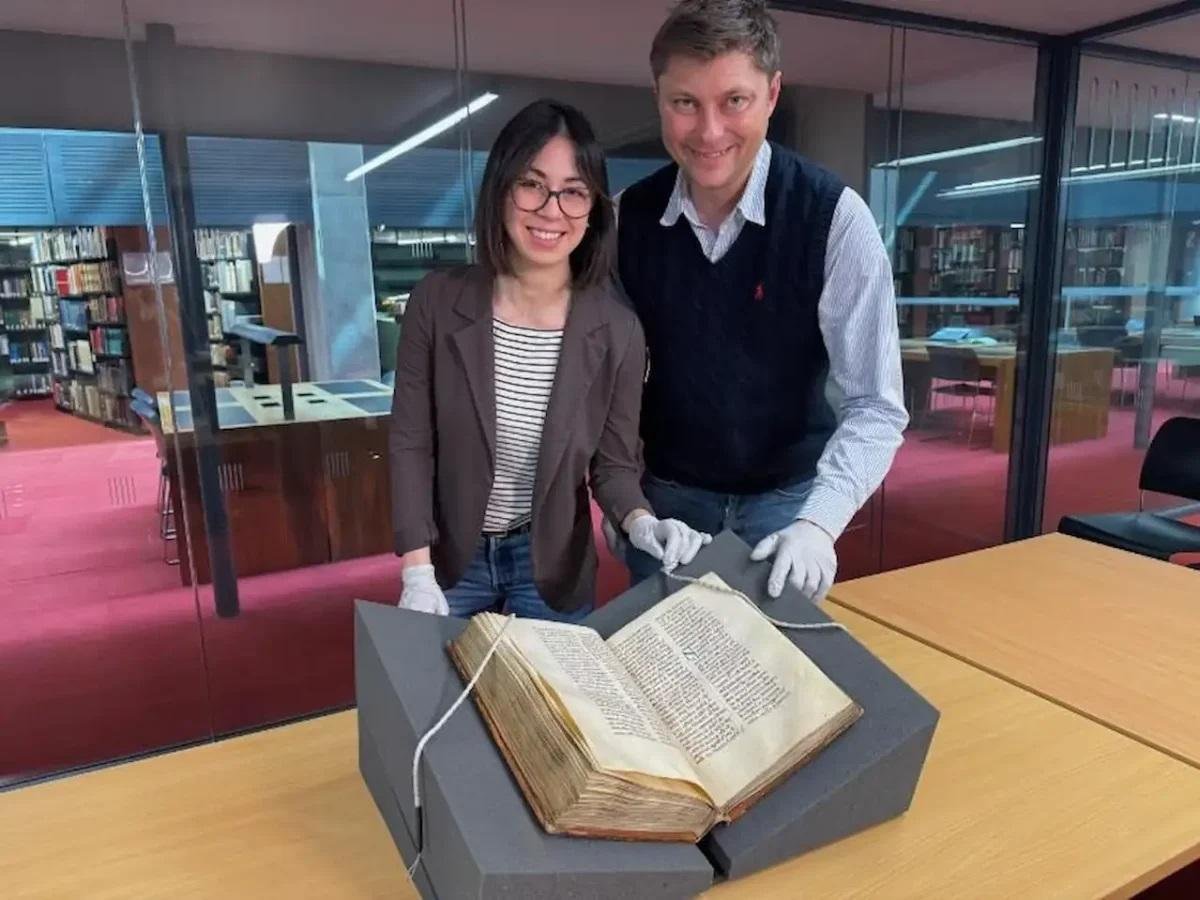
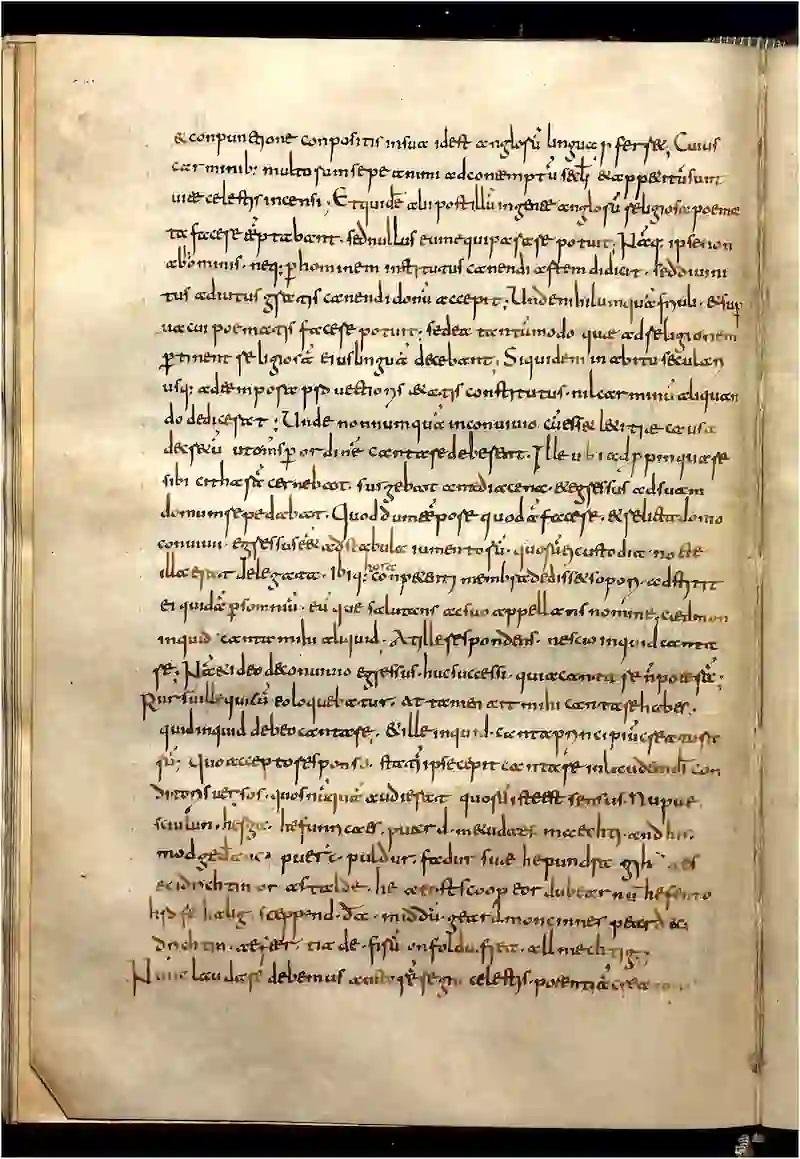
The manuscript dates to roughly 800 to 830 CE, making it the third oldest surviving copy of the poem. What sets this version apart is where the Old English text appears. In the two older surviving manuscripts, held in Cambridge and St. Petersburg, the poem survives mainly in Latin copies of Bede’s Ecclesiastical History of the English People, with the Old English lines added later in margins or at the end. In the Rome manuscript, the Old English poem sits directly inside the main Latin text.
This detail changes how scholars understand the reception of Old English poetry in the early medieval period. Bede himself wrote his history in Latin and translated the poem rather than including the original English version. The new manuscript shows readers restored the Old English text into the manuscript tradition within about a century of Bede completing his work.
Cædmon’s Hymn is a nine-line religious poem praising God as creator of the world. According to medieval tradition, the poem was composed by Cædmon, a cowherd linked to Whitby Abbey in present-day North Yorkshire. Bede tells the story of a man who left a feast embarrassed because he could not perform poetry, then experienced a dream in which he was instructed to sing about creation.
Only around three million words of Old English survive today, and most come from the tenth and eleventh centuries. Texts from the seventh century are far rarer, which makes Cædmon’s Hymn especially important for studying the earliest written stages of English.
The Rome manuscript offers more than a new witness to the poem. Scholars identified it as the earliest surviving text of the Northumbrian “eordu” recension, a textual version of the poem distinguished by a particular wording in line 5b. Before this discovery, the earliest known manuscript preserving this recension came from the late twelfth century. This pushes the known existence of this version back by more than 300 years.
Researchers also noted unusual punctuation in the manuscript. The Old English text appears to use interword interpuncts, small marks placed between words. This practice is highly unusual in Old English manuscripts and suggests earlier copying traditions may have been more varied than surviving evidence has indicated.
The manuscript itself has a complicated history. It was produced at the Benedictine Abbey of Nonantola in northern Italy during the first third of the ninth century. Later, amid the turmoil of the Napoleonic period, the codex was moved to Rome for safekeeping. It was later stolen from the church of San Bernardo alle Terme, passed through private ownership, and eventually entered the holdings of the National Central Library of Rome.
Because of this tangled ownership history, many Bede scholars believed the manuscript had been lost since the 1970s. Its existence was only briefly noted in scholarship, and no one had identified the embedded Old English poem.
The rediscovery became possible after the library digitized the manuscript and made the images freely accessible online. Researchers in Ireland were then able to study the codex remotely and recognize its significance.
The find also highlights links between England and Italy in the early medieval world. A manuscript copied in an Italian monastery preserved one of the earliest witnesses to an English poem composed in Northumbria, showing how texts and ideas moved across Europe centuries before the modern age.
The study, published in Early Medieval England and its Neighbours, includes a transcription and new critical edition of the text. For scholars of language history, literature, and manuscript culture, the Rome manuscript adds an important new chapter to the story of early English writing.




Disclaimer: This website is a science-focused magazine that welcomes both academic and non-academic audiences. Comments are written by users and may include personal opinions or unverified claims. They do not necessarily reflect the views of our editorial team or rely on scientific evidence.
Comment Policy: We kindly ask all commenters to engage respectfully. Comments that contain offensive, insulting, degrading, discriminatory, or racist content will be automatically removed.
Very interesting information has been reproduced here. Thank you