• About
  • Privacy Policy
  • Terms of Use
  • Donation
  • Contact
No Result
View All Result
Archaeology News
  • Home
  • News
    • Archaeology
    • Anthropology
    • Paleontology
  • Academic
    • Books
    • Conferences
    • Universities
  • Articles
  • VR Tours
  • Quiz & Game
  • Download
  • Encyclopedia
  • Forum
Archaeology News
No Result
View All Result
Home News Anthropology

Denisovan and Neanderthal DNA helped the first Americans survive, study finds

by Dario Radley
August 23, 2025

The first people to set foot in the Americas crossed with them not only stone technology and survival skills across the icy expanse of the Bering Strait. Along with these, a new study published in Science indicates that they also carried a genetic legacy inherited from two extinct relatives—Neanderthals and Denisovans—that could have helped them survive in a new and unfamiliar environment.
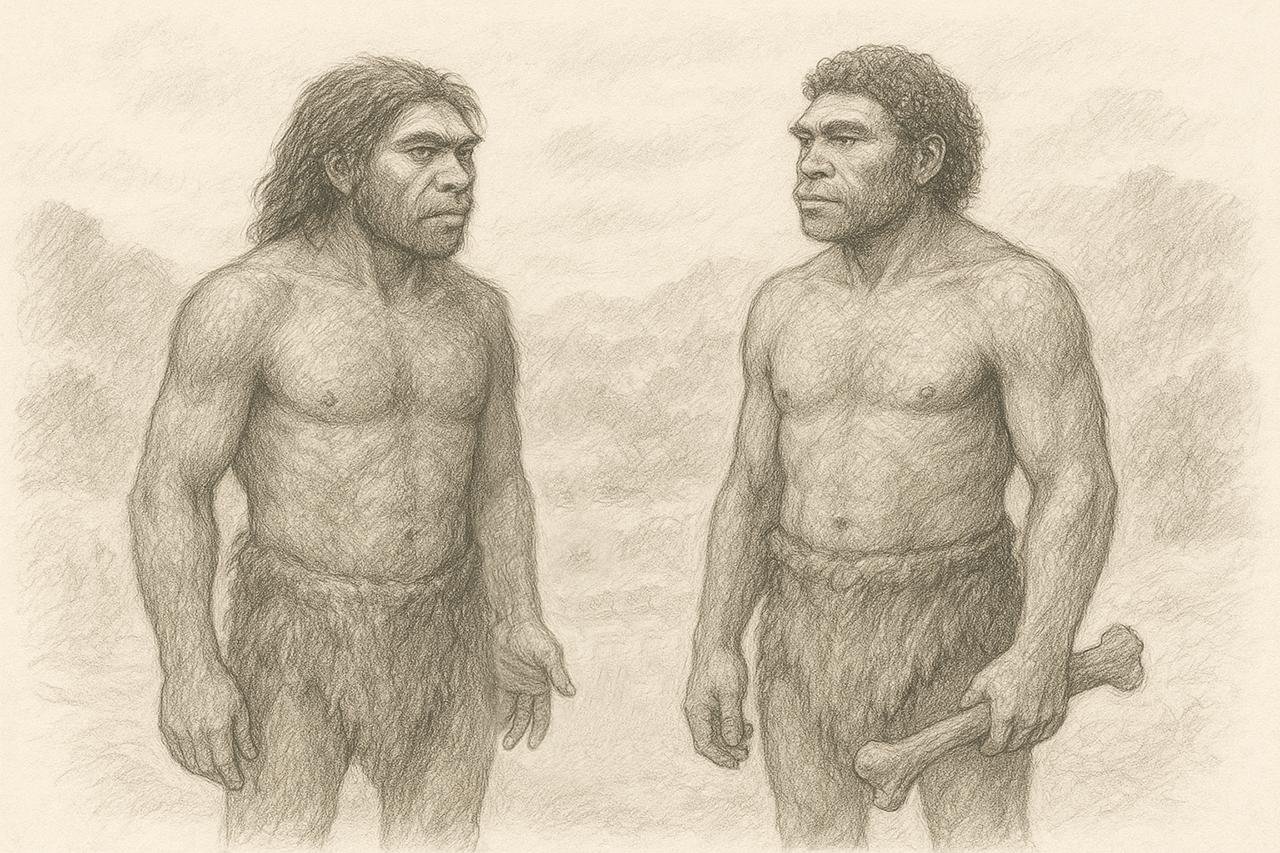
Denisovan and Neanderthal DNA helped the first Americans survive, study finds
Denisovan and Neanderthal DNA helped the first Americans survive, study finds.

The international research team, headed by the University of Colorado Boulder’s Fernando Villanea and Brown University’s David Peede, focused on the gene MUC19, which codes for mucin proteins involved in producing mucus. The proteins protect tissues from pathogens and may also play a role in immunity. Their findings suggest that Indigenous Americans inherited a version of the Denisovan-specific MUC19 that increased in frequency over time, perhaps because it offered an evolutionary advantage.

According to the study, one in three Mexicans today carries a copy of this Denisovan variant. It is found less often in others: about 20% of Peruvians and roughly 1% of Puerto Ricans and Colombians. Only about 1% of those of Central European ancestry have it. The difference, scientists suggest, reflects the higher proportion of Indigenous American DNA in Mexicans.

What amazed the scientists most was how the gene spread. The Denisovan DNA did not pass directly to modern humans but rather through Neanderthals. The Denisovan sequence is integrated within a larger Neanderthal-specific stretch of DNA, forming what Villanea described as “an Oreo, with a Denisovan center and Neanderthal cookies.” Genetic data suggest that Neanderthals first interbred with Denisovans and then passed on the combined DNA to humans. This is the first recorded case of a Denisovan gene entering humans with the help of a Neanderthal intermediary.
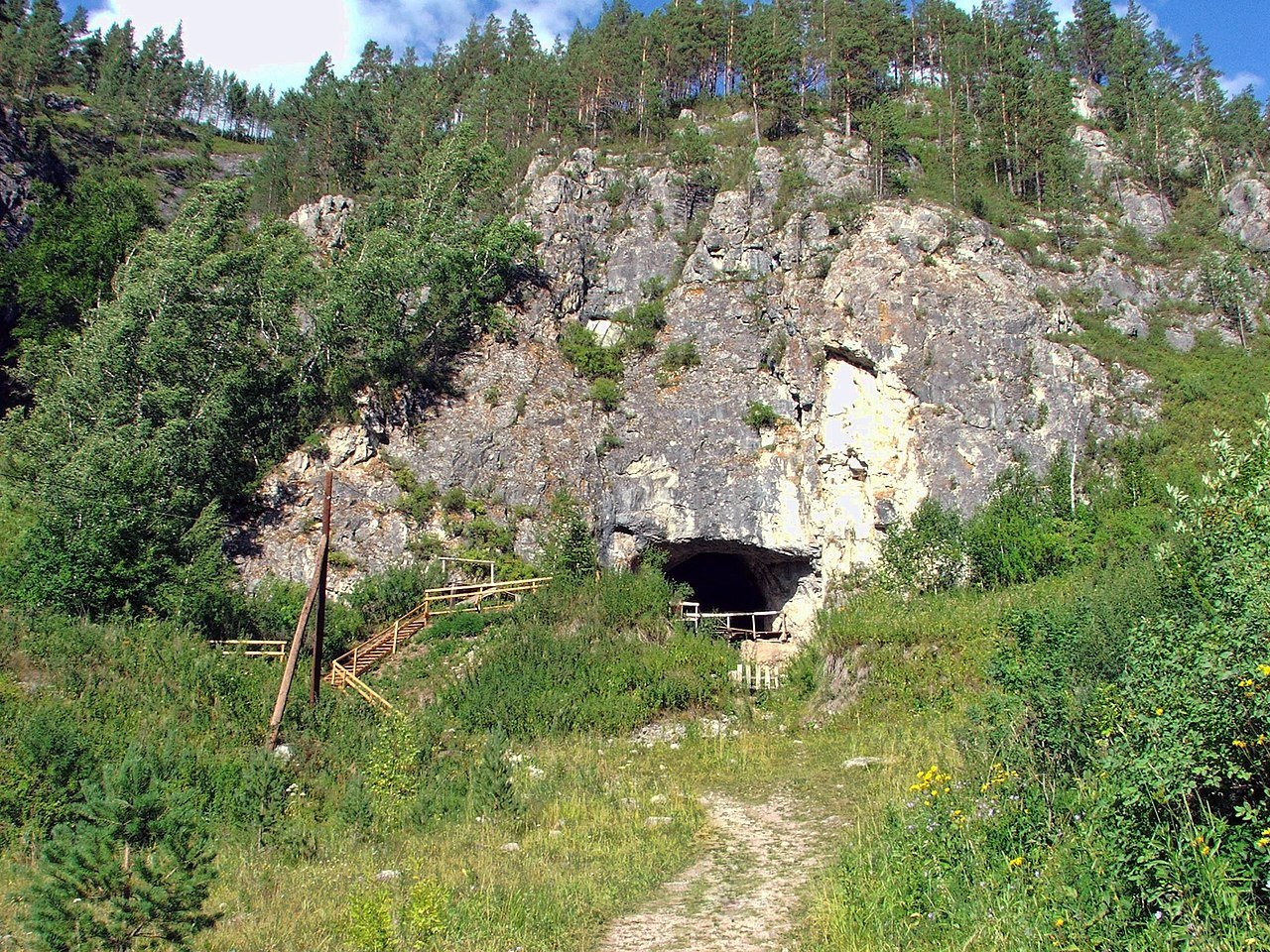
Denisovan and Neanderthal DNA helped the first Americans survive, study finds
Scientists found the first known Denisovan remains in Russia’s Denisova Cave, dating back over 50,000 years. Credit: Демин Алексей Барнаул / CC BY-SA 4.0

Researchers compared the genomes of ancient remains of 23 Indigenous Americans who lived before European contact, as well as genetic data from modern populations in Mexico, Peru, Colombia, and Puerto Rico. They also compared these with sequences from three Neanderthals and one Denisovan. Their research revealed that the segment of MUC19 that is associated with Denisovans is very long and contains variable number tandem repeats (VNTRs)—repeated segments of DNA that affect the manner in which the protein binds to sugars. Individuals who carry the archaic haplotype tend to have more VNTRs, which could potentially influence immunity.
RelatedStories

Oldest known dental treatment found in 59,000-year-old Neanderthal tooth from Siberia

Oldest known dental treatment found in 59,000-year-old Neanderthal tooth from Siberia

May 14, 2026
Homo erectus in Java: 140,000-year-old fossils found in submerged river valley

400,000-year-old Homo erectus proteins reveal genetic links to Denisovans and modern humans

May 14, 2026

The study provides proof that this package of genes underwent positive selection within Indigenous American populations—that is, it conferred some benefit that helped them survive. “In terms of evolution, this is an incredible leap,” Villanea said. “It shows an amount of adaptation and resilience within a population that is simply amazing.”
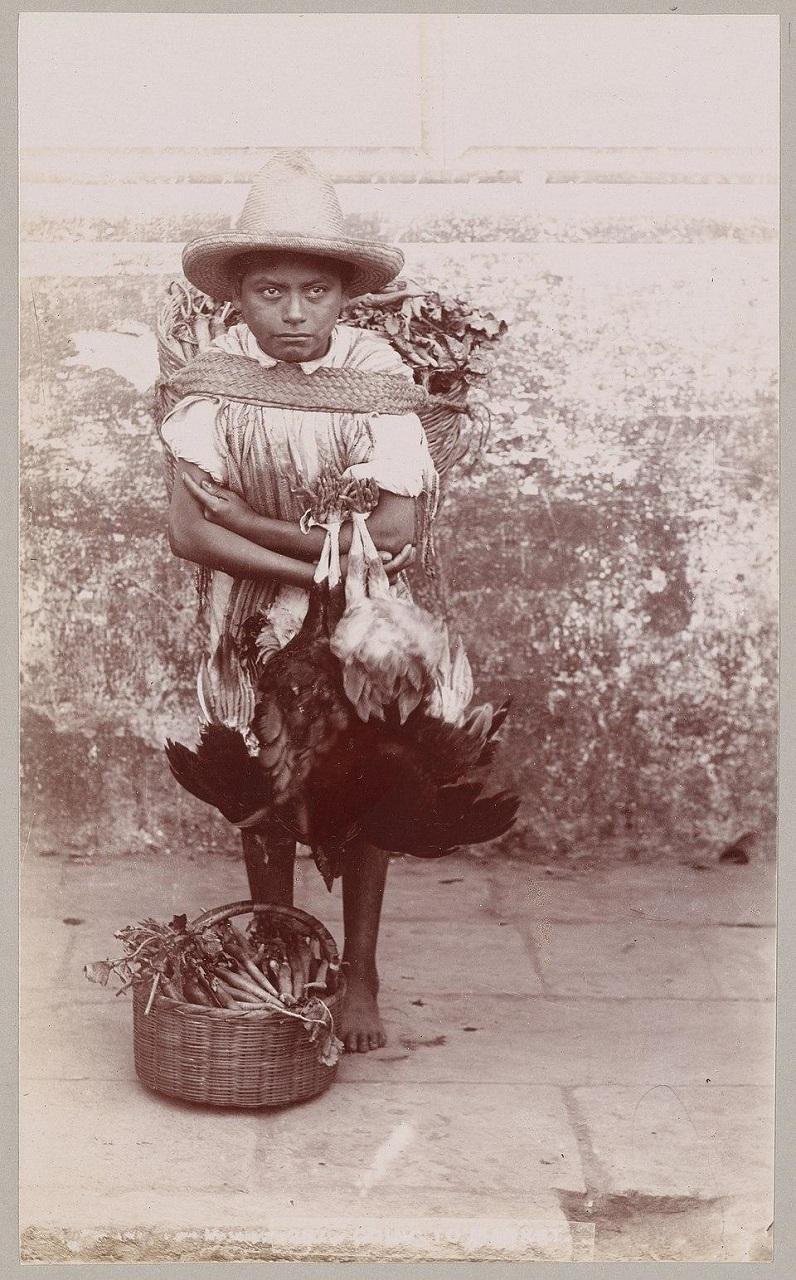
Denisovan and Neanderthal DNA helped the first Americans survive, study finds
1896 photograph of an Indigenous Mexican boy. Credit: Mayo & Weed / CC BY-SA 4.0

How this Denisovan variant reached so far in the Americas but not anywhere else is uncertain. Scientists indicate that the first inhabitants of the continent must have had to deal with new climates, foods, and pathogens, and that having the MUC19 variant helped them survive. Natural selection, over thousands of years, likely spread the gene through Indigenous peoples.

Though still enigmatic in many ways—Denisovans were identified only 15 years ago from DNA in a bone fragment in a Siberian cave—their genetic fingerprints remain. Up to 5% of the genome of some modern-day Oceanians is made up of Denisovan DNA. This latest research shows that their influence extended into the Americas, shaping the health and survival of Indigenous communities.

Villanea and his colleagues plan to look next at how different versions of MUC19 affect modern-day health, particularly among Latino and Indigenous American populations.
More information: Villanea, F. A., Peede, D., Kaufman, E. J., Añorve-Garibay, V., Chevy, E. T., Villa-Islas, V., … Huerta-Sánchez, E. (2025). The MUC19 gene: An evolutionary history of recurrent introgression and natural selection. Science (New York, N.Y.), 389(6762). doi:10.1126/science.adl0882

Share:

Share on Facebook Share on X (Twitter) Share on LinkedIn Share on Pinterest Share on WhatsApp Share on Email

You May Also Like...

1,000-year-old dingo burial in Australia reveals deep ties between Barkindji people and dingoes
Archaeology

1,000-year-old ritually buried dingo in Australia reveals deep ties between Barkindji people and dingoes

May 20, 2026
Ancient texts reveal how Persian and Greek rule shaped language in Central Asia
Archaeology

Ancient texts reveal how Persian and Greek rule shaped language in Central Asia

May 20, 2026
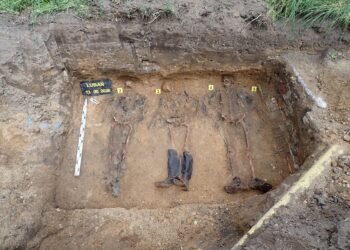
World War II mass grave in Poland reveals remains of German officer killed during Battle of Lauban
Anthropology

World War II mass grave in Poland reveals remains of German officer killed during Battle of Lauban

May 19, 2026
massive jar in Laos contained remains of 37 people, revealing ancient burial rituals and Asian trade links
Anthropology

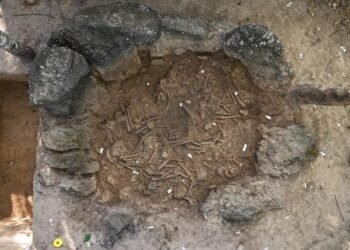
Massive jar in Laos contained remains of 37 people, revealing ancient burial rituals and Asian trade links

May 19, 2026
6,000-year-old necropolis in Spain rewrites origins of Europe’s first megalithic tombs
Archaeology

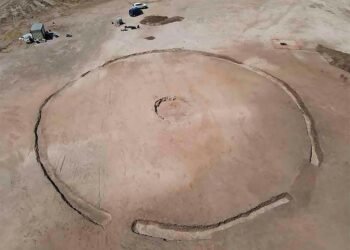
6,000-year-old necropolis in Spain rewrites origins of Europe’s first megalithic tombs

May 18, 2026
Ancient settlement with weaving workshop and longhouses uncovered in Germany gravel pit
Archaeology

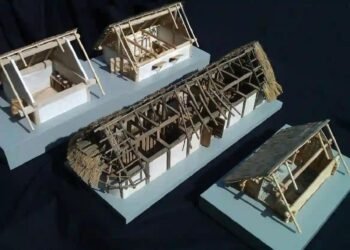
Ancient settlement with weaving workshop and longhouses uncovered in Germany gravel pit

May 17, 2026

Comments 2

  1. Editorial Team says:
    1 second ago

    Disclaimer: This website is a science-focused magazine that welcomes both academic and non-academic audiences. Comments are written by users and may include personal opinions or unverified claims. They do not necessarily reflect the views of our editorial team or rely on scientific evidence.

    Comment Policy: We kindly ask all commenters to engage respectfully. Comments that contain offensive, insulting, degrading, discriminatory, or racist content will be automatically removed.

  2. Mark D says:
    9 months ago

    Great insight, and great story. The first people to migrate from Asia into North and South America were essentially inhabiting a new planet with a whole new set of physical and mental challenges. The fact that they occupied everything from the Arctic north to Tierra Del Fuego so quickly suggests a lot a genetic resilience. One of the great stories of life on Earth.

  3. Rob Dunbar says:
    9 months ago

    It would be interesting to test for Denisovan DNA among indigenous peoples from The Arctic and Alaska as well as tribes further south of the land bridge to track the migration of the Neanderthal/Denison genes from north to south in North America

Follow us


Instagram
242K

Facebook
117K

Threads
46K

LinkedIn
14K

Twitter
6K

YouTube
1K
1,000-year-old dingo burial in Australia reveals deep ties between Barkindji people and dingoes

1,000-year-old ritually buried dingo in Australia reveals deep ties between Barkindji people and dingoes

May 20, 2026
Ancient texts reveal how Persian and Greek rule shaped language in Central Asia

Ancient texts reveal how Persian and Greek rule shaped language in Central Asia

May 20, 2026
World War II mass grave in Poland reveals remains of German officer killed during Battle of Lauban

World War II mass grave in Poland reveals remains of German officer killed during Battle of Lauban

May 19, 2026
massive jar in Laos contained remains of 37 people, revealing ancient burial rituals and Asian trade links

Massive jar in Laos contained remains of 37 people, revealing ancient burial rituals and Asian trade links

May 19, 2026

Archaeology News online magazine

Archaeology News is an international online magazine that covers all aspects of archaeology.


Categories

  • Academics
    • Books
    • Conferences
    • Universities
  • Articles
  • Download
  • Game
  • News
    • Anthropology
    • Archaeology
    • Paleontology
  • Quiz
  • Tours

Subscribe to our newsletter

© 2024 - Archaeology News Online Magazine. All Rights Reserved.

  • About
  • Privacy Policy
  • Terms of Use
  • Donation
  • Contact

Manage Consent
To provide the best experiences, we use technologies like cookies to store and/or access device information. Consenting to these technologies will allow us to process data such as browsing behavior or unique IDs on this site. Not consenting or withdrawing consent, may adversely affect certain features and functions.
Functional Always active
The technical storage or access is strictly necessary for the legitimate purpose of enabling the use of a specific service explicitly requested by the subscriber or user, or for the sole purpose of carrying out the transmission of a communication over an electronic communications network.
Preferences
The technical storage or access is necessary for the legitimate purpose of storing preferences that are not requested by the subscriber or user.
Statistics
The technical storage or access that is used exclusively for statistical purposes. The technical storage or access that is used exclusively for anonymous statistical purposes. Without a subpoena, voluntary compliance on the part of your Internet Service Provider, or additional records from a third party, information stored or retrieved for this purpose alone cannot usually be used to identify you.
Marketing
The technical storage or access is required to create user profiles to send advertising, or to track the user on a website or across several websites for similar marketing purposes.
  • Manage options
  • Manage services
  • Manage {vendor_count} vendors
  • Read more about these purposes
View preferences
  • {title}
  • {title}
  • {title}
  • Home
  • News
    • Archaeology
    • Anthropology
    • Paleontology
  • Academic
    • Books
    • Conferences
    • Universities
  • Articles
  • VR Tours
  • Quiz & Game
  • Download
  • Encyclopedia
  • Forum

About  .  Contact  .  Donation

© 2024 - Archaeology News Online Magazine. All Rights Reserved