• About
  • Privacy Policy
  • Terms of Use
  • Donation
  • Contact
No Result
View All Result
Archaeology News
  • Home
  • News
    • Archaeology
    • Anthropology
    • Paleontology
  • Academics
    • Books
    • Conferences
    • Universities
  • Articles
  • VR Tours
  • Quiz & Game
  • Download
  • Encyclopedia
  • Forum
Archaeology News
No Result
View All Result
Home News Archaeology

Ancient Maya astronomers accurately predicted solar eclipses centuries in advance

by Dario Radley
October 26, 2025

A recent study has decoded how Maya astronomers forecasted solar eclipses with astonishing accuracy more than a thousand years ago, revealing a sophisticated system of mathematics and observation that kept their predictions accurate for centuries.
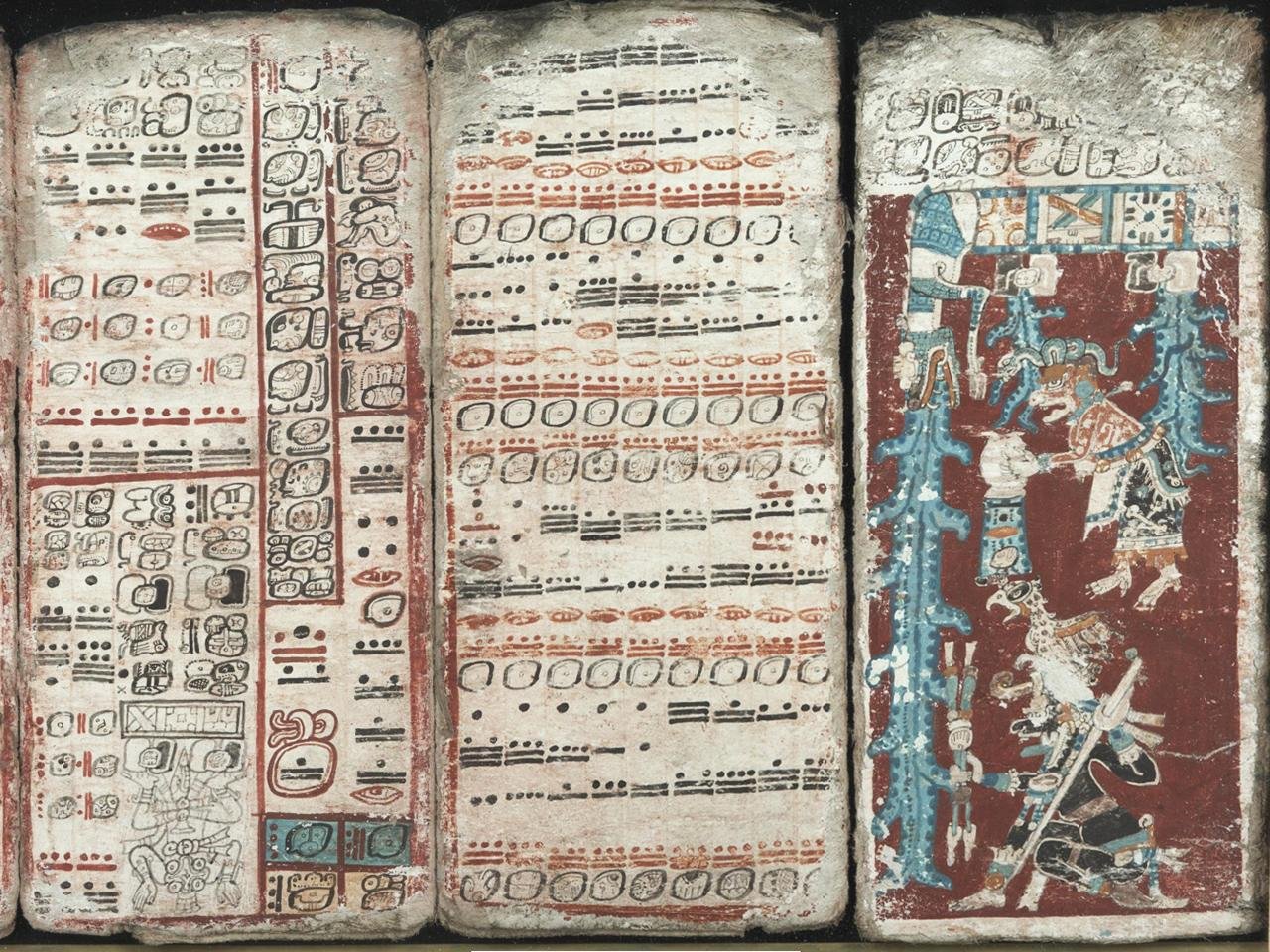
Ancient Maya astronomers accurately predicted solar eclipses centuries in advance
Sheets of the Dresden Codex depicting eclipses, multiplication tables, and the flood. Credit: Public Domain

The research, published in Science Advances, examines the famous eclipse table of the Dresden Codex, a 12th-century CE Maya manuscript. The codex, one of the few pre-Columbian American books in existence, preserves the culmination of centuries of astronomical knowledge gathered by Maya daykeepers, priests, and scientists who watched the skies with unwavering dedication.

For decades, scholars had presumed the 405-month cycle in the codex was designed exclusively for eclipse prediction. The new study refutes that hypothesis. Scholars John Justeson and Justin Lowry found that the table was conceived as a lunar calendar, which was later adapted to track solar eclipses by aligning it with the Maya 260-day ritual calendar. That calendar, which was used for divination and prophecy, helped align celestial events with religious and social life.

Mathematical modeling revealed that the 11,960-day duration of the table (which equals 405 lunar months) exactly matches 46 cycles of the 260-day calendar. This synchronization enabled Maya astronomers to predict when eclipses would coincide with particular ritual dates, blending scientific observation and spiritual significance.
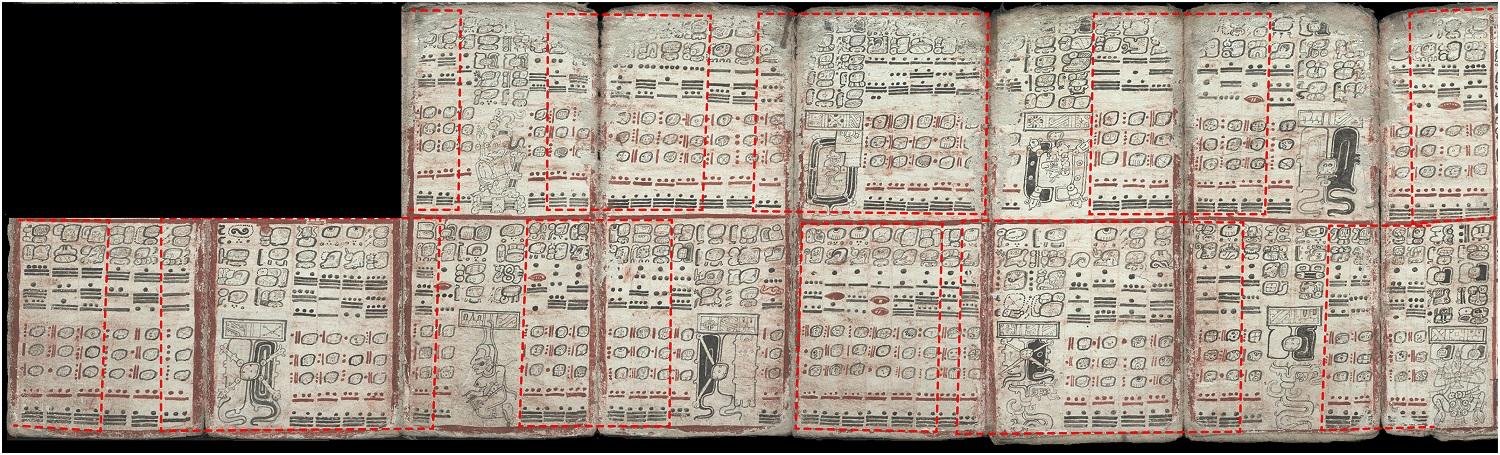
Ancient Maya astronomers accurately predicted solar eclipses centuries in advance
Eclipse table of the Dresden Codex. Credit: Justeson, J., & Lowry, J., Science Advances (2025)

Each “station” in the eight-page eclipse table represents a new moon—potential moments when the Sun could be obscured. These are typically spaced six lunar months, or about 177 days, apart, which is the interval it takes for the Moon to return to the same alignment with Earth and the Sun. Keeping its accuracy over the centuries, however, was no simple task.


RelatedStories

Archaeologists uncover oldest and largest Maya monument built to represent the cosmos

Archaeologists uncover oldest and largest Maya monument built to represent the cosmos

November 10, 2025
Misread medieval tale misled generations of historians about the Black Death's spread, study finds

Misread medieval tale misled generations of historians about the Black Death’s spread, study finds

November 7, 2025

Earlier theories had assumed the Maya simply restarted the table when it ended, but the researchers discovered something far more precise. The Maya used overlapping cycles—resetting their tables at 223- or 358-lunar-month intervals, corresponding to the saros and inex eclipse cycles known today. The points of reset corrected tiny discrepancies that accumulated over time, allowing predictions to remain accurate for more than 700 years.

By combining four resets at 358 months for every one at 223, the Maya managed to calibrate their tables to anticipate every solar eclipse observable in their region between 350 and 1150 CE. When the researchers compared the information in the Dresden Codex with modern records of historical eclipses, the alignment was remarkably close.

To the Maya, an eclipse was not merely an astronomical event but a cosmic portent—a moment when the Sun’s light was devoured, signaling divine anger or renewal. Yet underlying these mythological explanations lay a foundation of data collection and mathematical reasoning that rivaled that of ancient Babylon or Greece.

The study concludes that the codex’s method, if continuously updated, would still be capable of predicting modern-day eclipses over Mexico today. This achievement, attained without telescopes or advanced instruments, is a testament to the Maya civilization’s intellectual depth.


More information: Justeson, J., & Lowry, J. (2025). The design and reconstructible history of the Mayan eclipse table of the Dresden Codex. Science Advances, 11(43), eadt9039. doi:10.1126/sciadv.adt9039
Share232Tweet145Share41ShareSend

You May Also Like...

Air-filled anomalies in the Menkaure Pyramid may point to a second entrance
Archaeology

Air-filled anomalies in the Menkaure Pyramid may point to a second entrance

November 11, 2025
Scientists uncover purpose of 5,200 mystery holes in Peru, revealing a lost Andean system of trade and record-keeping
Archaeology

Scientists uncover purpose of 5,200 mystery holes in Peru, revealing a lost Andean system of trade and record-keeping

November 10, 2025
Archaeologists uncover oldest and largest Maya monument built to represent the cosmos
Archaeology

Archaeologists uncover oldest and largest Maya monument built to represent the cosmos

November 10, 2025
Roman roads reimagined: new digital map expands the empire’s network to nearly 300,000 km
Archaeology

Roman roads reimagined: new digital map expands the empire’s network to nearly 300,000 km

November 9, 2025
New study debunks myth of Easter Island's ecological collapse
Archaeology

Rats and the fall of Rapa Nui’s forests: invasive species, not humans, drove the island’s deforestation

November 9, 2025
2.75-million-year-old stone tools in Kenya reveal 300,000 years of technological stability
Anthropology

2.75-million-year-old stone tools in Kenya reveal 300,000 years of technological stability

November 9, 2025

Comments 1

  1. Editorial Team says:
    1 second ago
    Disclaimer: This website is a science-focused magazine that welcomes both academic and non-academic audiences. Comments are written by users and may include personal opinions or unverified claims. They do not necessarily reflect the views of our editorial team or rely on scientific evidence.
    Reply
  2. Jwheaton says:
    2 weeks ago

    Have you seen the earthworks related to the this?

    Reply

Leave a Reply Cancel reply

Your email address will not be published. Required fields are marked *

Follow us


Instagram
245K

Facebook
117K

Threads
45K

LinkedIn
14K

Twitter
6K

YouTube
1K
  • Trending
  • Comments
  • Latest
Shipwreck Salvage. Credit: rawpixel.com / Public Domain

2,000-year-old shipwreck discovered off Turkish coast with remarkably preserved stacked ceramics

July 2, 2025
Viking age DNA reveals 9,000-year-old HIV-resistant gene originating near the Black Sea

Viking age DNA reveals 9,000-year-old HIV-resistant gene originating near the Black Sea

May 18, 2025
Complete copy of the Canopus Decree unearthed in Egypt after 150 years

Complete copy of the Canopus Decree unearthed in Egypt after 150 years

September 13, 2025
Mystery of Armenia’s 6,000-year-old dragon stones solved

Mystery of Armenia’s 6,000-year-old dragon stones solved

September 23, 2025
Moses may be named in ancient Egyptian mine inscriptions, sparking debate over earliest biblical references

Moses may be named in ancient Egyptian mine inscriptions, sparking debate over earliest biblical references

July 31, 2025
Moses may be named in ancient Egyptian mine inscriptions, sparking debate over earliest biblical references

Moses may be named in ancient Egyptian mine inscriptions, sparking debate over earliest biblical references

3D analysis reveals Shroud of Turin image likely came from sculpture, not Jesus’ body

3D analysis reveals Shroud of Turin image likely came from sculpture, not Jesus’ body

$1 million prize offered to decipher 5,300-year-old Indus Valley script

$1 million prize offered to decipher 5,300-year-old Indus Valley script

Oldest ever genetic data from a human relative found in 2-million-year-old fossilized teeth

Oldest ever genetic data from a human relative found in 2-million-year-old fossilized teeth

Exceptionally large Roman shoes discovered at Magna fort near Hadrian’s Wall

Exceptionally large Roman shoes discovered at Magna fort near Hadrian’s Wall

Air-filled anomalies in the Menkaure Pyramid may point to a second entrance

Air-filled anomalies in the Menkaure Pyramid may point to a second entrance

November 11, 2025
Scientists uncover purpose of 5,200 mystery holes in Peru, revealing a lost Andean system of trade and record-keeping

Scientists uncover purpose of 5,200 mystery holes in Peru, revealing a lost Andean system of trade and record-keeping

November 10, 2025
Archaeologists uncover oldest and largest Maya monument built to represent the cosmos

Archaeologists uncover oldest and largest Maya monument built to represent the cosmos

November 10, 2025
Roman roads reimagined: new digital map expands the empire’s network to nearly 300,000 km

Roman roads reimagined: new digital map expands the empire’s network to nearly 300,000 km

November 9, 2025
New study debunks myth of Easter Island's ecological collapse

Rats and the fall of Rapa Nui’s forests: invasive species, not humans, drove the island’s deforestation

November 9, 2025

Archaeology News online magazine

Archaeology News is an international online magazine that covers all aspects of archaeology.


Categories

  • Academics
    • Books
    • Conferences
    • Universities
  • Articles
  • Download
  • Game
  • News
    • Anthropology
    • Archaeology
    • Paleontology
  • Quiz
  • Tours

Subscribe to our newsletter

© 2024 - Archaeology News Online Magazine. All Rights Reserved.

  • About
  • Privacy Policy
  • Terms of Use
  • Donation
  • Contact

Welcome Back!

Login to your account below

Forgotten Password? Sign Up

Create New Account!

Fill the forms below to register

All fields are required. Log In

Retrieve your password

Please enter your username or email address to reset your password.

Log In

Add New Playlist

Manage Consent
To provide the best experiences, we use technologies like cookies to store and/or access device information. Consenting to these technologies will allow us to process data such as browsing behavior or unique IDs on this site. Not consenting or withdrawing consent, may adversely affect certain features and functions.
Functional Always active
The technical storage or access is strictly necessary for the legitimate purpose of enabling the use of a specific service explicitly requested by the subscriber or user, or for the sole purpose of carrying out the transmission of a communication over an electronic communications network.
Preferences
The technical storage or access is necessary for the legitimate purpose of storing preferences that are not requested by the subscriber or user.
Statistics
The technical storage or access that is used exclusively for statistical purposes. The technical storage or access that is used exclusively for anonymous statistical purposes. Without a subpoena, voluntary compliance on the part of your Internet Service Provider, or additional records from a third party, information stored or retrieved for this purpose alone cannot usually be used to identify you.
Marketing
The technical storage or access is required to create user profiles to send advertising, or to track the user on a website or across several websites for similar marketing purposes.
Manage options Manage services Manage {vendor_count} vendors Read more about these purposes
View preferences
{title} {title} {title}
  • Home
  • News
    • Archaeology
    • Anthropology
    • Paleontology
  • Academics
    • Books
    • Conferences
    • Universities
  • Articles
  • VR Tours
  • Quiz & Game
  • Download
  • Encyclopedia
  • Forum

About  .  Contact  .  Donation

© 2024 - Archaeology News Online Magazine. All Rights Reserved