• About
  • Privacy Policy
  • Terms of Use
  • Donation
  • Contact
No Result
View All Result
Archaeology News
  • Home
  • News
    • Archaeology
    • Anthropology
    • Paleontology
  • Academic
    • Books
    • Conferences
    • Universities
  • Articles
  • VR Tours
  • Quiz & Game
  • Download
  • Encyclopedia
  • Forum
Archaeology News
No Result
View All Result
Home News Anthropology

Kissing may be 21 million years old, new evolutionary study reveals

by Dario Radley
November 19, 2025

A new evolutionary analysis indicates that kissing is millions of years older than humanity itself, with a primate ancestor that lived more than 21 million years ago. This study, published in Evolution and Human Behavior, offers the first cross-species reconstruction of how this intimate behavior emerged and persisted across great apes, and even extended to our extinct relatives, the Neanderthals.

Kissing may be 21 million years old, new evolutionary study reveals
Kissing may be 21 million years old, new evolutionary study reveals. Credit: Klub Boks

The researchers at Oxford and their international colleagues assembled behavioral data from modern primates and other animals, searching for a consistent pattern of mouth-to-mouth contact that was neither aggressive nor related to feeding.

This strict definition was essential, since similar behaviors, like a mother chimp sharing chewed food with an infant or the territorial “kissing” among some fish, could easily be confused with kissing. With this framework, the team brought together reports of kissing in bonobos, chimpanzees, gorillas, orangutans, and several monkey species, as well as observations of analogous behaviors in mammals and birds.
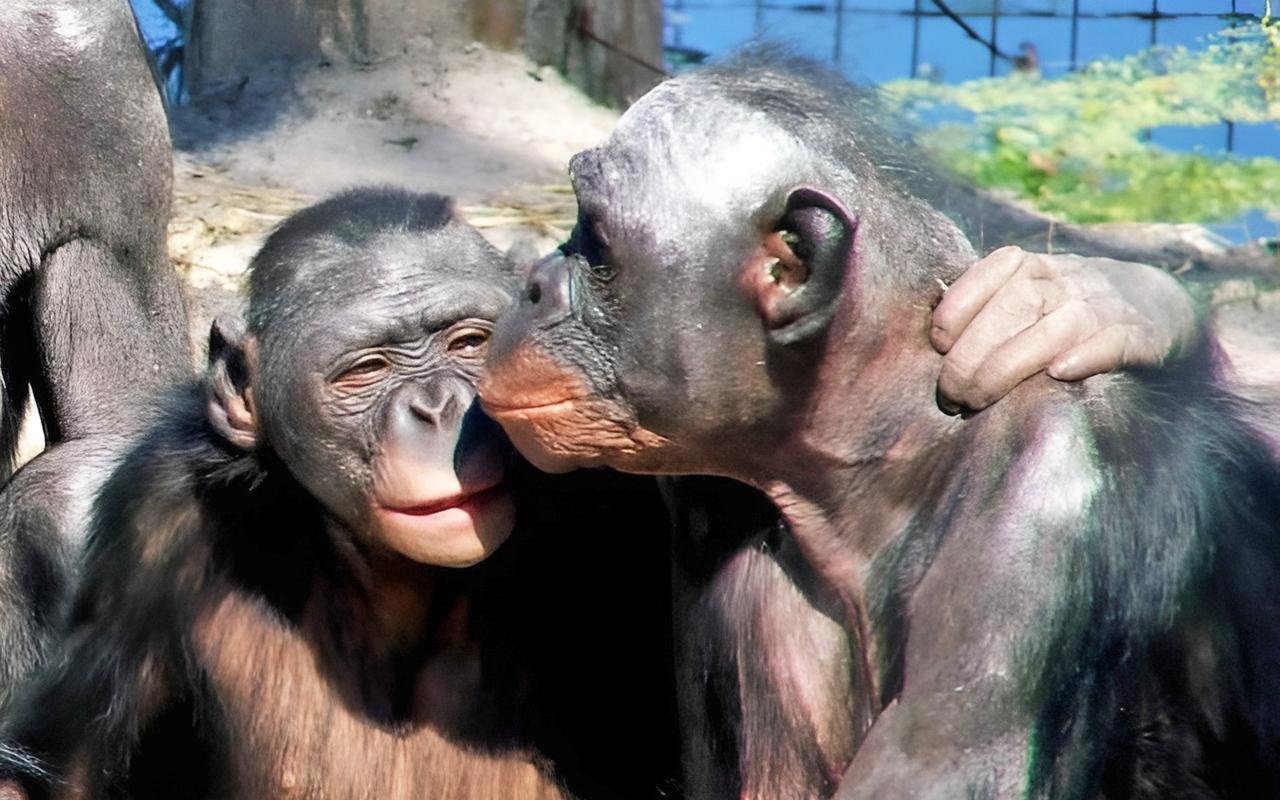
Kissing may be 21 million years old, new evolutionary study reveals
Kissing may be 21 million years old, new evolutionary study reveals. Credit: Amanda Downing / CC BY 2.0

The researchers used Bayesian modeling to treat kissing as if it were a biological trait and simulated millions of evolutionary scenarios on the primate family tree. These results invariably suggested that the origin of kissing can be traced back to a single ancestor of the large apes, somewhere from 21.5 to 16.9 million years ago. Although some primate lineages, like macaques and baboons, do not seem to have inherited the behavior, the evidence suggests that kissing re-evolved independently in some modern species within those groups.

Kissing may be 21 million years old, new evolutionary study reveals
Female Toque macaque with baby. Credit: Senthi Aathavan Senthilverl / CC BY-SA 4.0

The analyses also suggest that Neanderthals likely kissed and, given prior evidence of interbreeding and shared oral microbes, likely kissed Homo sapiens when the two species were in contact. While that conclusion is consistent with earlier genetic and archaeological evidence, the new study offers the most explicit evolutionary framework for how such behavior could have been shared between the species.
RelatedStories

Oldest known dental treatment found in 59,000-year-old Neanderthal tooth from Siberia

Oldest known dental treatment found in 59,000-year-old Neanderthal tooth from Siberia

May 14, 2026
Homo erectus in Java: 140,000-year-old fossils found in submerged river valley

400,000-year-old Homo erectus proteins reveal genetic links to Denisovans and modern humans

May 14, 2026

Why kissing persists remains a question. Kissing is far from universal in human cultures, and its possible costs — most notably, the spread of disease — seem to outweigh any obvious survival advantages. Yet several theories persist. Some researchers propose that kissing could help individuals detect subtle chemical signals related to health, immune compatibility, or even the microbial makeup of a potential partner. Others suggest it plays a role in social bonding, much like grooming among primates.
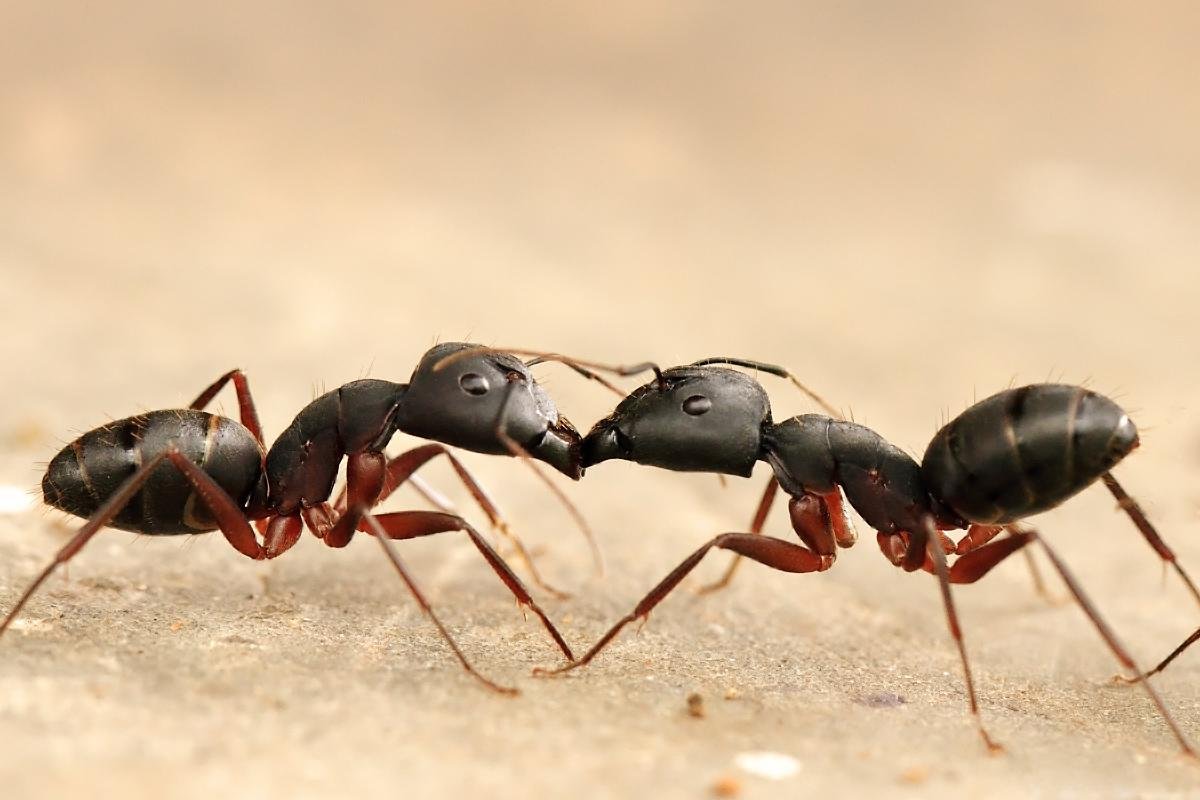
Kissing may be 21 million years old, new evolutionary study reveals
Non-kissing mouth-to-mouth behavior: trophallaxis in black ants. Credit: Rakeshkdogra / CC BY-SA 3.0

Although limited by incomplete behavioral records for many species, this study lays the groundwork for future research into just how pervasive the behavior really is. Demonstrating that kissing has deep evolutionary roots, these findings expose how this deceptively ordinary act connects modern humans to a long lineage of primates whose social worlds may have been far more complex — and far more familiar — than we once imagined.

More information: Brindle, M., Talbot, C. F., & West, S. (2025). A comparative approach to the evolution of kissing. Evolution and Human Behavior, 106788. doi:10.1016/j.evolhumbehav.2025.106788
ShareTweetShareShareSend

You May Also Like...

1,000-year-old dingo burial in Australia reveals deep ties between Barkindji people and dingoes
Archaeology

1,000-year-old ritually buried dingo in Australia reveals deep ties between Barkindji people and dingoes

May 20, 2026
Ancient texts reveal how Persian and Greek rule shaped language in Central Asia
Archaeology

Ancient texts reveal how Persian and Greek rule shaped language in Central Asia

May 20, 2026
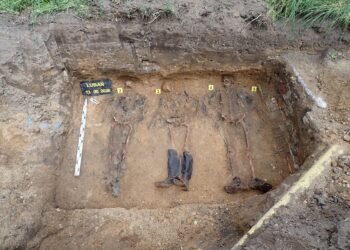
World War II mass grave in Poland reveals remains of German officer killed during Battle of Lauban
Anthropology

World War II mass grave in Poland reveals remains of German officer killed during Battle of Lauban

May 19, 2026
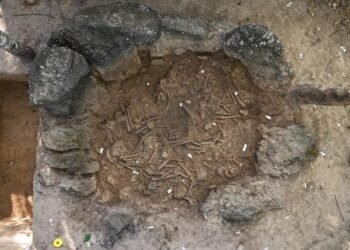
massive jar in Laos contained remains of 37 people, revealing ancient burial rituals and Asian trade links
Anthropology

Massive jar in Laos contained remains of 37 people, revealing ancient burial rituals and Asian trade links

May 19, 2026
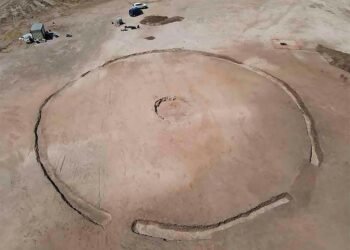
6,000-year-old necropolis in Spain rewrites origins of Europe’s first megalithic tombs
Archaeology

6,000-year-old necropolis in Spain rewrites origins of Europe’s first megalithic tombs

May 18, 2026
Ancient settlement with weaving workshop and longhouses uncovered in Germany gravel pit
Archaeology

Ancient settlement with weaving workshop and longhouses uncovered in Germany gravel pit

May 17, 2026

Comments 0

  1. Editorial Team says:
    1 second ago

    Disclaimer: This website is a science-focused magazine that welcomes both academic and non-academic audiences. Comments are written by users and may include personal opinions or unverified claims. They do not necessarily reflect the views of our editorial team or rely on scientific evidence.

    Comment Policy: We kindly ask all commenters to engage respectfully. Comments that contain offensive, insulting, degrading, discriminatory, or racist content will be automatically removed.

    Reply

Leave a Reply Cancel reply

Your email address will not be published. Required fields are marked *

Follow us


Instagram
242K

Facebook
117K

Threads
46K

LinkedIn
14K

Twitter
6K

YouTube
1K
1,000-year-old dingo burial in Australia reveals deep ties between Barkindji people and dingoes

1,000-year-old ritually buried dingo in Australia reveals deep ties between Barkindji people and dingoes

May 20, 2026
Ancient texts reveal how Persian and Greek rule shaped language in Central Asia

Ancient texts reveal how Persian and Greek rule shaped language in Central Asia

May 20, 2026
World War II mass grave in Poland reveals remains of German officer killed during Battle of Lauban

World War II mass grave in Poland reveals remains of German officer killed during Battle of Lauban

May 19, 2026
massive jar in Laos contained remains of 37 people, revealing ancient burial rituals and Asian trade links

Massive jar in Laos contained remains of 37 people, revealing ancient burial rituals and Asian trade links

May 19, 2026

Archaeology News online magazine

Archaeology News is an international online magazine that covers all aspects of archaeology.


Categories

  • Academics
    • Books
    • Conferences
    • Universities
  • Articles
  • Download
  • Game
  • News
    • Anthropology
    • Archaeology
    • Paleontology
  • Quiz
  • Tours

Subscribe to our newsletter

© 2024 - Archaeology News Online Magazine. All Rights Reserved.

  • About
  • Privacy Policy
  • Terms of Use
  • Donation
  • Contact

Manage Consent
To provide the best experiences, we use technologies like cookies to store and/or access device information. Consenting to these technologies will allow us to process data such as browsing behavior or unique IDs on this site. Not consenting or withdrawing consent, may adversely affect certain features and functions.
Functional Always active
The technical storage or access is strictly necessary for the legitimate purpose of enabling the use of a specific service explicitly requested by the subscriber or user, or for the sole purpose of carrying out the transmission of a communication over an electronic communications network.
Preferences
The technical storage or access is necessary for the legitimate purpose of storing preferences that are not requested by the subscriber or user.
Statistics
The technical storage or access that is used exclusively for statistical purposes. The technical storage or access that is used exclusively for anonymous statistical purposes. Without a subpoena, voluntary compliance on the part of your Internet Service Provider, or additional records from a third party, information stored or retrieved for this purpose alone cannot usually be used to identify you.
Marketing
The technical storage or access is required to create user profiles to send advertising, or to track the user on a website or across several websites for similar marketing purposes.
  • Manage options
  • Manage services
  • Manage {vendor_count} vendors
  • Read more about these purposes
View preferences
  • {title}
  • {title}
  • {title}
  • Home
  • News
    • Archaeology
    • Anthropology
    • Paleontology
  • Academic
    • Books
    • Conferences
    • Universities
  • Articles
  • VR Tours
  • Quiz & Game
  • Download
  • Encyclopedia
  • Forum

About  .  Contact  .  Donation

© 2024 - Archaeology News Online Magazine. All Rights Reserved