• About
  • Privacy Policy
  • Terms of Use
  • Donation
  • Contact
No Result
View All Result
Archaeology News
  • Home
  • News
    • Archaeology
    • Anthropology
    • Paleontology
  • Academic
    • Books
    • Conferences
    • Universities
  • Articles
  • VR Tours
  • Quiz & Game
  • Download
  • Encyclopedia
  • Forum
Archaeology News
No Result
View All Result
Home News Anthropology

New fossil evidence suggests that “Lucy” may not have been our direct human ancestor after all

by Dario Radley
December 23, 2025

For decades, the 3.2-million-year-old fossil called “Lucy” has been a centerpiece in stories about human origins. A member of the species Australopithecus afarensis, Lucy was long presented as the most plausible direct ancestor of later humans, a missing link that joined earlier apelike hominins to the genus Homo. New fossil finds from Ethiopia are now challenging researchers to revise that narrative and accept a more complex, branching family tree.
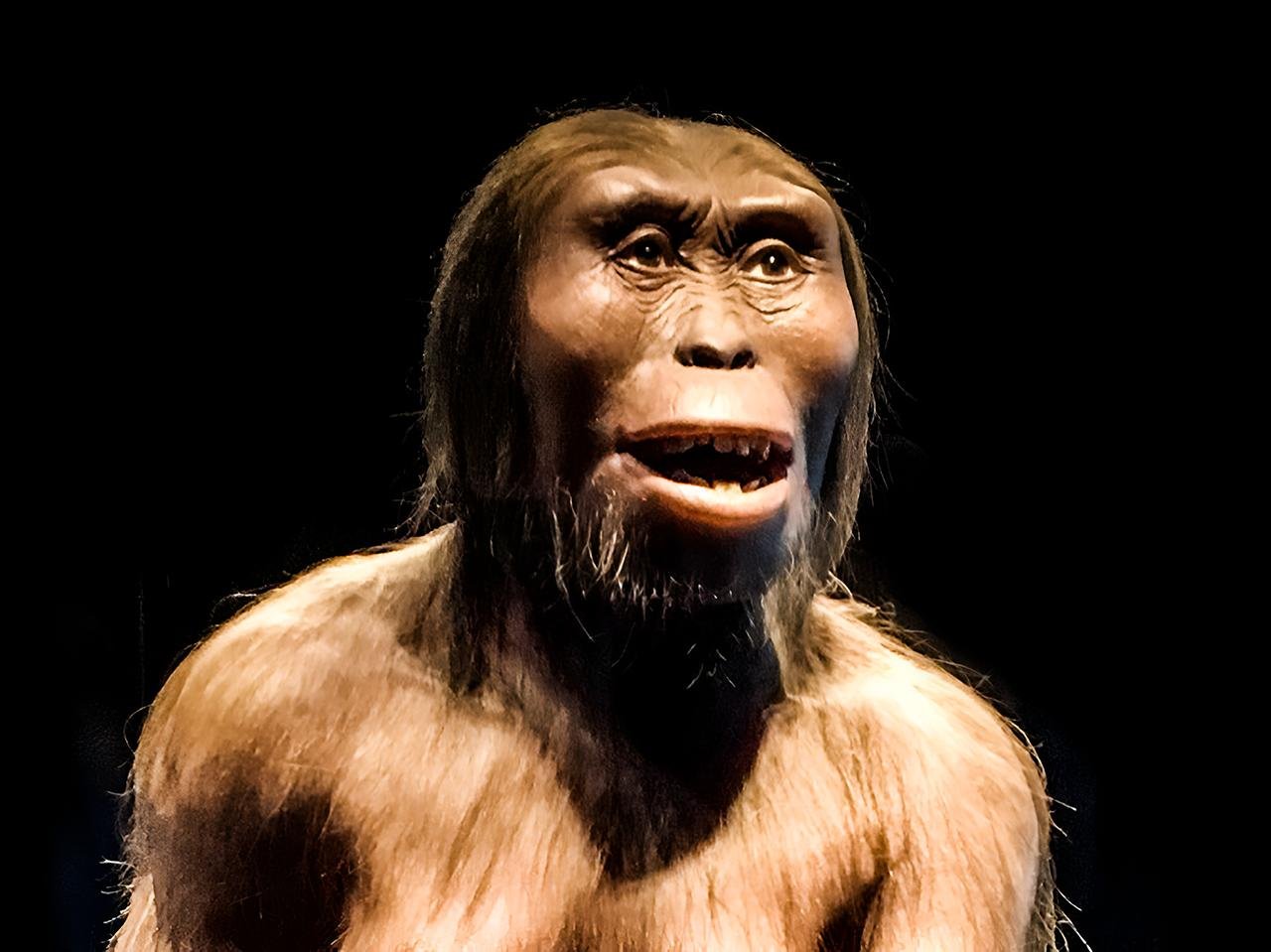
Model of a female Australopithecus afarensis.
Model of a female Australopithecus afarensis. Credit: Ernesto Lazaros, CC BY-SA 4.0

The shift comes from recent analysis of remains of another early hominin species, Australopithecus deyiremeda, discovered in the Woranso-Mille region of the Afar Rift. Newly recovered jaw and tooth fossils have now been confidently linked to an unusual 3.4-million-year-old partial foot, known as the “Burtele foot,” which was found years earlier but could not previously be assigned to a species. Together, these remains confirm that A. deyiremeda was a distinct species living at the same time and place as Lucy’s kind, rather than a variation of A. afarensis.

Anatomical comparisons reveal that A. deyiremeda retained more primitive features than Lucy’s species, particularly in its teeth and feet. The structure of the Burtele foot indicates strong grasping capabilities, suggesting that climbing trees remained an essential part of its lifestyle. Chemical signatures preserved in the teeth also point to a diet dominated by forest foods like fruits and leaves, unlike A. afarensis, which consumed a broader mix that included grasses.
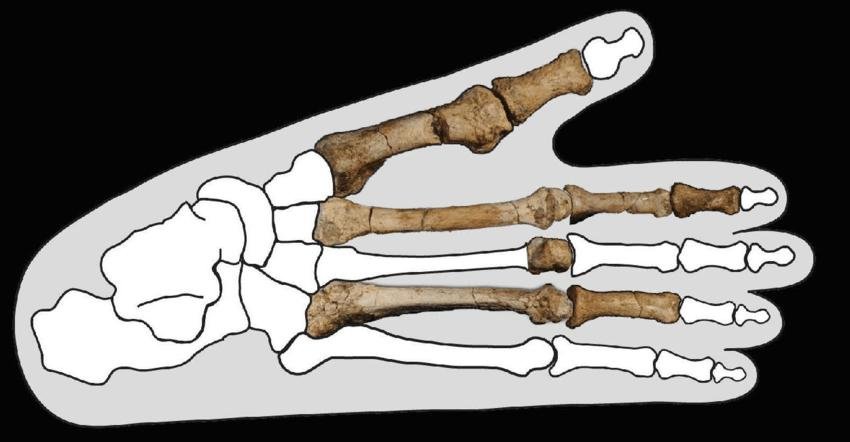
New fossil evidence suggests that “Lucy” may not have been our direct human ancestor after all.
The Burtele foot. Credit: John Nygren / CC BY 4.0

Importantly, the new analysis suggests that A. deyiremeda might be more closely related to an even older species, Australopithecus anamensis, than to Lucy’s species. If that interpretation is correct, A. anamensis, which lived more than four million years ago, might sit closer to the base of the human lineage, giving rise to multiple later branches, including Lucy’s species and others. That possibility undermines the long-held assumption that A. afarensis was the single ancestral trunk from which all later human species emerged.
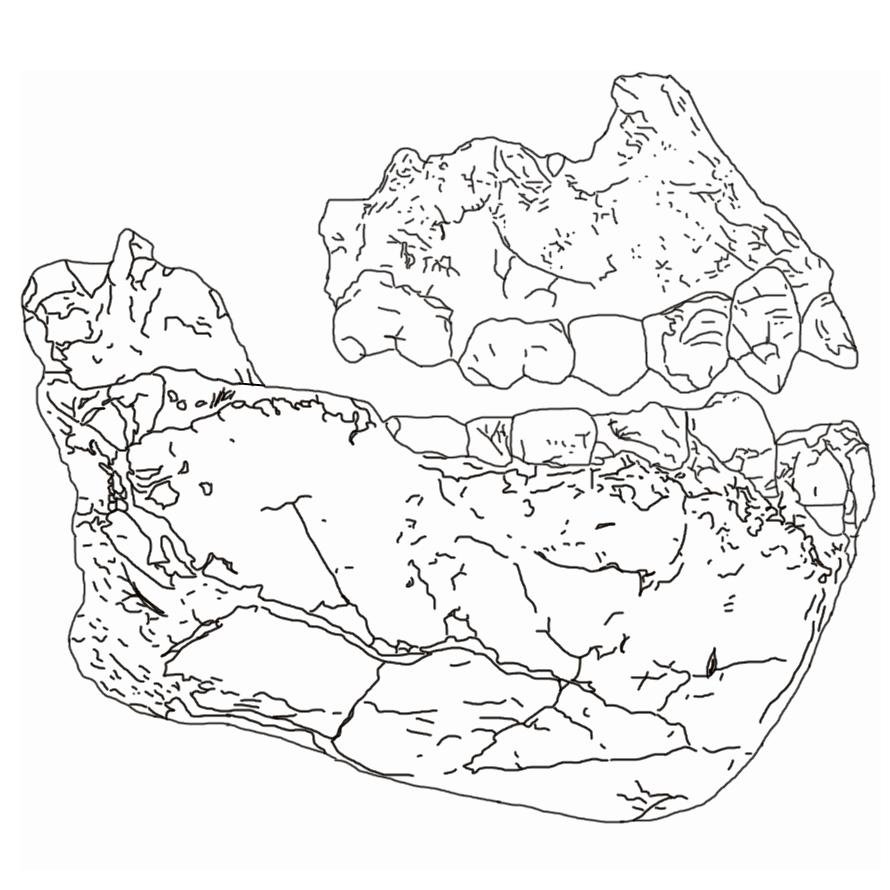
New fossil evidence suggests that “Lucy” may not have been our direct human ancestor after all.
Fossil jaws and teeth of Australopithecus deyiremeda. BRT-VP-3/1 (reversed) and BRT-VP-3/14 shown in occlusion. Credit: A. C. Tatarinov

These findings further solidify evidence that eastern Africa between 3.5 and 3.3 million years ago was inhabited by multiple hominin species, which occupied distinct ecological niches. Early human evolution no longer looks like a simple linear progression toward modern humans but rather more like a dense evolutionary “bush,” wherein many different species were experimenting with different diets, behaviors, and ways of moving through their environments.

RelatedStories

100,000-year-old Homo sapiens bones from Ethiopia may preserve earliest evidence of human cremation

100,000-year-old Homo sapiens bones from Ethiopia may preserve earliest evidence of human cremation

May 24, 2026
Neanderthals gathered shellfish like modern humans 115,000 years ago, study finds

Neanderthals gathered shellfish like modern humans 115,000 years ago, study finds

May 21, 2026

Not all researchers agree on what this means for Lucy’s status, and debate remains intense. Some scientists argue that A. afarensis still has the most compelling general case for being ancestral to Homo, while other experts say that the fossil record will never allow a definitive answer. What is becoming ever clearer, though, is that Lucy was not alone—and the path to humanity was much more intricate than once imagined.
More information: Haile-Selassie, Y., Schwartz, G.T., Prang, T.C. et al. (2025). New finds shed light on diet and locomotion in Australopithecus deyiremeda. Nature 648, 640–648. doi:10.1038/s41586-025-09714-4

Share:

Share on Facebook Share on X (Twitter) Share on LinkedIn Share on Pinterest Share on WhatsApp Share on Email

You May Also Like...

Ancient shipwreck with 300 amphorae found off Italy could reshape views of Mediterranean wine trade
Archaeology

Ancient shipwreck with 300 amphorae found off Italy could reshape views of Mediterranean wine trade

May 29, 2026
Ancient DNA reveals 700-kilometer migration along Peru’s coast before the Inca Empire
Anthropology

Ancient DNA reveals 700-kilometer migration along Peru’s coast before the Inca Empire

May 29, 2026
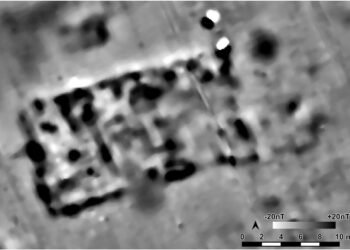
6,000-year-old mega-structure unearthed at prehistoric settlement in Romania
Archaeology

6,000-year-old mega-structure unearthed at prehistoric settlement in Romania

May 29, 2026
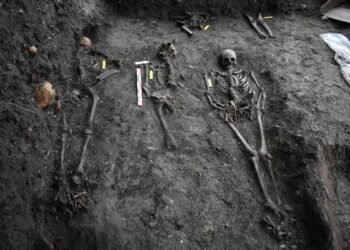
Medieval bone study identifies microbial communities driving archaeological bone degradation and preservation
Anthropology

Medieval bone study identifies microbial communities driving archaeological bone degradation and preservation

May 28, 2026
A large hidden hydraulic system mapped around the Urartian fortress of Argishtikhinili in Armenia
Archaeology

A large hidden hydraulic system mapped around the Urartian fortress of Argishtikhinili in Armenia

May 28, 2026
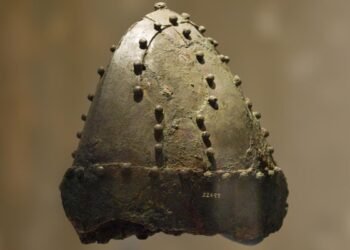
Sasanian military helmets reveal advanced brass technology across the Persian Empire
Archaeology

Sasanian military helmets reveal advanced brass technology across the Persian Empire

May 28, 2026

Comments 3

  1. Editorial Team says:
    1 second ago

    Disclaimer: This website is a science-focused magazine that welcomes both academic and non-academic audiences. Comments are written by users and may include personal opinions or unverified claims. They do not necessarily reflect the views of our editorial team or rely on scientific evidence.

    Comment Policy: We kindly ask all commenters to engage respectfully. Comments that contain offensive, insulting, degrading, discriminatory, or racist content will be automatically removed.

    Reply
  2. Mark A White says:
    5 months ago

    No str8 lines, it’s always bush. We clearly have complex origins just as we have a complex present.

    Reply
  3. S Cooke says:
    5 months ago

    “Lucy was long presented as the most plausible direct ancestor…” …in the 1950/60s. What’s not to like? So someone came along later (like we aren’t the living proof that THAT wouldn’t happen!) or whose relicts would be discovered later. If anyone’s surprised, they can crawl back under their pebble…

    Reply
  4. Jorge Pérez Tarrillo says:
    2 months ago

    La evolución del origen de la especie humana es tan compleja. Tengo una teoría al respecto que refuerza la tesis de que las llamadas razas, sean evoluciones separadas y no sólo adaptaciones a medio ambientes diversos que obligarían al campo del organismo homo. Que siga progresando la investigación científica para descubrir la verdadera historia de la humanidad. Antropólogo Jorge Pérez Tarrillo- Colegio Profesional de Antropólogos del Perú.

    Reply

Leave a Reply Cancel reply

Your email address will not be published. Required fields are marked *

Follow us


Instagram
242K

Facebook
117K

Threads
47K

LinkedIn
15K

Twitter
6K

YouTube
1K
Ancient shipwreck with 300 amphorae found off Italy could reshape views of Mediterranean wine trade

Ancient shipwreck with 300 amphorae found off Italy could reshape views of Mediterranean wine trade

May 29, 2026
Ancient DNA reveals 700-kilometer migration along Peru’s coast before the Inca Empire

Ancient DNA reveals 700-kilometer migration along Peru’s coast before the Inca Empire

May 29, 2026
6,000-year-old mega-structure unearthed at prehistoric settlement in Romania

6,000-year-old mega-structure unearthed at prehistoric settlement in Romania

May 29, 2026
Medieval bone study identifies microbial communities driving archaeological bone degradation and preservation

Medieval bone study identifies microbial communities driving archaeological bone degradation and preservation

May 28, 2026

Archaeology News online magazine

Archaeology News is an international online magazine that covers all aspects of archaeology.


Categories

  • Academics
    • Books
    • Conferences
    • Universities
  • Articles
  • Download
  • Game
  • News
    • Anthropology
    • Archaeology
    • Paleontology
  • Quiz
  • Tours

Subscribe to our newsletter

© 2024 - Archaeology News Online Magazine. All Rights Reserved.

  • About
  • Privacy Policy
  • Terms of Use
  • Donation
  • Contact

Manage Consent
To provide the best experiences, we use technologies like cookies to store and/or access device information. Consenting to these technologies will allow us to process data such as browsing behavior or unique IDs on this site. Not consenting or withdrawing consent, may adversely affect certain features and functions.
Functional Always active
The technical storage or access is strictly necessary for the legitimate purpose of enabling the use of a specific service explicitly requested by the subscriber or user, or for the sole purpose of carrying out the transmission of a communication over an electronic communications network.
Preferences
The technical storage or access is necessary for the legitimate purpose of storing preferences that are not requested by the subscriber or user.
Statistics
The technical storage or access that is used exclusively for statistical purposes. The technical storage or access that is used exclusively for anonymous statistical purposes. Without a subpoena, voluntary compliance on the part of your Internet Service Provider, or additional records from a third party, information stored or retrieved for this purpose alone cannot usually be used to identify you.
Marketing
The technical storage or access is required to create user profiles to send advertising, or to track the user on a website or across several websites for similar marketing purposes.
  • Manage options
  • Manage services
  • Manage {vendor_count} vendors
  • Read more about these purposes
View preferences
  • {title}
  • {title}
  • {title}
  • Home
  • News
    • Archaeology
    • Anthropology
    • Paleontology
  • Academic
    • Books
    • Conferences
    • Universities
  • Articles
  • VR Tours
  • Quiz & Game
  • Download
  • Encyclopedia
  • Forum

About  .  Contact  .  Donation

© 2024 - Archaeology News Online Magazine. All Rights Reserved