• About
  • Privacy Policy
  • Terms of Use
  • Donation
  • Contact
No Result
View All Result
Archaeology News
  • Home
  • News
    • Archaeology
    • Anthropology
    • Paleontology
  • Academic
    • Books
    • Conferences
    • Universities
  • Articles
  • VR Tours
  • Quiz & Game
  • Download
  • Encyclopedia
  • Forum
Archaeology News
No Result
View All Result
Home News Archaeology

42,000-year-old pendant unearthed in Mongolia may be earliest known phallic art

by Dario Radley
June 27, 2023

RelatedStories

Rare Bronze Age burial in Sweden reveals unusual pair of Wendel neck rings and complex ritual landscape near Norrköping

Rare Bronze Age burial in Sweden reveals unusual pair of Wendel neck rings and complex ritual landscape near Norrköping

May 12, 2026
Rare Bronze Age hoard of 18 bronze anklets and bracelets uncovered in Poland

Rare Bronze Age hoard of 18 bronze anklets and bracelets uncovered in Poland

May 10, 2026

Archaeologists have made a significant discovery in northern Mongolia, unearthing a pendant that may be the earliest example of phallic art ever found.

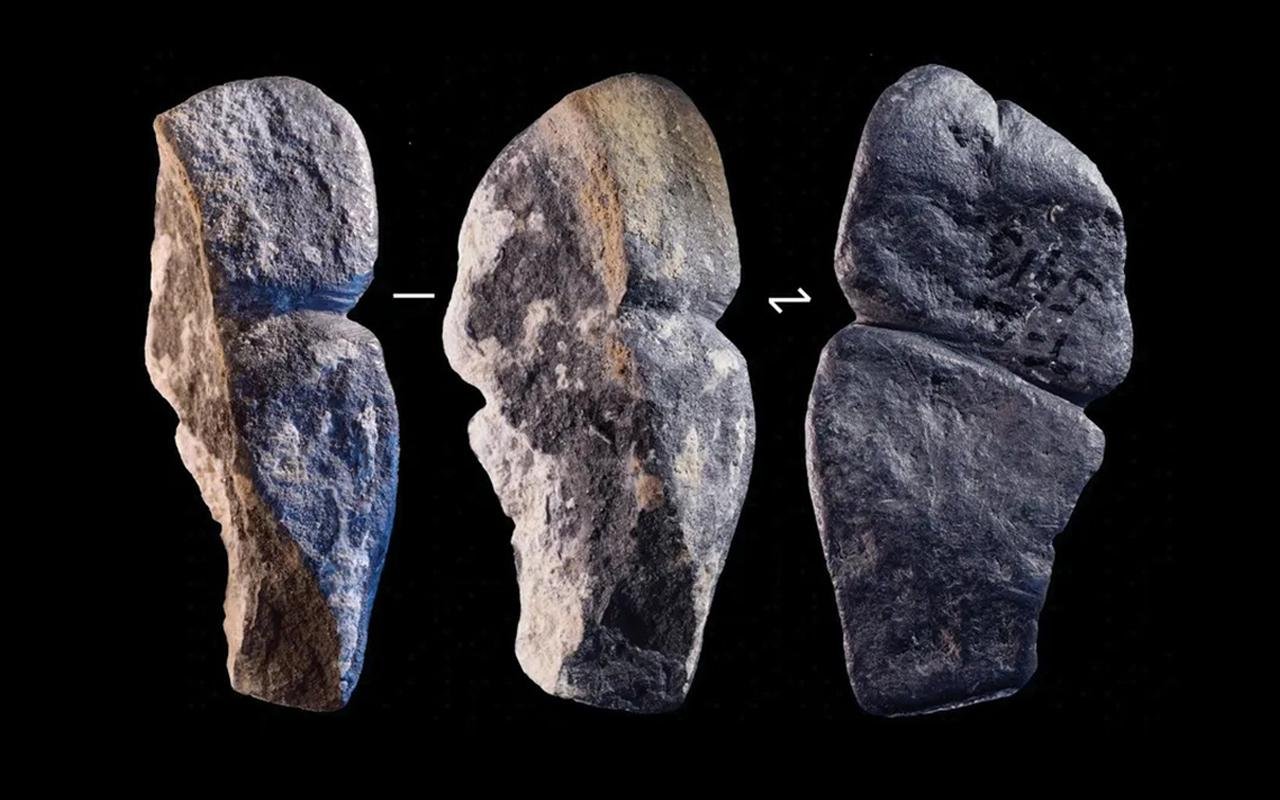
The artifact, dating back approximately 42,000 years, is a 1.7-inch-long pendant made of graphite. It was discovered at the Tolbor archaeological site in the Khangai Mountains and is believed to have been worn as a necklace.
42,000-year-old pendant unearthed in Mongolia may be earliest known phallic art
The artifact is 42,000 years old. Credit: S Rigaud et al., Scientific Reports, 2023 (CC BY 4.0)

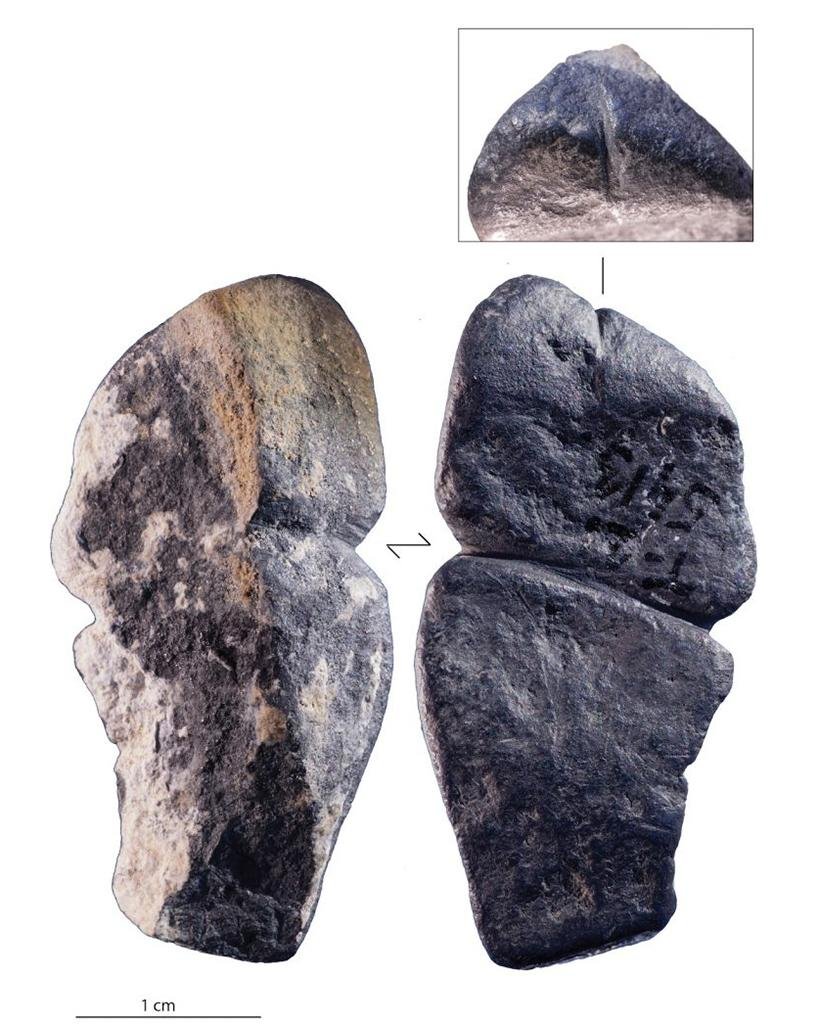
The pendant’s unique features, including distinct grooves depicting the urethra and the differentiation between the glans and the shaft, led researchers to interpret it as a representation of a penis.

The pendant’s age and craftsmanship make it a groundbreaking find. Previous depictions of human sex organs, particularly vulvas, have been found in cave art in France and Germany dating back 32,000 to 40,000 years.

However, this newly discovered pendant predates them by approximately 2,000 years, making it the oldest known example of phallic art.

The graphite material used in the pendant suggests that it was obtained from a distant location, as it was not widely available in the region at that time. The pendant’s worn appearance indicates that it may have been passed down through generations.

The researchers note that three-dimensional phallic pendants are unknown in the Paleolithic record, further emphasizing the significance of this discovery.

While the interpretation of the pendant as a phallic representation is not universally accepted, many experts support this view.

Some argue that the specific features carved into the pendant, such as the urethral opening and the distinction between the glans and the shaft, provide compelling evidence for its phallic nature. However, others remain skeptical, considering the object small and shapeless, and would require further convincing.

The purpose and function of the pendant are still a subject of speculation. It is unclear whether it held personal meaning for the wearer or served as a form of group identity or communication. The pendant’s small size suggests that it may have been challenging to identify from a distance, indicating a personal and intimate significance.
42,000-year-old pendant unearthed in Mongolia may be earliest known phallic art
Credit: S Rigaud et al.

It joins a lineage of personal ornaments found across Eurasia, some dating back 130,000 to 150,000 years, which demonstrates the early emergence of symbolic representations in our species.

The significance of this finding extends beyond the realm of phallic art. If the interpretation stands, the pendant represents one of the earliest forms of figurative art, surpassing other examples found in Southeast Asia, Europe, and Africa.

The representation of a phallus as one of the first artistic expressions may reflect the enduring fascination and cultural importance attached to human sexuality throughout history.

More information: Rigaud, S., Rybin, E.P., Khatsenovich, A.M. et al. (2023). Symbolic innovation at the onset of the Upper Paleolithic in Eurasia shown by the personal ornaments from Tolbor-21 (Mongolia). Sci Rep 13, 9545. DOI:10.1038/s41598-023-36140-1
Share2Tweet1ShareShareSend

You May Also Like...

Cut marks on 1.6-million-year-old bones reveal early humans moved and processed meat in Kenya
Anthropology

Cut marks on 1.6-million-year-old bones reveal early humans moved and processed meat in Kenya

May 13, 2026
280 ancient stone burial monuments found in Sudan reveal lost cattle-herding culture in the Sahara
Archaeology

280 ancient stone burial monuments found in Sudan reveal lost cattle-herding culture in the Sahara

May 13, 2026
Rare Bronze Age burial in Sweden reveals unusual pair of Wendel neck rings and complex ritual landscape near Norrköping
Archaeology

Rare Bronze Age burial in Sweden reveals unusual pair of Wendel neck rings and complex ritual landscape near Norrköping

May 12, 2026
Kasta Tomb in Amphipolis fully revealed as restoration uncovers largest burial mound in Macedonia
Archaeology

Kasta Tomb in Amphipolis fully revealed as restoration uncovers largest burial mound in Macedonia

May 12, 2026
Rare Roman villa threatened by farming damage reveals rare mosaic and bathhouse remains in Devon
Archaeology

Rare Roman villa threatened by farming damage reveals rare mosaic and bathhouse remains in Devon

May 12, 2026
Ancient burials, Roman well, and Anglo-Saxon house uncovered during A46 Newark bypass excavations
Anthropology

Ancient burials, Roman well, and Anglo-Saxon house uncovered during A46 Newark bypass excavations

May 12, 2026

Follow us


Instagram
242K

Facebook
117K

Threads
46K

LinkedIn
14K

Twitter
6K

YouTube
1K
  • Trending
  • Comments
  • Latest
Shipwreck Salvage. Credit: rawpixel.com / Public Domain

2,000-year-old shipwreck discovered off Turkish coast with remarkably preserved stacked ceramics

July 2, 2025
A new study suggests the mysterious Voynich Manuscript may be a medieval cipher

A new study suggests the mysterious Voynich Manuscript may be a medieval cipher

January 3, 2026
Viking age DNA reveals 9,000-year-old HIV-resistant gene originating near the Black Sea

Viking age DNA reveals 9,000-year-old HIV-resistant gene originating near the Black Sea

May 18, 2025
3D analysis reveals Shroud of Turin image likely came from sculpture, not Jesus’ body

3D analysis reveals Shroud of Turin image likely came from sculpture, not Jesus’ body

August 3, 2025
Moses may be named in ancient Egyptian mine inscriptions, sparking debate over earliest biblical references

Moses may be named in ancient Egyptian mine inscriptions, sparking debate over earliest biblical references

July 31, 2025
3D analysis reveals Shroud of Turin image likely came from sculpture, not Jesus’ body

3D analysis reveals Shroud of Turin image likely came from sculpture, not Jesus’ body

Moses may be named in ancient Egyptian mine inscriptions, sparking debate over earliest biblical references

Moses may be named in ancient Egyptian mine inscriptions, sparking debate over earliest biblical references

$1 million prize offered to decipher 5,300-year-old Indus Valley script

$1 million prize offered to decipher 5,300-year-old Indus Valley script

Oldest ever genetic data from a human relative found in 2-million-year-old fossilized teeth

Oldest ever genetic data from a human relative found in 2-million-year-old fossilized teeth

Exceptionally large Roman shoes discovered at Magna fort near Hadrian’s Wall

Exceptionally large Roman shoes discovered at Magna fort near Hadrian’s Wall

Cut marks on 1.6-million-year-old bones reveal early humans moved and processed meat in Kenya

Cut marks on 1.6-million-year-old bones reveal early humans moved and processed meat in Kenya

May 13, 2026
280 ancient stone burial monuments found in Sudan reveal lost cattle-herding culture in the Sahara

280 ancient stone burial monuments found in Sudan reveal lost cattle-herding culture in the Sahara

May 13, 2026
Rare Bronze Age burial in Sweden reveals unusual pair of Wendel neck rings and complex ritual landscape near Norrköping

Rare Bronze Age burial in Sweden reveals unusual pair of Wendel neck rings and complex ritual landscape near Norrköping

May 12, 2026
Kasta Tomb in Amphipolis fully revealed as restoration uncovers largest burial mound in Macedonia

Kasta Tomb in Amphipolis fully revealed as restoration uncovers largest burial mound in Macedonia

May 12, 2026
Rare Roman villa threatened by farming damage reveals rare mosaic and bathhouse remains in Devon

Rare Roman villa threatened by farming damage reveals rare mosaic and bathhouse remains in Devon

May 12, 2026

Archaeology News online magazine

Archaeology News is an international online magazine that covers all aspects of archaeology.


Categories

  • Academics
    • Books
    • Conferences
    • Universities
  • Articles
  • Download
  • Game
  • News
    • Anthropology
    • Archaeology
    • Paleontology
  • Quiz
  • Tours

Subscribe to our newsletter

© 2024 - Archaeology News Online Magazine. All Rights Reserved.

  • About
  • Privacy Policy
  • Terms of Use
  • Donation
  • Contact

Manage Consent
To provide the best experiences, we use technologies like cookies to store and/or access device information. Consenting to these technologies will allow us to process data such as browsing behavior or unique IDs on this site. Not consenting or withdrawing consent, may adversely affect certain features and functions.
Functional Always active
The technical storage or access is strictly necessary for the legitimate purpose of enabling the use of a specific service explicitly requested by the subscriber or user, or for the sole purpose of carrying out the transmission of a communication over an electronic communications network.
Preferences
The technical storage or access is necessary for the legitimate purpose of storing preferences that are not requested by the subscriber or user.
Statistics
The technical storage or access that is used exclusively for statistical purposes. The technical storage or access that is used exclusively for anonymous statistical purposes. Without a subpoena, voluntary compliance on the part of your Internet Service Provider, or additional records from a third party, information stored or retrieved for this purpose alone cannot usually be used to identify you.
Marketing
The technical storage or access is required to create user profiles to send advertising, or to track the user on a website or across several websites for similar marketing purposes.
  • Manage options
  • Manage services
  • Manage {vendor_count} vendors
  • Read more about these purposes
View preferences
  • {title}
  • {title}
  • {title}
  • Home
  • News
    • Archaeology
    • Anthropology
    • Paleontology
  • Academic
    • Books
    • Conferences
    • Universities
  • Articles
  • VR Tours
  • Quiz & Game
  • Download
  • Encyclopedia
  • Forum

About  .  Contact  .  Donation

© 2024 - Archaeology News Online Magazine. All Rights Reserved