• About
  • Privacy Policy
  • Terms of Use
  • Donation
  • Contact
No Result
View All Result
Archaeology News
  • Home
  • News
    • Archaeology
    • Anthropology
    • Paleontology
  • Academics
    • Books
    • Conferences
    • Universities
  • Articles
  • VR Tours
  • Quiz & Game
  • Download
  • Encyclopedia
  • Forum
Archaeology News
No Result
View All Result
Home News Anthropology

Ancient whalers’ graves in Svalbard are vanishing as permafrost melts

by Dario Radley
March 10, 2025

The frozen landscapes of Svalbard, a remote archipelago of Norway in the Arctic, have hidden a special archaeological find for years—graves from the 17th and 18th centuries that belong to European whalers. However, rising temperatures are fast becoming a menace to those very burial sites, accelerating their decay or even washing some into the sea.
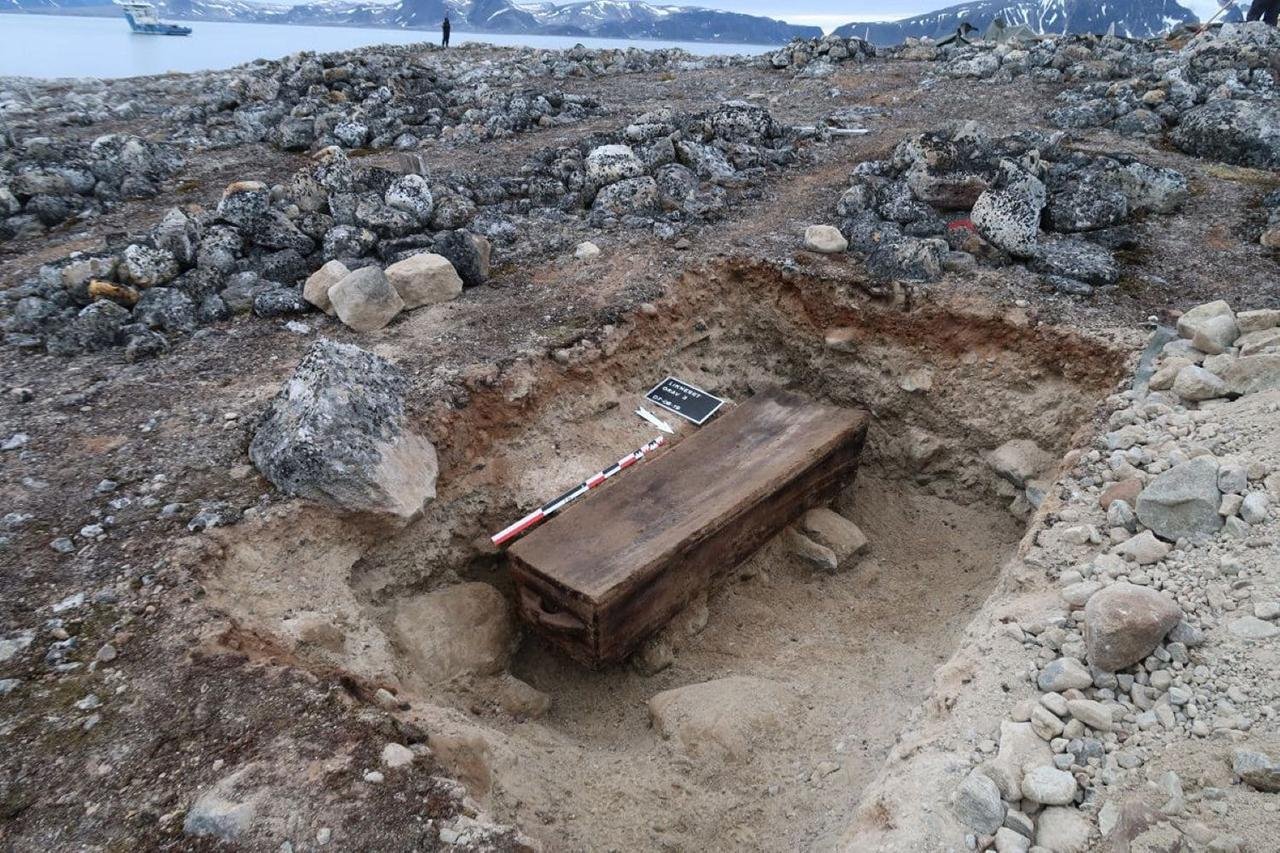
Ancient whalers' graves in Svalbard are vanishing as permafrost melts
Ancient whalers’ graves in Svalbard are vanishing as permafrost melts. Credit: Lise Loktu ©Sysselmesteren på Svalbard / NIKU

The graves in Smeerenburgfjorden, Northwest Spitsbergen National Park, are among the oldest and most vulnerable cultural heritage sites in Svalbard. The graves, containing the remains of around 600 whalers, have been well preserved in permafrost for centuries. But climate change has begun to change the environment at an alarming rate, causing permafrost to thaw, destabilizing the graves, and exposing skeletal and textile materials to erosion and microbial decay.

Under the direction of Lise Loktu, an archaeologist and researcher at the Norwegian Institute for Cultural Heritage Research (NIKU), the research project “Skeletons in the Closet” aims to document the damage and analyze the remains before they disappear. “The graves represent a unique archaeological resource that is rarely preserved elsewhere, neither in Europe nor the rest of the world,” Loktu explained.

In the last 30 to 40 years, there has been extensive climate change on Svalbard, with temperature increases leading to extreme weather, more precipitation, and intensified coastal erosion. As permafrost thaws, the active layer of soil also deepens with each passing year, making burial sites more vulnerable. Stronger wave action on the coast, coupled with reduced sea ice, accelerates the graves’ destruction.
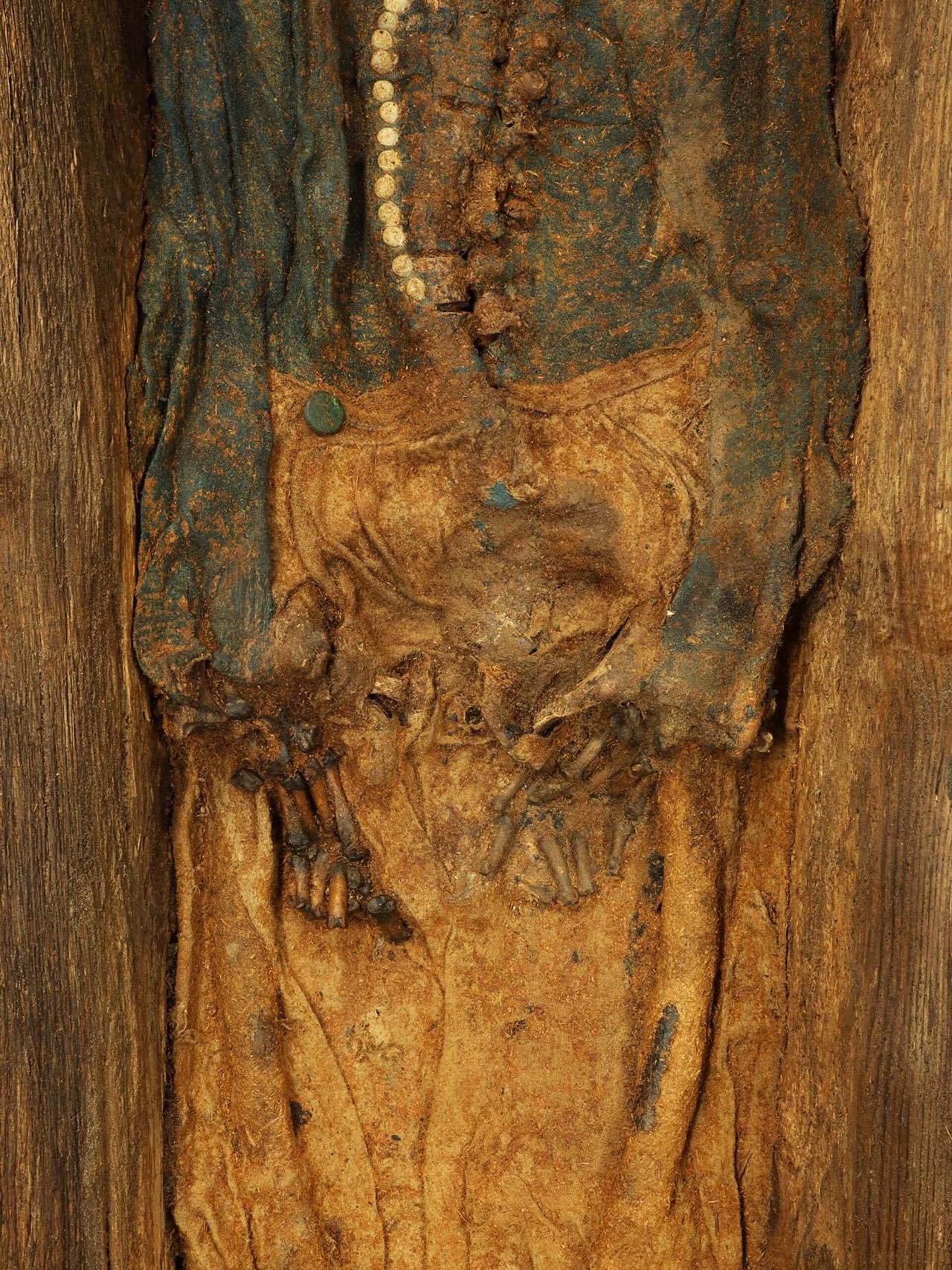
Ancient whalers' graves in Svalbard are vanishing as permafrost melts
Documentation of preserved skeletons and textiles from a grave that was examined at Likneset in 2019. Credit: Lise Loktu ©Sysselmesteren på Svalbard / NIKU

“At Likneset, we have documented that many graves are being destroyed due to these climate-related changes,” Loktu said. “The coffins are collapsing, exposing skeletal and textile materials to sediment intrusion, water, and oxygen. Collectively, these processes accelerate the microbial decomposition of archaeological materials.”

RelatedStories
Archaeologists reveal the forgotten 16th-century city beneath modern Gothenburg

Archaeologists reveal the forgotten 16th-century city beneath modern Gothenburg

November 8, 2025
Lost medieval town of Hamarkaupangen rediscovered in Norway after years of searching

Lost medieval town of Hamarkaupangen rediscovered in Norway after years of searching

July 9, 2025

The degradation is so rapid that researchers can observe noticeable changes from one year to the next. “We are in a race against time to document these graves before they disappear completely. There is still a lot of information to be gathered,” she added.

The remains of whalers buried in Svalbard are of immense value when it comes to learning about the lives of 17th- and 18th-century Europeans. From 1985 to 1990, excavations yielded a wealth of osteological data, which was analyzed by Elin T. Brødholt, an osteologist from the University of Oslo. These studies have shed light on the whalers’ health, living conditions, and social structures.

The analysis suggests that most of these people came from various European countries, including western Norway, where diets were very rich in marine food. Whalers, commonly assumed to be poor, actually exhibited evidence of social distinctions among them. For example, the average height of the individuals buried at Likneset was much greater than that of the people in other nearby cemeteries, an indication of better nutrition and economic conditions during childhood.
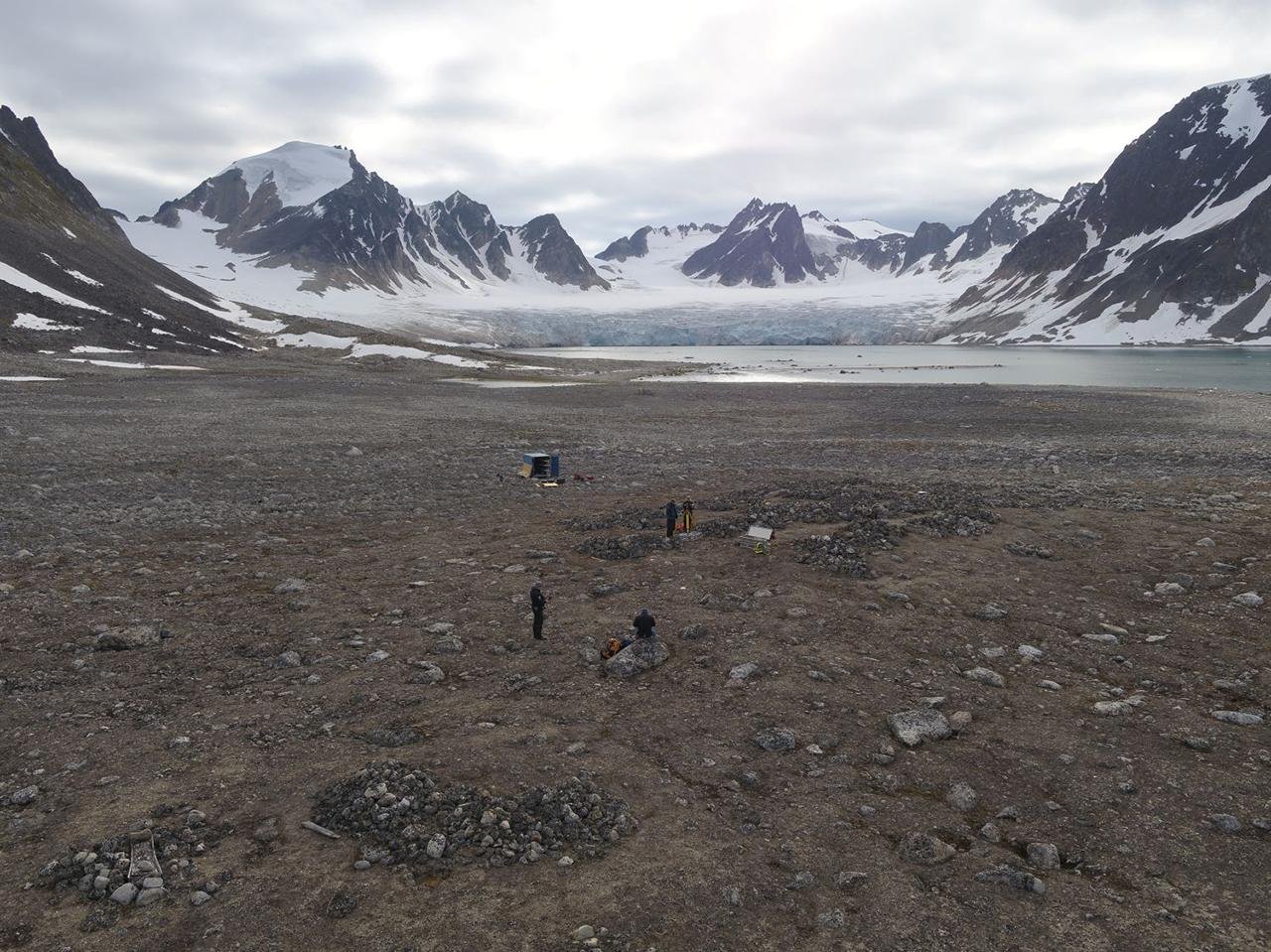
Ancient whalers' graves in Svalbard are vanishing as permafrost melts
Researchers in the Skeletons in the Closet project are looking at the connection between climate change and increased degradation of these archaeological cultural environments. Credit: Espen Olsen ©Sysselmesteren på Svalbard

The skeletal remains point to the physically demanding life of whaling. Signs of malnutrition and disease were present in many whalers, and the leading cause of death was most likely scurvy, brought about by a deficiency of vitamin C.

Bone analysis also indicates that the majority of whalers engaged in strenuous labor from a very young age; the wear marks suggest extensive use of the upper body. Some of these changes resemble those seen in Inuit populations that used kayaks for hunting; hence, certain whalers likely had specialized roles such as paddling, rowing, or harpooning.

With graves breaking down more rapidly and some already being lost to the sea, researchers fear that critical historical knowledge could be washed away forever. Loktu noted: “The graves on Svalbard are now breaking down more rapidly and are gradually being washed into the sea due to erosion. This is about preserving knowledge that would otherwise disappear forever, knowledge that we cannot retrieve from anywhere else.”

The archaeologists are doing everything they can to preserve what remains before it is lost forever.
Share5Tweet3Share1ShareSend

You May Also Like...

Air-filled anomalies in the Menkaure Pyramid may point to a second entrance
Archaeology

Air-filled anomalies in the Menkaure Pyramid may point to a second entrance

November 11, 2025
Scientists uncover purpose of 5,200 mystery holes in Peru, revealing a lost Andean system of trade and record-keeping
Archaeology

Scientists uncover purpose of 5,200 mystery holes in Peru, revealing a lost Andean system of trade and record-keeping

November 10, 2025
Archaeologists uncover oldest and largest Maya monument built to represent the cosmos
Archaeology

Archaeologists uncover oldest and largest Maya monument built to represent the cosmos

November 10, 2025
Roman roads reimagined: new digital map expands the empire’s network to nearly 300,000 km
Archaeology

Roman roads reimagined: new digital map expands the empire’s network to nearly 300,000 km

November 9, 2025
New study debunks myth of Easter Island's ecological collapse
Archaeology

Rats and the fall of Rapa Nui’s forests: invasive species, not humans, drove the island’s deforestation

November 9, 2025
2.75-million-year-old stone tools in Kenya reveal 300,000 years of technological stability
Anthropology

2.75-million-year-old stone tools in Kenya reveal 300,000 years of technological stability

November 9, 2025

Comments 2

  1. Editorial Team says:
    1 second ago
    Disclaimer: This website is a science-focused magazine that welcomes both academic and non-academic audiences. Comments are written by users and may include personal opinions or unverified claims. They do not necessarily reflect the views of our editorial team or rely on scientific evidence.
    Reply
  2. Ed N Lewton says:
    8 months ago

    Thumbs up to the archeologists for efforts in preserving these remains,and as your article stated,they provide valuable information on how they lived and their diet as well.Has there been any evidence of bronze age seafarers around Svalbard? I think they were aware of this island and had the capability to reach it.

    Reply
    • Andrew Milner says:
      8 months ago

      Great to see that these people, can be saved for research, I find this great work from all those archeologygist. Fantastic work and great opportunity for people to learn about, the people who are not here any more, and not washed into the see ,it’s incredible that sea creatures will eat these people, and lose all information about them. Great work, keep the all the good work, and news for everyone, great stuff.

      Reply

Leave a Reply Cancel reply

Your email address will not be published. Required fields are marked *

Follow us


Instagram
245K

Facebook
117K

Threads
45K

LinkedIn
14K

Twitter
6K

YouTube
1K
  • Trending
  • Comments
  • Latest
Shipwreck Salvage. Credit: rawpixel.com / Public Domain

2,000-year-old shipwreck discovered off Turkish coast with remarkably preserved stacked ceramics

July 2, 2025
Viking age DNA reveals 9,000-year-old HIV-resistant gene originating near the Black Sea

Viking age DNA reveals 9,000-year-old HIV-resistant gene originating near the Black Sea

May 18, 2025
Complete copy of the Canopus Decree unearthed in Egypt after 150 years

Complete copy of the Canopus Decree unearthed in Egypt after 150 years

September 13, 2025
Mystery of Armenia’s 6,000-year-old dragon stones solved

Mystery of Armenia’s 6,000-year-old dragon stones solved

September 23, 2025
Moses may be named in ancient Egyptian mine inscriptions, sparking debate over earliest biblical references

Moses may be named in ancient Egyptian mine inscriptions, sparking debate over earliest biblical references

July 31, 2025
Moses may be named in ancient Egyptian mine inscriptions, sparking debate over earliest biblical references

Moses may be named in ancient Egyptian mine inscriptions, sparking debate over earliest biblical references

3D analysis reveals Shroud of Turin image likely came from sculpture, not Jesus’ body

3D analysis reveals Shroud of Turin image likely came from sculpture, not Jesus’ body

$1 million prize offered to decipher 5,300-year-old Indus Valley script

$1 million prize offered to decipher 5,300-year-old Indus Valley script

Oldest ever genetic data from a human relative found in 2-million-year-old fossilized teeth

Oldest ever genetic data from a human relative found in 2-million-year-old fossilized teeth

Exceptionally large Roman shoes discovered at Magna fort near Hadrian’s Wall

Exceptionally large Roman shoes discovered at Magna fort near Hadrian’s Wall

Air-filled anomalies in the Menkaure Pyramid may point to a second entrance

Air-filled anomalies in the Menkaure Pyramid may point to a second entrance

November 11, 2025
Scientists uncover purpose of 5,200 mystery holes in Peru, revealing a lost Andean system of trade and record-keeping

Scientists uncover purpose of 5,200 mystery holes in Peru, revealing a lost Andean system of trade and record-keeping

November 10, 2025
Archaeologists uncover oldest and largest Maya monument built to represent the cosmos

Archaeologists uncover oldest and largest Maya monument built to represent the cosmos

November 10, 2025
Roman roads reimagined: new digital map expands the empire’s network to nearly 300,000 km

Roman roads reimagined: new digital map expands the empire’s network to nearly 300,000 km

November 9, 2025
New study debunks myth of Easter Island's ecological collapse

Rats and the fall of Rapa Nui’s forests: invasive species, not humans, drove the island’s deforestation

November 9, 2025

Archaeology News online magazine

Archaeology News is an international online magazine that covers all aspects of archaeology.


Categories

  • Academics
    • Books
    • Conferences
    • Universities
  • Articles
  • Download
  • Game
  • News
    • Anthropology
    • Archaeology
    • Paleontology
  • Quiz
  • Tours

Subscribe to our newsletter

© 2024 - Archaeology News Online Magazine. All Rights Reserved.

  • About
  • Privacy Policy
  • Terms of Use
  • Donation
  • Contact

Welcome Back!

Login to your account below

Forgotten Password? Sign Up

Create New Account!

Fill the forms below to register

All fields are required. Log In

Retrieve your password

Please enter your username or email address to reset your password.

Log In

Add New Playlist

Manage Consent
To provide the best experiences, we use technologies like cookies to store and/or access device information. Consenting to these technologies will allow us to process data such as browsing behavior or unique IDs on this site. Not consenting or withdrawing consent, may adversely affect certain features and functions.
Functional Always active
The technical storage or access is strictly necessary for the legitimate purpose of enabling the use of a specific service explicitly requested by the subscriber or user, or for the sole purpose of carrying out the transmission of a communication over an electronic communications network.
Preferences
The technical storage or access is necessary for the legitimate purpose of storing preferences that are not requested by the subscriber or user.
Statistics
The technical storage or access that is used exclusively for statistical purposes. The technical storage or access that is used exclusively for anonymous statistical purposes. Without a subpoena, voluntary compliance on the part of your Internet Service Provider, or additional records from a third party, information stored or retrieved for this purpose alone cannot usually be used to identify you.
Marketing
The technical storage or access is required to create user profiles to send advertising, or to track the user on a website or across several websites for similar marketing purposes.
Manage options Manage services Manage {vendor_count} vendors Read more about these purposes
View preferences
{title} {title} {title}
  • Home
  • News
    • Archaeology
    • Anthropology
    • Paleontology
  • Academics
    • Books
    • Conferences
    • Universities
  • Articles
  • VR Tours
  • Quiz & Game
  • Download
  • Encyclopedia
  • Forum

About  .  Contact  .  Donation

© 2024 - Archaeology News Online Magazine. All Rights Reserved