• About
  • Privacy Policy
  • Terms of Use
  • Donation
  • Contact
No Result
View All Result
Archaeology News
  • Home
  • News
    • Archaeology
    • Anthropology
    • Paleontology
  • Academic
    • Books
    • Conferences
    • Universities
  • Articles
  • VR Tours
  • Quiz & Game
  • Download
  • Encyclopedia
  • Forum
Archaeology News
No Result
View All Result
Home News Anthropology

Medieval bed burials across Europe reveal cultural diversity, symbolism, and mystery

by Dario Radley
June 16, 2025

A new study published in the European Journal of Archaeology, led by Dr. Astrid Noterman, clarifies the little-known early medieval European burial ritual of bed burials.
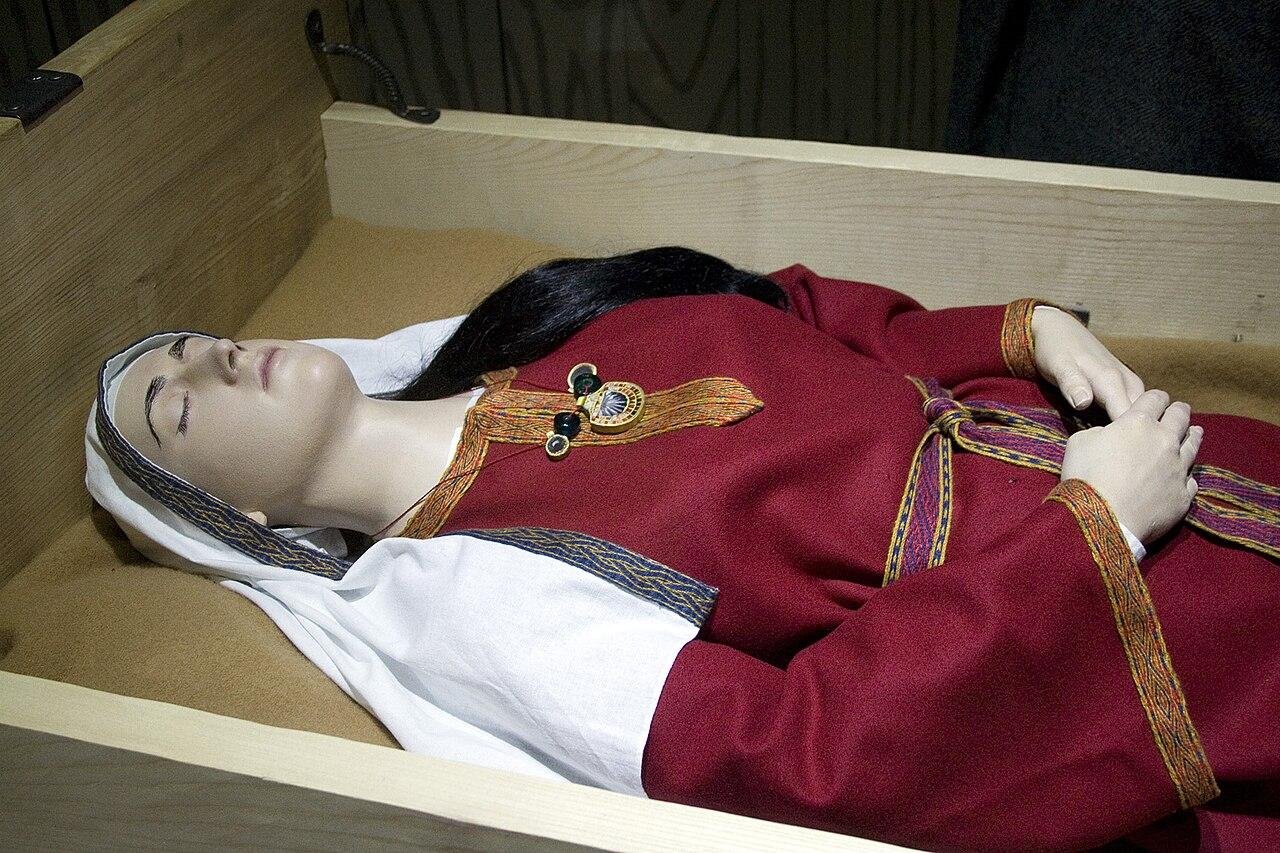
Medieval bed burials across Europe reveal cultural diversity, symbolism, and mystery
Replica of the “Saxon Princess” bed burial at Kirkleatham Museum. Credit: Prioryman / CC BY-SA 3.0

The practice, where deceased individuals were interred on or with beds, spanned the sixth to the early tenth century CE and was found in Germany, England, and Scandinavia. The research overturns earlier presumptions that had considered bed burials to be a single tradition; rather, it demonstrates that they were a complex, varied practice that evolved in different regions and social contexts.

Dr. Noterman’s research is among the most comprehensive studies to date, examining not only the actual beds but also their location, surrounding artifacts, and the identity of the individuals interred with them. “This plurality is not limited to regions or time but can also be found within the cemeteries themselves,” she writes. “It therefore seems necessary to shift the focus of research on bed burials away from a single category and start talking about practices, in the plural.”

Bed burials in Germany typically took place in unremarkable cemeteries, without any features such as consistent grave orientation. The graves typically had simple wooden bed frames and relatively modest grave goods, such as rings or wooden bowls. Some burials were more elaborate, however, including such items as lyres, candelabras, or even double chairs. Women were frequently buried with weaving tools—spindle whorls, weaving battens, and wooden distaffs—a symbolic link between domestic roles and burial ritual.
Medieval bed burials across Europe reveal cultural diversity, symbolism, and mystery
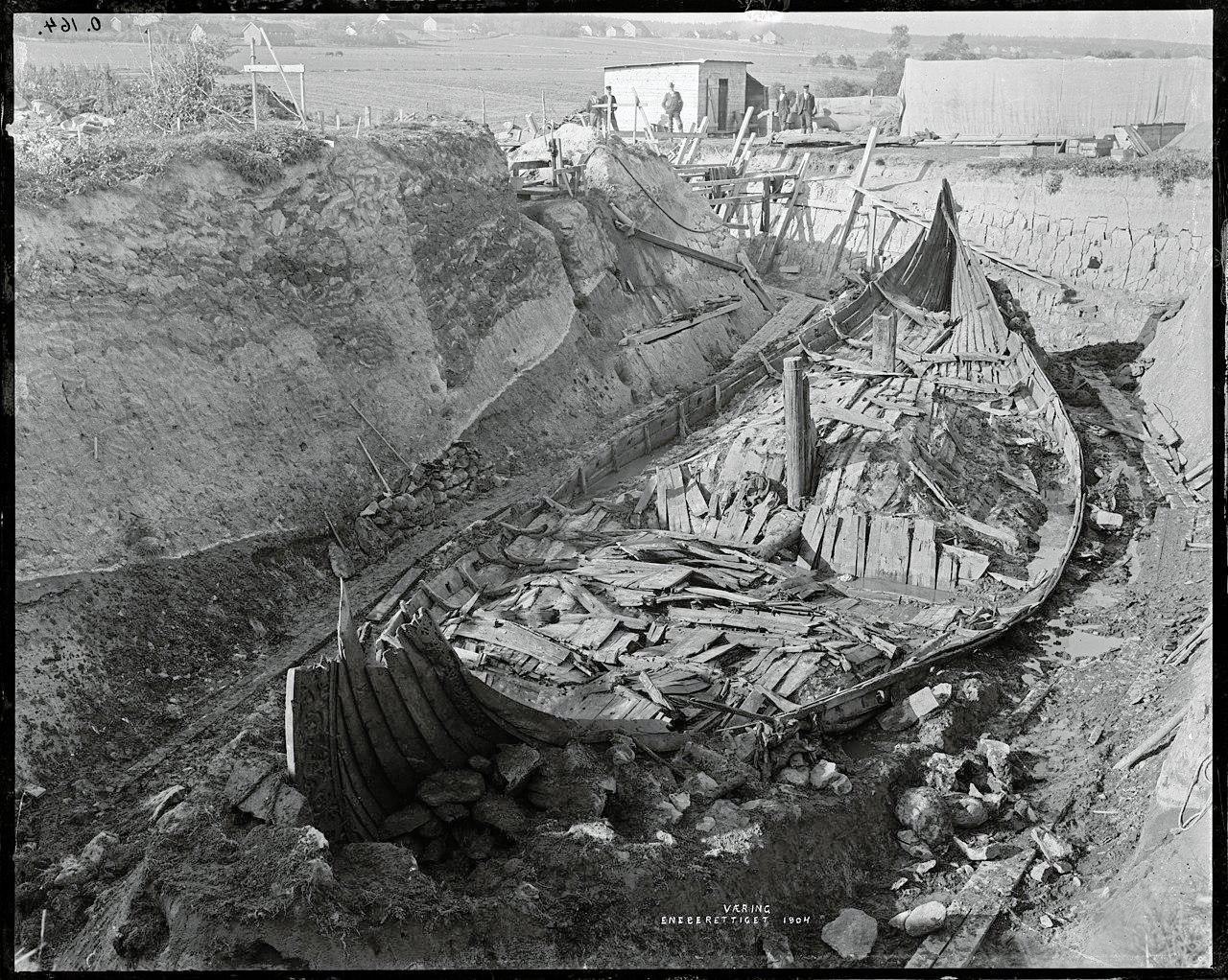
From the archaeological excavations of the Viking era Oseberg ship burial mound near Tønsberg (100 km southwest of Oslo, Norway) in 1904. Credit: Olaf Væring (1837-1906) /Kulturhistorisk museum (CC BY-SA 4.0)

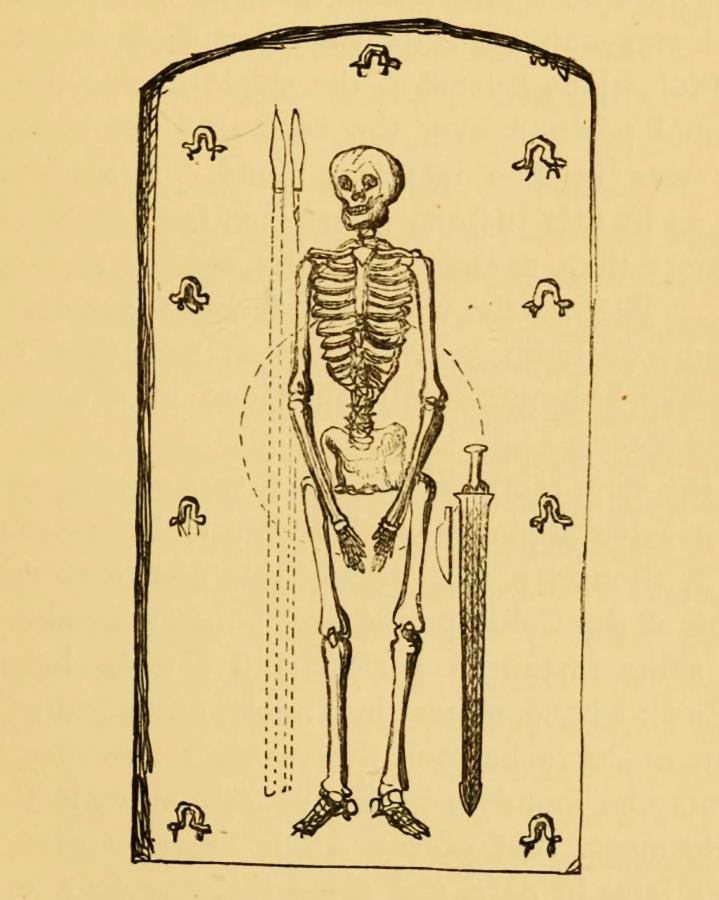
England is another story. English bed burials often involve beds that had been dismantled and were sometimes placed inside ancient burial mounds, which were being reused long after they had originally been constructed. Although most of those buried in this way were female, one male example is known from Lapwing Hill in Derbyshire. Stable isotope analysis revealed that individuals buried at locations like Trumpington and Edix Hill had not grown up locally, and that bed burial may thus have been introduced into Britain by continental migrants.

RelatedStories
Rare Bronze Age burial in Sweden reveals unusual pair of Wendel neck rings and complex ritual landscape near Norrköping
Rare Bronze Age burial in Sweden reveals unusual pair of Wendel neck rings and complex ritual landscape near Norrköping

May 12, 2026
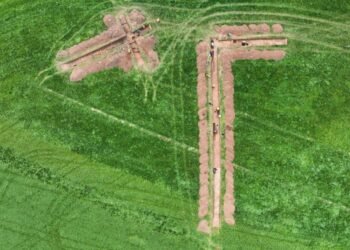
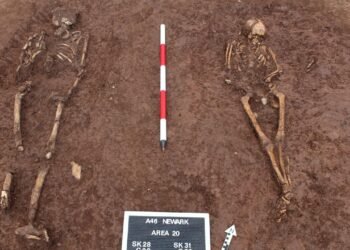
Ancient burials, Roman well, and Anglo-Saxon house uncovered during A46 Newark bypass excavations

Ancient burials, Roman well, and Anglo-Saxon house uncovered during A46 Newark bypass excavations

May 12, 2026

Scandinavian examples, particularly the magnificent ship burials of Oseberg and Gokstad, are different from both English and Germanic traditions. These graves, often placed near waterways so that they would be visible, contained wealthy grave goods and displayed status and power. The two women buried at Oseberg, for instance, were found to have originated from the Black Sea region—again reflecting cross-cultural contacts in burial practices.
Medieval bed burials across Europe reveal cultural diversity, symbolism, and mystery
Drawing of the Lapwing Hill bed grave (from Jewitt, 1870: 209, fig. 325)

The study also draws on emerging fields of research, such as the “archaeology of affect,” suggesting that bed burials would have conveyed emotional and symbolic messages to the living. Beds, Dr. Noterman notes, were also present at all of the major life stages—birth, illness, marriage, and death. Their presence in graves may have been not just practical or symbolic but a means of communication, especially in Christian or elite Scandinavian contexts.

This study promotes a more subtle consideration of medieval burial rites, prompting scholars to consider bed burials not as a single unified rite but as varied practices shaped by regional, social, and emotional factors.
More information: Noterman, A. A. (2025). Sharing a Bed but Nothing Else: Bed Burial Traditions in First Millennium AD Europe. European Journal of Archaeology. DOI: 10.1017/eaa.2025.10009
Share22Tweet14Share4ShareSend

You May Also Like...

Rare Bronze Age burial in Sweden reveals unusual pair of Wendel neck rings and complex ritual landscape near Norrköping
Archaeology

Rare Bronze Age burial in Sweden reveals unusual pair of Wendel neck rings and complex ritual landscape near Norrköping

May 12, 2026
Kasta Tomb in Amphipolis fully revealed as restoration uncovers largest burial mound in Macedonia
Archaeology

Kasta Tomb in Amphipolis fully revealed as restoration uncovers largest burial mound in Macedonia

May 12, 2026
Rare Roman villa threatened by farming damage reveals rare mosaic and bathhouse remains in Devon
Archaeology

Rare Roman villa threatened by farming damage reveals rare mosaic and bathhouse remains in Devon

May 12, 2026
Ancient burials, Roman well, and Anglo-Saxon house uncovered during A46 Newark bypass excavations
Anthropology

Ancient burials, Roman well, and Anglo-Saxon house uncovered during A46 Newark bypass excavations

May 12, 2026
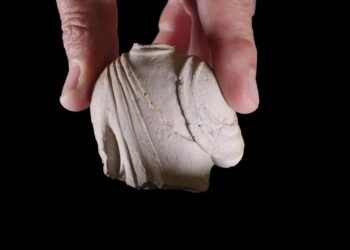
8-year-old boy finds 1,700-year-old Roman statuette fragment in Ramon Crater
Archaeology

8-year-old boy finds 1,700-year-old Roman statuette fragment in Ramon Crater

May 11, 2026
Slag from Paleopolis on Andros points to iron weapon and tool making during Macedonian rule in the 4th–3rd century BCE
Archaeology

Slag from Paleopolis on Andros points to iron weapon and tool making during Macedonian rule in the 4th–3rd century BCE

May 11, 2026

Follow us


Instagram
242K

Facebook
117K

Threads
46K

LinkedIn
14K

Twitter
6K

YouTube
1K
  • Trending
  • Comments
  • Latest
Shipwreck Salvage. Credit: rawpixel.com / Public Domain

2,000-year-old shipwreck discovered off Turkish coast with remarkably preserved stacked ceramics

July 2, 2025
A new study suggests the mysterious Voynich Manuscript may be a medieval cipher

A new study suggests the mysterious Voynich Manuscript may be a medieval cipher

January 3, 2026
Viking age DNA reveals 9,000-year-old HIV-resistant gene originating near the Black Sea

Viking age DNA reveals 9,000-year-old HIV-resistant gene originating near the Black Sea

May 18, 2025
3D analysis reveals Shroud of Turin image likely came from sculpture, not Jesus’ body

3D analysis reveals Shroud of Turin image likely came from sculpture, not Jesus’ body

August 3, 2025
Moses may be named in ancient Egyptian mine inscriptions, sparking debate over earliest biblical references

Moses may be named in ancient Egyptian mine inscriptions, sparking debate over earliest biblical references

July 31, 2025
3D analysis reveals Shroud of Turin image likely came from sculpture, not Jesus’ body

3D analysis reveals Shroud of Turin image likely came from sculpture, not Jesus’ body

Moses may be named in ancient Egyptian mine inscriptions, sparking debate over earliest biblical references

Moses may be named in ancient Egyptian mine inscriptions, sparking debate over earliest biblical references

$1 million prize offered to decipher 5,300-year-old Indus Valley script

$1 million prize offered to decipher 5,300-year-old Indus Valley script

Oldest ever genetic data from a human relative found in 2-million-year-old fossilized teeth

Oldest ever genetic data from a human relative found in 2-million-year-old fossilized teeth

Exceptionally large Roman shoes discovered at Magna fort near Hadrian’s Wall

Exceptionally large Roman shoes discovered at Magna fort near Hadrian’s Wall

Rare Bronze Age burial in Sweden reveals unusual pair of Wendel neck rings and complex ritual landscape near Norrköping

Rare Bronze Age burial in Sweden reveals unusual pair of Wendel neck rings and complex ritual landscape near Norrköping

May 12, 2026
Kasta Tomb in Amphipolis fully revealed as restoration uncovers largest burial mound in Macedonia

Kasta Tomb in Amphipolis fully revealed as restoration uncovers largest burial mound in Macedonia

May 12, 2026
Rare Roman villa threatened by farming damage reveals rare mosaic and bathhouse remains in Devon

Rare Roman villa threatened by farming damage reveals rare mosaic and bathhouse remains in Devon

May 12, 2026
Ancient burials, Roman well, and Anglo-Saxon house uncovered during A46 Newark bypass excavations

Ancient burials, Roman well, and Anglo-Saxon house uncovered during A46 Newark bypass excavations

May 12, 2026
8-year-old boy finds 1,700-year-old Roman statuette fragment in Ramon Crater

8-year-old boy finds 1,700-year-old Roman statuette fragment in Ramon Crater

May 11, 2026

Archaeology News online magazine

Archaeology News is an international online magazine that covers all aspects of archaeology.


Categories

  • Academics
    • Books
    • Conferences
    • Universities
  • Articles
  • Download
  • Game
  • News
    • Anthropology
    • Archaeology
    • Paleontology
  • Quiz
  • Tours

Subscribe to our newsletter

© 2024 - Archaeology News Online Magazine. All Rights Reserved.

  • About
  • Privacy Policy
  • Terms of Use
  • Donation
  • Contact

Manage Consent
To provide the best experiences, we use technologies like cookies to store and/or access device information. Consenting to these technologies will allow us to process data such as browsing behavior or unique IDs on this site. Not consenting or withdrawing consent, may adversely affect certain features and functions.
Functional Always active
The technical storage or access is strictly necessary for the legitimate purpose of enabling the use of a specific service explicitly requested by the subscriber or user, or for the sole purpose of carrying out the transmission of a communication over an electronic communications network.
Preferences
The technical storage or access is necessary for the legitimate purpose of storing preferences that are not requested by the subscriber or user.
Statistics
The technical storage or access that is used exclusively for statistical purposes. The technical storage or access that is used exclusively for anonymous statistical purposes. Without a subpoena, voluntary compliance on the part of your Internet Service Provider, or additional records from a third party, information stored or retrieved for this purpose alone cannot usually be used to identify you.
Marketing
The technical storage or access is required to create user profiles to send advertising, or to track the user on a website or across several websites for similar marketing purposes.
  • Manage options
  • Manage services
  • Manage {vendor_count} vendors
  • Read more about these purposes
View preferences
  • {title}
  • {title}
  • {title}
  • Home
  • News
    • Archaeology
    • Anthropology
    • Paleontology
  • Academic
    • Books
    • Conferences
    • Universities
  • Articles
  • VR Tours
  • Quiz & Game
  • Download
  • Encyclopedia
  • Forum

About  .  Contact  .  Donation

© 2024 - Archaeology News Online Magazine. All Rights Reserved