• About
  • Privacy Policy
  • Terms of Use
  • Donation
  • Contact
No Result
View All Result
Archaeology News
  • Home
  • News
    • Archaeology
    • Anthropology
    • Paleontology
  • Academic
    • Books
    • Conferences
    • Universities
  • Articles
  • VR Tours
  • Quiz & Game
  • Download
  • Encyclopedia
  • Forum
Archaeology News
No Result
View All Result
Home News Anthropology

Ancient DNA study reveals Ötzi the Iceman’s unique ancestry and the genetic legacy of his Alpine homeland

by Dario Radley
July 20, 2025

A recent paleogenomic study has revealed incredible genetic continuity and subtle social interactions among prehistoric populations in the Eastern Italian Alps that once sheltered Ötzi the Iceman. Published in Nature Communications, the study analyzed the genomes of 47 individuals who lived between 6400 and 1300 BCE, from the Mesolithic to the Middle Bronze Age.
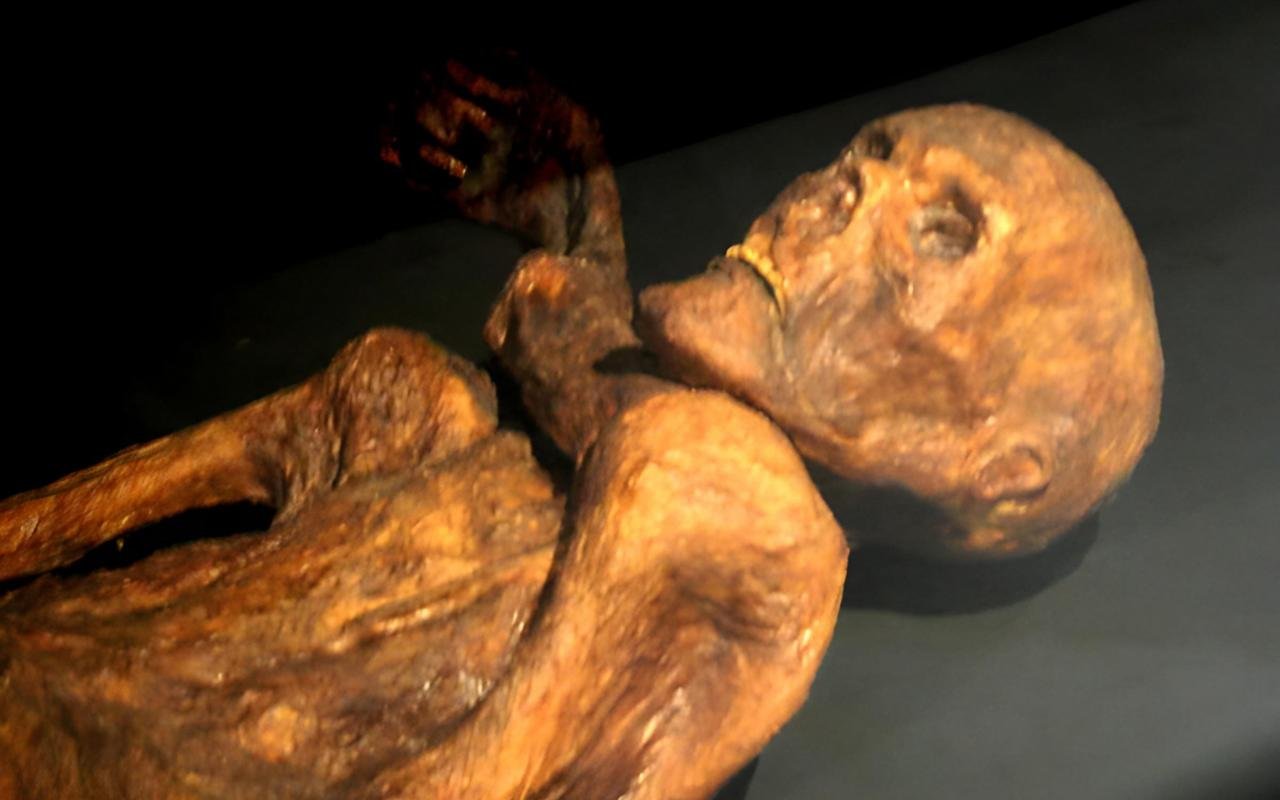
Rewriting the story of Ötzi, the Alps ice man
Ötzi the ice mummy. Credit: Wikimedia Commons, CC BY-SA 3.0

Led by Valentina Coia, the study examined ancient DNA to uncover how populations in the high-altitude Alps evolved across millennia. Among the individuals studied was Ötzi, the 5,300-year-old mummy found frozen in the Alps in 1991. Ötzi’s genome, rich in Anatolian farmer ancestry, has long puzzled researchers due to its distinctiveness. This latest research confirms that while Ötzi shared a great deal genetically with neighboring Copper Age people, his origins differed in several important ways.

Most of the individuals in the study had approximately 80–90% Anatolian farmer ancestry, revealing strong continuity with early Neolithic populations in southern Europe. Their DNA remained little altered for more than 2,000 years, indicating that the area served as a genetic refuge, holding on to its original lineage even in the face of broader prehistoric Europe-wide changes. But the paternal and maternal lines of Ötzi were distinctive. His Y-chromosome haplogroup (G2a-Z6208) and his mitochondrial DNA have not been discovered in any other ancient or modern individuals, making him a genetic outlier.

Low Y-chromosome marker diversity but high mitochondrial DNA diversity in Alpine men indicates a patrilocal society, with females moving into male-dominated communities. In the kind of social structure Coia and her team explained in Nature Communications, this would have resulted in the stabilization of male lineages over generations, while maternal lines had more external connections.

Ancient DNA study reveals Ötzi the Iceman’s unique ancestry and the genetic legacy of his Alpine homeland
Snow-Capped Italian Alps under Cloudy Skies. Credit: Marek Piwnicki

Apart from their ancestry, the researchers used whole genomes to predict physical characteristics. As with Ötzi, the majority likely had dark hair and brown eyes. They also shared his lactose intolerance—none of them carried genes for digesting milk, suggesting milk had not become a dietary staple yet.
RelatedStories

Late Bronze Age bronze ring hoard near Dresden reveals ritual practices and social life 1300–1100 BCE

Late Bronze Age bronze ring hoard near Dresden reveals ritual practices and social life 1300–1100 BCE

April 21, 2026
Ancient DNA reveals male lineage and family ties in Neolithic Scotland tombs

Ancient DNA reveals male lineage and family ties in Neolithic Scotland tombs

April 16, 2026

Though continuity of genes was the norm, the study did detect isolated instances of foreign ancestry. A small girl (LAS01) from around 2400 BCE had Steppe-affiliated ancestry, most likely due to limited contact with arriving Bronze Age groups. Another individual, SIU01, who lived around 1600 BCE, had both Steppe genes and the haplogroup R1b, typically found in the Bell Beaker culture. Conversely, DNA from individuals such as NOG302 and ROM402 indicated gene flow from the Eastern Mediterranean and the Caucasus.

Outside of these occasional intrusions, however, the genetic record shows a picture of stability throughout time. As the authors concluded, the Eastern Italian Alps were not so much a crossroads as a genetic stronghold, obdurate to great demographic shifts, yet permeable to limited cultural and genetic exchange.

Though the mystery of Ötzi’s exact cultural affiliation remains unresolved, this study offers a clearer understanding of the world he lived in—one shaped by deep-rooted traditions, tight social bonds, and a landscape both isolating and connective.
More information: Croze, M., Paladin, A., Zingale, S. et al. (2025). Genomic diversity and structure of prehistoric alpine individuals from the Tyrolean Iceman’s territory. Nat Commun 16, 6431. doi:10.1038/s41467-025-61601-8
Share93Tweet58Share16ShareSend

You May Also Like...

Ancient ship burial in Norway dates to CE 700, rewriting early Viking Age origins
Archaeology

Ancient ship burial in Norway dates to CE 700, rewriting early Viking Age origins

April 25, 2026
Ramses II statue found in Egypt’s eastern Nile Delta shows ancient reuse of royal monuments
Archaeology

Ramses II statue found in Egypt’s eastern Nile Delta shows ancient reuse of royal monuments

April 24, 2026
Late Bronze Age bronze ring hoard near Dresden reveals ritual practices and social life 1300–1100 BCE
Archaeology

Late Bronze Age bronze ring hoard near Dresden reveals ritual practices and social life 1300–1100 BCE

April 21, 2026
Roman cemetery in Egypt reveals golden tongues, mummies, and rare Iliad papyrus
Anthropology

Roman cemetery in Egypt reveals golden tongues, mummies, and rare Iliad papyrus

April 19, 2026
Basel plague study finds young workers had highest death rates in 17th century outbreak
Anthropology

Basel plague study finds young workers had highest death rates in 17th century outbreak

April 17, 2026
Ancient DNA reveals male lineage and family ties in Neolithic Scotland tombs
Anthropology

Ancient DNA reveals male lineage and family ties in Neolithic Scotland tombs

April 16, 2026

Follow us


Instagram
244K

Facebook
118K

Threads
46K

LinkedIn
14K

Twitter
6K

YouTube
1K
  • Trending
  • Comments
  • Latest
Shipwreck Salvage. Credit: rawpixel.com / Public Domain

2,000-year-old shipwreck discovered off Turkish coast with remarkably preserved stacked ceramics

July 2, 2025
Viking age DNA reveals 9,000-year-old HIV-resistant gene originating near the Black Sea

Viking age DNA reveals 9,000-year-old HIV-resistant gene originating near the Black Sea

May 18, 2025
A new study suggests the mysterious Voynich Manuscript may be a medieval cipher

A new study suggests the mysterious Voynich Manuscript may be a medieval cipher

January 3, 2026
3D analysis reveals Shroud of Turin image likely came from sculpture, not Jesus’ body

3D analysis reveals Shroud of Turin image likely came from sculpture, not Jesus’ body

August 3, 2025
Moses may be named in ancient Egyptian mine inscriptions, sparking debate over earliest biblical references

Moses may be named in ancient Egyptian mine inscriptions, sparking debate over earliest biblical references

July 31, 2025
3D analysis reveals Shroud of Turin image likely came from sculpture, not Jesus’ body

3D analysis reveals Shroud of Turin image likely came from sculpture, not Jesus’ body

Moses may be named in ancient Egyptian mine inscriptions, sparking debate over earliest biblical references

Moses may be named in ancient Egyptian mine inscriptions, sparking debate over earliest biblical references

$1 million prize offered to decipher 5,300-year-old Indus Valley script

$1 million prize offered to decipher 5,300-year-old Indus Valley script

Oldest ever genetic data from a human relative found in 2-million-year-old fossilized teeth

Oldest ever genetic data from a human relative found in 2-million-year-old fossilized teeth

Exceptionally large Roman shoes discovered at Magna fort near Hadrian’s Wall

Exceptionally large Roman shoes discovered at Magna fort near Hadrian’s Wall

Ancient ship burial in Norway dates to CE 700, rewriting early Viking Age origins

Ancient ship burial in Norway dates to CE 700, rewriting early Viking Age origins

April 25, 2026
Ramses II statue found in Egypt’s eastern Nile Delta shows ancient reuse of royal monuments

Ramses II statue found in Egypt’s eastern Nile Delta shows ancient reuse of royal monuments

April 24, 2026
Late Bronze Age bronze ring hoard near Dresden reveals ritual practices and social life 1300–1100 BCE

Late Bronze Age bronze ring hoard near Dresden reveals ritual practices and social life 1300–1100 BCE

April 21, 2026
Roman cemetery in Egypt reveals golden tongues, mummies, and rare Iliad papyrus

Roman cemetery in Egypt reveals golden tongues, mummies, and rare Iliad papyrus

April 19, 2026
Basel plague study finds young workers had highest death rates in 17th century outbreak

Basel plague study finds young workers had highest death rates in 17th century outbreak

April 17, 2026

Archaeology News online magazine

Archaeology News is an international online magazine that covers all aspects of archaeology.


Categories

  • Academics
    • Books
    • Conferences
    • Universities
  • Articles
  • Download
  • Game
  • News
    • Anthropology
    • Archaeology
    • Paleontology
  • Quiz
  • Tours

Subscribe to our newsletter

© 2024 - Archaeology News Online Magazine. All Rights Reserved.

  • About
  • Privacy Policy
  • Terms of Use
  • Donation
  • Contact

Manage Consent
To provide the best experiences, we use technologies like cookies to store and/or access device information. Consenting to these technologies will allow us to process data such as browsing behavior or unique IDs on this site. Not consenting or withdrawing consent, may adversely affect certain features and functions.
Functional Always active
The technical storage or access is strictly necessary for the legitimate purpose of enabling the use of a specific service explicitly requested by the subscriber or user, or for the sole purpose of carrying out the transmission of a communication over an electronic communications network.
Preferences
The technical storage or access is necessary for the legitimate purpose of storing preferences that are not requested by the subscriber or user.
Statistics
The technical storage or access that is used exclusively for statistical purposes. The technical storage or access that is used exclusively for anonymous statistical purposes. Without a subpoena, voluntary compliance on the part of your Internet Service Provider, or additional records from a third party, information stored or retrieved for this purpose alone cannot usually be used to identify you.
Marketing
The technical storage or access is required to create user profiles to send advertising, or to track the user on a website or across several websites for similar marketing purposes.
  • Manage options
  • Manage services
  • Manage {vendor_count} vendors
  • Read more about these purposes
View preferences
  • {title}
  • {title}
  • {title}
  • Home
  • News
    • Archaeology
    • Anthropology
    • Paleontology
  • Academic
    • Books
    • Conferences
    • Universities
  • Articles
  • VR Tours
  • Quiz & Game
  • Download
  • Encyclopedia
  • Forum

About  .  Contact  .  Donation

© 2024 - Archaeology News Online Magazine. All Rights Reserved