
Archaeologists have uncovered a well-preserved Late Classic Maya household complex buried on the Punta Ycacos Lagoon seafloor in southern Belize, offering an entirely new look at how ordinary Maya families lived and worked more than 1,200 years ago. The discovery, analyzed by Dr. Heather McKillop and Dr. E. Cory Sills and published in Ancient Mesoamerica, sheds light on the so-called “invisible sites” that very rarely survive in the archaeological record.

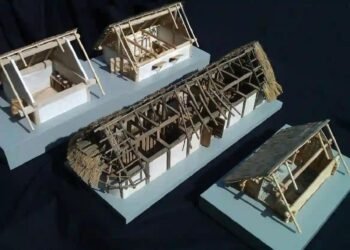
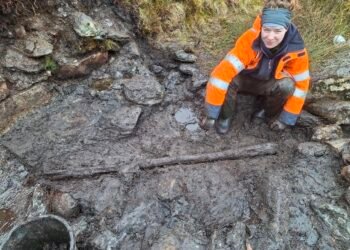
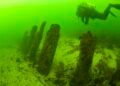
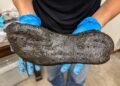
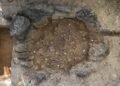
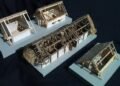
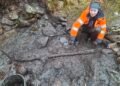
Called Ch’ok Ayin, it lies within the Paynes Creek Salt Works and was preserved by being covered in mangrove peat that created an oxygen-free environment, preventing the wooden structures from decaying. It is about 32 by 27 meters in size and contains 56 hardwood posts and several palm posts for pole-and-thatch houses—a type of architecture still common in modern Maya villages but usually lost to time. Preservation of such architecture is rare along the coasts of Belize and the Yucatán.
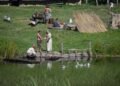
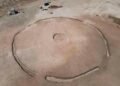
Mapping at the site revealed a small household cluster organized around a central plaza. One structure was a residence, and others served as salt kitchens and brine-enrichment workshops—principal stages in salt production. Archaeological evidence reveals that the household specialized in this essential commodity by collecting saline-rich lagoon water, filtering it through salt-laden sediment, and boiling it in clay pots over wood fires until the brine crystallized. Salt cakes produced this way were then traded across the southern region.
Despite its modest materials, the Ch’ok Ayin household was far from poor. Artifacts such as Belize Red pottery from the upper Belize River valley, obsidian from the Guatemalan highlands, northern Belize fine chert tools, and jadeite traces show participation in widespread trade networks. These findings contrast assumptions that pole-and-thatch dwellings represented the lowest tier of Maya society. Instead, they demonstrate participation in a market economy that connected inland and coastal populations throughout the Late Classic period (CE 550–800).

The site also provides a preview of the way rising sea levels during the Holocene reshaped the ancient Maya landscape. When coastal lowlands were flooded, once-prosperous settlements were submerged under mangrove swamps and lagoons. Sites like Ch’ok Ayin, Moho Cay, and Wild Cane Cay are now underwater and thus invisible to modern survey methods such as lidar, which primarily detects stone structures and raised mounds. Traditional approaches would have counted Ch’ok Ayin as uninhabited, overlooking evidence of real domestic life and production.
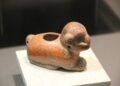
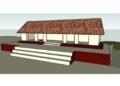
The exceptional preservation at the Paynes Creek Salt Works provides the only known examples of Classic Maya wooden architecture, transforming scholars’ understanding of life along the ancient Caribbean shore.




Disclaimer: This website is a science-focused magazine that welcomes both academic and non-academic audiences. Comments are written by users and may include personal opinions or unverified claims. They do not necessarily reflect the views of our editorial team or rely on scientific evidence.
Comment Policy: We kindly ask all commenters to engage respectfully. Comments that contain offensive, insulting, degrading, discriminatory, or racist content will be automatically removed.