
Ancient coins and broken metal pieces found in a 5th-century grave in Belgium are giving archaeologists a rare look at how people handled daily trade after the Roman monetary system began to break down in northwestern Europe.
The study, published in Britannia, focuses on burial A-104, uncovered at the Roman coastal fort of Oudenburg in Belgium. The burial dates to the early 5th century CE, around the same period when bronze coinage stopped reaching northern Gaul. By about CE 400, base-metal coins were no longer supplied to the region, leaving gold and silver as the only official currency. Those precious metals were far less practical for ordinary purchases, which likely forced communities to find other ways to conduct smaller transactions.
Researchers believe the contents of this grave may preserve evidence of one of those solutions.
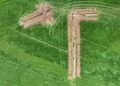
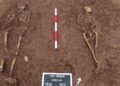
The Oudenburg site was first established by the Roman army in the late 2nd century CE as a strategic fort along the coast. Archaeological evidence shows the settlement stayed occupied until the early or mid-5th century. Excavations in 1964 uncovered Graveyard A, used mainly during the 4th and 5th centuries, including burial A-104.
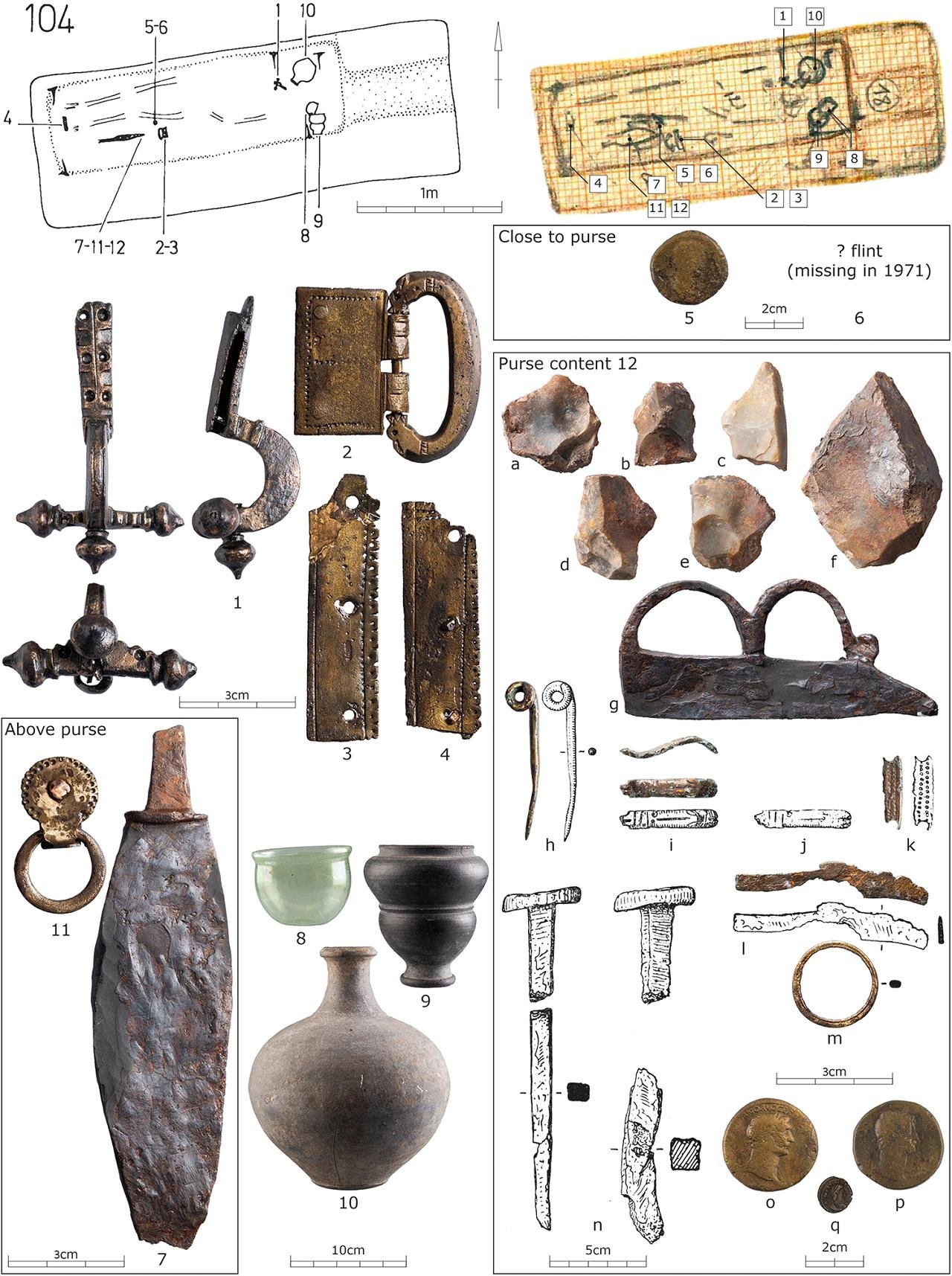
The grave belonged to a man buried with personal items such as a crossbow brooch, belt plaque, knife, ceramic jug, glass vessels, and a purse. Although the purse itself had mostly decayed into soil and fragments of fiber, archaeologists recovered a collection of objects from inside.
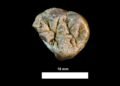
These included an iron fire striker, six pieces of flint, two belt hooks, a brooch pin, several small metal fragments, and four bronze coins. Three coins were inside the purse remains, while a fourth was found nearby and was likely part of the same group.
The coins came from very different periods. Two were minted under Emperor Trajan between CE 98 and 117, another under Hadrian in CE 138, and one much later coin of Valentinian II produced between CE 388 and 402.
Such a mix is unusual. Older coins found in archaeological layers are often treated as accidental intrusions, but in this case researchers argue the coins were deliberately collected and placed together.
Their explanation centers on weight.
The combined weight of the coins measured about 56.77 grams, close to two Roman unciae, a known Roman weight unit. This suggests the coins may no longer have been valued for their original face value, but instead for their metal content and weight. The damaged bronze fragments found alongside them support the same idea.
Most of the metal pieces were broken beyond repair. Instead of serving as usable objects, they may have functioned as scrap bronze, sometimes called Hackbronze, valued as raw material. Researchers suggest people could have grouped coins and metal fragments together for small exchanges based on weight, especially after official bronze currency supplies ended.
This would fit broader changes in the post-Roman economy. Without regular state-issued small change, local communities likely relied on mixed exchange systems that included barter, gifts, commodities, and forms of bullion exchange.
Similar finds exist elsewhere, including a burial at Tongeren containing 47 bronze coins whose total weight matched 10 Roman solidi. Yet the Oudenburg grave stands out because of its early date and the clear presence of scrap metal mixed with coins.
Later Merovingian burials often contain purses or belt bags with both coins and bronze fragments, especially in regions such as Kaiseraugst in Switzerland, where several graves from the late Roman and early medieval periods show the same pattern.
Because of this, the researchers think burial A-104 may represent an early stage in a practice that later became common. The grave could preserve a transitional moment between the late Roman monetary system and the more flexible exchange habits of the early medieval world.
The study does not claim definitive proof that scrap bronze served as currency. The authors note that more purse assemblages need weight analysis before broader conclusions are possible. Even so, the find suggests small collections of worn coins and broken metal were not random leftovers.
Instead, they may have been practical tools in an economy adapting to the loss of imperial support. For archaeologists trying to understand everyday life after Rome’s decline, these modest objects offer an unusually detailed clue.










Disclaimer: This website is a science-focused magazine that welcomes both academic and non-academic audiences. Comments are written by users and may include personal opinions or unverified claims. They do not necessarily reflect the views of our editorial team or rely on scientific evidence.
Comment Policy: We kindly ask all commenters to engage respectfully. Comments that contain offensive, insulting, degrading, discriminatory, or racist content will be automatically removed.