
Archaeologists in southeastern Poland are studying a rare Bronze Age hoard uncovered near the village of Śniatycze in the Komarów-Osada municipality. The deposit contained 18 bronze ornaments buried together in a small pit about 30 centimeters below the ground. Most of the objects are heavy anklets and bracelets linked to the Lusatian culture, a society that lived across parts of present-day Poland during the Late Bronze Age and Early Iron Age.
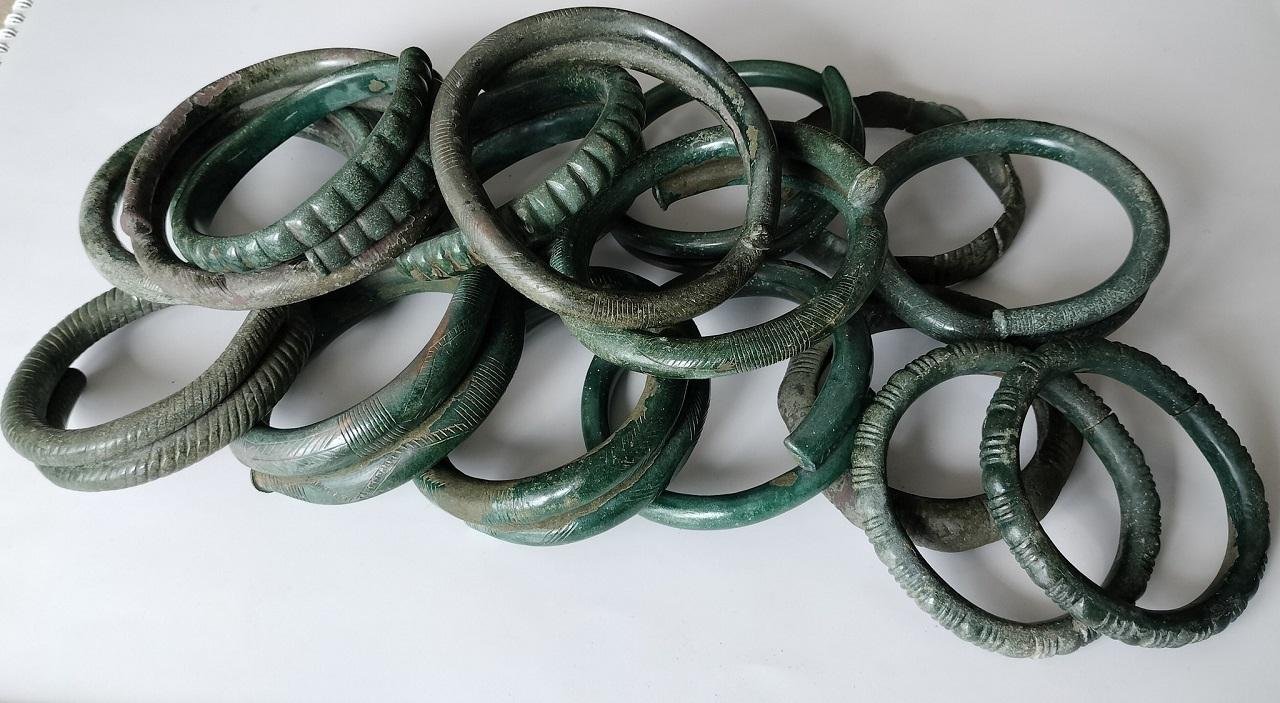
The hoard weighs roughly 3.6 kilograms and stands out because large collections of Lusatian bronze ornaments are uncommon in the Zamość region. Earlier finds from the area usually involved single pieces or small fragments. Archaeologists said the newly uncovered group is one of the largest known deposits of its kind from eastern Poland.
The ornaments were first located by a licensed detectorist working with official permission from heritage authorities and the landowner. After the discovery, archaeologists examined the site and confirmed that all the objects had been placed together in one small pit. The bronze pieces survived in unusually good condition. After limited cleaning and early conservation work, many already appeared close to exhibition quality.
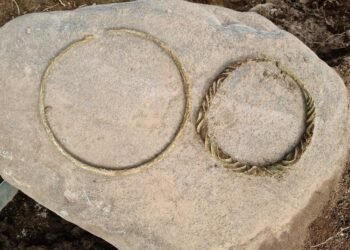
Most of the items were shaped from thick bronze rods bent into spiral forms. Several appear to have been made as matching pairs. Some carry simple surfaces without decoration, while others show detailed engraved patterns cut into the metal. Archaeologists identified repeated grooves, diagonal marks, rhombus motifs, chevrons, and herringbone-like designs across many of the objects.
Among the finds were pairs of massive anklets decorated with ribbed patterns formed by transverse cuts. Other examples featured overlapping ends shaped into flattened “foot-like” terminals. One large ornament carried dense geometric decoration across almost the entire outer surface, including rhombus patterns filled with tiny horizontal lines. Another was engraved with a continuous spiral incision running along both inner and outer surfaces.
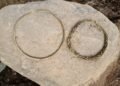
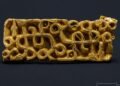
Researchers also identified two heavy circular ornaments with raised nodules pressed from the inside of the bronze. One of these had a concave inner side that created a distinct C-shaped cross-section. The variety of forms and decorative styles points to highly skilled metalworking traditions during the late stages of the Lusatian culture.
Specialists examining the hoard dated the objects to the Hallstatt D period, around 550 to 400 BCE. The assessment involved archaeologists from Zamość along with Professor Wojciech Blajer from Kraków. The Lusatian culture is known for fortified settlements, cremation cemeteries, and advanced bronze production. Bronze goods from this period moved across trade networks linking different regions of Central Europe.
Comparable hoards have previously been recorded in Greater Poland, Pomerania, Kujawy, Lower Silesia, and Lesser Poland. Finds of this scale remain rare in the eastern part of the country. Archaeologists believe the newly uncovered deposit could improve understanding of Lusatian settlement patterns and exchange systems in the Lublin region.
The reason the ornaments were buried is still uncertain. Similar Bronze Age hoards are sometimes interpreted as hidden wealth stored for protection during unstable times. Other deposits appear to have held ceremonial or symbolic meaning. Since all 18 objects were carefully placed together, archaeologists believe the collection was intentionally deposited rather than lost accidentally.
The artifacts are expected to be transferred to the Zamość Museum, where specialists will carry out detailed conservation, metallurgical testing, and further typological analysis. Researchers hope the study of the bronze composition and manufacturing techniques will provide more information about trade contacts and metalworking practices in southeastern Poland during the final centuries of the Bronze Age.
More information: Lublin Voivodeship Conservator of Monuments







Disclaimer: This website is a science-focused magazine that welcomes both academic and non-academic audiences. Comments are written by users and may include personal opinions or unverified claims. They do not necessarily reflect the views of our editorial team or rely on scientific evidence.
Comment Policy: We kindly ask all commenters to engage respectfully. Comments that contain offensive, insulting, degrading, discriminatory, or racist content will be automatically removed.