• About
  • Privacy Policy
  • Terms of Use
  • Donation
  • Contact
No Result
View All Result
Archaeology News
  • Home
  • News
    • Archaeology
    • Anthropology
    • Paleontology
  • Academic
    • Books
    • Conferences
    • Universities
  • Articles
  • VR Tours
  • Quiz & Game
  • Download
  • Encyclopedia
  • Forum
Archaeology News
No Result
View All Result
Home News Anthropology

Ancient genomes reveal women-centered community in Celtic Britain

by Dario Radley
January 15, 2025

A genetic study has, for the first time, unraveled a matrilocal social system in Iron Age Britain, where land and connectedness with the community were passed down through a female lineage. This is a first for European prehistory and underlines the importance of women in social and political spheres.
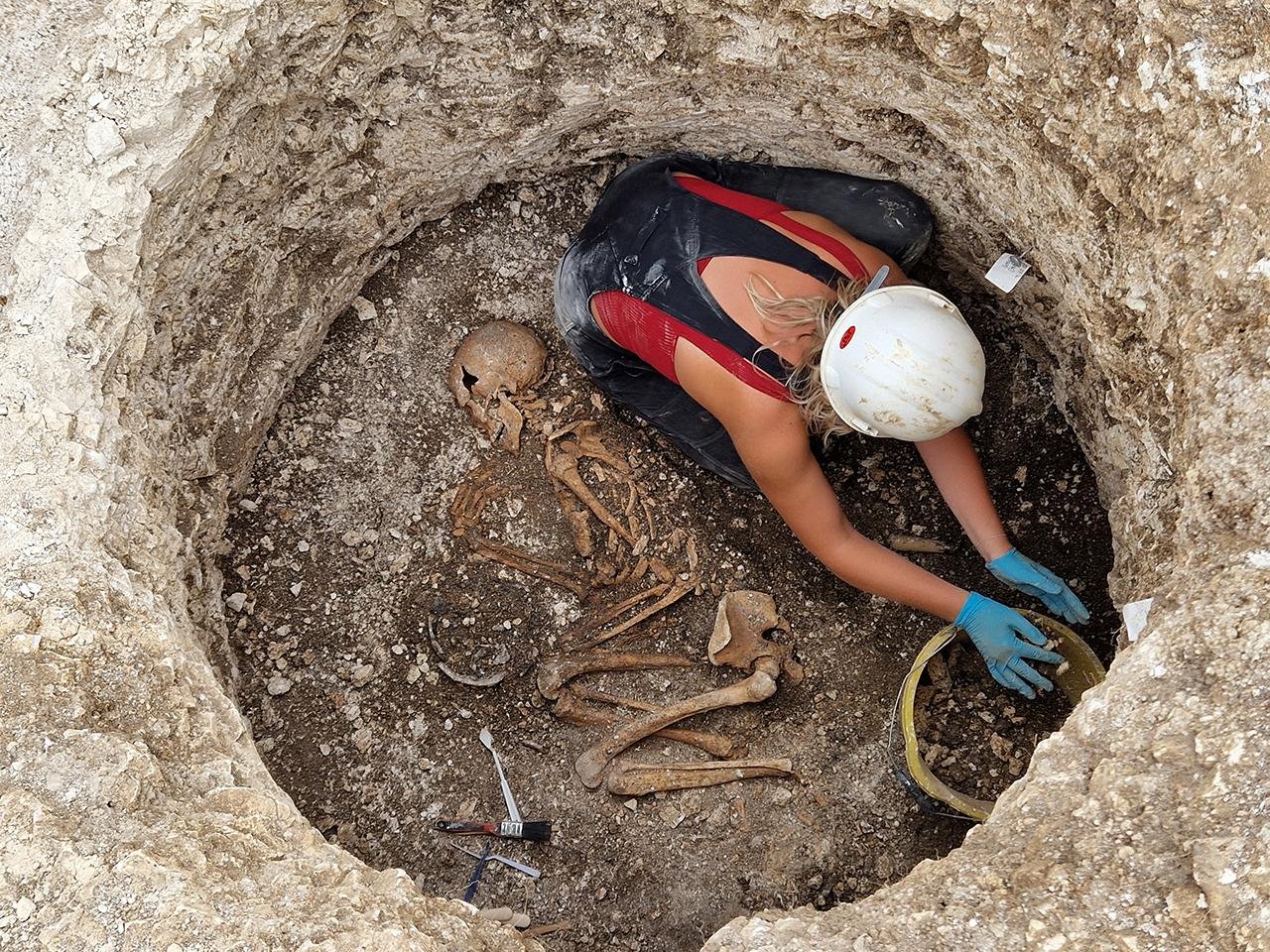
Ancient genomes uncover women-centric community in Celtic Britain
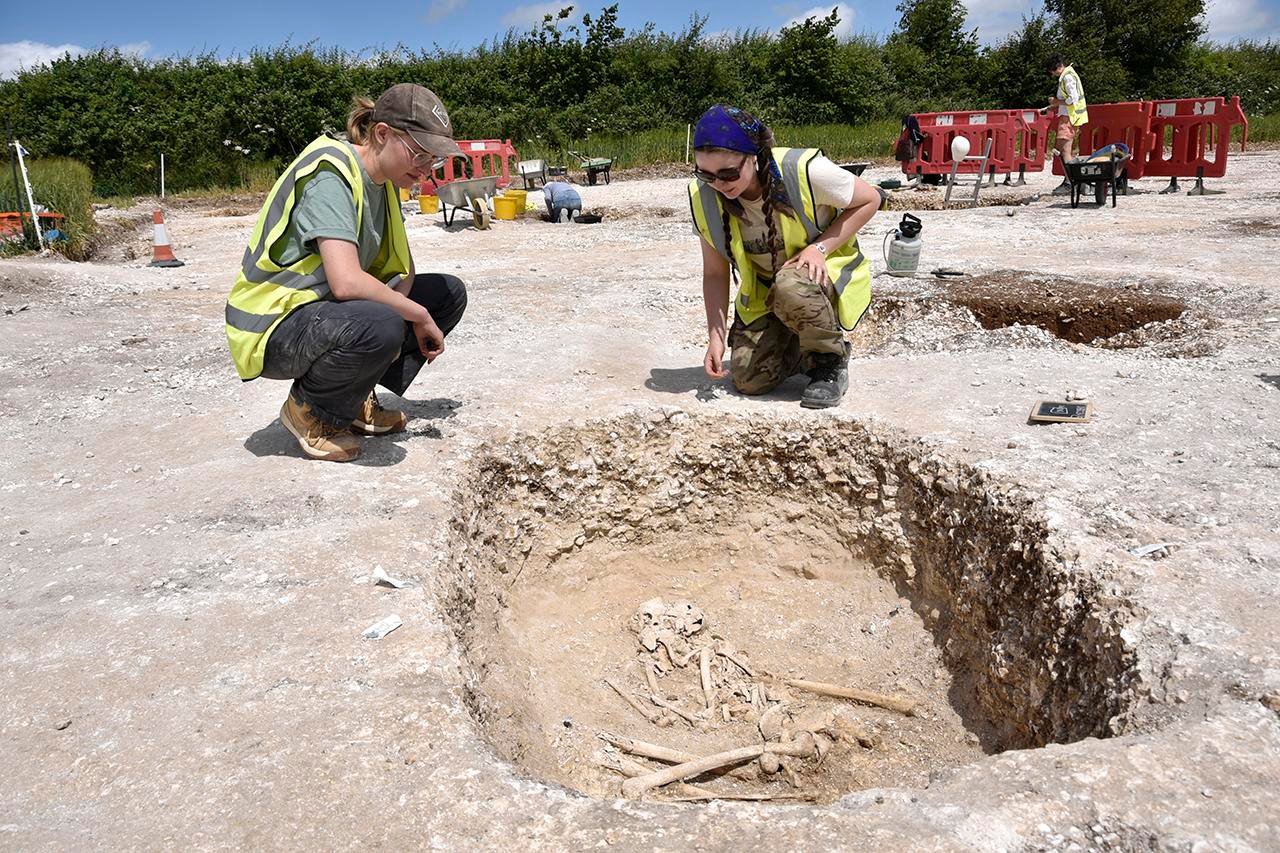
The archaeologists were thrilled to uncover well-preserved skeletons in Dorset. Credit: Bournemouth University

Researchers from Trinity College Dublin and Bournemouth University collaborated to analyze DNA from 57 individuals buried at a site near Winterbourne Kingston, Dorset, known as ‘Duropolis.” This burial ground, in use both before and after the Roman Conquest of CE 43, provided a rare view of the lives of the Durotriges, a Celtic tribe.

In the study, just published in Nature, the archaeogeneticists reconstructed a family tree centered around maternal lines. Dr. Lara Cassidy, an assistant professor in Genetics at Trinity College Dublin, is the lead researcher on the project. “This was the cemetery of a large kin group,” Cassidy said. “Most members could be traced back to the same mother, who lived many centuries before, whereas relationships through the father’s line were almost absent.”

This matrilocal pattern, with husbands moving into their wives’ communities, suggests that land and identity were likely passed down through women. “It predicts female social and political empowerment,” Dr. Cassidy said.
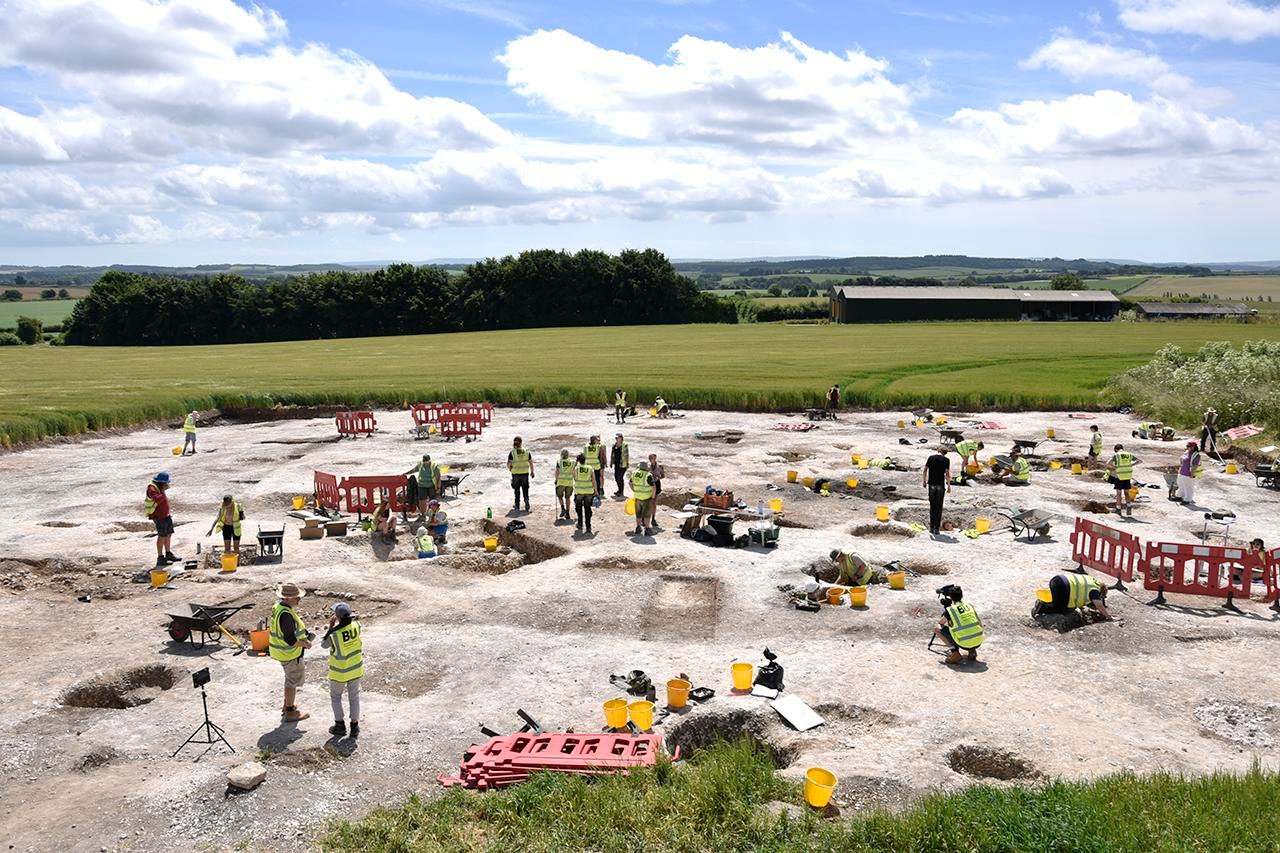
Ancient genomes uncover women-centric community in Celtic Britain
Many skeletons were found buried with valuable objects. Credit: Bournemouth University

Well-preserved Iron Age graves are scarce in Britain, but Dorset’s unusual customs are an exceptional case. Excavations at Duropolis, which started in 2009 and are led by Dr. Miles Russell from Bournemouth University, had already revealed richly furnished burials, most of them women’s.

RelatedStories

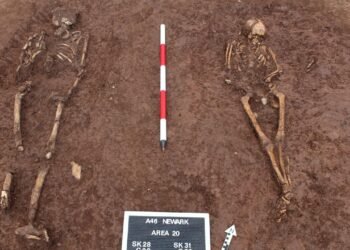
Ancient burials, Roman well, and Anglo-Saxon house uncovered during A46 Newark bypass excavations

Ancient burials, Roman well, and Anglo-Saxon house uncovered during A46 Newark bypass excavations

May 12, 2026
DNA identifies four more members of Franklin Expedition, solving 160-year arctic mystery

DNA identifies four more members of Franklin Expedition, solving 160-year arctic mystery

May 7, 2026

“Beyond archaeology, knowledge of Iron Age Britain has come primarily from Greek and Roman writers, but they are not always considered the most trustworthy. That said, their commentary on British women is remarkable in light of these findings. When the Romans arrived, they were astonished to find women occupying positions of power. Two of the earliest recorded rulers were queens – Boudica and Cartimandua – who commanded armies,” Dr. Russell added.
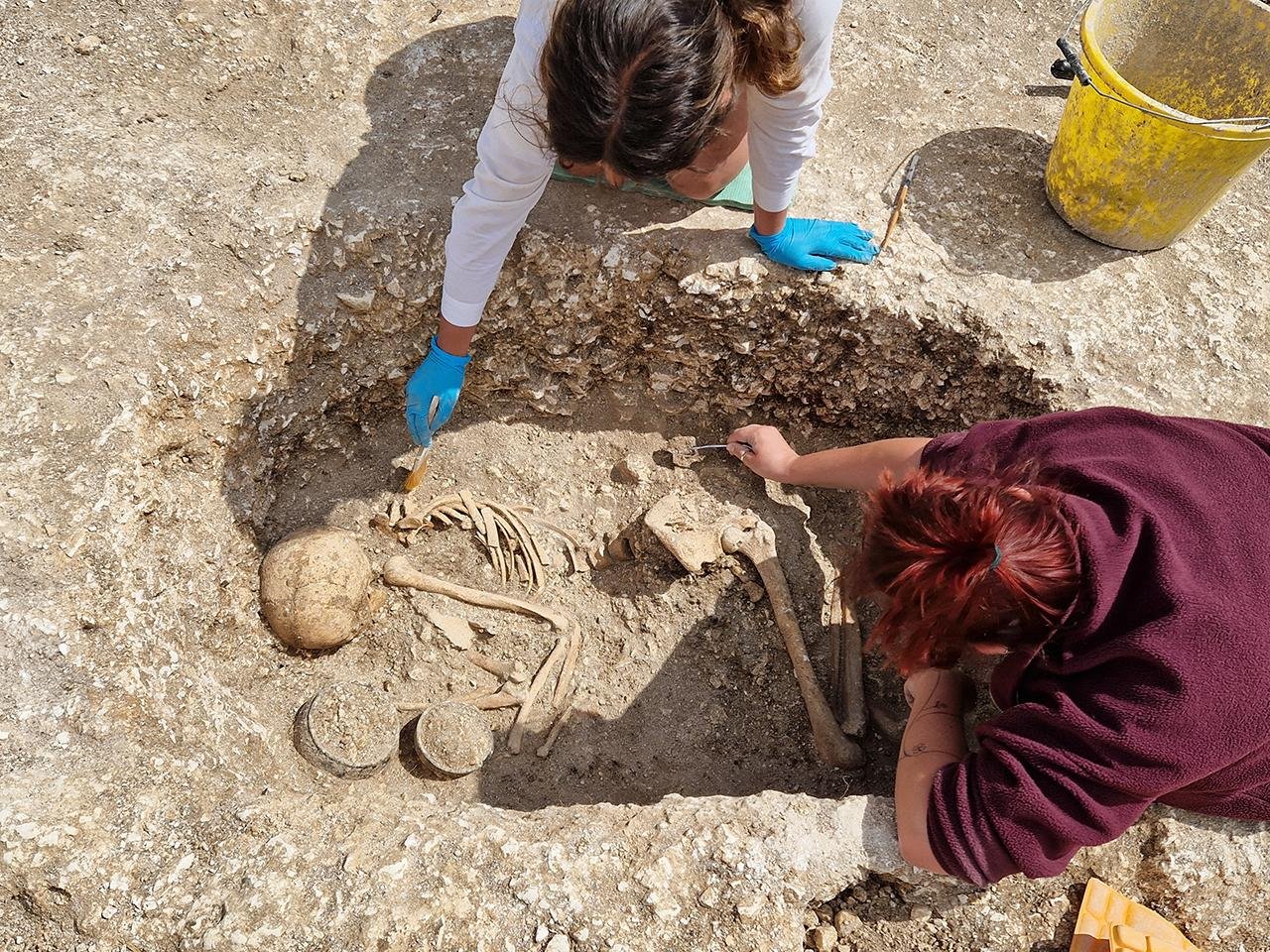
Ancient genomes uncover women-centric community in Celtic Britain
Excavating an Iron Age burial in Dorset, England. Credit: Bournemouth University

Anthropologist Dr. Martin Smith from Bournemouth University said: “These results give us a whole new way of looking at the burials we are uncovering with our students. Rather than simply seeing a set of skeletons, hidden aspects of these people’s lives and identities come into view as mothers, husbands, daughters, and so on. We also see these folk had a deep knowledge of their own ancestry – multiple marriages between distant branches of this family occurred and were possibly favored, but close inbreeding was avoided.”
Ancient genomes uncover women-centric community in Celtic Britain
Well-preserved Iron Age graves are scarce in Britain. Credit: Bournemouth University

The study’s findings were not limited to Dorset. By analyzing data from more than 150 archaeological sites across Britain, the team also found similar matrilocality in other parts of the country, including Yorkshire. Dan Bradley, Professor of Population Genetics in Trinity’s Department of Genetics said: “Across Britain, we saw cemeteries where most individuals were maternally descended from a small set of female ancestors. In Yorkshire, for example, one dominant matriline was established before 400 BCE. To our surprise, this was a widespread phenomenon with deep roots on the island.”

The findings align with classical accounts of Celtic women’s liberties, including property rights and multiple marital options.
Bournemouth University

More information: Cassidy, L.M., Russell, M., Smith, M. et al. (2025). Continental influx and pervasive matrilocality in Iron Age Britain. Nature. doi:10.1038/s41586-024-08409-6
Share7Tweet4Share1ShareSend

You May Also Like...

Cut marks on 1.6-million-year-old bones reveal early humans moved and processed meat in Kenya
Anthropology

Cut marks on 1.6-million-year-old bones reveal early humans moved and processed meat in Kenya

May 13, 2026
280 ancient stone burial monuments found in Sudan reveal lost cattle-herding culture in the Sahara
Archaeology

280 ancient stone burial monuments found in Sudan reveal lost cattle-herding culture in the Sahara

May 13, 2026
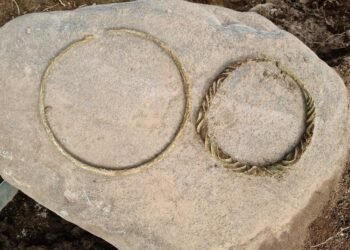
Rare Bronze Age burial in Sweden reveals unusual pair of Wendel neck rings and complex ritual landscape near Norrköping
Archaeology

Rare Bronze Age burial in Sweden reveals unusual pair of Wendel neck rings and complex ritual landscape near Norrköping

May 12, 2026
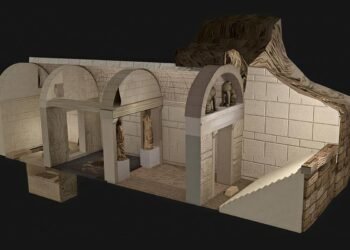
Kasta Tomb in Amphipolis fully revealed as restoration uncovers largest burial mound in Macedonia
Archaeology

Kasta Tomb in Amphipolis fully revealed as restoration uncovers largest burial mound in Macedonia

May 12, 2026
Rare Roman villa threatened by farming damage reveals rare mosaic and bathhouse remains in Devon
Archaeology

Rare Roman villa threatened by farming damage reveals rare mosaic and bathhouse remains in Devon

May 12, 2026
Ancient burials, Roman well, and Anglo-Saxon house uncovered during A46 Newark bypass excavations
Anthropology

Ancient burials, Roman well, and Anglo-Saxon house uncovered during A46 Newark bypass excavations

May 12, 2026

Follow us


Instagram
242K

Facebook
117K

Threads
46K

LinkedIn
14K

Twitter
6K

YouTube
1K
  • Trending
  • Comments
  • Latest
Shipwreck Salvage. Credit: rawpixel.com / Public Domain

2,000-year-old shipwreck discovered off Turkish coast with remarkably preserved stacked ceramics

July 2, 2025
A new study suggests the mysterious Voynich Manuscript may be a medieval cipher

A new study suggests the mysterious Voynich Manuscript may be a medieval cipher

January 3, 2026
Viking age DNA reveals 9,000-year-old HIV-resistant gene originating near the Black Sea

Viking age DNA reveals 9,000-year-old HIV-resistant gene originating near the Black Sea

May 18, 2025
3D analysis reveals Shroud of Turin image likely came from sculpture, not Jesus’ body

3D analysis reveals Shroud of Turin image likely came from sculpture, not Jesus’ body

August 3, 2025
Moses may be named in ancient Egyptian mine inscriptions, sparking debate over earliest biblical references

Moses may be named in ancient Egyptian mine inscriptions, sparking debate over earliest biblical references

July 31, 2025
3D analysis reveals Shroud of Turin image likely came from sculpture, not Jesus’ body

3D analysis reveals Shroud of Turin image likely came from sculpture, not Jesus’ body

Moses may be named in ancient Egyptian mine inscriptions, sparking debate over earliest biblical references

Moses may be named in ancient Egyptian mine inscriptions, sparking debate over earliest biblical references

$1 million prize offered to decipher 5,300-year-old Indus Valley script

$1 million prize offered to decipher 5,300-year-old Indus Valley script

Oldest ever genetic data from a human relative found in 2-million-year-old fossilized teeth

Oldest ever genetic data from a human relative found in 2-million-year-old fossilized teeth

Exceptionally large Roman shoes discovered at Magna fort near Hadrian’s Wall

Exceptionally large Roman shoes discovered at Magna fort near Hadrian’s Wall

Cut marks on 1.6-million-year-old bones reveal early humans moved and processed meat in Kenya

Cut marks on 1.6-million-year-old bones reveal early humans moved and processed meat in Kenya

May 13, 2026
280 ancient stone burial monuments found in Sudan reveal lost cattle-herding culture in the Sahara

280 ancient stone burial monuments found in Sudan reveal lost cattle-herding culture in the Sahara

May 13, 2026
Rare Bronze Age burial in Sweden reveals unusual pair of Wendel neck rings and complex ritual landscape near Norrköping

Rare Bronze Age burial in Sweden reveals unusual pair of Wendel neck rings and complex ritual landscape near Norrköping

May 12, 2026
Kasta Tomb in Amphipolis fully revealed as restoration uncovers largest burial mound in Macedonia

Kasta Tomb in Amphipolis fully revealed as restoration uncovers largest burial mound in Macedonia

May 12, 2026
Rare Roman villa threatened by farming damage reveals rare mosaic and bathhouse remains in Devon

Rare Roman villa threatened by farming damage reveals rare mosaic and bathhouse remains in Devon

May 12, 2026

Archaeology News online magazine

Archaeology News is an international online magazine that covers all aspects of archaeology.


Categories

  • Academics
    • Books
    • Conferences
    • Universities
  • Articles
  • Download
  • Game
  • News
    • Anthropology
    • Archaeology
    • Paleontology
  • Quiz
  • Tours

Subscribe to our newsletter

© 2024 - Archaeology News Online Magazine. All Rights Reserved.

  • About
  • Privacy Policy
  • Terms of Use
  • Donation
  • Contact

Manage Consent
To provide the best experiences, we use technologies like cookies to store and/or access device information. Consenting to these technologies will allow us to process data such as browsing behavior or unique IDs on this site. Not consenting or withdrawing consent, may adversely affect certain features and functions.
Functional Always active
The technical storage or access is strictly necessary for the legitimate purpose of enabling the use of a specific service explicitly requested by the subscriber or user, or for the sole purpose of carrying out the transmission of a communication over an electronic communications network.
Preferences
The technical storage or access is necessary for the legitimate purpose of storing preferences that are not requested by the subscriber or user.
Statistics
The technical storage or access that is used exclusively for statistical purposes. The technical storage or access that is used exclusively for anonymous statistical purposes. Without a subpoena, voluntary compliance on the part of your Internet Service Provider, or additional records from a third party, information stored or retrieved for this purpose alone cannot usually be used to identify you.
Marketing
The technical storage or access is required to create user profiles to send advertising, or to track the user on a website or across several websites for similar marketing purposes.
  • Manage options
  • Manage services
  • Manage {vendor_count} vendors
  • Read more about these purposes
View preferences
  • {title}
  • {title}
  • {title}
  • Home
  • News
    • Archaeology
    • Anthropology
    • Paleontology
  • Academic
    • Books
    • Conferences
    • Universities
  • Articles
  • VR Tours
  • Quiz & Game
  • Download
  • Encyclopedia
  • Forum

About  .  Contact  .  Donation

© 2024 - Archaeology News Online Magazine. All Rights Reserved