• About
  • Privacy Policy
  • Terms of Use
  • Donation
  • Contact
No Result
View All Result
Archaeology News
  • Home
  • News
    • Archaeology
    • Anthropology
    • Paleontology
  • Academic
    • Books
    • Conferences
    • Universities
  • Articles
  • VR Tours
  • Quiz & Game
  • Download
  • Encyclopedia
  • Forum
Archaeology News
No Result
View All Result
Home News Archaeology

Ancient jewelry made from meteorites discovered in Poland

by Dario Radley
February 21, 2025

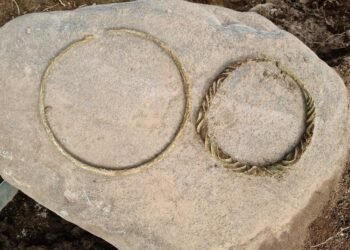
Researchers have made a remarkable find in Poland’s Częstochowa Museum collection—several ancient ornaments made from meteoritic iron. A team of Polish and French scientists analyzed burial objects from two early Iron Age graveyards, Częstochowa-Raków and Częstochowa-Mirów. Their work has given us new insights into how early metalworkers used cosmic materials in their craft.
Ancient jewelry made from meteorites discovered in Poland
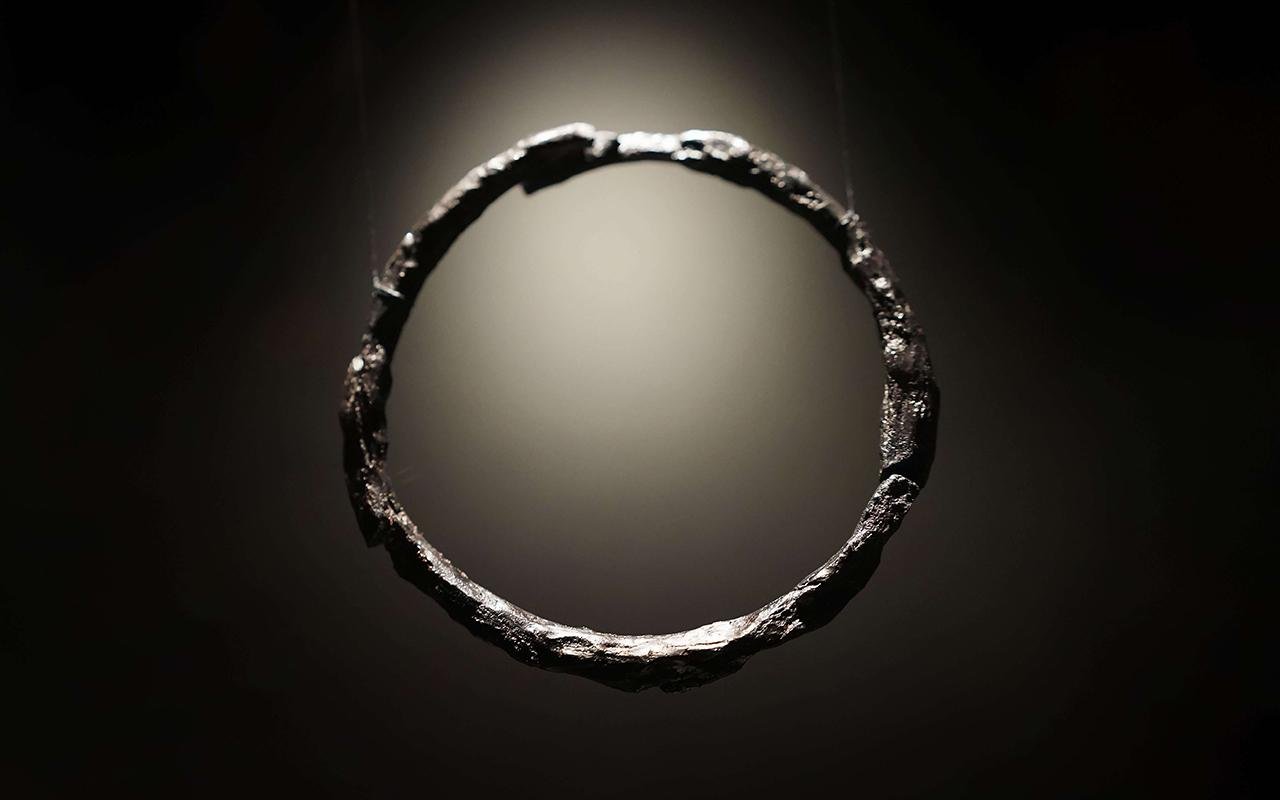
Cosmic materials were found in two bracelets. Credit: Częstochowa City Hall/Częstochowa Museum

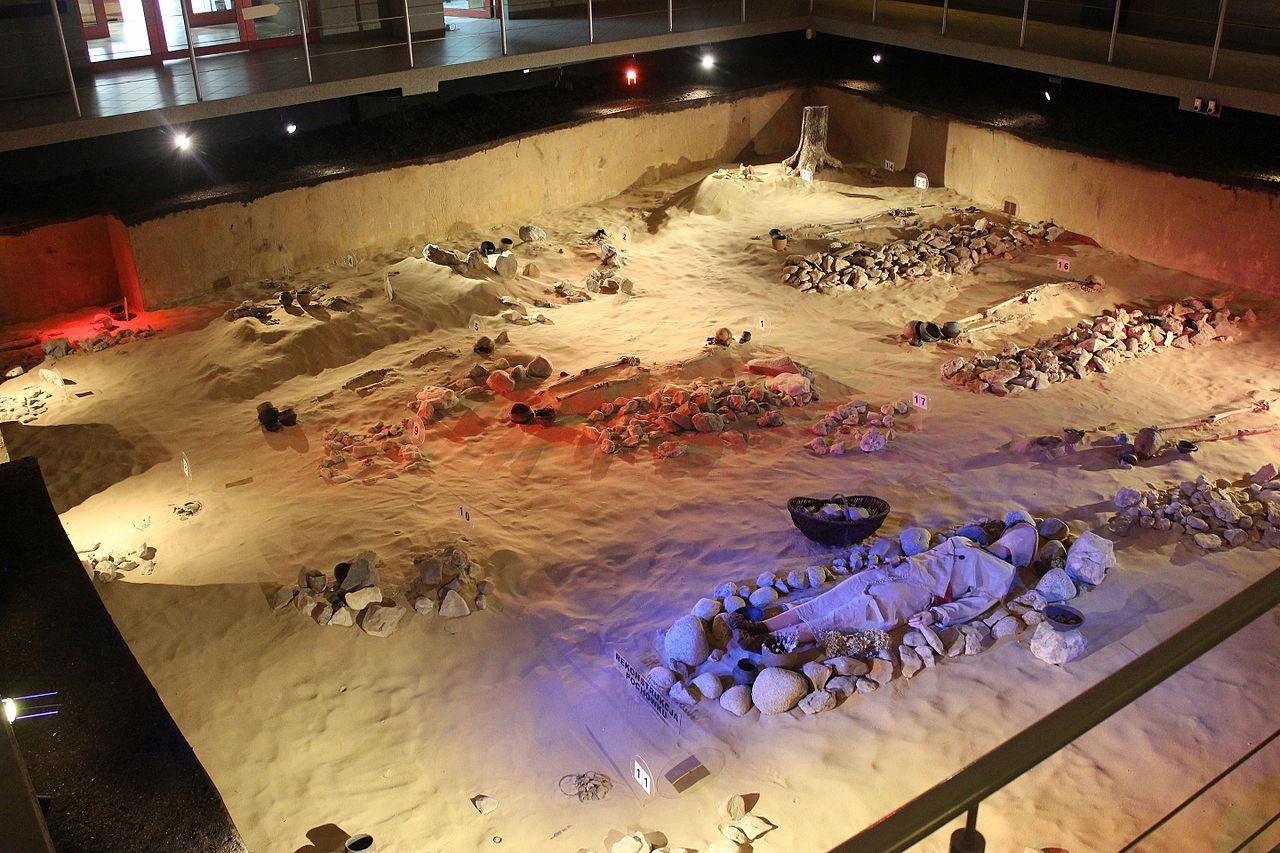
The findings, published in the Journal of Archaeological Science: Reports, confirmed that three bracelets, an ankle ring, and a pin contain meteoritic iron. This makes them one of the biggest known groups of such artifacts at an archaeological site. These cemeteries, which date back to about 750–600 BCE, are linked to the Lusatian culture. This culture lived in areas that are now Poland, the Czech Republic, Slovakia, eastern Germany, and western Ukraine.

For a long time, archaeologists knew about just two meteoritic iron bracelets in the Częstochowa Museum’s collection. Jerzy Zimny, an archaeologist, first looked into these in the 1960s. But in 2022, Professor Albert Jambon a meteorite specialist from Sorbonne University and Dr. Karol Dzięgielewski from Jagiellonian University revisited these artifacts. This new study led them to find three more ornaments made from meteoritic iron.

The scientists used portable X-ray fluorescence spectrometry (p-XRF) and scanning electron microscopy with energy-dispersive spectroscopy (SEM/EDS) to study 26 artifacts. These cutting-edge techniques showed high levels of nickel—characteristic of ataxites, a rare type of iron meteorite. The results suggest that all five meteoritic iron objects came from one meteorite, likely a contemporary fall rather than an imported material.
Ancient jewelry made from meteorites discovered in Poland
Cemetery of the Lusatian culture, Częstochowa Museum. Credit: Andrzej Otrębski

In the Bronze Age, people valued meteoritic iron because it was so scarce. But its use in these Iron Age burial grounds suggests a shift in perception. Earlier societies viewed meteoritic iron as a material with great symbolic or ritual significance. But the Lusatian culture, however, seems to have just seen it as an accessible raw material. The presence of both meteoritic and smelted iron within the same burial contexts, whether cremation or inhumation, tells us that meteoritic iron wasn’t just for certain social groups or religious purposes.


RelatedStories

Ancient burials, Roman well, and Anglo-Saxon house uncovered during A46 Newark bypass excavations

Ancient burials, Roman well, and Anglo-Saxon house uncovered during A46 Newark bypass excavations

May 12, 2026
5,000-year-old artificial island hidden in Scottish loch predates Stonehenge

5,000-year-old artificial island hidden in Scottish loch predates Stonehenge

May 5, 2026

Dr. Dzięgielewski said that Poland has no evidence of local iron smelting during this period. This means the terrestrial iron in these objects was likely imported. But the meteoritic iron was almost certainly local. This supports the idea that ancient craftsmen might have collected and worked with this iron not long after it fell to Earth.

One fascinating part of the find is the way the meteoritic iron was incorporated into jewelry. The presence of varying compositions within individual artifacts hints that metalworkers mixed meteoritic iron with smelted iron to achieve specific aesthetic or structural effects. This technique came about almost a millennium before we knew about wootz and Damascus steel, raising new questions about early metallurgical innovations.

This finding broadens our knowledge of ancient ironworking methods. Researchers aim to explore other sites in Poland to determine whether similar meteoritic iron objects exist elsewhere.
More information: Jambon, A., Bielińska, G., Kosiński, M., Wieczorek-Szmal, M., Miśta-Jakubowska, E., Tarasiuk, J., & Dzięgielewski, K. (2025). Heavenly metal for the commoners: Meteoritic irons from the Early Iron Age cemeteries in Częstochowa (Poland). Journal of Archaeological Science, Reports, 62(104982), 104982. doi:10.1016/j.jasrep.2025.104982
Share13Tweet8Share2ShareSend

You May Also Like...

Cut marks on 1.6-million-year-old bones reveal early humans moved and processed meat in Kenya
Anthropology

Cut marks on 1.6-million-year-old bones reveal early humans moved and processed meat in Kenya

May 13, 2026
280 ancient stone burial monuments found in Sudan reveal lost cattle-herding culture in the Sahara
Archaeology

280 ancient stone burial monuments found in Sudan reveal lost cattle-herding culture in the Sahara

May 13, 2026
Rare Bronze Age burial in Sweden reveals unusual pair of Wendel neck rings and complex ritual landscape near Norrköping
Archaeology

Rare Bronze Age burial in Sweden reveals unusual pair of Wendel neck rings and complex ritual landscape near Norrköping

May 12, 2026
Kasta Tomb in Amphipolis fully revealed as restoration uncovers largest burial mound in Macedonia
Archaeology

Kasta Tomb in Amphipolis fully revealed as restoration uncovers largest burial mound in Macedonia

May 12, 2026
Rare Roman villa threatened by farming damage reveals rare mosaic and bathhouse remains in Devon
Archaeology

Rare Roman villa threatened by farming damage reveals rare mosaic and bathhouse remains in Devon

May 12, 2026
Ancient burials, Roman well, and Anglo-Saxon house uncovered during A46 Newark bypass excavations
Anthropology

Ancient burials, Roman well, and Anglo-Saxon house uncovered during A46 Newark bypass excavations

May 12, 2026

Follow us


Instagram
242K

Facebook
117K

Threads
46K

LinkedIn
14K

Twitter
6K

YouTube
1K
  • Trending
  • Comments
  • Latest
Shipwreck Salvage. Credit: rawpixel.com / Public Domain

2,000-year-old shipwreck discovered off Turkish coast with remarkably preserved stacked ceramics

July 2, 2025
A new study suggests the mysterious Voynich Manuscript may be a medieval cipher

A new study suggests the mysterious Voynich Manuscript may be a medieval cipher

January 3, 2026
Viking age DNA reveals 9,000-year-old HIV-resistant gene originating near the Black Sea

Viking age DNA reveals 9,000-year-old HIV-resistant gene originating near the Black Sea

May 18, 2025
3D analysis reveals Shroud of Turin image likely came from sculpture, not Jesus’ body

3D analysis reveals Shroud of Turin image likely came from sculpture, not Jesus’ body

August 3, 2025
Moses may be named in ancient Egyptian mine inscriptions, sparking debate over earliest biblical references

Moses may be named in ancient Egyptian mine inscriptions, sparking debate over earliest biblical references

July 31, 2025
3D analysis reveals Shroud of Turin image likely came from sculpture, not Jesus’ body

3D analysis reveals Shroud of Turin image likely came from sculpture, not Jesus’ body

Moses may be named in ancient Egyptian mine inscriptions, sparking debate over earliest biblical references

Moses may be named in ancient Egyptian mine inscriptions, sparking debate over earliest biblical references

$1 million prize offered to decipher 5,300-year-old Indus Valley script

$1 million prize offered to decipher 5,300-year-old Indus Valley script

Oldest ever genetic data from a human relative found in 2-million-year-old fossilized teeth

Oldest ever genetic data from a human relative found in 2-million-year-old fossilized teeth

Exceptionally large Roman shoes discovered at Magna fort near Hadrian’s Wall

Exceptionally large Roman shoes discovered at Magna fort near Hadrian’s Wall

Cut marks on 1.6-million-year-old bones reveal early humans moved and processed meat in Kenya

Cut marks on 1.6-million-year-old bones reveal early humans moved and processed meat in Kenya

May 13, 2026
280 ancient stone burial monuments found in Sudan reveal lost cattle-herding culture in the Sahara

280 ancient stone burial monuments found in Sudan reveal lost cattle-herding culture in the Sahara

May 13, 2026
Rare Bronze Age burial in Sweden reveals unusual pair of Wendel neck rings and complex ritual landscape near Norrköping

Rare Bronze Age burial in Sweden reveals unusual pair of Wendel neck rings and complex ritual landscape near Norrköping

May 12, 2026
Kasta Tomb in Amphipolis fully revealed as restoration uncovers largest burial mound in Macedonia

Kasta Tomb in Amphipolis fully revealed as restoration uncovers largest burial mound in Macedonia

May 12, 2026
Rare Roman villa threatened by farming damage reveals rare mosaic and bathhouse remains in Devon

Rare Roman villa threatened by farming damage reveals rare mosaic and bathhouse remains in Devon

May 12, 2026

Archaeology News online magazine

Archaeology News is an international online magazine that covers all aspects of archaeology.


Categories

  • Academics
    • Books
    • Conferences
    • Universities
  • Articles
  • Download
  • Game
  • News
    • Anthropology
    • Archaeology
    • Paleontology
  • Quiz
  • Tours

Subscribe to our newsletter

© 2024 - Archaeology News Online Magazine. All Rights Reserved.

  • About
  • Privacy Policy
  • Terms of Use
  • Donation
  • Contact

Manage Consent
To provide the best experiences, we use technologies like cookies to store and/or access device information. Consenting to these technologies will allow us to process data such as browsing behavior or unique IDs on this site. Not consenting or withdrawing consent, may adversely affect certain features and functions.
Functional Always active
The technical storage or access is strictly necessary for the legitimate purpose of enabling the use of a specific service explicitly requested by the subscriber or user, or for the sole purpose of carrying out the transmission of a communication over an electronic communications network.
Preferences
The technical storage or access is necessary for the legitimate purpose of storing preferences that are not requested by the subscriber or user.
Statistics
The technical storage or access that is used exclusively for statistical purposes. The technical storage or access that is used exclusively for anonymous statistical purposes. Without a subpoena, voluntary compliance on the part of your Internet Service Provider, or additional records from a third party, information stored or retrieved for this purpose alone cannot usually be used to identify you.
Marketing
The technical storage or access is required to create user profiles to send advertising, or to track the user on a website or across several websites for similar marketing purposes.
  • Manage options
  • Manage services
  • Manage {vendor_count} vendors
  • Read more about these purposes
View preferences
  • {title}
  • {title}
  • {title}
  • Home
  • News
    • Archaeology
    • Anthropology
    • Paleontology
  • Academic
    • Books
    • Conferences
    • Universities
  • Articles
  • VR Tours
  • Quiz & Game
  • Download
  • Encyclopedia
  • Forum

About  .  Contact  .  Donation

© 2024 - Archaeology News Online Magazine. All Rights Reserved