• About
  • Privacy Policy
  • Terms of Use
  • Donation
  • Contact
No Result
View All Result
Archaeology News
  • Home
  • News
    • Archaeology
    • Anthropology
    • Paleontology
  • Academic
    • Books
    • Conferences
    • Universities
  • Articles
  • VR Tours
  • Quiz & Game
  • Download
  • Encyclopedia
  • Forum
Archaeology News
No Result
View All Result
Home News Archaeology

Earliest use of psychoactive plant ‘harmal’ uncovered in ancient Arabia for health and healing

by Dario Radley
May 24, 2025

Archaeologists have uncovered the earliest known evidence of the use of the medical and psychoactive plant Peganum harmala, also referred to as Syrian rue or harmal, for fumigation around 2,700 years ago in an oasis settlement in northwestern Saudi Arabia. The study, published in Communications Biology, shows that Iron Age communities at Qurayyah intentionally burned harmal not in temples or burial practices, but in homes for therapeutic, sensory, and possibly psychoactive purposes.

Earliest use of psychoactive plant 'harmal' uncovered in ancient Arabia for health and healing
One of the ancient fumigation devices used in the inhalation of harmal. Credit: Hans Sell

Led by Dr. Barbara Huber of the Max Planck Institute of Geoanthropology and Professor Marta Luciani of the University of Vienna, the researchers collaborated with the Saudi Ministry of Culture’s Heritage Commission to analyze organic residues found in ancient ceramic fumigation devices. Using high-performance liquid chromatography-tandem mass spectrometry (HPLC-MS/MS), they detected the characteristic alkaloids of the plant—harmine and harmane—inside the vessels.

“Our findings represent chemical evidence for the earliest known burning of harmal, not just in Arabia, but globally,” said Dr. Huber. The discovery verifies that these old Arabian communities possessed a systematic understanding of their local pharmacopeia centuries prior to the beginning of written records describing medicinal practices.

Peganum harmala possesses complex pharmacological effects. Its alkaloids are reversible MAO-A enzyme inhibitors that impact neurotransmitters such as serotonin. This can produce effects ranging from mild sedation and pain relief to hallucinations, depending on the dose. Of particular note, the mode of delivery in Qurayyah—burning seeds and inhalation of smoke—would have offered a controlled method of application, preventing toxicity through ingestion.

Earliest use of psychoactive plant 'harmal' uncovered in ancient Arabia for health and healing
The oasis settlement of Qurayyah in northwestern Saudi Arabia. Credit: A. M. Abualhassan

What makes this discovery even more interesting is its domestic setting. “All of the fumigation material with harmal was found inside houses, courtyards, cooking areas, and cellars,” according to the researchers.

RelatedStories

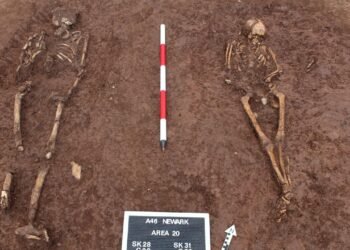
Ancient burials, Roman well, and Anglo-Saxon house uncovered during A46 Newark bypass excavations

Ancient burials, Roman well, and Anglo-Saxon house uncovered during A46 Newark bypass excavations

May 12, 2026
Malaria influenced early human migration and settlement in Africa long before farming, study finds

Malaria influenced early human migration and settlement in Africa long before farming, study finds

May 9, 2026

The study also finds a specific differentiation in the use of plants in various contexts. Harmal was used within domestic contexts, whereas burial sites at neighboring oases contained aromatic substances like Commiphora and coniferous resin. This reflects a qualitative distinction within ancient Arabian communities regarding the specific roles plants played in health, purification, and spiritual life.

Earliest use of psychoactive plant 'harmal' uncovered in ancient Arabia for health and healing
Harmala (Peganum harmala). Credit: Yuriy75 / CC BY-SA 3.0

Ahmed M. Abualhassan, co-director of the Qurayyah project from the Saudi Heritage Commission, emphasized the cultural importance of this find: “We’re preserving not only objects, but the intangible cultural heritage of ancient knowledge that still holds relevance in local communities today.” Harmal continues to be used in traditional medicine and household fumigation in parts of Arabia.

The team suggests that ancient organic residues like these could help in the rediscovery of forgotten bioactive compounds, and therefore ultimately inform modern pharmacology. “Utilizing the information stored in ancient organic remains could enable the recovery of bioactive compounds that have been forgotten over time,” the researchers wrote.

But with modernization and globalism threatening traditional knowledge systems, researchers stress the urgency of documentation. “Such practices are increasingly disappearing,” the researchers warned. Through this study, they believe they are preserving a fine thread of ethnobotanical knowledge going back millennia.
More information: Max Planck Society
Publication: Huber, B., Luciani, M., Abualhassan, A.M. et al. (2025). Metabolic profiling reveals first evidence of fumigating drug plant Peganum harmala in Iron Age Arabia. Commun Biol 8, 720. doi:10.1038/s42003-025-08096-7
Share22Tweet14Share4ShareSend

You May Also Like...

Cut marks on 1.6-million-year-old bones reveal early humans moved and processed meat in Kenya
Anthropology

Cut marks on 1.6-million-year-old bones reveal early humans moved and processed meat in Kenya

May 13, 2026
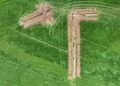
280 ancient stone burial monuments found in Sudan reveal lost cattle-herding culture in the Sahara
Archaeology

280 ancient stone burial monuments found in Sudan reveal lost cattle-herding culture in the Sahara

May 13, 2026
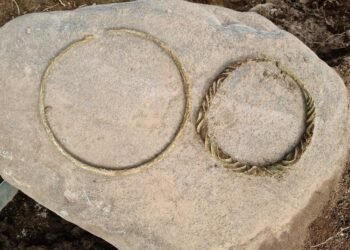
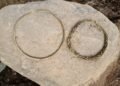
Rare Bronze Age burial in Sweden reveals unusual pair of Wendel neck rings and complex ritual landscape near Norrköping
Archaeology

Rare Bronze Age burial in Sweden reveals unusual pair of Wendel neck rings and complex ritual landscape near Norrköping

May 12, 2026
Kasta Tomb in Amphipolis fully revealed as restoration uncovers largest burial mound in Macedonia
Archaeology

Kasta Tomb in Amphipolis fully revealed as restoration uncovers largest burial mound in Macedonia

May 12, 2026
Rare Roman villa threatened by farming damage reveals rare mosaic and bathhouse remains in Devon
Archaeology

Rare Roman villa threatened by farming damage reveals rare mosaic and bathhouse remains in Devon

May 12, 2026
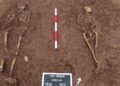
Ancient burials, Roman well, and Anglo-Saxon house uncovered during A46 Newark bypass excavations
Anthropology

Ancient burials, Roman well, and Anglo-Saxon house uncovered during A46 Newark bypass excavations

May 12, 2026

Follow us


Instagram
242K

Facebook
117K

Threads
46K

LinkedIn
14K

Twitter
6K

YouTube
1K
  • Trending
  • Comments
  • Latest
Shipwreck Salvage. Credit: rawpixel.com / Public Domain

2,000-year-old shipwreck discovered off Turkish coast with remarkably preserved stacked ceramics

July 2, 2025
A new study suggests the mysterious Voynich Manuscript may be a medieval cipher

A new study suggests the mysterious Voynich Manuscript may be a medieval cipher

January 3, 2026
Viking age DNA reveals 9,000-year-old HIV-resistant gene originating near the Black Sea

Viking age DNA reveals 9,000-year-old HIV-resistant gene originating near the Black Sea

May 18, 2025
3D analysis reveals Shroud of Turin image likely came from sculpture, not Jesus’ body

3D analysis reveals Shroud of Turin image likely came from sculpture, not Jesus’ body

August 3, 2025
Moses may be named in ancient Egyptian mine inscriptions, sparking debate over earliest biblical references

Moses may be named in ancient Egyptian mine inscriptions, sparking debate over earliest biblical references

July 31, 2025
3D analysis reveals Shroud of Turin image likely came from sculpture, not Jesus’ body

3D analysis reveals Shroud of Turin image likely came from sculpture, not Jesus’ body

Moses may be named in ancient Egyptian mine inscriptions, sparking debate over earliest biblical references

Moses may be named in ancient Egyptian mine inscriptions, sparking debate over earliest biblical references

$1 million prize offered to decipher 5,300-year-old Indus Valley script

$1 million prize offered to decipher 5,300-year-old Indus Valley script

Oldest ever genetic data from a human relative found in 2-million-year-old fossilized teeth

Oldest ever genetic data from a human relative found in 2-million-year-old fossilized teeth

Exceptionally large Roman shoes discovered at Magna fort near Hadrian’s Wall

Exceptionally large Roman shoes discovered at Magna fort near Hadrian’s Wall

Cut marks on 1.6-million-year-old bones reveal early humans moved and processed meat in Kenya

Cut marks on 1.6-million-year-old bones reveal early humans moved and processed meat in Kenya

May 13, 2026
280 ancient stone burial monuments found in Sudan reveal lost cattle-herding culture in the Sahara

280 ancient stone burial monuments found in Sudan reveal lost cattle-herding culture in the Sahara

May 13, 2026
Rare Bronze Age burial in Sweden reveals unusual pair of Wendel neck rings and complex ritual landscape near Norrköping

Rare Bronze Age burial in Sweden reveals unusual pair of Wendel neck rings and complex ritual landscape near Norrköping

May 12, 2026
Kasta Tomb in Amphipolis fully revealed as restoration uncovers largest burial mound in Macedonia

Kasta Tomb in Amphipolis fully revealed as restoration uncovers largest burial mound in Macedonia

May 12, 2026
Rare Roman villa threatened by farming damage reveals rare mosaic and bathhouse remains in Devon

Rare Roman villa threatened by farming damage reveals rare mosaic and bathhouse remains in Devon

May 12, 2026

Archaeology News online magazine

Archaeology News is an international online magazine that covers all aspects of archaeology.


Categories

  • Academics
    • Books
    • Conferences
    • Universities
  • Articles
  • Download
  • Game
  • News
    • Anthropology
    • Archaeology
    • Paleontology
  • Quiz
  • Tours

Subscribe to our newsletter

© 2024 - Archaeology News Online Magazine. All Rights Reserved.

  • About
  • Privacy Policy
  • Terms of Use
  • Donation
  • Contact

Manage Consent
To provide the best experiences, we use technologies like cookies to store and/or access device information. Consenting to these technologies will allow us to process data such as browsing behavior or unique IDs on this site. Not consenting or withdrawing consent, may adversely affect certain features and functions.
Functional Always active
The technical storage or access is strictly necessary for the legitimate purpose of enabling the use of a specific service explicitly requested by the subscriber or user, or for the sole purpose of carrying out the transmission of a communication over an electronic communications network.
Preferences
The technical storage or access is necessary for the legitimate purpose of storing preferences that are not requested by the subscriber or user.
Statistics
The technical storage or access that is used exclusively for statistical purposes. The technical storage or access that is used exclusively for anonymous statistical purposes. Without a subpoena, voluntary compliance on the part of your Internet Service Provider, or additional records from a third party, information stored or retrieved for this purpose alone cannot usually be used to identify you.
Marketing
The technical storage or access is required to create user profiles to send advertising, or to track the user on a website or across several websites for similar marketing purposes.
  • Manage options
  • Manage services
  • Manage {vendor_count} vendors
  • Read more about these purposes
View preferences
  • {title}
  • {title}
  • {title}
  • Home
  • News
    • Archaeology
    • Anthropology
    • Paleontology
  • Academic
    • Books
    • Conferences
    • Universities
  • Articles
  • VR Tours
  • Quiz & Game
  • Download
  • Encyclopedia
  • Forum

About  .  Contact  .  Donation

© 2024 - Archaeology News Online Magazine. All Rights Reserved