• About
  • Privacy Policy
  • Terms of Use
  • Donation
  • Contact
No Result
View All Result
Archaeology News
  • Home
  • News
    • Archaeology
    • Anthropology
    • Paleontology
  • Academic
    • Books
    • Conferences
    • Universities
  • Articles
  • VR Tours
  • Quiz & Game
  • Download
  • Encyclopedia
  • Forum
Archaeology News
No Result
View All Result
Home News Archaeology

Hidden messages praising Pharaoh Ramesses II discovered on 3,300-year-old Egyptian obelisk in Paris

by Dario Radley
May 3, 2025

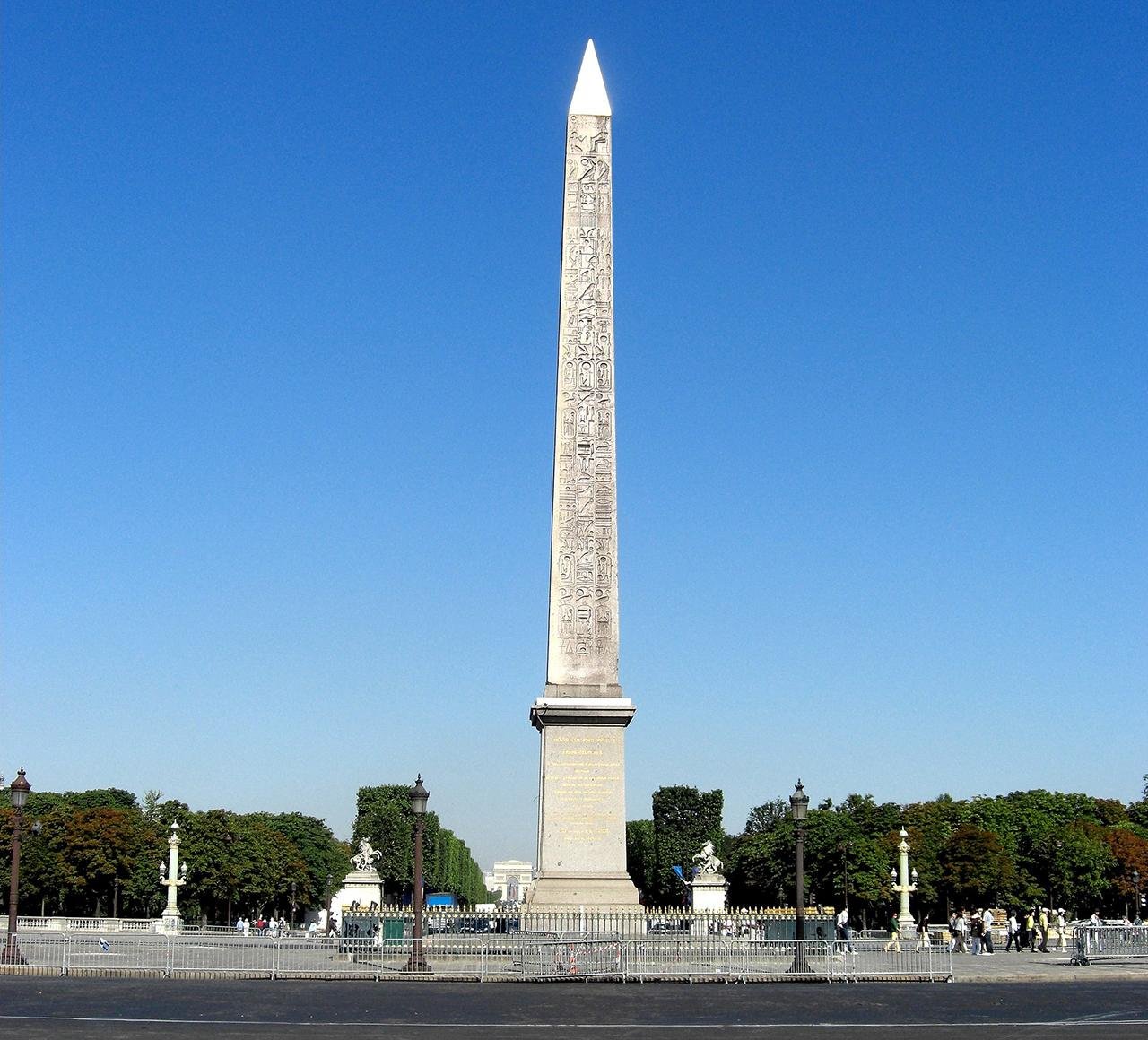
A 3,300-year-old Egyptian obelisk looming over Paris’ Place de la Concorde recently yielded a sequence of secret messages, all thanks to French Egyptologist Jean-Guillaume Olette-Pelletier’s keen observations. Once placed at the Luxor Temple’s entrance in Egypt, the red granite monument is now the target of a groundbreaking study that claims it was an ancient propaganda monument promoting Pharaoh Ramesses II as a divine ruler.
Hidden messages praising Pharaoh Ramesses II discovered on 3,300-year-old Egyptian obelisk in Paris
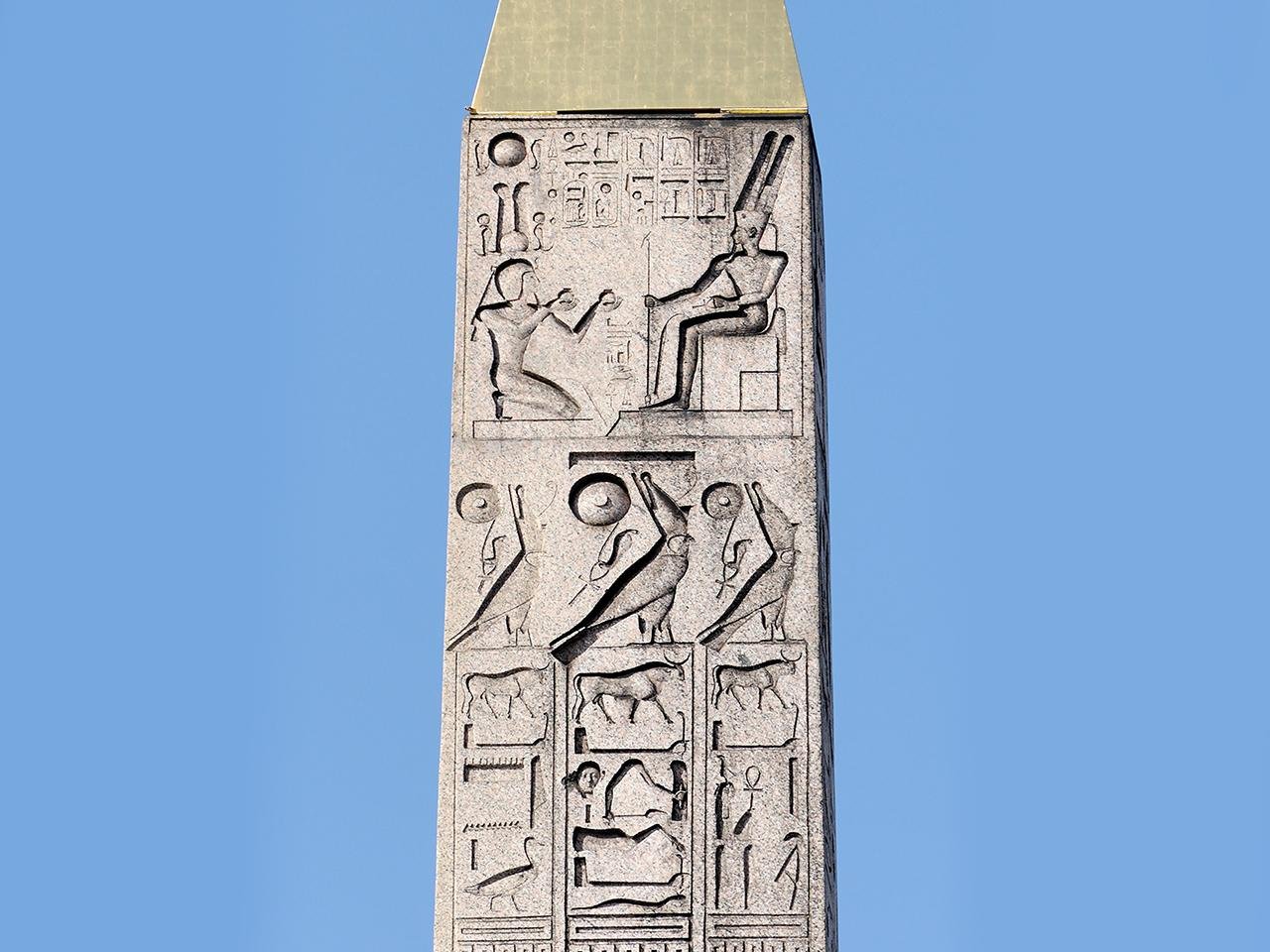
Upper part of the obelisk at the Place de la Concorde, Paris. Credit: Marie-Lan Nguyen, CC BY 3.0

Originally constructed by Ramesses II—one of the most prolific builders of ancient Egypt—the obelisk was gifted to France by the Ottoman Empire in the early 19th century and relocated in 1836. Covered in intricate hieroglyphs, it had been admired for its aesthetic and historical significance. But according to Dr. Olette-Pelletier, who teaches at the Sorbonne and the Catholic University of Paris, the carvings conceal more than meets the eye.

During his regular walks around the obelisk, Olette-Pelletier began noticing unusual patterns within the hieroglyphs. “At one point, I realized something unusual: The hieroglyphs’ meaning indicated a direction, that of the entrance to the portico of the Luxor Temple,” he told Sciences et Avenir. Curious and unable to find previous research on the subject, he decided to investigate further himself.

Hidden messages praising Pharaoh Ramesses II discovered on 3,300-year-old Egyptian obelisk in Paris
Entrance to the temple where the obelisk originally stood. Credit: Gérard Ducherm, CC BY-SA 2.5

The breakthrough came in 2021, when scaffolding covered the obelisk for restoration ahead of the Olympic Games. With special permission, Olette-Pelletier climbed the scaffolding to examine the upper parts—usually inaccessible to researchers. The close inspection confirmed that the monument carries a total of seven crypto-hieroglyphs—a rare form of encoded text discovered in the 1950s by Canon Étienne Drioton. These cryptic inscriptions, which typically feature puns, visual wordplay, and varying directions of reading, were meant only to be understood by Egypt’s intellectual elite.

These secret messages, according to Olette-Pelletier, would have been legible to nobles arriving by boat on the Nile, especially to those attending an annual Opet Festival honoring the god Amun. The side of the obelisk that once faced the river (now the Seine) was built so carefully that only from specific angles were the inscriptions readable—including one that even needed to be viewed from a 45-degree angle.


RelatedStories

Archaeologists uncover 2,000-year-old workshops and Roman necropolis in Egypt’s western Nile Delta

Archaeologists uncover 2,000-year-old workshops and Roman necropolis in Egypt’s western Nile Delta

December 31, 2025
4,400-year-old sun temple of King Nyuserre uncovered at Abusir necropolis in Egypt

4,400-year-old sun temple of King Nyuserre uncovered at Abusir necropolis in Egypt

December 16, 2025
Hidden messages praising Pharaoh Ramesses II discovered on 3,300-year-old Egyptian obelisk in Paris
The Obelisk of Luxor at the center of Place de la Concorde, Paris. Credit: Craig Booth, CC BY 2.0

One of the inscriptions contains a depiction of Ramesses II presenting offerings to Amun, with inscribed text declaring the divine origin and eternal right to rule of the king.

One striking example of this three-dimensional cryptography is an engraving that, when viewed from one direction, spells out Ramesses II’s full throne name. When viewed from another, it proclaims his eternal life. Another inscription, once overlooked by scholars, shows an offering table beneath the god Amun, completing a sentence that reads as a sacred offering from the king to the deity.

Hidden messages praising Pharaoh Ramesses II discovered on 3,300-year-old Egyptian obelisk in Paris
Place de la Concorde and the obelisk as seen from the Eiffel Tower, Paris, France. Credit: Cristian Bortes, CC BY 2.0

Though the discovery has caused excitement, some researchers have urged caution. Since the study is not yet peer-reviewed, they are urging more analysis. Still, the consequences are significant. If confirmed, Olette-Pelletier’s findings not only shed light on how the ancient Egyptians used monumental art for ideological purposes but also on how rulers like Ramesses II upheld power by controlling public imagery.

His full findings are expected to be published in the Egyptology journal ENiM.

Share14Tweet9Share2ShareSend

You May Also Like...

5,500-year-old human skeleton in Colombia reveals earliest evidence of syphilis in the Americas
Anthropology

5,500-year-old human skeleton in Colombia reveals earliest evidence of syphilis in the Americas

January 23, 2026
Republican-era tombs and a Hercules shrine unearthed in eastern Rome reveal centuries of suburban life
Archaeology

Republican-era tombs and a Hercules shrine unearthed in eastern Rome reveal centuries of suburban life

January 23, 2026
Oldest known rock art dated to 67,800 years discovered in Sulawesi cave
Archaeology

Oldest known rock art dated to 67,800 years discovered in Sulawesi cave

January 20, 2026
Elite Anglo-Saxon sand burials and sacrificed horse grave found near Sizewell nuclear site in England
Anthropology

Elite Anglo-Saxon sand burials and sacrificed horse grave found near Sizewell nuclear site in England

January 19, 2026
Roman marching camps discovered in Saxony-Anhalt reveal early military advances deep into Germania
Archaeology

Roman marching camps discovered in Saxony-Anhalt reveal early military advances deep into Germania

January 15, 2026
Casablanca fossils dated 773,000 years back reveal African origin of last common ancestor of humans and Neanderthals
Anthropology

Casablanca fossils dated 773,000 years back reveal African origin of last common ancestor of humans and Neanderthals

January 10, 2026

Follow us


Instagram
244K

Facebook
118K

Threads
45K

LinkedIn
14K

Twitter
6K

YouTube
1K
  • Trending
  • Comments
  • Latest
Shipwreck Salvage. Credit: rawpixel.com / Public Domain

2,000-year-old shipwreck discovered off Turkish coast with remarkably preserved stacked ceramics

July 2, 2025
Viking age DNA reveals 9,000-year-old HIV-resistant gene originating near the Black Sea

Viking age DNA reveals 9,000-year-old HIV-resistant gene originating near the Black Sea

May 18, 2025
A new study suggests the mysterious Voynich Manuscript may be a medieval cipher

A new study suggests the mysterious Voynich Manuscript may be a medieval cipher

January 3, 2026
Moses may be named in ancient Egyptian mine inscriptions, sparking debate over earliest biblical references

Moses may be named in ancient Egyptian mine inscriptions, sparking debate over earliest biblical references

July 31, 2025
Mystery of Armenia’s 6,000-year-old dragon stones solved

Mystery of Armenia’s 6,000-year-old dragon stones solved

September 23, 2025
3D analysis reveals Shroud of Turin image likely came from sculpture, not Jesus’ body

3D analysis reveals Shroud of Turin image likely came from sculpture, not Jesus’ body

Moses may be named in ancient Egyptian mine inscriptions, sparking debate over earliest biblical references

Moses may be named in ancient Egyptian mine inscriptions, sparking debate over earliest biblical references

$1 million prize offered to decipher 5,300-year-old Indus Valley script

$1 million prize offered to decipher 5,300-year-old Indus Valley script

Oldest ever genetic data from a human relative found in 2-million-year-old fossilized teeth

Oldest ever genetic data from a human relative found in 2-million-year-old fossilized teeth

Exceptionally large Roman shoes discovered at Magna fort near Hadrian’s Wall

Exceptionally large Roman shoes discovered at Magna fort near Hadrian’s Wall

5,500-year-old human skeleton in Colombia reveals earliest evidence of syphilis in the Americas

5,500-year-old human skeleton in Colombia reveals earliest evidence of syphilis in the Americas

January 23, 2026
Republican-era tombs and a Hercules shrine unearthed in eastern Rome reveal centuries of suburban life

Republican-era tombs and a Hercules shrine unearthed in eastern Rome reveal centuries of suburban life

January 23, 2026
Oldest known rock art dated to 67,800 years discovered in Sulawesi cave

Oldest known rock art dated to 67,800 years discovered in Sulawesi cave

January 20, 2026
Elite Anglo-Saxon sand burials and sacrificed horse grave found near Sizewell nuclear site in England

Elite Anglo-Saxon sand burials and sacrificed horse grave found near Sizewell nuclear site in England

January 19, 2026
Roman marching camps discovered in Saxony-Anhalt reveal early military advances deep into Germania

Roman marching camps discovered in Saxony-Anhalt reveal early military advances deep into Germania

January 15, 2026

Archaeology News online magazine

Archaeology News is an international online magazine that covers all aspects of archaeology.


Categories

  • Academics
    • Books
    • Conferences
    • Universities
  • Articles
  • Download
  • Game
  • News
    • Anthropology
    • Archaeology
    • Paleontology
  • Quiz
  • Tours

Subscribe to our newsletter

© 2024 - Archaeology News Online Magazine. All Rights Reserved.

  • About
  • Privacy Policy
  • Terms of Use
  • Donation
  • Contact

Welcome Back!

Login to your account below

Forgotten Password? Sign Up

Create New Account!

Fill the forms below to register

All fields are required. Log In

Retrieve your password

Please enter your username or email address to reset your password.

Log In

Add New Playlist

Manage Consent
To provide the best experiences, we use technologies like cookies to store and/or access device information. Consenting to these technologies will allow us to process data such as browsing behavior or unique IDs on this site. Not consenting or withdrawing consent, may adversely affect certain features and functions.
Functional Always active
The technical storage or access is strictly necessary for the legitimate purpose of enabling the use of a specific service explicitly requested by the subscriber or user, or for the sole purpose of carrying out the transmission of a communication over an electronic communications network.
Preferences
The technical storage or access is necessary for the legitimate purpose of storing preferences that are not requested by the subscriber or user.
Statistics
The technical storage or access that is used exclusively for statistical purposes. The technical storage or access that is used exclusively for anonymous statistical purposes. Without a subpoena, voluntary compliance on the part of your Internet Service Provider, or additional records from a third party, information stored or retrieved for this purpose alone cannot usually be used to identify you.
Marketing
The technical storage or access is required to create user profiles to send advertising, or to track the user on a website or across several websites for similar marketing purposes.
  • Manage options
  • Manage services
  • Manage {vendor_count} vendors
  • Read more about these purposes
View preferences
  • {title}
  • {title}
  • {title}
  • Home
  • News
    • Archaeology
    • Anthropology
    • Paleontology
  • Academic
    • Books
    • Conferences
    • Universities
  • Articles
  • VR Tours
  • Quiz & Game
  • Download
  • Encyclopedia
  • Forum

About  .  Contact  .  Donation

© 2024 - Archaeology News Online Magazine. All Rights Reserved