• About
  • Privacy Policy
  • Terms of Use
  • Donation
  • Contact
No Result
View All Result
Archaeology News
  • Home
  • News
    • Archaeology
    • Anthropology
    • Paleontology
  • Academic
    • Books
    • Conferences
    • Universities
  • Articles
  • VR Tours
  • Quiz & Game
  • Download
  • Encyclopedia
  • Forum
Archaeology News
No Result
View All Result
Home News Anthropology

Neanderthals and early humans reshaped Europe’s landscapes long before the rise of agriculture, study finds

by Dario Radley
October 26, 2025

A recent study published in PLOS One reveals that Neanderthals and early modern humans began to reshape Europe’s ecosystems tens of thousands of years before the rise of agriculture. Rather than being passive foragers in an unspoiled wilderness, these early populations actually influenced vegetation patterns across the continent.
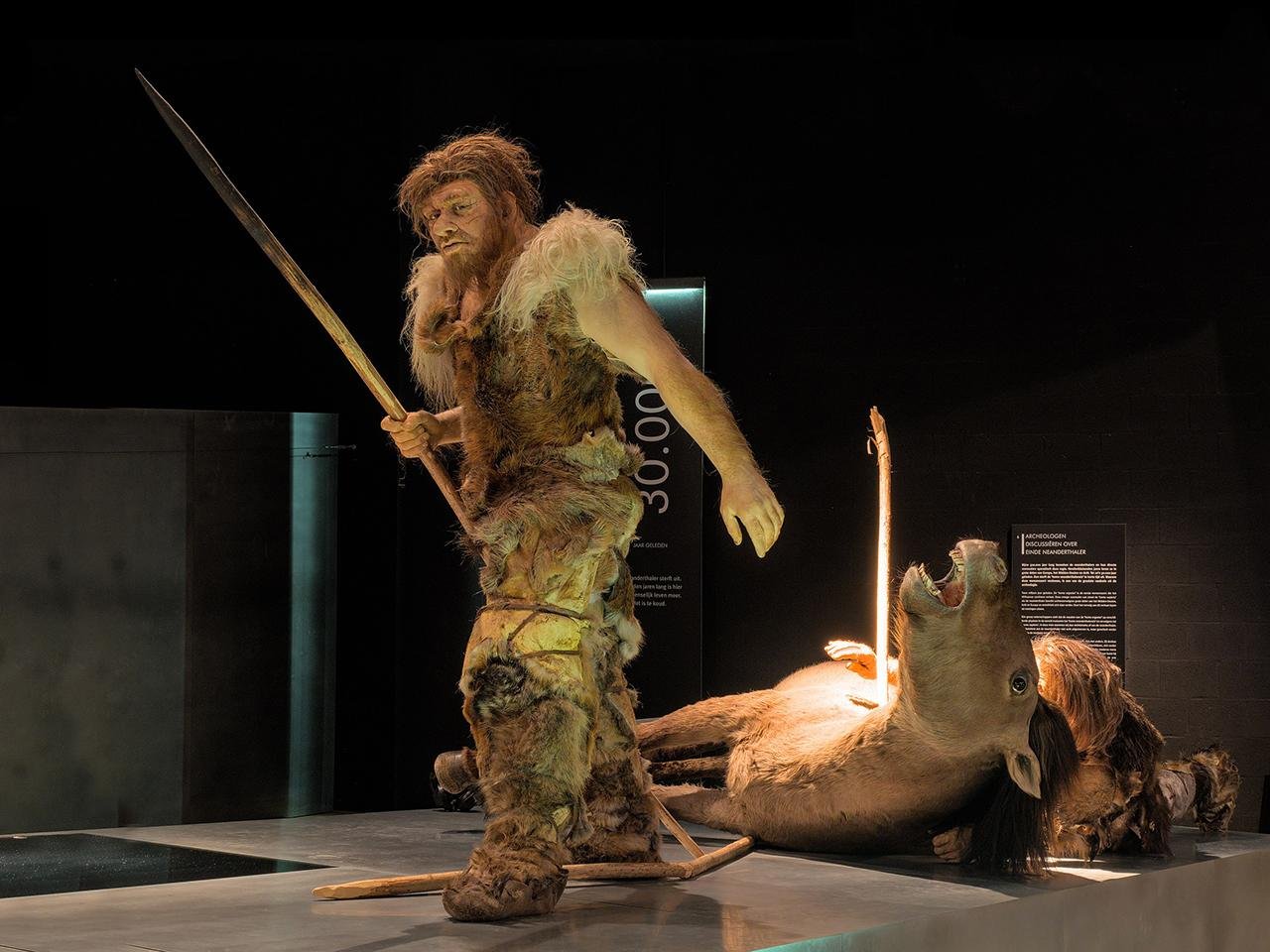
Neanderthals and early humans reshaped Europe’s landscapes long before the rise of farming, study finds
Neanderthal hunters depicted in the Gallo-Romeins Museum, Tongeren (Belgium). Credit: Trougnouf (Benoit Brummer) / CC BY 4.0

The international research team, comprising archaeologists, ecologists, and climate scientists from the Netherlands, Denmark, France, and the United Kingdom, used advanced computer simulations to investigate how interactions between climate, wildlife, fire, and human activity shaped prehistoric landscapes in Europe. Their conclusions refute the common theory that humans had little impact on their environment before the advent of farming.

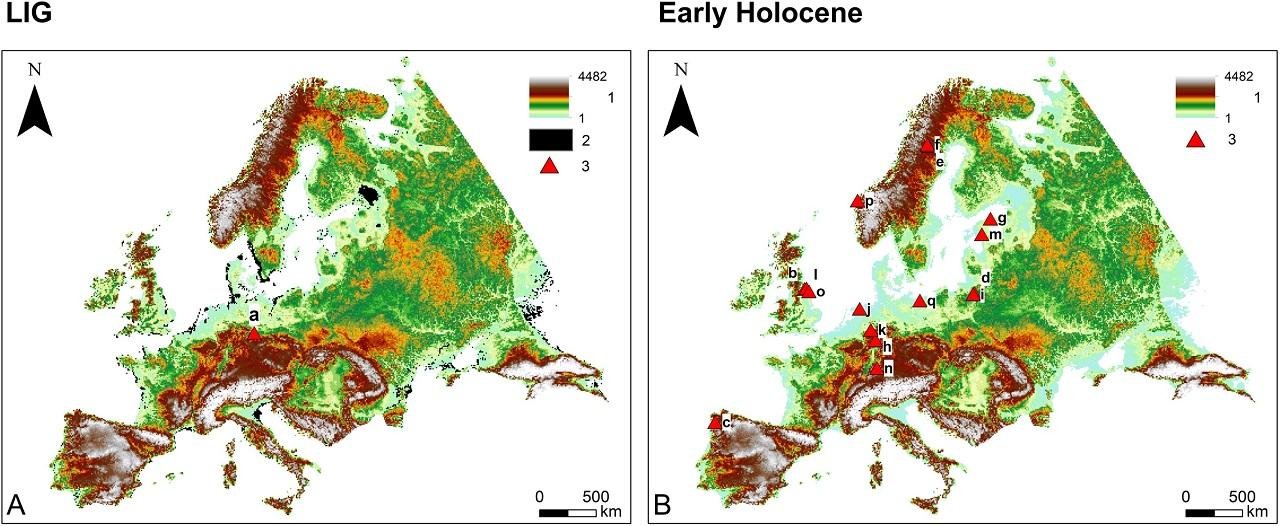
Led by Leiden University archaeologist Anastasia Nikulina, the researchers developed a sophisticated model called HUMLAND (HUMan impact on LANDscapes), which was adapted to simulate how hunter-gatherers interacted with their landscapes during two of the most important warm periods: the Last Interglacial (c. 125,000–116,000 years ago), when Europe was inhabited only by Neanderthals, and the Early Holocene (c. 12,000–8,000 years ago), when Mesolithic hunter-gatherers of our own species, Homo sapiens, occupied the continent.

By comparing the model’s simulations with pollen-based reconstructions of vegetation, they found striking mismatches between what climate alone could explain and what actually appeared in the fossil record. Even after adding the natural occurrence of wildfires, animal grazing, and climatic shifts, the results still fell short—until they added human behavior into the equation.
Neanderthals and early humans reshaped Europe’s landscapes long before the rise of farming, study finds
LIG (A) and Early Holocene (B) study areas. Legend: 1 – Elevations (in meters above sea level, m a.s.l.); 2 – No data; 3 – Case studies indicating possible vegetation burning by LIG and Early–Middle Holocene hunter-gatherers. List of case studies: a – Neumark-Nord; b – Bonfield Gill Head; c – Campo Lameiro; d – Dudka Island; e – Dumpokjauratj; f – Ipmatisjauratj; g – Kunda-Arusoo; h – Lahn Valley complex; i – Lake Miłkowskie; j – Meerstad; k – Mesolithic site at Soest; l – North Gill; m – Pulli; n – Rottenburg-Siebenlinden sites; o – Star Carr; p – Vingen sites; q – Wolin II. Credit: A. Nikulina et al., PLOS One (2025)

The researchers incorporated human activities such as burning vegetation to manage landscapes and hunting large herbivores such as bison, aurochs, and even elephants. These activities, the simulations showed, significantly altered vegetation composition and openness. Fire opened forests and maintained grasslands, while hunting reduced grazing pressure, allowing some areas to become denser with shrubs and trees.

RelatedStories

Cut marks on 1.6-million-year-old bones reveal early humans moved and processed meat in Kenya

Cut marks on 1.6-million-year-old bones reveal early humans moved and processed meat in Kenya

May 13, 2026
Neanderthals used rhinoceros teeth as tools for making stone implements, study finds

Neanderthals used rhinoceros teeth as tools for making stone implements, study finds

May 9, 2026

According to the research, Mesolithic hunter-gatherers may have influenced up to 47% of plant-type distribution, while Neanderthals affected about 6% of plant distribution and 14% of vegetation openness. Even where human use of fire was limited, hunting alone had a large ecological impact. This indicates that both Neanderthals and early Homo sapiens modified similar areas around their campsites and shared preferences for open landscapes.
Neanderthals and early humans reshaped Europe’s landscapes long before the rise of farming, study finds
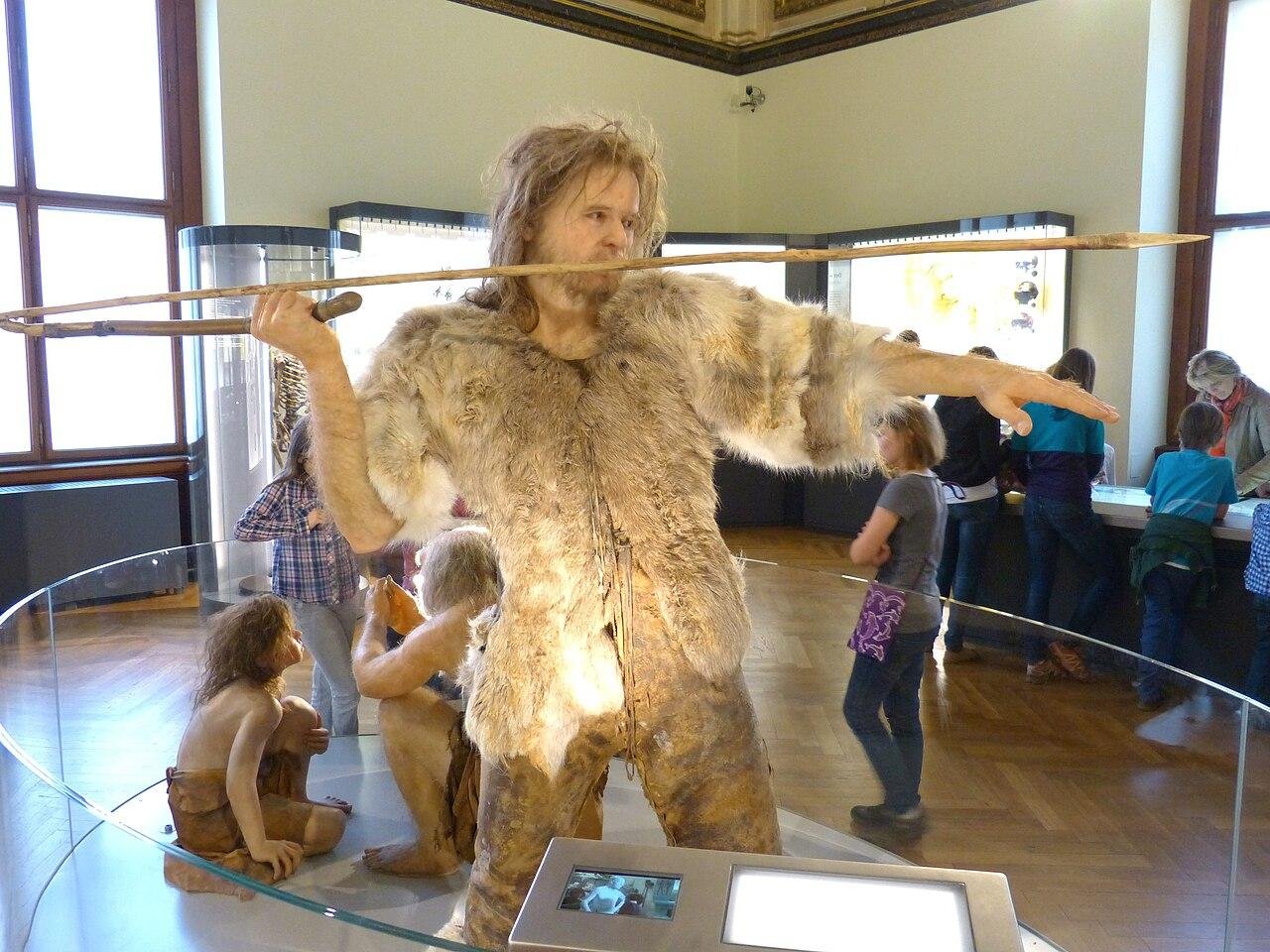
Natural History Museum, Vienna (Austria). Soft-tissue reconstruction of a Paleolithic hunter (Homo sapiens) with a spear-thrower and spear (Cro-Magnon 1, Les Eyzies-de-Tayac, France). Credit: Wolfgang Sauber / CC BY-SA 4.0

The study’s approach was not only novel for its use of vast data from across the continent, but also because it integrated artificial intelligence. Using a genetic algorithm, researchers were able to explore thousands of possible scenarios to identify those that best matched real-world pollen data. The combination of archaeology, ecology, and computational science allowed researchers to quantify the degree to which early humans shaped their environment.

Their findings depict prehistoric Europe not as an untouched landscape, but as a dynamic environment already transformed by humans. Their fires and hunting created ripple effects through ecosystems, changing plant communities and landscape structure long before the first fields were plowed.

These results are not just exclusive to Europe, but suggest that the human ecological footprint is a natural feature of our species, not an emergent development linked to agriculture or industry. As the researchers point out, comparing regions such as the Americas or Australia, which lacked earlier hominin populations before the arrival of Homo sapiens, could reveal more about how deeply ancient humans altered the natural landscape.
More information: Nikulina, A., Zapolska, A., Serge, M. A., Roche, D. M., Mazier, F., Davoli, M., … Scherjon, F. (2025). On the ecological impact of prehistoric hunter-gatherers in Europe: Early Holocene (Mesolithic) and Last Interglacial (Neanderthal) foragers compared. PloS One, 20(10), e0328218. doi:10.1371/journal.pone.0328218
Share93Tweet58Share16ShareSend

You May Also Like...

Cut marks on 1.6-million-year-old bones reveal early humans moved and processed meat in Kenya
Anthropology

Cut marks on 1.6-million-year-old bones reveal early humans moved and processed meat in Kenya

May 13, 2026
280 ancient stone burial monuments found in Sudan reveal lost cattle-herding culture in the Sahara
Archaeology

280 ancient stone burial monuments found in Sudan reveal lost cattle-herding culture in the Sahara

May 13, 2026
Rare Bronze Age burial in Sweden reveals unusual pair of Wendel neck rings and complex ritual landscape near Norrköping
Archaeology

Rare Bronze Age burial in Sweden reveals unusual pair of Wendel neck rings and complex ritual landscape near Norrköping

May 12, 2026
Kasta Tomb in Amphipolis fully revealed as restoration uncovers largest burial mound in Macedonia
Archaeology

Kasta Tomb in Amphipolis fully revealed as restoration uncovers largest burial mound in Macedonia

May 12, 2026
Rare Roman villa threatened by farming damage reveals rare mosaic and bathhouse remains in Devon
Archaeology

Rare Roman villa threatened by farming damage reveals rare mosaic and bathhouse remains in Devon

May 12, 2026
Ancient burials, Roman well, and Anglo-Saxon house uncovered during A46 Newark bypass excavations
Anthropology

Ancient burials, Roman well, and Anglo-Saxon house uncovered during A46 Newark bypass excavations

May 12, 2026

Comments 0

  1. Editorial Team says:
    1 second ago

    Disclaimer: This website is a science-focused magazine that welcomes both academic and non-academic audiences. Comments are written by users and may include personal opinions or unverified claims. They do not necessarily reflect the views of our editorial team or rely on scientific evidence.

    Comment Policy: We kindly ask all commenters to engage respectfully. Comments that contain offensive, insulting, degrading, discriminatory, or racist content will be automatically removed.

    Reply

Leave a Reply Cancel reply

Your email address will not be published. Required fields are marked *

Follow us


Instagram
242K

Facebook
117K

Threads
46K

LinkedIn
14K

Twitter
6K

YouTube
1K
  • Trending
  • Comments
  • Latest
Shipwreck Salvage. Credit: rawpixel.com / Public Domain

2,000-year-old shipwreck discovered off Turkish coast with remarkably preserved stacked ceramics

July 2, 2025
A new study suggests the mysterious Voynich Manuscript may be a medieval cipher

A new study suggests the mysterious Voynich Manuscript may be a medieval cipher

January 3, 2026
Viking age DNA reveals 9,000-year-old HIV-resistant gene originating near the Black Sea

Viking age DNA reveals 9,000-year-old HIV-resistant gene originating near the Black Sea

May 18, 2025
3D analysis reveals Shroud of Turin image likely came from sculpture, not Jesus’ body

3D analysis reveals Shroud of Turin image likely came from sculpture, not Jesus’ body

August 3, 2025
Moses may be named in ancient Egyptian mine inscriptions, sparking debate over earliest biblical references

Moses may be named in ancient Egyptian mine inscriptions, sparking debate over earliest biblical references

July 31, 2025
3D analysis reveals Shroud of Turin image likely came from sculpture, not Jesus’ body

3D analysis reveals Shroud of Turin image likely came from sculpture, not Jesus’ body

Moses may be named in ancient Egyptian mine inscriptions, sparking debate over earliest biblical references

Moses may be named in ancient Egyptian mine inscriptions, sparking debate over earliest biblical references

$1 million prize offered to decipher 5,300-year-old Indus Valley script

$1 million prize offered to decipher 5,300-year-old Indus Valley script

Oldest ever genetic data from a human relative found in 2-million-year-old fossilized teeth

Oldest ever genetic data from a human relative found in 2-million-year-old fossilized teeth

Exceptionally large Roman shoes discovered at Magna fort near Hadrian’s Wall

Exceptionally large Roman shoes discovered at Magna fort near Hadrian’s Wall

Cut marks on 1.6-million-year-old bones reveal early humans moved and processed meat in Kenya

Cut marks on 1.6-million-year-old bones reveal early humans moved and processed meat in Kenya

May 13, 2026
280 ancient stone burial monuments found in Sudan reveal lost cattle-herding culture in the Sahara

280 ancient stone burial monuments found in Sudan reveal lost cattle-herding culture in the Sahara

May 13, 2026
Rare Bronze Age burial in Sweden reveals unusual pair of Wendel neck rings and complex ritual landscape near Norrköping

Rare Bronze Age burial in Sweden reveals unusual pair of Wendel neck rings and complex ritual landscape near Norrköping

May 12, 2026
Kasta Tomb in Amphipolis fully revealed as restoration uncovers largest burial mound in Macedonia

Kasta Tomb in Amphipolis fully revealed as restoration uncovers largest burial mound in Macedonia

May 12, 2026
Rare Roman villa threatened by farming damage reveals rare mosaic and bathhouse remains in Devon

Rare Roman villa threatened by farming damage reveals rare mosaic and bathhouse remains in Devon

May 12, 2026

Archaeology News online magazine

Archaeology News is an international online magazine that covers all aspects of archaeology.


Categories

  • Academics
    • Books
    • Conferences
    • Universities
  • Articles
  • Download
  • Game
  • News
    • Anthropology
    • Archaeology
    • Paleontology
  • Quiz
  • Tours

Subscribe to our newsletter

© 2024 - Archaeology News Online Magazine. All Rights Reserved.

  • About
  • Privacy Policy
  • Terms of Use
  • Donation
  • Contact

Manage Consent
To provide the best experiences, we use technologies like cookies to store and/or access device information. Consenting to these technologies will allow us to process data such as browsing behavior or unique IDs on this site. Not consenting or withdrawing consent, may adversely affect certain features and functions.
Functional Always active
The technical storage or access is strictly necessary for the legitimate purpose of enabling the use of a specific service explicitly requested by the subscriber or user, or for the sole purpose of carrying out the transmission of a communication over an electronic communications network.
Preferences
The technical storage or access is necessary for the legitimate purpose of storing preferences that are not requested by the subscriber or user.
Statistics
The technical storage or access that is used exclusively for statistical purposes. The technical storage or access that is used exclusively for anonymous statistical purposes. Without a subpoena, voluntary compliance on the part of your Internet Service Provider, or additional records from a third party, information stored or retrieved for this purpose alone cannot usually be used to identify you.
Marketing
The technical storage or access is required to create user profiles to send advertising, or to track the user on a website or across several websites for similar marketing purposes.
  • Manage options
  • Manage services
  • Manage {vendor_count} vendors
  • Read more about these purposes
View preferences
  • {title}
  • {title}
  • {title}
  • Home
  • News
    • Archaeology
    • Anthropology
    • Paleontology
  • Academic
    • Books
    • Conferences
    • Universities
  • Articles
  • VR Tours
  • Quiz & Game
  • Download
  • Encyclopedia
  • Forum

About  .  Contact  .  Donation

© 2024 - Archaeology News Online Magazine. All Rights Reserved