• About
  • Privacy Policy
  • Terms of Use
  • Donation
  • Contact
No Result
View All Result
Archaeology News
  • Home
  • News
    • Archaeology
    • Anthropology
    • Paleontology
  • Academics
    • Books
    • Conferences
    • Universities
  • Articles
  • VR Tours
  • Quiz & Game
  • Download
  • Encyclopedia
  • Forum
Archaeology News
No Result
View All Result
Home News Archaeology

5,000-year-old monumental building in Iraq reveals ties to the world’s first cities

by Dario Radley
November 3, 2025

A monumental structure has been discovered in northern Iraq by archaeologists, dating back 5,000 years and potentially rewriting how the world’s first cities interacted with surrounding regions. The findings were made at the Kani Shaie site in the Sulaymaniyah Governorate and date to the Uruk period, roughly 3300–3100 BCE, when early urban civilization was forming in southern Mesopotamia.
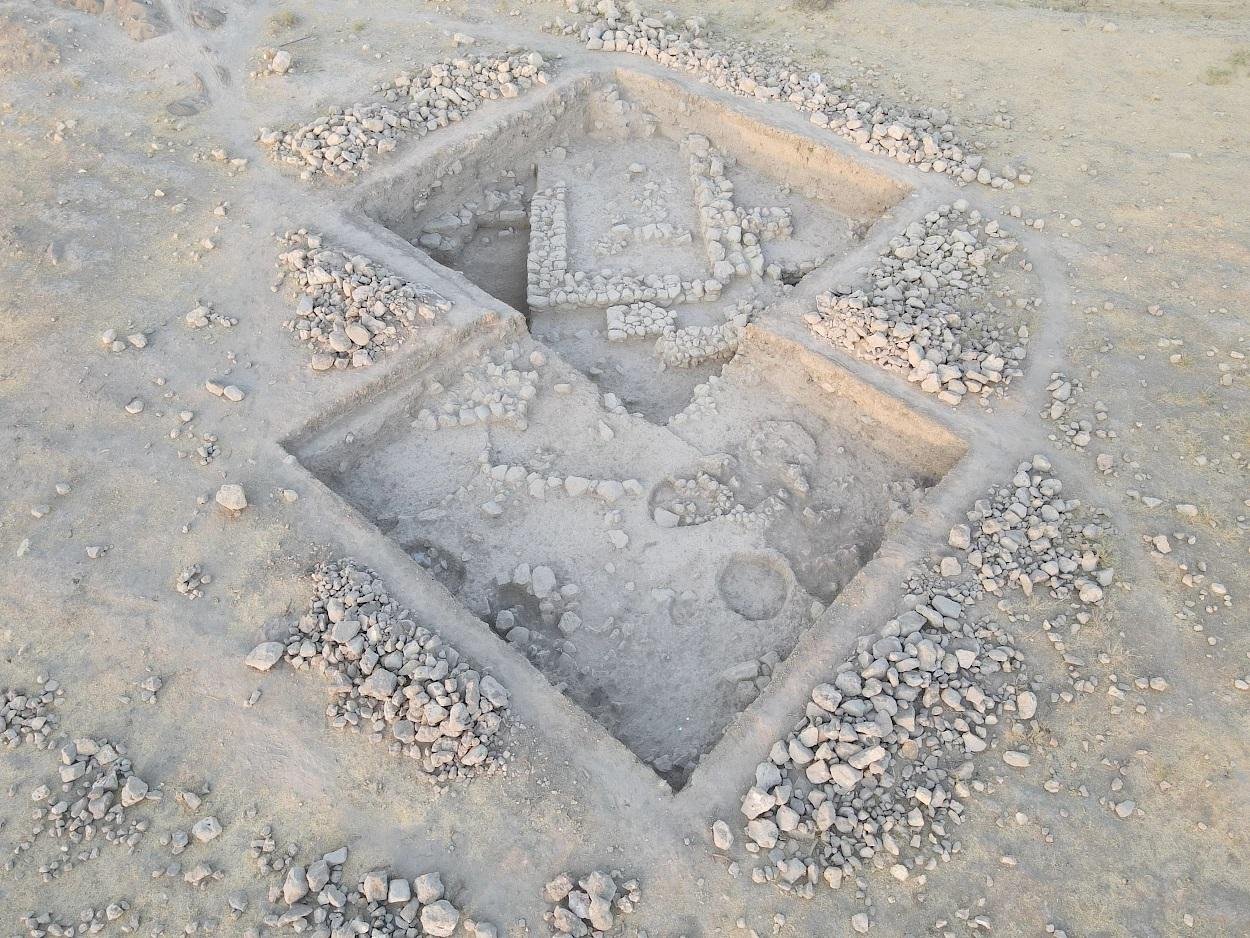
5,000-year-old monumental building in Iraq reveals ties to the world’s first cities
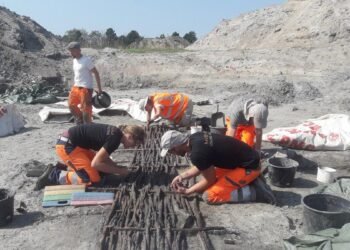
View of the Neo-Assyrian and Post-Assyrian period levels. Credit: Kani Shaie Archaeological Project / University of Coimbra

The discovery was announced by the Kani Shaie Archaeological Project, an international collaboration led by the University of Coimbra’s Centre for Studies in Archaeology, Arts and Heritage Sciences (CEAACP), along with its institutional partners, the University of Cambridge and the Slemani Antiquities and Heritage Directorate. Excavations revealed a large, officially constructed building atop the mound, probably a temple or cultic space where ritual or administrative activities would have been conducted.

Archaeologists identified unique wall cones—decorative clay or stone elements pressed into plastered walls and painted to form colorful geometric mosaics—common in the monumental architecture of southern Mesopotamia. This suggests the building had a ceremonial or public function. Other finds include a fragment of a gold pendant, attesting to access to luxury materials and hence social prestige, and cylinder seals, used for record-keeping and the authentication of power. These finds collectively suggest that Kani Shaie was not an isolated settlement but an active participant in the administrative and cultural networks of its time.

It lies almost 300 miles (480 km) north of Uruk, generally considered the world’s first metropolis, and this fact makes the findings at Kani Shaie especially significant. Uruk, boasting a population of up to 80,000 and with organized streets and temples, influenced early writing, trade, and religion. The monumental building at Kani Shaie indicates that this influence extended deep into the Zagros foothills, linking highland communities with the urban centers of the southern plain.
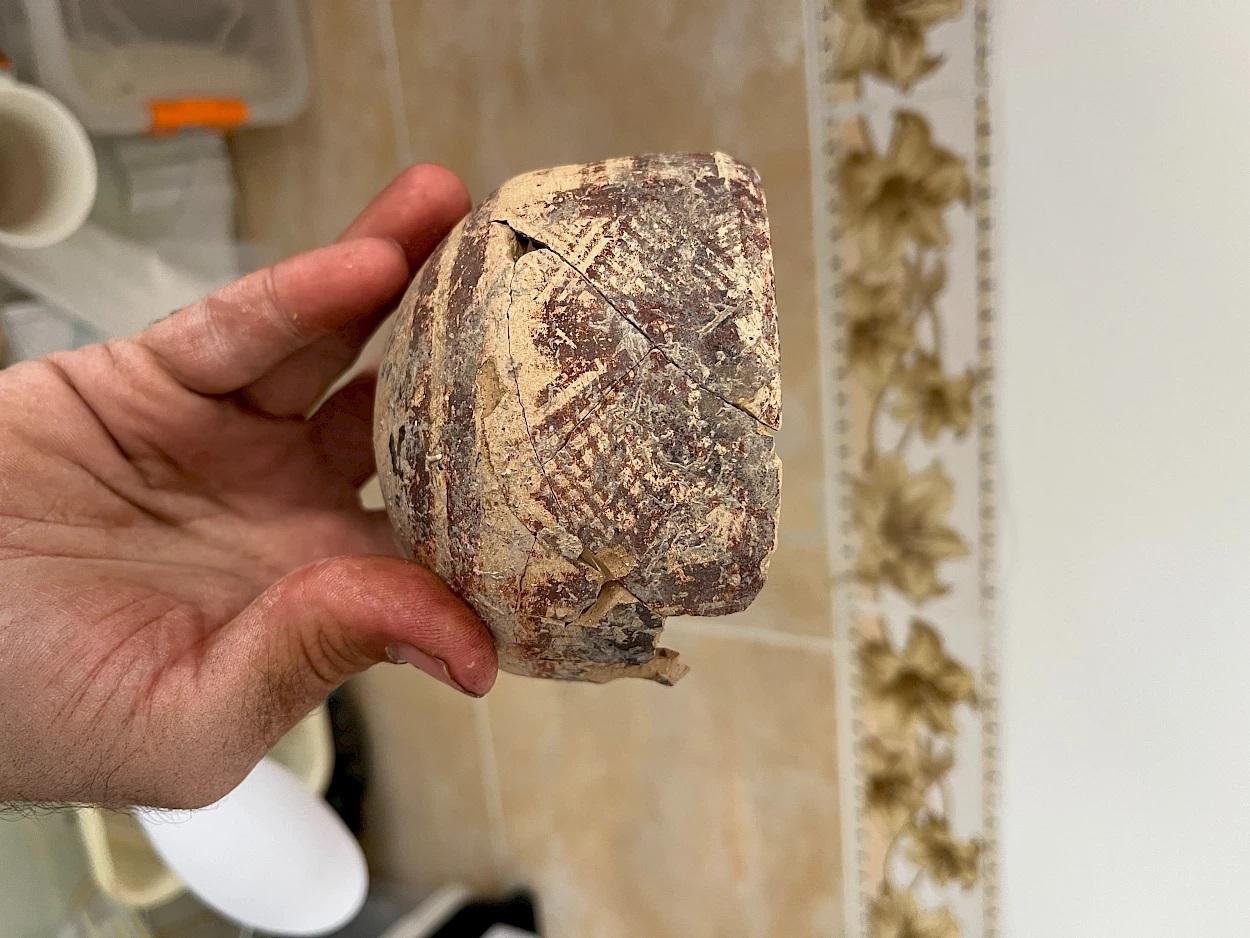
5,000-year-old monumental building in Iraq reveals ties to the world’s first cities
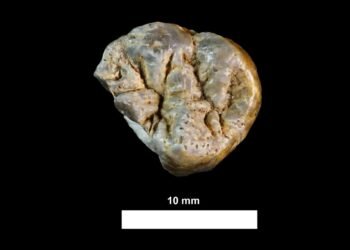
Decorated bowl, ca. 3100 BCE. Credit: Kani Shaie Archaeological Project / University of Coimbra

If the monumental nature of the building is confirmed, it may challenge our current view of how Uruk interacted with surrounding regions. Sites like Kani Shaie would have been active contributors to shaping early cultural and political systems rather than peripheral observers.

RelatedStories

Signatures meant more in Mesopotamia than they do now − what cylinder seals say about ancient and modern life

Signatures meant more in Mesopotamia than they do now − what cylinder seals say about ancient and modern life

November 7, 2025
Rare Assyrian inscription found in Jerusalem

Rare Assyrian inscription found in Jerusalem

October 22, 2025

Excavations at Kani Shaie, ongoing since 2013, have revealed a long sequence of human occupation from the Chalcolithic period, c. 6500 BCE, to the 3rd millennium BCE, with later layers dating to the Neo-Assyrian and Hellenistic–Parthian periods. This makes it one of the most important archaeological sites east of the Tigris River for studying early social and political development.

The project’s 2025 season was funded by the Portuguese Foundation for Science and Technology (FCT) and supported by the University of Cambridge. The findings reinforce that the cultural networks connecting the Fertile Crescent—the Cradle of Civilization—were more extensive and dynamic than previously believed.

More information: University of Coimbra

Share193Tweet121Share34ShareSend

You May Also Like...

Air-filled anomalies in the Menkaure Pyramid may point to a second entrance
Archaeology

Air-filled anomalies in the Menkaure Pyramid may point to a second entrance

November 11, 2025
Scientists uncover purpose of 5,200 mystery holes in Peru, revealing a lost Andean system of trade and record-keeping
Archaeology

Scientists uncover purpose of 5,200 mystery holes in Peru, revealing a lost Andean system of trade and record-keeping

November 10, 2025
Archaeologists uncover oldest and largest Maya monument built to represent the cosmos
Archaeology

Archaeologists uncover oldest and largest Maya monument built to represent the cosmos

November 10, 2025
Roman roads reimagined: new digital map expands the empire’s network to nearly 300,000 km
Archaeology

Roman roads reimagined: new digital map expands the empire’s network to nearly 300,000 km

November 9, 2025
New study debunks myth of Easter Island's ecological collapse
Archaeology

Rats and the fall of Rapa Nui’s forests: invasive species, not humans, drove the island’s deforestation

November 9, 2025
2.75-million-year-old stone tools in Kenya reveal 300,000 years of technological stability
Anthropology

2.75-million-year-old stone tools in Kenya reveal 300,000 years of technological stability

November 9, 2025

Comments 0

  1. Editorial Team says:
    1 second ago
    Disclaimer: This website is a science-focused magazine that welcomes both academic and non-academic audiences. Comments are written by users and may include personal opinions or unverified claims. They do not necessarily reflect the views of our editorial team or rely on scientific evidence.
    Reply

Leave a Reply Cancel reply

Your email address will not be published. Required fields are marked *

Follow us


Instagram
245K

Facebook
117K

Threads
45K

LinkedIn
14K

Twitter
6K

YouTube
1K
  • Trending
  • Comments
  • Latest
Shipwreck Salvage. Credit: rawpixel.com / Public Domain

2,000-year-old shipwreck discovered off Turkish coast with remarkably preserved stacked ceramics

July 2, 2025
Viking age DNA reveals 9,000-year-old HIV-resistant gene originating near the Black Sea

Viking age DNA reveals 9,000-year-old HIV-resistant gene originating near the Black Sea

May 18, 2025
Complete copy of the Canopus Decree unearthed in Egypt after 150 years

Complete copy of the Canopus Decree unearthed in Egypt after 150 years

September 13, 2025
Mystery of Armenia’s 6,000-year-old dragon stones solved

Mystery of Armenia’s 6,000-year-old dragon stones solved

September 23, 2025
Moses may be named in ancient Egyptian mine inscriptions, sparking debate over earliest biblical references

Moses may be named in ancient Egyptian mine inscriptions, sparking debate over earliest biblical references

July 31, 2025
Moses may be named in ancient Egyptian mine inscriptions, sparking debate over earliest biblical references

Moses may be named in ancient Egyptian mine inscriptions, sparking debate over earliest biblical references

3D analysis reveals Shroud of Turin image likely came from sculpture, not Jesus’ body

3D analysis reveals Shroud of Turin image likely came from sculpture, not Jesus’ body

$1 million prize offered to decipher 5,300-year-old Indus Valley script

$1 million prize offered to decipher 5,300-year-old Indus Valley script

Oldest ever genetic data from a human relative found in 2-million-year-old fossilized teeth

Oldest ever genetic data from a human relative found in 2-million-year-old fossilized teeth

Exceptionally large Roman shoes discovered at Magna fort near Hadrian’s Wall

Exceptionally large Roman shoes discovered at Magna fort near Hadrian’s Wall

Air-filled anomalies in the Menkaure Pyramid may point to a second entrance

Air-filled anomalies in the Menkaure Pyramid may point to a second entrance

November 11, 2025
Scientists uncover purpose of 5,200 mystery holes in Peru, revealing a lost Andean system of trade and record-keeping

Scientists uncover purpose of 5,200 mystery holes in Peru, revealing a lost Andean system of trade and record-keeping

November 10, 2025
Archaeologists uncover oldest and largest Maya monument built to represent the cosmos

Archaeologists uncover oldest and largest Maya monument built to represent the cosmos

November 10, 2025
Roman roads reimagined: new digital map expands the empire’s network to nearly 300,000 km

Roman roads reimagined: new digital map expands the empire’s network to nearly 300,000 km

November 9, 2025
New study debunks myth of Easter Island's ecological collapse

Rats and the fall of Rapa Nui’s forests: invasive species, not humans, drove the island’s deforestation

November 9, 2025

Archaeology News online magazine

Archaeology News is an international online magazine that covers all aspects of archaeology.


Categories

  • Academics
    • Books
    • Conferences
    • Universities
  • Articles
  • Download
  • Game
  • News
    • Anthropology
    • Archaeology
    • Paleontology
  • Quiz
  • Tours

Subscribe to our newsletter

© 2024 - Archaeology News Online Magazine. All Rights Reserved.

  • About
  • Privacy Policy
  • Terms of Use
  • Donation
  • Contact

Welcome Back!

Login to your account below

Forgotten Password? Sign Up

Create New Account!

Fill the forms below to register

All fields are required. Log In

Retrieve your password

Please enter your username or email address to reset your password.

Log In

Add New Playlist

Manage Consent
To provide the best experiences, we use technologies like cookies to store and/or access device information. Consenting to these technologies will allow us to process data such as browsing behavior or unique IDs on this site. Not consenting or withdrawing consent, may adversely affect certain features and functions.
Functional Always active
The technical storage or access is strictly necessary for the legitimate purpose of enabling the use of a specific service explicitly requested by the subscriber or user, or for the sole purpose of carrying out the transmission of a communication over an electronic communications network.
Preferences
The technical storage or access is necessary for the legitimate purpose of storing preferences that are not requested by the subscriber or user.
Statistics
The technical storage or access that is used exclusively for statistical purposes. The technical storage or access that is used exclusively for anonymous statistical purposes. Without a subpoena, voluntary compliance on the part of your Internet Service Provider, or additional records from a third party, information stored or retrieved for this purpose alone cannot usually be used to identify you.
Marketing
The technical storage or access is required to create user profiles to send advertising, or to track the user on a website or across several websites for similar marketing purposes.
Manage options Manage services Manage {vendor_count} vendors Read more about these purposes
View preferences
{title} {title} {title}
  • Home
  • News
    • Archaeology
    • Anthropology
    • Paleontology
  • Academics
    • Books
    • Conferences
    • Universities
  • Articles
  • VR Tours
  • Quiz & Game
  • Download
  • Encyclopedia
  • Forum

About  .  Contact  .  Donation

© 2024 - Archaeology News Online Magazine. All Rights Reserved