• About
  • Privacy Policy
  • Terms of Use
  • Donation
  • Contact
No Result
View All Result
Archaeology News
  • Home
  • News
    • Archaeology
    • Anthropology
    • Paleontology
  • Academic
    • Books
    • Conferences
    • Universities
  • Articles
  • VR Tours
  • Quiz & Game
  • Download
  • Encyclopedia
  • Forum
Archaeology News
No Result
View All Result
Home News Archaeology

Earliest evidence of cereal harvesting by ancient Canarians discovered in Gran Canaria

by Dario Radley
May 6, 2026

Archaeologists studying a cave complex on Gran Canaria have found the earliest direct evidence of cereal harvesting in the Canary Islands, adding new detail to what is known about farming and burial customs among the island’s Indigenous communities before the Castilian conquest.
Earliest evidence of cereal harvesting by ancient Canarians discovered in Gran Canaria
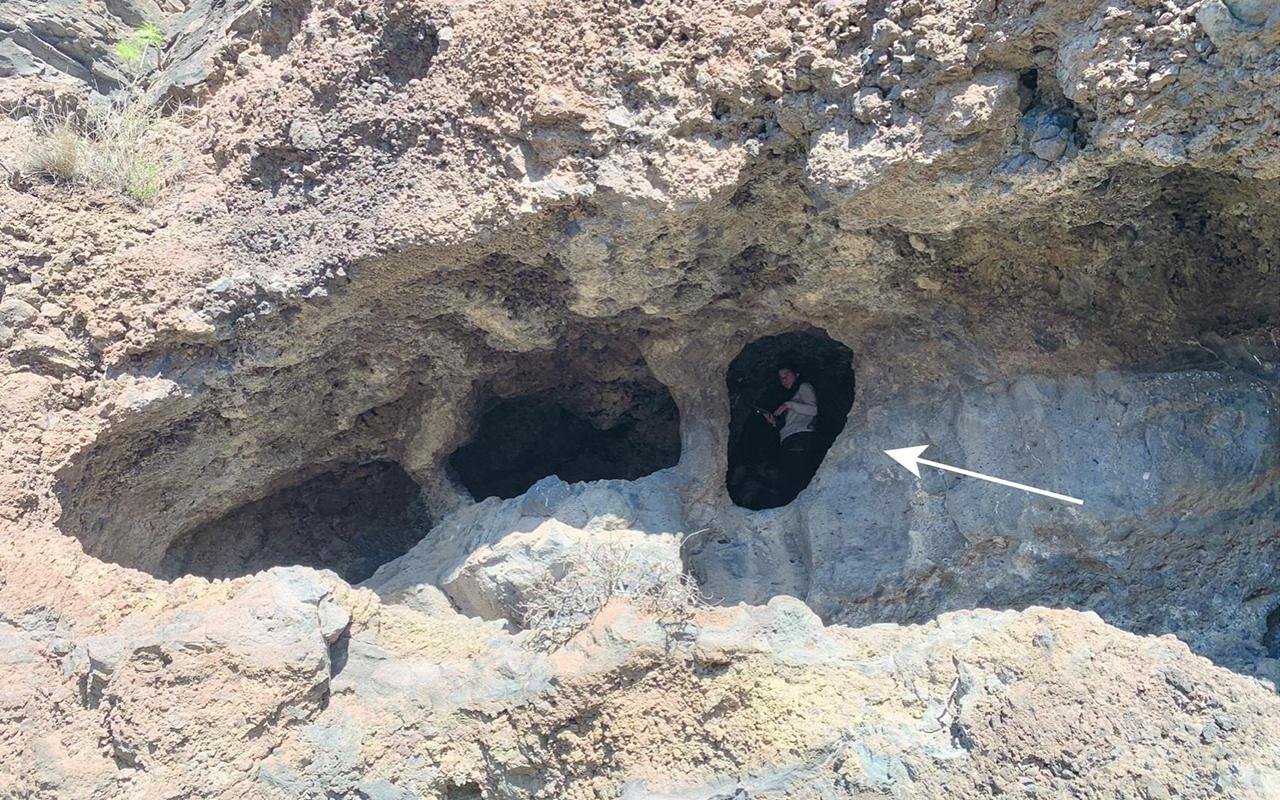
Frontal view of Complex 1, displaying the three cavities/silos with exterior access; the arrow marks the entrance to Complex 2. Credit: Brito-Abrante et al., Journal of Archaeological Science, Reports (2026)

The research focused on stone tools recovered from cave complex C008 at Bentayga, a major archaeological site on the southern slope of Roque Bentayga in Tejeda, Spain. The study, published in the Journal of Archaeological Science: Reports, examined how people used the caves between the 10th and 13th centuries CE.

Roque Bentayga, a volcanic monolith rising 1,414 meters above sea level, was an important center for the ancient inhabitants of Gran Canaria, a population of Amazigh origin. More than 100 caves were cut into its slopes and served different roles, including homes, burial chambers, and granaries.

The C008 complex sits about 1,100 meters above sea level and consists of several artificial chambers carved into volcanic tuff. Radiocarbon dating shows the caves first functioned as a granary between the 10th and 13th centuries. Later, during the 12th and 13th centuries, part of the space was reused as a collective burial area.
Earliest evidence of cereal harvesting by ancient Canarians discovered in Gran Canaria
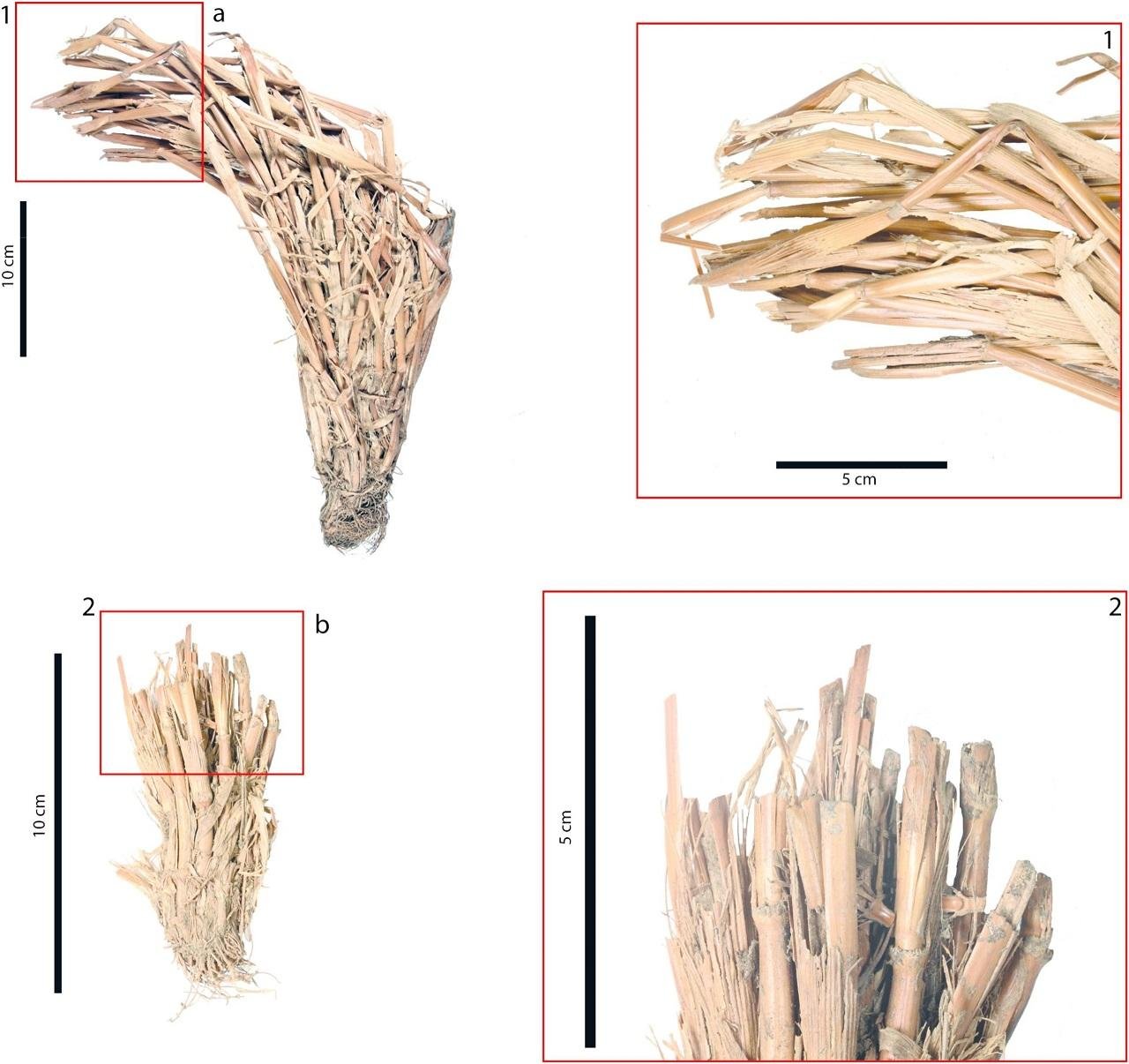
Remains of cereal stems from Complex 2, in C008, Bentayga, with detail of the upper part. a) Cereal stem uprooted; 1) Close-up of the upper part showing clean cut marks. b) Cereal stem uprooted; 2) Close-up of the upper part with evidence of a clean cut. Credit: Brito-Abrante et al., Journal of Archaeological Science, Reports (2026)

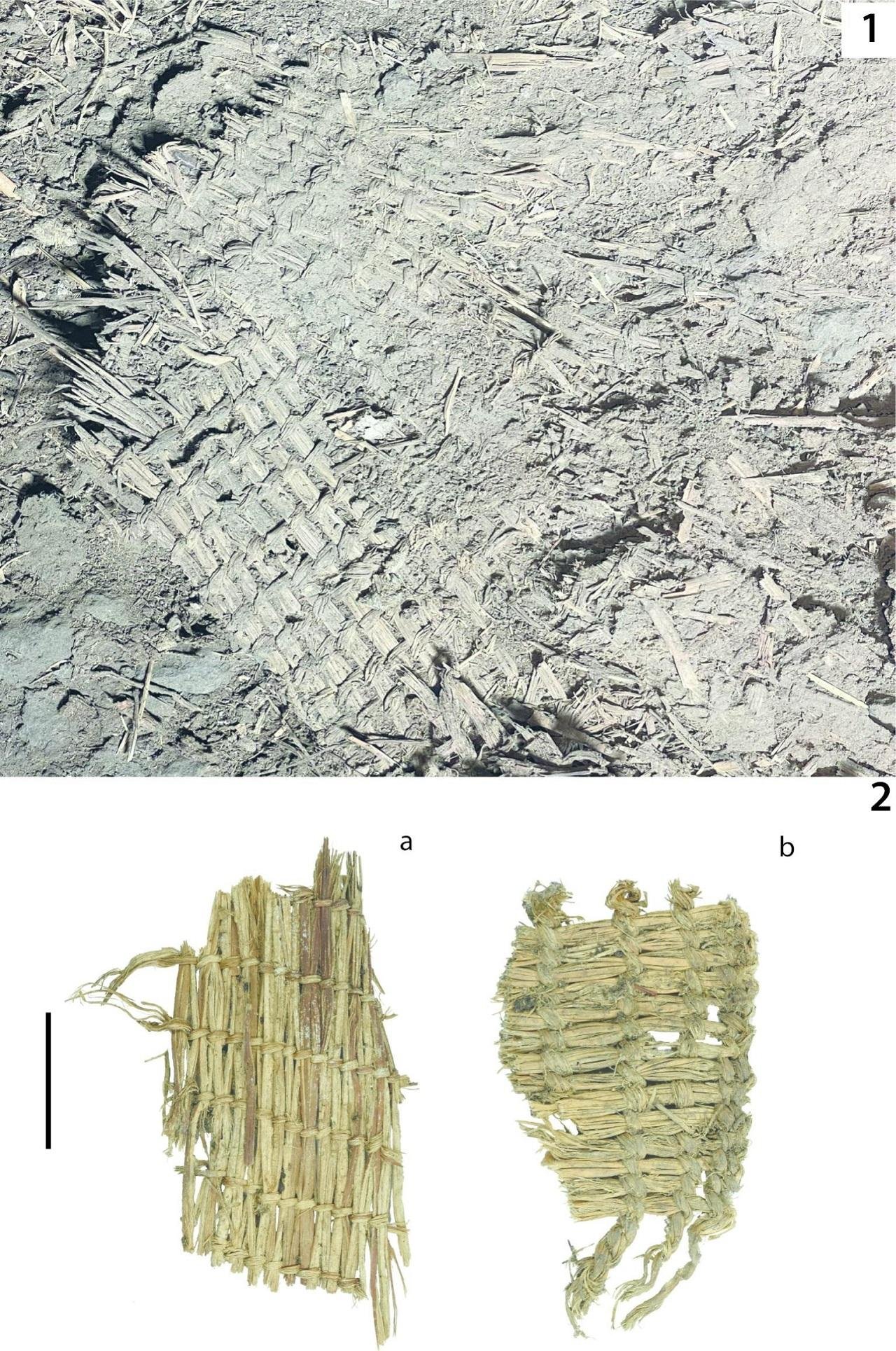
Dry and stable conditions inside the caves preserved unusual organic materials, including barley ears, seeds, reed mats, leather fragments, wood, and even soft animal tissues. Such preservation gave researchers a rare chance to study both tools and associated materials together.

RelatedStories

146,000-year-old Ice Age humans used advanced stone tools for butchery and survival

146,000-year-old Ice Age humans used advanced stone tools for butchery and survival

May 8, 2026
How ancient communities adapted their diets and farming strategies in prehistoric Poland

How ancient communities adapted their diets and farming strategies in prehistoric Poland

February 26, 2026

The team analyzed 218 stone artifacts and selected 46 for detailed functional study. Researchers used high-powered microscopes with magnifications up to 400 times and cleaned the pieces in ultrasonic baths to remove sediment. This work was especially difficult because the assemblage consisted largely of volcanic rocks such as basalt, trachyte, and obsidian, whose rough surfaces make microscopic wear traces harder to identify than on flint.

Among the most important finds was a small basalt blade showing clear traces linked to cereal harvesting. Its edge displayed a bright continuous sheen and fine parallel scratches, wear patterns created by repeated cutting of silica-rich cereal stems. This is the first physical proof of cereal harvesting tools in the pre-European archaeology of the Canary Islands.

Until now, archaeologists had relied mostly on later European written accounts and indirect evidence, such as weed seeds or crop remains, to suggest cereal agriculture on the islands. Some historical descriptions claimed ancient Canarians removed grain heads by hand, leaving stalks behind. The new evidence points to a more varied harvesting system.
Earliest evidence of cereal harvesting by ancient Canarians discovered in Gran Canaria
Organic artifacts from the Complex 2, in C008, Bentayga. 1) In situ rush mat in type 1 fabric (Juncus sp.) from chamber D of the complex; 2) Detail of two fragments of type 2 fabric from chamber B (Juncus sp.); b has a type 1 warp finish off. Credit: Brito-Abrante et al., Journal of Archaeological Science, Reports (2026)

Researchers also found barley stems with clean cut marks, which support the idea that people used cutting tools similar to sickles. In one silo, archaeologists documented bundles of uprooted plants whose upper sections had been neatly cut, likely separating grain from stalks.

The findings suggest these caves were more than storage spaces. Large stone picks and scrapers carried wear from striking and scraping volcanic rock, showing they were used to shape and maintain the cave walls. Other tools were linked to crop processing, indicating grain handling likely took place inside the granaries.

The site later took on a different purpose. In the burial phase, archaeologists found adult and perinatal human remains in a central chamber. Bodies had been wrapped in shrouds made from plant fibers and leather.

Stone flakes recovered near the burials showed wear linked to scraping dry hide and cutting reeds. Researchers believe these tools were likely used to prepare or adjust burial wrappings during funerary rituals rather than being intentionally placed as grave goods, since such offerings were not typical in Indigenous Gran Canarian burial traditions.

An obsidian piece also showed traces linked to meat processing, suggesting stored food or preserved meat products may have been prepared in the complex as well.

The study gives a more detailed picture of life at Bentayga. Over several centuries, the same cave complex served as a construction site, food storage and processing center, and later a burial place. Researchers say the work also highlights the value of use-wear studies on volcanic stone tools, an area still understudied despite the importance of such materials in volcanic regions like the Canary Islands.
More information: Brito-Abrante, I., Santana, J., Morales, J., Pino Curbelo, M. del, Martínez-Barrio, C., Campagne, J., … Rodríguez-Rodríguez, A. (2026). More than storage: A functional analysis of the lithic industry associated with the C008 cave complex at Bentayga, Gran Canaria (Canary Islands, Spain). Journal of Archaeological Science, Reports, 71(105668), 105668. doi:10.1016/j.jasrep.2026.105668
Share6Tweet4Share1ShareSend

You May Also Like...

Cut marks on 1.6-million-year-old bones reveal early humans moved and processed meat in Kenya
Anthropology

Cut marks on 1.6-million-year-old bones reveal early humans moved and processed meat in Kenya

May 13, 2026
280 ancient stone burial monuments found in Sudan reveal lost cattle-herding culture in the Sahara
Archaeology

280 ancient stone burial monuments found in Sudan reveal lost cattle-herding culture in the Sahara

May 13, 2026
Rare Bronze Age burial in Sweden reveals unusual pair of Wendel neck rings and complex ritual landscape near Norrköping
Archaeology

Rare Bronze Age burial in Sweden reveals unusual pair of Wendel neck rings and complex ritual landscape near Norrköping

May 12, 2026
Kasta Tomb in Amphipolis fully revealed as restoration uncovers largest burial mound in Macedonia
Archaeology

Kasta Tomb in Amphipolis fully revealed as restoration uncovers largest burial mound in Macedonia

May 12, 2026
Rare Roman villa threatened by farming damage reveals rare mosaic and bathhouse remains in Devon
Archaeology

Rare Roman villa threatened by farming damage reveals rare mosaic and bathhouse remains in Devon

May 12, 2026
Ancient burials, Roman well, and Anglo-Saxon house uncovered during A46 Newark bypass excavations
Anthropology

Ancient burials, Roman well, and Anglo-Saxon house uncovered during A46 Newark bypass excavations

May 12, 2026

Comments 0

  1. Editorial Team says:
    1 second ago

    Disclaimer: This website is a science-focused magazine that welcomes both academic and non-academic audiences. Comments are written by users and may include personal opinions or unverified claims. They do not necessarily reflect the views of our editorial team or rely on scientific evidence.

    Comment Policy: We kindly ask all commenters to engage respectfully. Comments that contain offensive, insulting, degrading, discriminatory, or racist content will be automatically removed.

    Reply

Leave a Reply Cancel reply

Your email address will not be published. Required fields are marked *

Follow us


Instagram
242K

Facebook
117K

Threads
46K

LinkedIn
14K

Twitter
6K

YouTube
1K
  • Trending
  • Comments
  • Latest
Shipwreck Salvage. Credit: rawpixel.com / Public Domain

2,000-year-old shipwreck discovered off Turkish coast with remarkably preserved stacked ceramics

July 2, 2025
A new study suggests the mysterious Voynich Manuscript may be a medieval cipher

A new study suggests the mysterious Voynich Manuscript may be a medieval cipher

January 3, 2026
Viking age DNA reveals 9,000-year-old HIV-resistant gene originating near the Black Sea

Viking age DNA reveals 9,000-year-old HIV-resistant gene originating near the Black Sea

May 18, 2025
3D analysis reveals Shroud of Turin image likely came from sculpture, not Jesus’ body

3D analysis reveals Shroud of Turin image likely came from sculpture, not Jesus’ body

August 3, 2025
Moses may be named in ancient Egyptian mine inscriptions, sparking debate over earliest biblical references

Moses may be named in ancient Egyptian mine inscriptions, sparking debate over earliest biblical references

July 31, 2025
3D analysis reveals Shroud of Turin image likely came from sculpture, not Jesus’ body

3D analysis reveals Shroud of Turin image likely came from sculpture, not Jesus’ body

Moses may be named in ancient Egyptian mine inscriptions, sparking debate over earliest biblical references

Moses may be named in ancient Egyptian mine inscriptions, sparking debate over earliest biblical references

$1 million prize offered to decipher 5,300-year-old Indus Valley script

$1 million prize offered to decipher 5,300-year-old Indus Valley script

Oldest ever genetic data from a human relative found in 2-million-year-old fossilized teeth

Oldest ever genetic data from a human relative found in 2-million-year-old fossilized teeth

Exceptionally large Roman shoes discovered at Magna fort near Hadrian’s Wall

Exceptionally large Roman shoes discovered at Magna fort near Hadrian’s Wall

Cut marks on 1.6-million-year-old bones reveal early humans moved and processed meat in Kenya

Cut marks on 1.6-million-year-old bones reveal early humans moved and processed meat in Kenya

May 13, 2026
280 ancient stone burial monuments found in Sudan reveal lost cattle-herding culture in the Sahara

280 ancient stone burial monuments found in Sudan reveal lost cattle-herding culture in the Sahara

May 13, 2026
Rare Bronze Age burial in Sweden reveals unusual pair of Wendel neck rings and complex ritual landscape near Norrköping

Rare Bronze Age burial in Sweden reveals unusual pair of Wendel neck rings and complex ritual landscape near Norrköping

May 12, 2026
Kasta Tomb in Amphipolis fully revealed as restoration uncovers largest burial mound in Macedonia

Kasta Tomb in Amphipolis fully revealed as restoration uncovers largest burial mound in Macedonia

May 12, 2026
Rare Roman villa threatened by farming damage reveals rare mosaic and bathhouse remains in Devon

Rare Roman villa threatened by farming damage reveals rare mosaic and bathhouse remains in Devon

May 12, 2026

Archaeology News online magazine

Archaeology News is an international online magazine that covers all aspects of archaeology.


Categories

  • Academics
    • Books
    • Conferences
    • Universities
  • Articles
  • Download
  • Game
  • News
    • Anthropology
    • Archaeology
    • Paleontology
  • Quiz
  • Tours

Subscribe to our newsletter

© 2024 - Archaeology News Online Magazine. All Rights Reserved.

  • About
  • Privacy Policy
  • Terms of Use
  • Donation
  • Contact

Manage Consent
To provide the best experiences, we use technologies like cookies to store and/or access device information. Consenting to these technologies will allow us to process data such as browsing behavior or unique IDs on this site. Not consenting or withdrawing consent, may adversely affect certain features and functions.
Functional Always active
The technical storage or access is strictly necessary for the legitimate purpose of enabling the use of a specific service explicitly requested by the subscriber or user, or for the sole purpose of carrying out the transmission of a communication over an electronic communications network.
Preferences
The technical storage or access is necessary for the legitimate purpose of storing preferences that are not requested by the subscriber or user.
Statistics
The technical storage or access that is used exclusively for statistical purposes. The technical storage or access that is used exclusively for anonymous statistical purposes. Without a subpoena, voluntary compliance on the part of your Internet Service Provider, or additional records from a third party, information stored or retrieved for this purpose alone cannot usually be used to identify you.
Marketing
The technical storage or access is required to create user profiles to send advertising, or to track the user on a website or across several websites for similar marketing purposes.
  • Manage options
  • Manage services
  • Manage {vendor_count} vendors
  • Read more about these purposes
View preferences
  • {title}
  • {title}
  • {title}
  • Home
  • News
    • Archaeology
    • Anthropology
    • Paleontology
  • Academic
    • Books
    • Conferences
    • Universities
  • Articles
  • VR Tours
  • Quiz & Game
  • Download
  • Encyclopedia
  • Forum

About  .  Contact  .  Donation

© 2024 - Archaeology News Online Magazine. All Rights Reserved