• About
  • Privacy Policy
  • Terms of Use
  • Donation
  • Contact
No Result
View All Result
Archaeology News
  • Home
  • News
    • Archaeology
    • Anthropology
    • Paleontology
  • Academic
    • Books
    • Conferences
    • Universities
  • Articles
  • VR Tours
  • Quiz & Game
  • Download
  • Encyclopedia
  • Forum
Archaeology News
No Result
View All Result
Home News Archaeology

Silver brooch depicting Romulus and Remus found in Valencia

by Dario Radley
February 15, 2024

The Department of Culture of the Generalitat Valenciana has recently announced the discovery of a rare silver brooch, depicting the iconic scene of Romulus and Remus being suckled by a she-wolf.
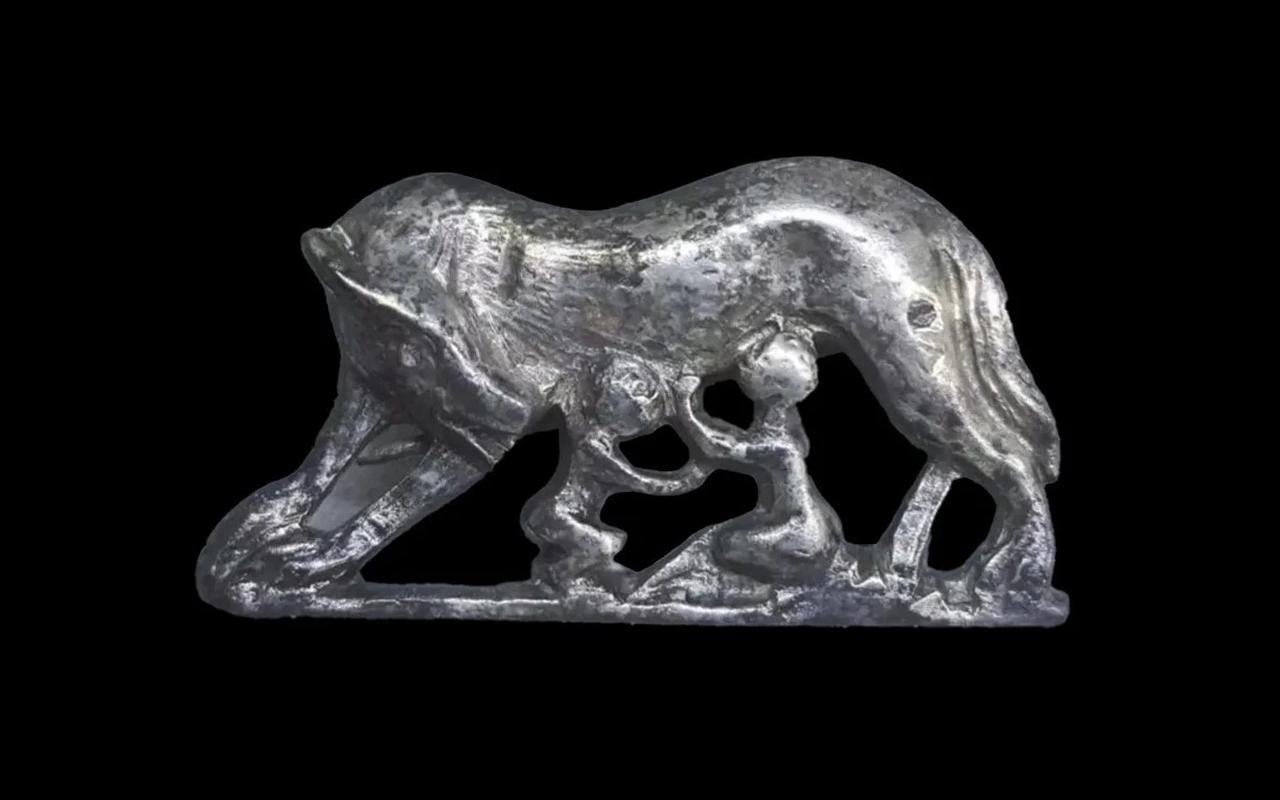
Silver brooch depicting Romulus and Remus found in Valencia
Credit: The Department of Culture of the Generalitat Valenciana

This remarkable artifact was discovered during excavations at Vilanova d’Alcolea, a site in Spain believed to have served as an ancient postal building during the Roman era. Archaeologists, led by Josep Carbó, made the discovery, describing it as an exceptional piece both for its rarity and quality.

Romulus and Remus, pivotal figures in Roman mythology, were twin brothers whose legendary tale forms the foundation myth of Rome and the Roman Kingdom. Born in Alba Longa to Rhea Silvia, the twins were the grandsons of the deposed King Numitor. Threatened by their potential claim to power, King Amulius, Numitor’s brother, ordered the infants to be abandoned on the banks of the Tiber River.

Legend has it that the twins were saved by a she-wolf who nursed them in a cave known as Lupercal, situated at the southwestern foot of the Palatine Hill in Rome. Upon discovering their true heritage, Romulus and Remus avenged their family and reinstated their grandfather, Numitor, as the rightful king. However, their story took a tragic turn when a dispute arose between the brothers, leading to Romulus committing fratricide against Remus. Romulus then went on to establish the city of Rome, solidifying his position as its first ruler.

The silver brooch, measuring 4 centimeters in size and dating back to the 2nd century CE, portrays the iconic scene of the she-wolf nurturing the twins in their infancy. This depiction has become synonymous with the founding of Rome since the 3rd century BCE.

RelatedStories

Rare Bronze Age burial in Sweden reveals unusual pair of Wendel neck rings and complex ritual landscape near Norrköping
Rare Bronze Age burial in Sweden reveals unusual pair of Wendel neck rings and complex ritual landscape near Norrköping

May 12, 2026
Rare Roman villa threatened by farming damage reveals rare mosaic and bathhouse remains in Devon

Rare Roman villa threatened by farming damage reveals rare mosaic and bathhouse remains in Devon

May 12, 2026

The archaeological site where the brooch was discovered holds additional significance. Situated near the Via Augusta, the longest Roman road in Roman Hispania, the site is believed to have been an official post of the Roman Empire, catering to officials and travelers alike. The proximity to this historic route enhances the importance of the find.

Archaeologist, Josep Carbó, emphasized the significance of the discovery, stating, “It is an exceptional piece due to its rarity and quality since there are very few pieces of this type that have been studied.”

Share2Tweet2ShareShareSend

You May Also Like...

Horse domestication began centuries earlier than thought, study reveals early riding and management in 4th millennium BCE
Archaeology

Horse domestication began centuries earlier than thought, study reveals early riding and management in 4th millennium BCE

May 15, 2026
Ancient Danes kept fishing for millennia after farming arrived, study finds
Archaeology

Ancient Danes kept fishing for millennia after farming arrived, study finds

May 14, 2026
Oldest known dental treatment found in 59,000-year-old Neanderthal tooth from Siberia
Anthropology

Oldest known dental treatment found in 59,000-year-old Neanderthal tooth from Siberia

May 14, 2026
Homo erectus in Java: 140,000-year-old fossils found in submerged river valley
Anthropology

400,000-year-old Homo erectus proteins reveal genetic links to Denisovans and modern humans

May 14, 2026
Cut marks on 1.6-million-year-old bones reveal early humans moved and processed meat in Kenya
Anthropology

Cut marks on 1.6-million-year-old bones reveal early humans moved and processed meat in Kenya

May 13, 2026
280 ancient stone burial monuments found in Sudan reveal lost cattle-herding culture in the Sahara
Archaeology

280 ancient stone burial monuments found in Sudan reveal lost cattle-herding culture in the Sahara

May 13, 2026

Follow us


Instagram
242K

Facebook
117K

Threads
46K

LinkedIn
14K

Twitter
6K

YouTube
1K
  • Trending
  • Comments
  • Latest
Shipwreck Salvage. Credit: rawpixel.com / Public Domain

2,000-year-old shipwreck discovered off Turkish coast with remarkably preserved stacked ceramics

July 2, 2025
A new study suggests the mysterious Voynich Manuscript may be a medieval cipher

A new study suggests the mysterious Voynich Manuscript may be a medieval cipher

January 3, 2026
Viking age DNA reveals 9,000-year-old HIV-resistant gene originating near the Black Sea

Viking age DNA reveals 9,000-year-old HIV-resistant gene originating near the Black Sea

May 18, 2025
3D analysis reveals Shroud of Turin image likely came from sculpture, not Jesus’ body

3D analysis reveals Shroud of Turin image likely came from sculpture, not Jesus’ body

August 3, 2025
Moses may be named in ancient Egyptian mine inscriptions, sparking debate over earliest biblical references

Moses may be named in ancient Egyptian mine inscriptions, sparking debate over earliest biblical references

July 31, 2025
3D analysis reveals Shroud of Turin image likely came from sculpture, not Jesus’ body

3D analysis reveals Shroud of Turin image likely came from sculpture, not Jesus’ body

Moses may be named in ancient Egyptian mine inscriptions, sparking debate over earliest biblical references

Moses may be named in ancient Egyptian mine inscriptions, sparking debate over earliest biblical references

$1 million prize offered to decipher 5,300-year-old Indus Valley script

$1 million prize offered to decipher 5,300-year-old Indus Valley script

Oldest ever genetic data from a human relative found in 2-million-year-old fossilized teeth

Oldest ever genetic data from a human relative found in 2-million-year-old fossilized teeth

Exceptionally large Roman shoes discovered at Magna fort near Hadrian’s Wall

Exceptionally large Roman shoes discovered at Magna fort near Hadrian’s Wall

Horse domestication began centuries earlier than thought, study reveals early riding and management in 4th millennium BCE

Horse domestication began centuries earlier than thought, study reveals early riding and management in 4th millennium BCE

May 15, 2026
Ancient Danes kept fishing for millennia after farming arrived, study finds

Ancient Danes kept fishing for millennia after farming arrived, study finds

May 14, 2026
Oldest known dental treatment found in 59,000-year-old Neanderthal tooth from Siberia

Oldest known dental treatment found in 59,000-year-old Neanderthal tooth from Siberia

May 14, 2026
Homo erectus in Java: 140,000-year-old fossils found in submerged river valley

400,000-year-old Homo erectus proteins reveal genetic links to Denisovans and modern humans

May 14, 2026
Cut marks on 1.6-million-year-old bones reveal early humans moved and processed meat in Kenya

Cut marks on 1.6-million-year-old bones reveal early humans moved and processed meat in Kenya

May 13, 2026

Archaeology News online magazine

Archaeology News is an international online magazine that covers all aspects of archaeology.


Categories

  • Academics
    • Books
    • Conferences
    • Universities
  • Articles
  • Download
  • Game
  • News
    • Anthropology
    • Archaeology
    • Paleontology
  • Quiz
  • Tours

Subscribe to our newsletter

© 2024 - Archaeology News Online Magazine. All Rights Reserved.

  • About
  • Privacy Policy
  • Terms of Use
  • Donation
  • Contact

Manage Consent
To provide the best experiences, we use technologies like cookies to store and/or access device information. Consenting to these technologies will allow us to process data such as browsing behavior or unique IDs on this site. Not consenting or withdrawing consent, may adversely affect certain features and functions.
Functional Always active
The technical storage or access is strictly necessary for the legitimate purpose of enabling the use of a specific service explicitly requested by the subscriber or user, or for the sole purpose of carrying out the transmission of a communication over an electronic communications network.
Preferences
The technical storage or access is necessary for the legitimate purpose of storing preferences that are not requested by the subscriber or user.
Statistics
The technical storage or access that is used exclusively for statistical purposes. The technical storage or access that is used exclusively for anonymous statistical purposes. Without a subpoena, voluntary compliance on the part of your Internet Service Provider, or additional records from a third party, information stored or retrieved for this purpose alone cannot usually be used to identify you.
Marketing
The technical storage or access is required to create user profiles to send advertising, or to track the user on a website or across several websites for similar marketing purposes.
  • Manage options
  • Manage services
  • Manage {vendor_count} vendors
  • Read more about these purposes
View preferences
  • {title}
  • {title}
  • {title}
  • Home
  • News
    • Archaeology
    • Anthropology
    • Paleontology
  • Academic
    • Books
    • Conferences
    • Universities
  • Articles
  • VR Tours
  • Quiz & Game
  • Download
  • Encyclopedia
  • Forum

About  .  Contact  .  Donation

© 2024 - Archaeology News Online Magazine. All Rights Reserved