• About
  • Privacy Policy
  • Terms of Use
  • Donation
  • Contact
No Result
View All Result
Archaeology News
  • Home
  • News
    • Archaeology
    • Anthropology
    • Paleontology
  • Academics
    • Books
    • Conferences
    • Universities
  • Articles
  • VR Tours
  • Quiz & Game
  • Download
  • Encyclopedia
  • Forum
Archaeology News
No Result
View All Result
Home News Archaeology

New study suggests hydraulic lift used in construction of Egypt’s first pyramid

by Dario Radley
July 27, 2024

A recent study proposes a revolutionary theory about the construction of Egypt’s Step Pyramid of Djoser, suggesting that ancient Egyptians may have used an advanced hydraulic lift system to raise the massive stone blocks. This new hypothesis challenges the long-standing belief that ramps and rollers were the primary methods used in building these monumental structures.
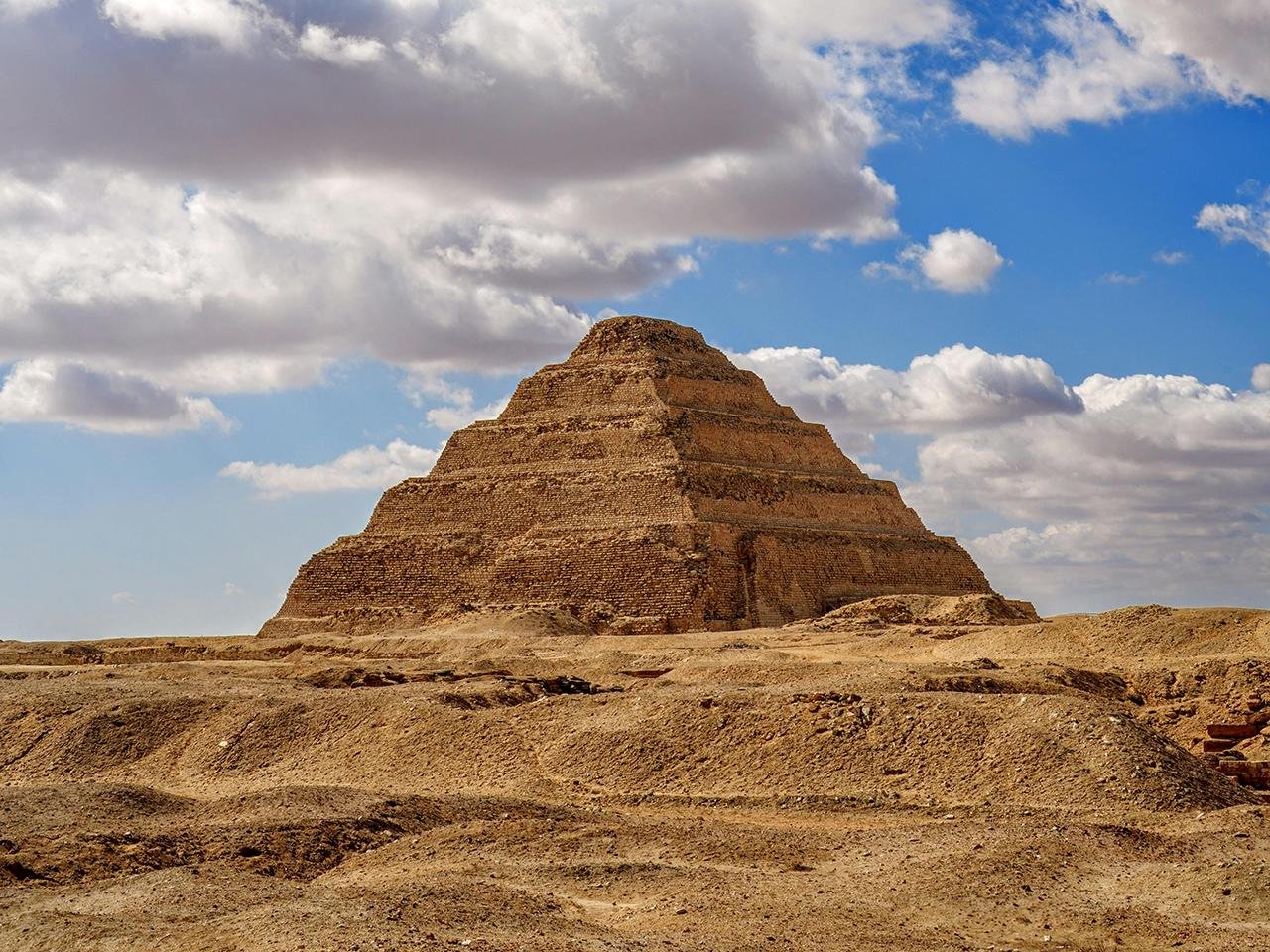
New study suggests hydraulic lift used in construction of Egypt’s first pyramid
A new study suggests Egypt’s first pyramid was constructed using a hydraulic lift. Credit: Hugo Sykes

The Step Pyramid of Djoser, standing approximately 60 to 62 meters tall, is the earliest colossal stone building in Egypt, constructed during the Third Dynasty under the reign of Pharaoh Djoser (circa 2670–2650 BCE). Located on the Saqqara Plateau, south of Giza, it forms the centerpiece of a vast mortuary complex. Despite extensive studies over the years, the precise methods employed in its construction have remained elusive.

The study, led by Dr. Xavier Landreau from the CEA Paleotechnic Institute and his team of French engineers, hydrologists, and material scientists, utilized satellite radar imagery and historical archaeological reports to uncover new insights into the pyramid’s construction. Their research points to a sophisticated water management system that may have facilitated the construction process.

Dr. Landreau explained in an interview with Haaretz, “Satellite imagery clearly shows that a rectangular stone enclosure known as Gisr el-Mudir, located west of the Saqqara necropolis, has all the technical characteristics of a check dam. This feature would have been used to control the flow of flash floods and capture heavy objects coming from upriver.”
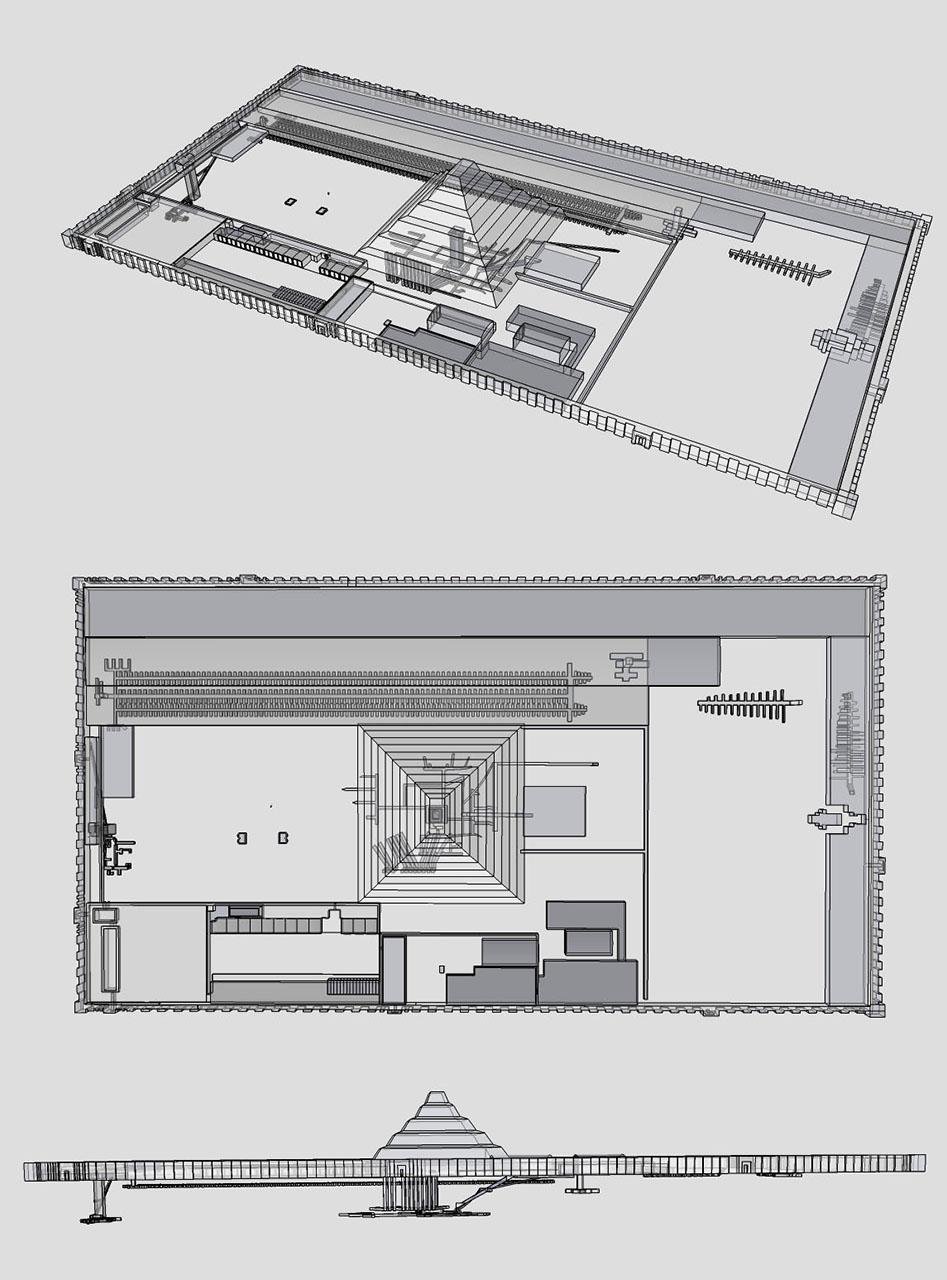
New study suggests hydraulic lift used in construction of Egypt’s first pyramid
Perspective view, plan and elevation images of Djoser’s Pyramid Complex taken from a 3d model. Credit: R.F.Morgan, CC BY-SA 3.0

The researchers propose that the Pyramid of Djoser was built using a hydraulic lift mechanism that raised stone blocks through the center of the structure. This method, described as “volcano fashion,” would involve floating limestone blocks upward using water pressure and then placing them in their respective positions.

RelatedStories

Hidden Mamluk-era tunnels reveal a hydraulic system that powered the medieval sugar industry

Hidden Mamluk-era tunnels reveal a hydraulic system that powered the medieval sugar industry

October 28, 2025
Ancient Egyptians mastered arsenical bronze on Elephantine Island 4,000 years ago

Ancient Egyptians mastered arsenical bronze on Elephantine Island 4,000 years ago

October 25, 2025

The key to this hydraulic system lies in the complex water management infrastructure surrounding the pyramid. The Gisr el-Mudir, a massive stone enclosure, and a dry moat with successive, deep compartments near the pyramid’s southern section, likely played crucial roles. The study suggests that these structures formed part of an integrated system for regulating water flow and improving water quality.

In their paper, the authors explain: “The monumental linear rock-cut structure in the southern section of the moat combines the technical requirements of a water treatment facility: a settling basin, a retention basin, and a purification system. This setup likely directed sediment-free water to feed the hydraulic lift system within the pyramid.”

New study suggests hydraulic lift used in construction of Egypt’s first pyramid
The Step Pyramid of Djoser. Credit: Hala Ezzat

The researchers highlight that the Third Dynasty period coincided with the latter part of the Green Sahara period when northern Africa experienced more rainfall and lush vegetation. The Abusir Wadi, an ancient stream flowing from the mountains west of the Saqqara Plateau, would have provided ample water to support such a hydraulic system.

“Before the Fourth Dynasty, there were more problems with floods than with a lack of water,” Dr. Landreau noted, emphasizing the need for effective water management systems at the time.

This new hypothesis not only offers a plausible explanation for the construction of the Pyramid of Djoser but also underscores the advanced understanding of hydraulic engineering possessed by the ancient Egyptians. If proven correct, it would revolutionize our understanding of ancient Egyptian engineering and architectural techniques.

The study’s authors acknowledge that further onsite research is necessary to validate their theory. This includes reconstructing the water flow within the pyramid shafts and investigating the historical water levels of the Abusir Wadi to confirm its viability as a water source.
More information: Landreau et al., On the possible use of hydraulic force to assist with building the Step Pyramid of Saqqara. ResearchGate
Share16Tweet10Share3ShareSend

You May Also Like...

Misread medieval tale misled generations of historians about the Black Death's spread, study finds
Archaeology

Misread medieval tale misled generations of historians about the Black Death’s spread, study finds

November 7, 2025
Signatures meant more in Mesopotamia than they do now − what cylinder seals say about ancient and modern life
Archaeology

Signatures meant more in Mesopotamia than they do now − what cylinder seals say about ancient and modern life

November 7, 2025
Daily life uncovered in Hellenistic military settlement at Pyla-Vigla, Cyprus
Archaeology

New discoveries reveal daily life in a Hellenistic military settlement at Pyla-Vigla, Cyprus

November 7, 2025
Viking treasures unearthed in Sweden reveal a society in transition
Archaeology

Viking treasures unearthed in Sweden reveal a society in transition

November 6, 2025
Archaeologists unearth 5,000-year-old winepress and Canaanite ritual artifacts near Tel Megiddo
Archaeology

Archaeologists unearth 5,000-year-old winepress and Canaanite ritual artifacts near Tel Megiddo

November 5, 2025
5,000-year-old monumental building in Iraq reveals ties to the world’s first cities
Archaeology

5,000-year-old monumental building in Iraq reveals ties to the world’s first cities

November 3, 2025

Follow us


Instagram
245K

Facebook
117K

Threads
45K

LinkedIn
14K

Twitter
6K

YouTube
1K
  • Trending
  • Comments
  • Latest
Shipwreck Salvage. Credit: rawpixel.com / Public Domain

2,000-year-old shipwreck discovered off Turkish coast with remarkably preserved stacked ceramics

July 2, 2025
Viking age DNA reveals 9,000-year-old HIV-resistant gene originating near the Black Sea

Viking age DNA reveals 9,000-year-old HIV-resistant gene originating near the Black Sea

May 18, 2025
Complete copy of the Canopus Decree unearthed in Egypt after 150 years

Complete copy of the Canopus Decree unearthed in Egypt after 150 years

September 13, 2025
Mystery of Armenia’s 6,000-year-old dragon stones solved

Mystery of Armenia’s 6,000-year-old dragon stones solved

September 23, 2025
Moses may be named in ancient Egyptian mine inscriptions, sparking debate over earliest biblical references

Moses may be named in ancient Egyptian mine inscriptions, sparking debate over earliest biblical references

July 31, 2025
Moses may be named in ancient Egyptian mine inscriptions, sparking debate over earliest biblical references

Moses may be named in ancient Egyptian mine inscriptions, sparking debate over earliest biblical references

3D analysis reveals Shroud of Turin image likely came from sculpture, not Jesus’ body

3D analysis reveals Shroud of Turin image likely came from sculpture, not Jesus’ body

$1 million prize offered to decipher 5,300-year-old Indus Valley script

$1 million prize offered to decipher 5,300-year-old Indus Valley script

Oldest ever genetic data from a human relative found in 2-million-year-old fossilized teeth

Oldest ever genetic data from a human relative found in 2-million-year-old fossilized teeth

Exceptionally large Roman shoes discovered at Magna fort near Hadrian’s Wall

Exceptionally large Roman shoes discovered at Magna fort near Hadrian’s Wall

Misread medieval tale misled generations of historians about the Black Death's spread, study finds

Misread medieval tale misled generations of historians about the Black Death’s spread, study finds

November 7, 2025
Signatures meant more in Mesopotamia than they do now − what cylinder seals say about ancient and modern life

Signatures meant more in Mesopotamia than they do now − what cylinder seals say about ancient and modern life

November 7, 2025
Daily life uncovered in Hellenistic military settlement at Pyla-Vigla, Cyprus

New discoveries reveal daily life in a Hellenistic military settlement at Pyla-Vigla, Cyprus

November 7, 2025
Viking treasures unearthed in Sweden reveal a society in transition

Viking treasures unearthed in Sweden reveal a society in transition

November 6, 2025
Archaeologists unearth 5,000-year-old winepress and Canaanite ritual artifacts near Tel Megiddo

Archaeologists unearth 5,000-year-old winepress and Canaanite ritual artifacts near Tel Megiddo

November 5, 2025

Archaeology News online magazine

Archaeology News is an international online magazine that covers all aspects of archaeology.


Categories

  • Academics
    • Books
    • Conferences
    • Universities
  • Articles
  • Download
  • Game
  • News
    • Anthropology
    • Archaeology
    • Paleontology
  • Quiz
  • Tours

Subscribe to our newsletter

© 2024 - Archaeology News Online Magazine. All Rights Reserved.

  • About
  • Privacy Policy
  • Terms of Use
  • Donation
  • Contact

Welcome Back!

Login to your account below

Forgotten Password? Sign Up

Create New Account!

Fill the forms below to register

All fields are required. Log In

Retrieve your password

Please enter your username or email address to reset your password.

Log In

Add New Playlist

Manage Consent
To provide the best experiences, we use technologies like cookies to store and/or access device information. Consenting to these technologies will allow us to process data such as browsing behavior or unique IDs on this site. Not consenting or withdrawing consent, may adversely affect certain features and functions.
Functional Always active
The technical storage or access is strictly necessary for the legitimate purpose of enabling the use of a specific service explicitly requested by the subscriber or user, or for the sole purpose of carrying out the transmission of a communication over an electronic communications network.
Preferences
The technical storage or access is necessary for the legitimate purpose of storing preferences that are not requested by the subscriber or user.
Statistics
The technical storage or access that is used exclusively for statistical purposes. The technical storage or access that is used exclusively for anonymous statistical purposes. Without a subpoena, voluntary compliance on the part of your Internet Service Provider, or additional records from a third party, information stored or retrieved for this purpose alone cannot usually be used to identify you.
Marketing
The technical storage or access is required to create user profiles to send advertising, or to track the user on a website or across several websites for similar marketing purposes.
Manage options Manage services Manage {vendor_count} vendors Read more about these purposes
View preferences
{title} {title} {title}
  • Home
  • News
    • Archaeology
    • Anthropology
    • Paleontology
  • Academics
    • Books
    • Conferences
    • Universities
  • Articles
  • VR Tours
  • Quiz & Game
  • Download
  • Encyclopedia
  • Forum

About  .  Contact  .  Donation

© 2024 - Archaeology News Online Magazine. All Rights Reserved