• About
  • Privacy Policy
  • Terms of Use
  • Donation
  • Contact
No Result
View All Result
Archaeology News
  • Home
  • News
    • Archaeology
    • Anthropology
    • Paleontology
  • Academics
    • Books
    • Conferences
    • Universities
  • Articles
  • VR Tours
  • Quiz & Game
  • Download
  • Encyclopedia
  • Forum
Archaeology News
No Result
View All Result
Home News Archaeology

Silver amulet unearthed in Frankfurt grave Is the oldest evidence of Christianity north of the Alps

by Dario Radley
December 15, 2024

Archaeologists have uncovered a groundbreaking artifact in a 3rd-century Roman grave near Frankfurt, Germany, which provides the earliest archaeological evidence of Christianity north of the Alps. The artifact, a silver amulet known as the “Frankfurt Silver Inscription,” dates back to approximately 230-270 CE and predates previously known Christian artifacts from this region by nearly 50 years.
Silver amulet unearthed in Frankfurt grave Is the oldest evidence of Christianity north of the Alps
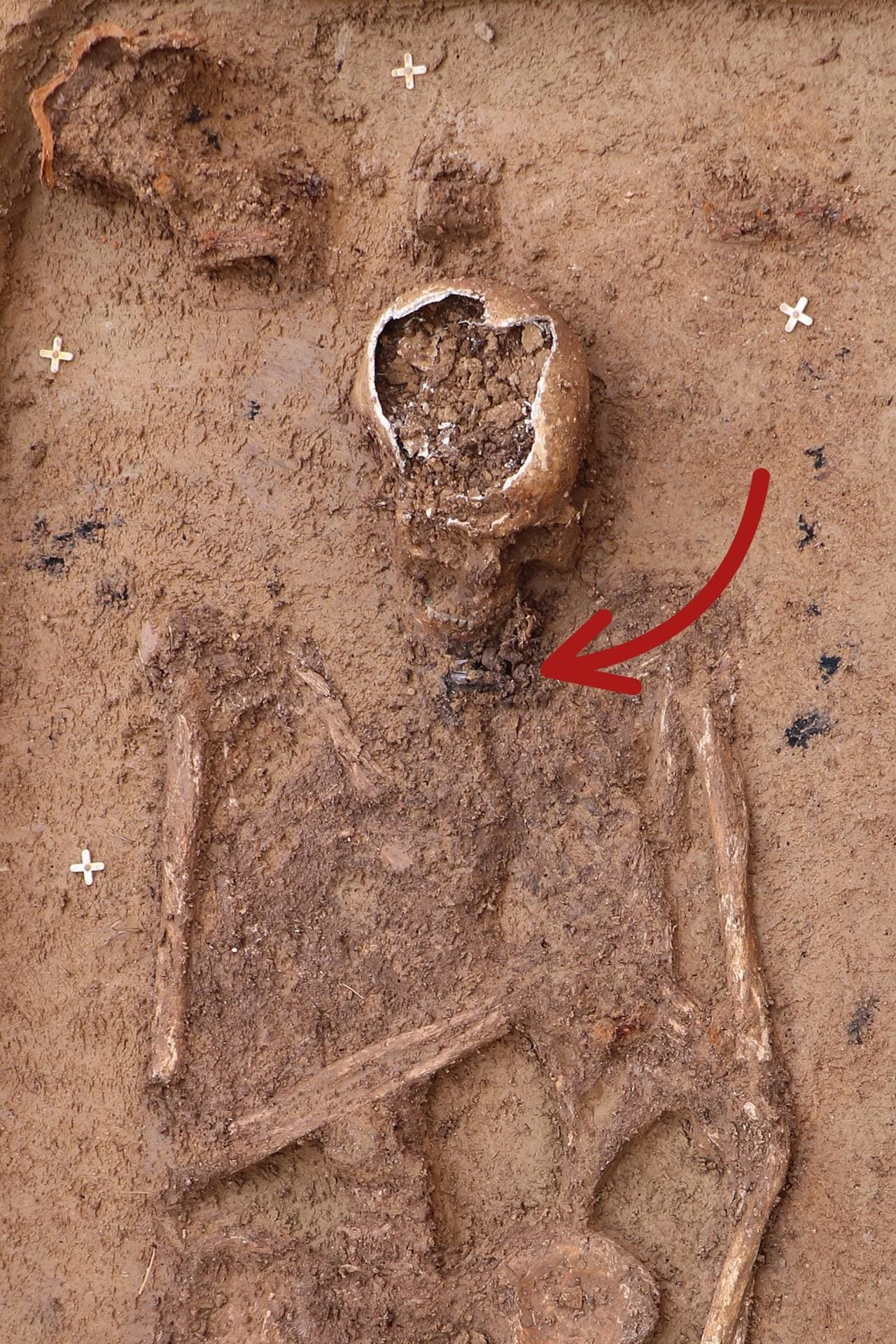
3rd-century burial with silver amulet at the neck. Credit: Michael Obst, Monument Office of the City of Frankfurt am Main

Discovery and Significance

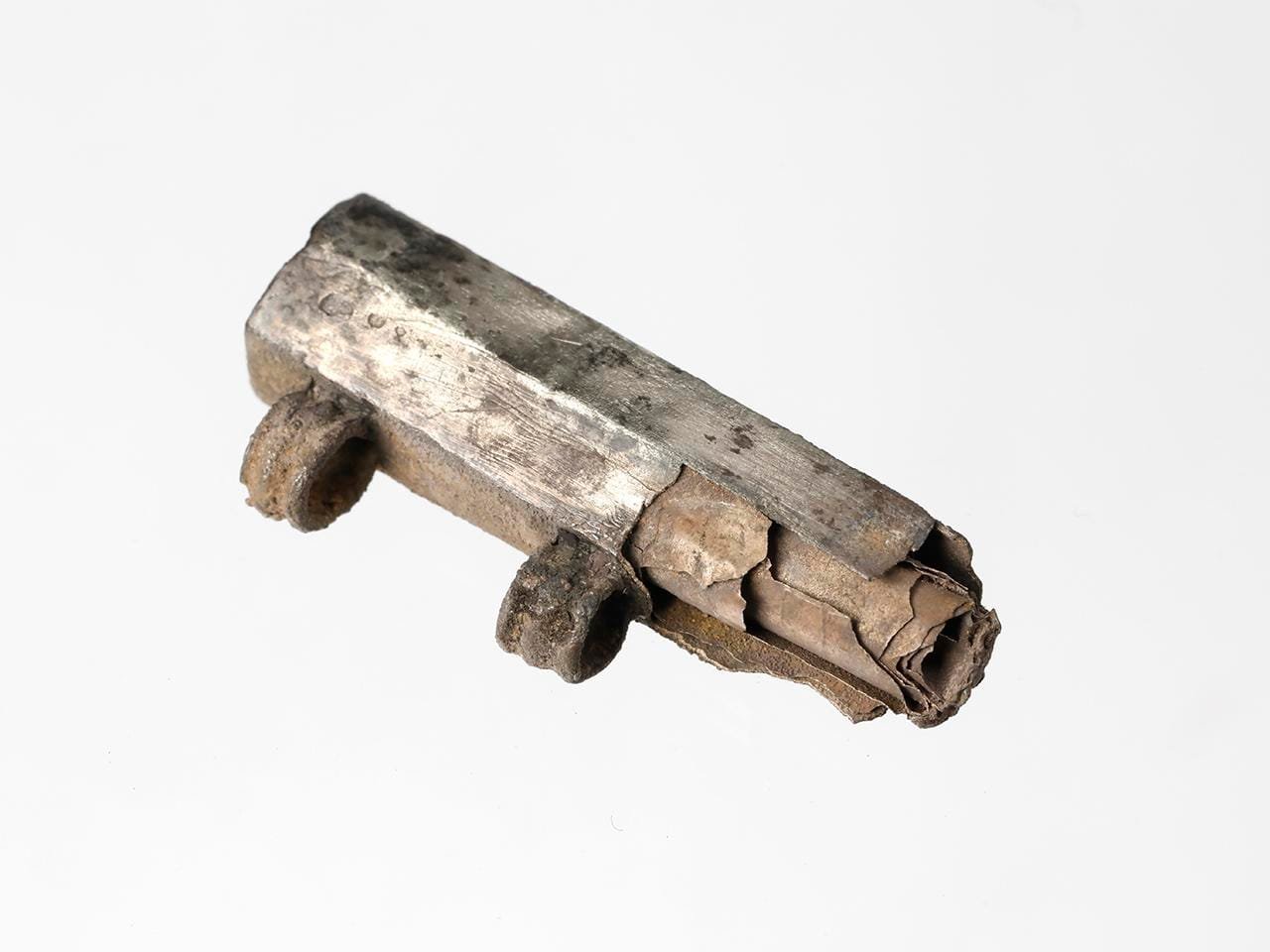
The silver amulet was found during a 2017-2018 excavation of a Roman cemetery in the Heilmannstraße area, the site of the ancient Roman city of Nida. The burial ground, which contained 127 graves, was notable for its unusually high proportion of inhumation burials—a practice uncommon in other Roman cemeteries in Frankfurt. Among these graves, one stood out: the resting place of a man aged 35-45 years. Alongside grave goods such as an incense burner and pottery, archaeologists discovered a small rolled silver foil beneath the man’s chin. The amulet, likely worn on a ribbon around the neck, is classified as a phylactery—a container designed to protect the wearer through its contents.

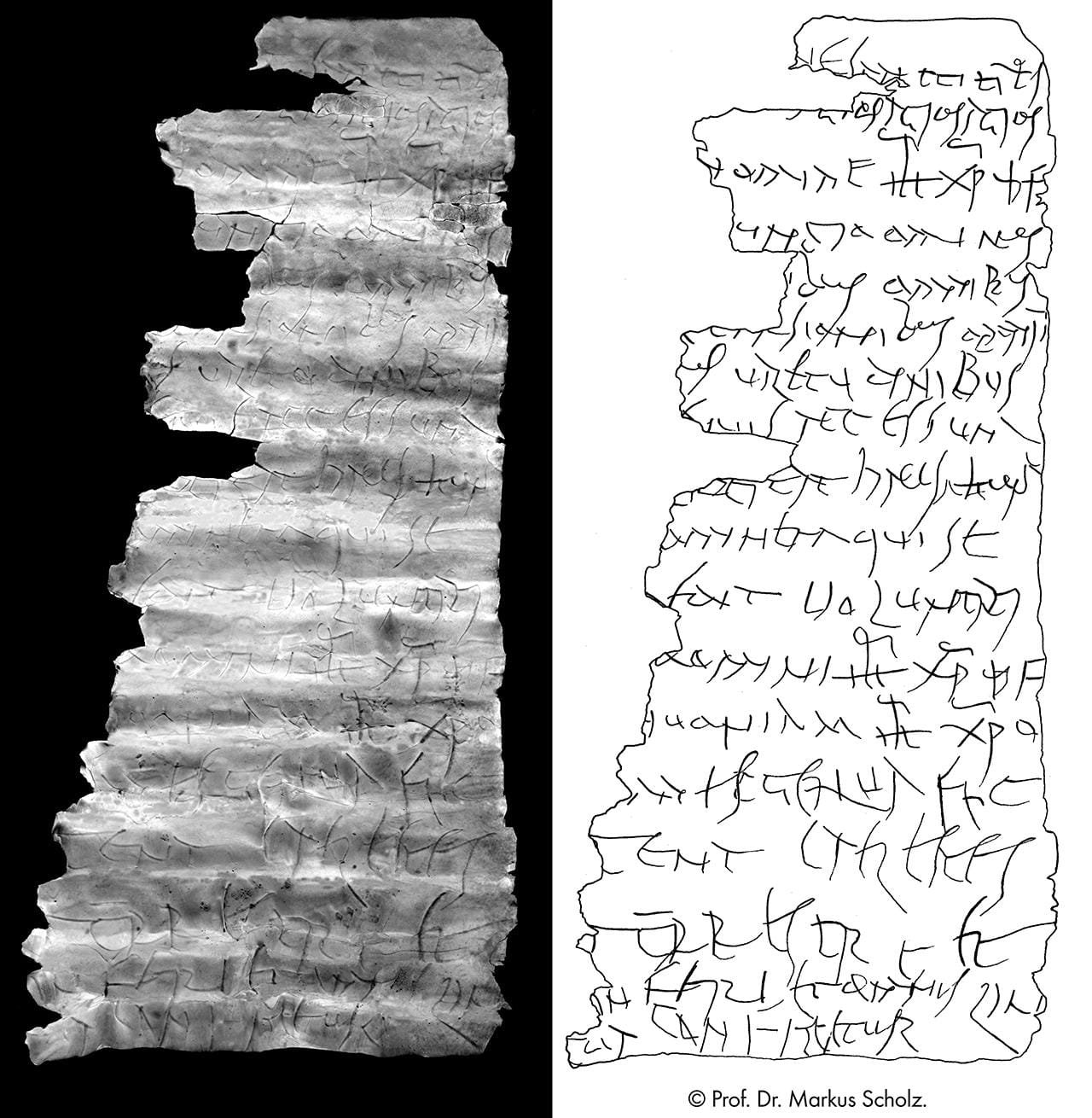
The inscription etched into the amulet’s silver foil was deciphered using advanced computer tomography technology at the Leibniz Center for Archaeology (LEIZA) in Mainz. This non-invasive method allowed researchers to digitally “unroll” the fragile scroll, which would have disintegrated if manually handled. The digital imaging process revealed an 18-line Latin text containing exclusively Christian content—a rarity for its time.
Silver amulet unearthed in Frankfurt grave Is the oldest evidence of Christianity north of the Alps
Rolled silver amulet, ca. 230-260 CE. Credit: U. Dettmar, AMF

Translation and Interpretation

The text of the Frankfurt Silver Inscription translated into English:
(In the name?) of St. Titus.
Holy, holy, holy!
In the name of Jesus Christ, Son of God!
The lord of the world
resists to the best of his [ability?]
all seizures(?)/setbacks(?).
The god(?) grants well-being
Admission.
This rescue device(?) protects
the person who
surrenders to the will
of the Lord Jesus Christ, the Son of God,
since before Jesus Christ
bend all knees: the heavenly ones,
the earthly and
the subterranean, and every tongue
confess (to Jesus Christ).
Silver amulet unearthed in Frankfurt grave Is the oldest evidence of Christianity north of the Alps
Inscription digitally unscrolled. Credit: LEIZA. / Prof. Dr. Markus Scholz

The text opens with a reference to St. Titus, a disciple of the Apostle Paul, and includes invocations such as “Holy, holy, holy!” and “In the name of Jesus Christ, Son of God.” It also incorporates elements of Christian liturgy, including a near-verbatim quotation from Paul’s letter to the Philippians (Phil. 2:10-11). Prof. Dr. Markus Scholz of Goethe University, Frankfurt, who led the deciphering process, remarked the text’s sophistication suggests it was crafted by an elaborate scribe, and its purely Christian content is extraordinary for this period, where religious syncretism was more common.

RelatedStories

Archaeologists uncover Benin City’s ancient urban and artistic legacy

Archaeologists uncover Benin City’s ancient urban and artistic legacy

November 2, 2025
Ancient Egyptians mastered arsenical bronze on Elephantine Island 4,000 years ago

Ancient Egyptians mastered arsenical bronze on Elephantine Island 4,000 years ago

October 25, 2025

Typically, amulets from this era contained a blend of Christian, Jewish, and pagan elements. However, the absence of references to Yahweh, angels, or pagan deities in this inscription underscores its exclusively Christian nature. This uniqueness not only highlights the wearer’s devotion but also raises questions about the role of Christianity in Nida, a city that was once a cultural and administrative hub of Roman Germania.

Broader Implications

The discovery has significant implications for multiple fields, including archaeology, theology, and Roman history. It pushes back the timeline for evidence of Christianity in the region by several decades. Historical sources had hinted at Christian communities in Gaul and Upper Germania as early as the late 2nd century, but tangible proof north of the Alps was previously limited to the 4th century.
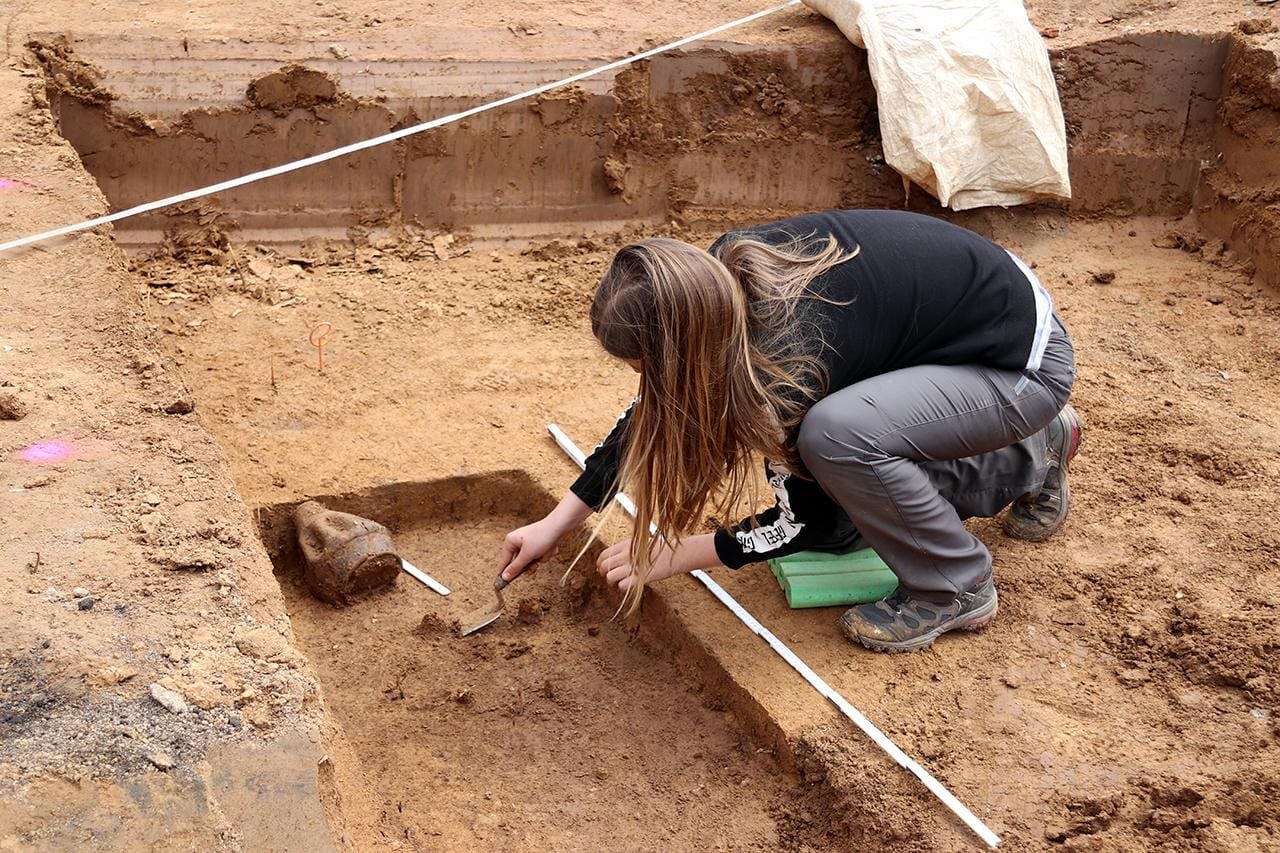
Silver amulet unearthed in Frankfurt grave Is the oldest evidence of Christianity north of the Alps
Uncovering the grave. Credit: Michael Obst, Monument Office of the City of Frankfurt am Main

Technological Advances and Collaboration

The meticulous preservation and analysis of the amulet exemplify the benefits of collaboration between institutions. The project involved several organizations and project partners, including the City of Frankfurt on the Main, the Archaeological Museum Frankfurt (AMF), the Frankfurt Department of Planning and Housing, LEIZA, Johann Wolfgang Goethe University Frankfurt, the University of Bonn, and the Rhine-Main Archaeology Network (VARM).

Dr. Ivan Calandra of LEIZA highlighted the challenges posed by the amulet’s age and condition, noting, “The challenge in analyzing the artifact was that the silver sheet was not only rolled but, after approximately 1,800 years, was also creased and compressed. Using the CT scanner, we were able to scan it in very high resolution and create a 3D model.”

A Window into Early Christianity

The discovery of the Frankfurt Silver Inscription provides the earliest archaeological evidence of Christianity north of the Alps and underscores the Roman Empire’s interconnectedness.

Nida, situated in the hinterland of the Upper Germanic Limes, was far from a peripheral outpost; it was a vibrant center influenced by diverse cultural and religious currents. The find invites further research into how Christianity emerged and thrived in such a dynamic environment during the 3rd century.

Share218Tweet136Share38ShareSend

You May Also Like...

Misread medieval tale misled generations of historians about the Black Death's spread, study finds
Archaeology

Misread medieval tale misled generations of historians about the Black Death’s spread, study finds

November 7, 2025
Signatures meant more in Mesopotamia than they do now − what cylinder seals say about ancient and modern life
Archaeology

Signatures meant more in Mesopotamia than they do now − what cylinder seals say about ancient and modern life

November 7, 2025
Daily life uncovered in Hellenistic military settlement at Pyla-Vigla, Cyprus
Archaeology

New discoveries reveal daily life in a Hellenistic military settlement at Pyla-Vigla, Cyprus

November 7, 2025
Viking treasures unearthed in Sweden reveal a society in transition
Archaeology

Viking treasures unearthed in Sweden reveal a society in transition

November 6, 2025
Archaeologists unearth 5,000-year-old winepress and Canaanite ritual artifacts near Tel Megiddo
Archaeology

Archaeologists unearth 5,000-year-old winepress and Canaanite ritual artifacts near Tel Megiddo

November 5, 2025
5,000-year-old monumental building in Iraq reveals ties to the world’s first cities
Archaeology

5,000-year-old monumental building in Iraq reveals ties to the world’s first cities

November 3, 2025

Comments 1

  1. Editorial Team says:
    1 second ago
    Disclaimer: This website is a science-focused magazine that welcomes both academic and non-academic audiences. Comments are written by users and may include personal opinions or unverified claims. They do not necessarily reflect the views of our editorial team or rely on scientific evidence.
  2. David Ganz says:
    11 months ago

    The ‘elaborate scribe’ would seem to be a mistranslation for a ‘sophisticated writer’ .As a scribe, the writer ( who probably did not compose the text) is not very skilled.

Follow us


Instagram
245K

Facebook
117K

Threads
45K

LinkedIn
14K

Twitter
6K

YouTube
1K
  • Trending
  • Comments
  • Latest
Shipwreck Salvage. Credit: rawpixel.com / Public Domain

2,000-year-old shipwreck discovered off Turkish coast with remarkably preserved stacked ceramics

July 2, 2025
Viking age DNA reveals 9,000-year-old HIV-resistant gene originating near the Black Sea

Viking age DNA reveals 9,000-year-old HIV-resistant gene originating near the Black Sea

May 18, 2025
Complete copy of the Canopus Decree unearthed in Egypt after 150 years

Complete copy of the Canopus Decree unearthed in Egypt after 150 years

September 13, 2025
Mystery of Armenia’s 6,000-year-old dragon stones solved

Mystery of Armenia’s 6,000-year-old dragon stones solved

September 23, 2025
Moses may be named in ancient Egyptian mine inscriptions, sparking debate over earliest biblical references

Moses may be named in ancient Egyptian mine inscriptions, sparking debate over earliest biblical references

July 31, 2025
Moses may be named in ancient Egyptian mine inscriptions, sparking debate over earliest biblical references

Moses may be named in ancient Egyptian mine inscriptions, sparking debate over earliest biblical references

3D analysis reveals Shroud of Turin image likely came from sculpture, not Jesus’ body

3D analysis reveals Shroud of Turin image likely came from sculpture, not Jesus’ body

$1 million prize offered to decipher 5,300-year-old Indus Valley script

$1 million prize offered to decipher 5,300-year-old Indus Valley script

Oldest ever genetic data from a human relative found in 2-million-year-old fossilized teeth

Oldest ever genetic data from a human relative found in 2-million-year-old fossilized teeth

Exceptionally large Roman shoes discovered at Magna fort near Hadrian’s Wall

Exceptionally large Roman shoes discovered at Magna fort near Hadrian’s Wall

Misread medieval tale misled generations of historians about the Black Death's spread, study finds

Misread medieval tale misled generations of historians about the Black Death’s spread, study finds

November 7, 2025
Signatures meant more in Mesopotamia than they do now − what cylinder seals say about ancient and modern life

Signatures meant more in Mesopotamia than they do now − what cylinder seals say about ancient and modern life

November 7, 2025
Daily life uncovered in Hellenistic military settlement at Pyla-Vigla, Cyprus

New discoveries reveal daily life in a Hellenistic military settlement at Pyla-Vigla, Cyprus

November 7, 2025
Viking treasures unearthed in Sweden reveal a society in transition

Viking treasures unearthed in Sweden reveal a society in transition

November 6, 2025
Archaeologists unearth 5,000-year-old winepress and Canaanite ritual artifacts near Tel Megiddo

Archaeologists unearth 5,000-year-old winepress and Canaanite ritual artifacts near Tel Megiddo

November 5, 2025

Archaeology News online magazine

Archaeology News is an international online magazine that covers all aspects of archaeology.


Categories

  • Academics
    • Books
    • Conferences
    • Universities
  • Articles
  • Download
  • Game
  • News
    • Anthropology
    • Archaeology
    • Paleontology
  • Quiz
  • Tours

Subscribe to our newsletter

© 2024 - Archaeology News Online Magazine. All Rights Reserved.

  • About
  • Privacy Policy
  • Terms of Use
  • Donation
  • Contact

Welcome Back!

Login to your account below

Forgotten Password? Sign Up

Create New Account!

Fill the forms below to register

All fields are required. Log In

Retrieve your password

Please enter your username or email address to reset your password.

Log In

Add New Playlist

Manage Consent
To provide the best experiences, we use technologies like cookies to store and/or access device information. Consenting to these technologies will allow us to process data such as browsing behavior or unique IDs on this site. Not consenting or withdrawing consent, may adversely affect certain features and functions.
Functional Always active
The technical storage or access is strictly necessary for the legitimate purpose of enabling the use of a specific service explicitly requested by the subscriber or user, or for the sole purpose of carrying out the transmission of a communication over an electronic communications network.
Preferences
The technical storage or access is necessary for the legitimate purpose of storing preferences that are not requested by the subscriber or user.
Statistics
The technical storage or access that is used exclusively for statistical purposes. The technical storage or access that is used exclusively for anonymous statistical purposes. Without a subpoena, voluntary compliance on the part of your Internet Service Provider, or additional records from a third party, information stored or retrieved for this purpose alone cannot usually be used to identify you.
Marketing
The technical storage or access is required to create user profiles to send advertising, or to track the user on a website or across several websites for similar marketing purposes.
Manage options Manage services Manage {vendor_count} vendors Read more about these purposes
View preferences
{title} {title} {title}
  • Home
  • News
    • Archaeology
    • Anthropology
    • Paleontology
  • Academics
    • Books
    • Conferences
    • Universities
  • Articles
  • VR Tours
  • Quiz & Game
  • Download
  • Encyclopedia
  • Forum

About  .  Contact  .  Donation

© 2024 - Archaeology News Online Magazine. All Rights Reserved