• About
  • Privacy Policy
  • Terms of Use
  • Donation
  • Contact
No Result
View All Result
Archaeology News
  • Home
  • News
    • Archaeology
    • Anthropology
    • Paleontology
  • Academic
    • Books
    • Conferences
    • Universities
  • Articles
  • VR Tours
  • Quiz & Game
  • Download
  • Encyclopedia
  • Forum
Archaeology News
No Result
View All Result
Home News Anthropology

Researchers uncover lost human lineage that shaped our evolution

by Dario Radley
March 19, 2025

A revolutionary study in genetics has upended the long-standing belief that modern humans originated from a single continuous lineage. Instead, research conducted by a team at the University of Cambridge has now produced robust evidence suggesting that Homo sapiens is the result of a mixture between two ancient ancestral populations that diverged approximately 1.5 million years ago and reconnected approximately 300,000 years ago.
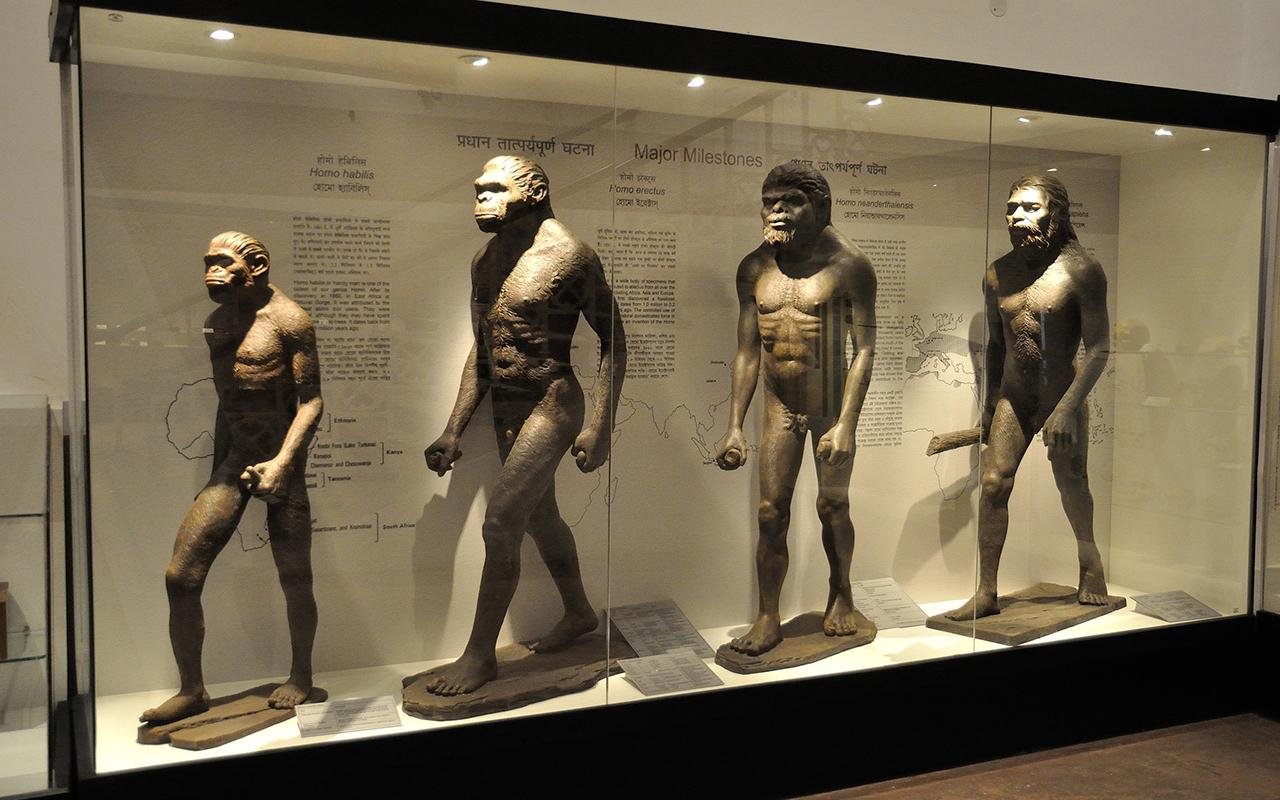
Researchers uncover lost human lineage that shaped our evolution
Human Evolution Gallery at Indian Museum Kolkata. Credit: Biswarup Ganguly

The research, which was published in the journal Nature Genetics, contradicts the view that modern humans evolved from a single ancestral population of humanity in Africa between 200,000 and 300,000 years ago, instead putting forward a considerably more complicated evolutionary history.

Dr. Trevor Cousins, the study’s first author from Cambridge’s Department of Genetics, said: “For a long time, it’s been assumed that we evolved from a single continuous ancestral lineage, but the exact details of our origins are uncertain.”

Using advanced genomic analytical methods, the scientists identified two primary ancestral groups—Population A and Population B—that split approximately 1.5 million years ago. Population A underwent a severe bottleneck, shrinking to a very small population size, then gradually growing over the next million years. This group would later contribute roughly 80% of the genetic material to modern humans and was also the ancestral lineage of Neanderthals and Denisovans.
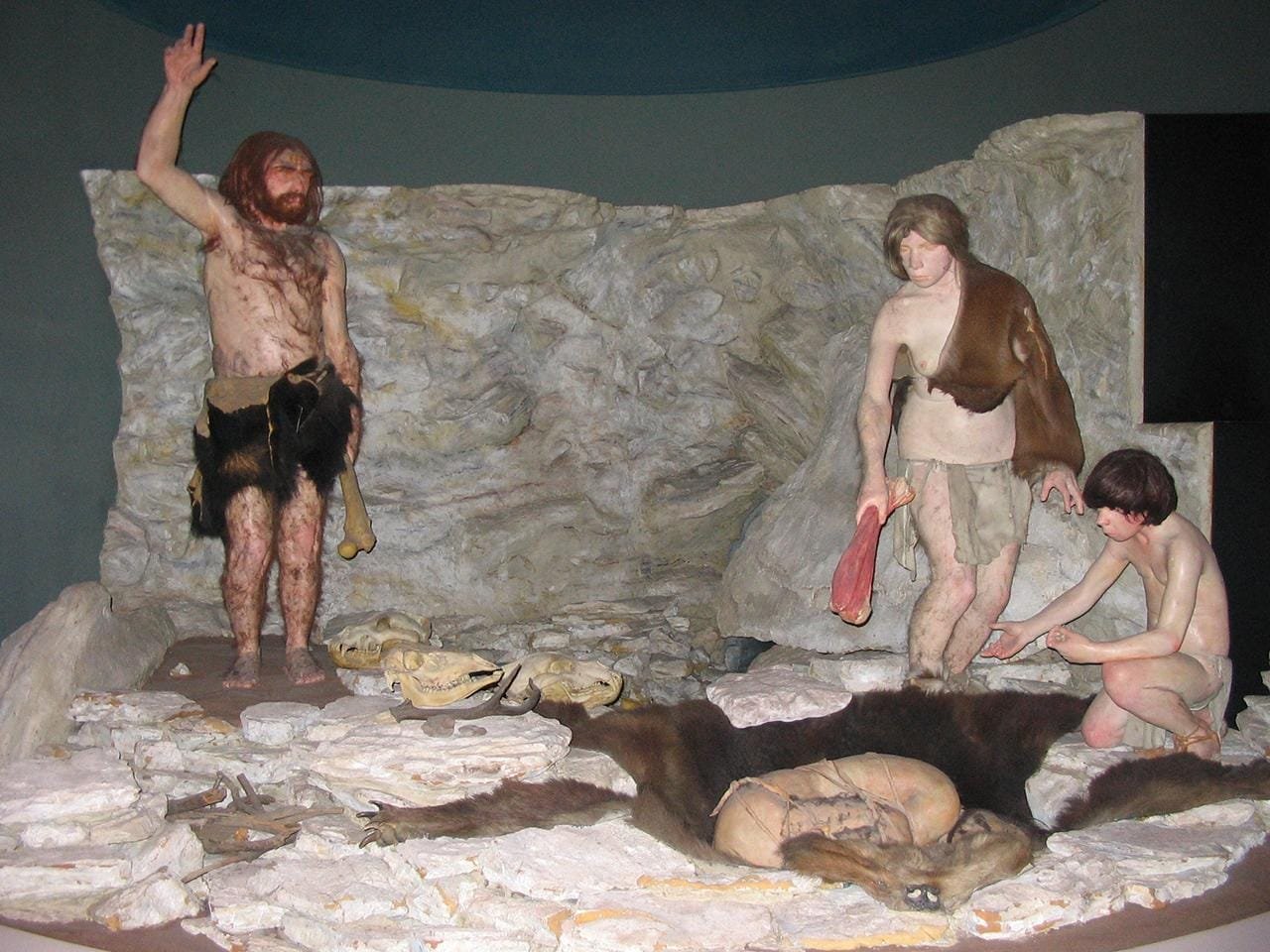
Neanderthals and early Homo sapiens had different burial practices, study suggests
Early Humans’ Burial. Credit: Laura Blankenship, via Flickr. CC BY-SA 2.0

In contrast, Population B was distinct until about 300,000 years ago, when the two populations interbred. It was through this event that approximately 20% of the DNA of modern humans originated from Population B.
RelatedStories

Neanderthals used rhinoceros teeth as tools for making stone implements, study finds

Neanderthals used rhinoceros teeth as tools for making stone implements, study finds

May 9, 2026
146,000-year-old Ice Age humans used advanced stone tools for butchery and survival

146,000-year-old Ice Age humans used advanced stone tools for butchery and survival

May 8, 2026

According to co-author Professor Richard Durbin, also from Cambridge’s Department of Genetics, “Our research shows clear signs that our evolutionary origins are more complex, involving different groups that developed separately for more than a million years, then came back together to form the modern human species.”

Although Neanderthal DNA represents about 2% of the genome of non-African modern humans, the ancient interbreeding provided a more substantial contribution to the modern gene pool. Notably, Population B genes were highly concentrated in regions of the genome associated with brain function and neural processing, providing further evidence that this genetic exchange may have played a crucial role in the development of human cognition.

According to the researchers, some of the genes from Population B may have been less compatible with the predominant genetic background. This hints at a process known as purifying selection, where natural selection removes harmful mutations over time.”

The researchers used a computational algorithm known as cobraa, which models how ancient human populations split apart and later merged back together. In contrast to prior studies, which relied on extracting DNA from ancient fossils, this method analyzed modern human DNA, utilizing the 1,000 Genomes Project and Human Genome Diversity Project data in this analysis.

A reconstruction of a Neanderthal man.
A reconstruction of an elderly Neanderthal man. Credit: Neanderthal-Museum, Mettmann

Overall, the findings from this research illustrate new aspects of the evolutionary history of Homo sapiens, raising interesting questions regarding our ancestry. Fossil record evidence from Africa and elsewhere shows that species such as Homo erectus and Homo heidelbergensis were present during the period in question, and either could be candidates for those ancestral populations. However, the analysis of modern genetic information alone cannot definitively determine which fossil groups belong to Population A or B.

“What’s becoming clear is that the idea of species evolving in clean, distinct lineages is too simplistic,” Cousins said. “Interbreeding and genetic exchange have likely played a major role in the emergence of new species repeatedly across the animal kingdom.”

Beyond illuminating human ancestry, the study’s methods could transform how scientists study evolution in other species. The team used their model on genetic data from other species, including bats, dolphins, chimpanzees, and gorillas, and found support for evidence of ancestral population structure in some groups but not others.

In the future, the researchers plan to improve their model to account for more gradual genetic exchanges (not just sharp splits and reunions). They will also explore how the findings align with fossils that imply early human populations were more diverse than previously considered.

“The fact that we can reconstruct events from hundreds of thousands or millions of years ago just by looking at DNA today is astonishing,” said co-author Dr. Aylwyn Scally. “And it tells us that our history is far richer and more complex than we imagined.”
More information: Cousins, T., Scally, A. & Durbin, R. (2025). A structured coalescent model reveals deep ancestral structure shared by all modern humans. Nature Genetics. doi:10.1038/s41588-025-02117-1
Share34Tweet21Share6ShareSend

You May Also Like...

Rare Bronze Age burial in Sweden reveals unusual pair of Wendel neck rings and complex ritual landscape near Norrköping
Archaeology

Rare Bronze Age burial in Sweden reveals unusual pair of Wendel neck rings and complex ritual landscape near Norrköping

May 12, 2026
Kasta Tomb in Amphipolis fully revealed as restoration uncovers largest burial mound in Macedonia
Archaeology

Kasta Tomb in Amphipolis fully revealed as restoration uncovers largest burial mound in Macedonia

May 12, 2026
Rare Roman villa threatened by farming damage reveals rare mosaic and bathhouse remains in Devon
Archaeology

Rare Roman villa threatened by farming damage reveals rare mosaic and bathhouse remains in Devon

May 12, 2026
Ancient burials, Roman well, and Anglo-Saxon house uncovered during A46 Newark bypass excavations
Anthropology

Ancient burials, Roman well, and Anglo-Saxon house uncovered during A46 Newark bypass excavations

May 12, 2026
8-year-old boy finds 1,700-year-old Roman statuette fragment in Ramon Crater
Archaeology

8-year-old boy finds 1,700-year-old Roman statuette fragment in Ramon Crater

May 11, 2026
Slag from Paleopolis on Andros points to iron weapon and tool making during Macedonian rule in the 4th–3rd century BCE
Archaeology

Slag from Paleopolis on Andros points to iron weapon and tool making during Macedonian rule in the 4th–3rd century BCE

May 11, 2026

Comments 1

  1. Editorial Team says:
    1 second ago

    Disclaimer: This website is a science-focused magazine that welcomes both academic and non-academic audiences. Comments are written by users and may include personal opinions or unverified claims. They do not necessarily reflect the views of our editorial team or rely on scientific evidence.

    Comment Policy: We kindly ask all commenters to engage respectfully. Comments that contain offensive, insulting, degrading, discriminatory, or racist content will be automatically removed.

  2. Paul Stowe says:
    1 year ago

    Dear Google: I’ve noticed that when ancestors are depicted, they are of men. We’re not women present too??

Follow us


Instagram
242K

Facebook
117K

Threads
46K

LinkedIn
14K

Twitter
6K

YouTube
1K
  • Trending
  • Comments
  • Latest
Shipwreck Salvage. Credit: rawpixel.com / Public Domain

2,000-year-old shipwreck discovered off Turkish coast with remarkably preserved stacked ceramics

July 2, 2025
A new study suggests the mysterious Voynich Manuscript may be a medieval cipher

A new study suggests the mysterious Voynich Manuscript may be a medieval cipher

January 3, 2026
Viking age DNA reveals 9,000-year-old HIV-resistant gene originating near the Black Sea

Viking age DNA reveals 9,000-year-old HIV-resistant gene originating near the Black Sea

May 18, 2025
3D analysis reveals Shroud of Turin image likely came from sculpture, not Jesus’ body

3D analysis reveals Shroud of Turin image likely came from sculpture, not Jesus’ body

August 3, 2025
Moses may be named in ancient Egyptian mine inscriptions, sparking debate over earliest biblical references

Moses may be named in ancient Egyptian mine inscriptions, sparking debate over earliest biblical references

July 31, 2025
3D analysis reveals Shroud of Turin image likely came from sculpture, not Jesus’ body

3D analysis reveals Shroud of Turin image likely came from sculpture, not Jesus’ body

Moses may be named in ancient Egyptian mine inscriptions, sparking debate over earliest biblical references

Moses may be named in ancient Egyptian mine inscriptions, sparking debate over earliest biblical references

$1 million prize offered to decipher 5,300-year-old Indus Valley script

$1 million prize offered to decipher 5,300-year-old Indus Valley script

Oldest ever genetic data from a human relative found in 2-million-year-old fossilized teeth

Oldest ever genetic data from a human relative found in 2-million-year-old fossilized teeth

Exceptionally large Roman shoes discovered at Magna fort near Hadrian’s Wall

Exceptionally large Roman shoes discovered at Magna fort near Hadrian’s Wall

Rare Bronze Age burial in Sweden reveals unusual pair of Wendel neck rings and complex ritual landscape near Norrköping

Rare Bronze Age burial in Sweden reveals unusual pair of Wendel neck rings and complex ritual landscape near Norrköping

May 12, 2026
Kasta Tomb in Amphipolis fully revealed as restoration uncovers largest burial mound in Macedonia

Kasta Tomb in Amphipolis fully revealed as restoration uncovers largest burial mound in Macedonia

May 12, 2026
Rare Roman villa threatened by farming damage reveals rare mosaic and bathhouse remains in Devon

Rare Roman villa threatened by farming damage reveals rare mosaic and bathhouse remains in Devon

May 12, 2026
Ancient burials, Roman well, and Anglo-Saxon house uncovered during A46 Newark bypass excavations

Ancient burials, Roman well, and Anglo-Saxon house uncovered during A46 Newark bypass excavations

May 12, 2026
8-year-old boy finds 1,700-year-old Roman statuette fragment in Ramon Crater

8-year-old boy finds 1,700-year-old Roman statuette fragment in Ramon Crater

May 11, 2026

Archaeology News online magazine

Archaeology News is an international online magazine that covers all aspects of archaeology.


Categories

  • Academics
    • Books
    • Conferences
    • Universities
  • Articles
  • Download
  • Game
  • News
    • Anthropology
    • Archaeology
    • Paleontology
  • Quiz
  • Tours

Subscribe to our newsletter

© 2024 - Archaeology News Online Magazine. All Rights Reserved.

  • About
  • Privacy Policy
  • Terms of Use
  • Donation
  • Contact

Manage Consent
To provide the best experiences, we use technologies like cookies to store and/or access device information. Consenting to these technologies will allow us to process data such as browsing behavior or unique IDs on this site. Not consenting or withdrawing consent, may adversely affect certain features and functions.
Functional Always active
The technical storage or access is strictly necessary for the legitimate purpose of enabling the use of a specific service explicitly requested by the subscriber or user, or for the sole purpose of carrying out the transmission of a communication over an electronic communications network.
Preferences
The technical storage or access is necessary for the legitimate purpose of storing preferences that are not requested by the subscriber or user.
Statistics
The technical storage or access that is used exclusively for statistical purposes. The technical storage or access that is used exclusively for anonymous statistical purposes. Without a subpoena, voluntary compliance on the part of your Internet Service Provider, or additional records from a third party, information stored or retrieved for this purpose alone cannot usually be used to identify you.
Marketing
The technical storage or access is required to create user profiles to send advertising, or to track the user on a website or across several websites for similar marketing purposes.
  • Manage options
  • Manage services
  • Manage {vendor_count} vendors
  • Read more about these purposes
View preferences
  • {title}
  • {title}
  • {title}
  • Home
  • News
    • Archaeology
    • Anthropology
    • Paleontology
  • Academic
    • Books
    • Conferences
    • Universities
  • Articles
  • VR Tours
  • Quiz & Game
  • Download
  • Encyclopedia
  • Forum

About  .  Contact  .  Donation

© 2024 - Archaeology News Online Magazine. All Rights Reserved