• About
  • Privacy Policy
  • Terms of Use
  • Donation
  • Contact
No Result
View All Result
Archaeology News
  • Home
  • News
    • Archaeology
    • Anthropology
    • Paleontology
  • Academic
    • Books
    • Conferences
    • Universities
  • Articles
  • VR Tours
  • Quiz & Game
  • Download
  • Encyclopedia
  • Forum
Archaeology News
No Result
View All Result
Home News Archaeology

Mollusc shells from Saqqara reveal ancient Egyptian life, rituals, and beliefs

by Dario Radley
September 27, 2025

Archaeologists at Egypt’s Saqqara necropolis have uncovered mollusc shells that shed light on aspects of life in ancient Egypt, from everyday existence to religious rituals. The discovery comes from the Saqqara West mission, a project led by Polish archaeologists that has been conducting excavations since the late 1980s.

Mollusc shells from Saqqara reveal ancient Egyptian life, rituals, and beliefs
Serapeum of Saqqara, Necropolis of Saqqara, Egypt. Credit: Fabio Achilli / CC BY 2.0

Saqqara, about 30 to 40 kilometers south of Cairo near the famous Step Pyramid of Netjerikhet, was one of the most magnificent cemeteries of ancient Memphis. It was for centuries the burial ground of kings, priests, and officials of the highest government ranks, and hence a rich source of information regarding Egyptian society.

Among the finds, mollusc shells stand out for their range of uses. Excavations show they were employed both for their practicality and symbolism. Larger shells were typically used as containers, holding oils, perfumes, or even writing ink for scribes. Others were incorporated into clothing, ornaments, or jewelry, showing appreciation for their beautiful forms.

Their purpose, however, extended beyond decoration and utility. Some shells were held spiritually and intentionally buried. Cowrie shells, for example, were linked with fertility in that they resembled a female reproductive organ. Women wore them as amulets during pregnancy or after childbirth, and they were sometimes discovered in the graves of children. Clam shells, associated with scribes, were used as ink containers and were entombed with writers so their tools of trade might accompany them into the afterlife. This conformed to the larger Egyptian belief that things essential in life would be required anew in death.

Mollusc shells from Saqqara reveal ancient Egyptian life, rituals, and beliefs
Hepy, string of cowrie shells, circa 1950–1885 BCE. Middle Kingdom, Dynasty 12, from Egypt, Memphite Region, Lisht South, mastaba west of Senwosretankh, Pit 3. Metropolitan Museum of Art.

Shells were also used in construction methods. Shells broken up and mixed with straw were integrated into mudbricks to make buildings more resistant, a technique still used in some Egyptian rural areas. This introduces a mundane link with nature, as molluscs are extremely responsive to water quality and climate. The shells preserved within the bricks and fills provide archaeologists with invaluable information regarding the environmental conditions thousands of years ago.

RelatedStories

Ancient bathhouse and Roman villa with mosaics unearthed in Alexandria during rescue excavation

Ancient bathhouse and Roman villa with mosaics unearthed in Alexandria during rescue excavation

May 3, 2026
CT scans reveal hidden details of 2,300-year-old Egyptian mummies

CT scans reveal hidden details of 2,300-year-old Egyptian mummies

April 26, 2026

The shells discovered so far in Saqqara are relatively rare—only about 30 specimens have been found since 1999. Some of them are complete, while others are fragments. This scarcity suggests several possibilities: perhaps shells were not widely utilized at this site, or it is likely that they were removed during ancient looting. However, what has been recovered provides insight into symbolic and practical customs that are otherwise difficult to trace.

Surprisingly, none of the shells bear royal inscriptions or elaborate ornamentation. It may be that their natural features were thought to be outstanding in themselves. The recently uncovered shells usually display stunning patterns or vivid colors, though these fade over time. Others were white by nature, and the Egyptians might have intentionally chosen them for their purity.

Cumulatively, these small finds point to the close relationship between people and the environment around them in ancient Egypt. Well beyond simple remains, Saqqara’s shells show us a culture that drew meaning, utility, and spiritual solace from the smallest details of the natural world.

More information: Nauka w Polsce
Share11Tweet7Share2ShareSend

You May Also Like...

Cut marks on 1.6-million-year-old bones reveal early humans moved and processed meat in Kenya
Anthropology

Cut marks on 1.6-million-year-old bones reveal early humans moved and processed meat in Kenya

May 13, 2026
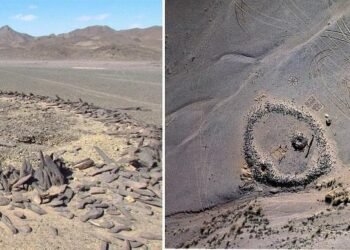
280 ancient stone burial monuments found in Sudan reveal lost cattle-herding culture in the Sahara
Archaeology

280 ancient stone burial monuments found in Sudan reveal lost cattle-herding culture in the Sahara

May 13, 2026
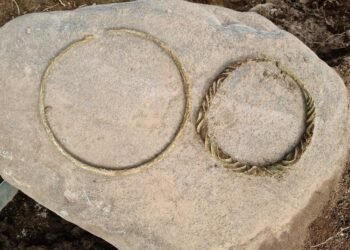
Rare Bronze Age burial in Sweden reveals unusual pair of Wendel neck rings and complex ritual landscape near Norrköping
Archaeology

Rare Bronze Age burial in Sweden reveals unusual pair of Wendel neck rings and complex ritual landscape near Norrköping

May 12, 2026
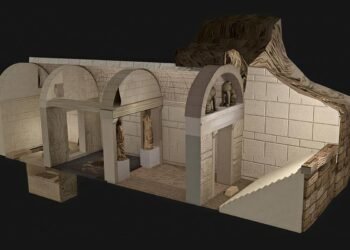
Kasta Tomb in Amphipolis fully revealed as restoration uncovers largest burial mound in Macedonia
Archaeology

Kasta Tomb in Amphipolis fully revealed as restoration uncovers largest burial mound in Macedonia

May 12, 2026
Rare Roman villa threatened by farming damage reveals rare mosaic and bathhouse remains in Devon
Archaeology

Rare Roman villa threatened by farming damage reveals rare mosaic and bathhouse remains in Devon

May 12, 2026
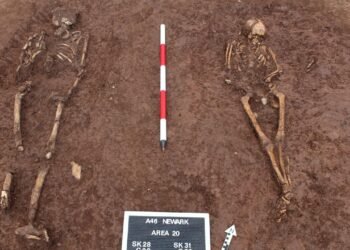
Ancient burials, Roman well, and Anglo-Saxon house uncovered during A46 Newark bypass excavations
Anthropology

Ancient burials, Roman well, and Anglo-Saxon house uncovered during A46 Newark bypass excavations

May 12, 2026

Comments 0

  1. Editorial Team says:
    1 second ago

    Disclaimer: This website is a science-focused magazine that welcomes both academic and non-academic audiences. Comments are written by users and may include personal opinions or unverified claims. They do not necessarily reflect the views of our editorial team or rely on scientific evidence.

    Comment Policy: We kindly ask all commenters to engage respectfully. Comments that contain offensive, insulting, degrading, discriminatory, or racist content will be automatically removed.

    Reply

Leave a Reply Cancel reply

Your email address will not be published. Required fields are marked *

Follow us


Instagram
242K

Facebook
117K

Threads
46K

LinkedIn
14K

Twitter
6K

YouTube
1K
  • Trending
  • Comments
  • Latest
Shipwreck Salvage. Credit: rawpixel.com / Public Domain

2,000-year-old shipwreck discovered off Turkish coast with remarkably preserved stacked ceramics

July 2, 2025
A new study suggests the mysterious Voynich Manuscript may be a medieval cipher

A new study suggests the mysterious Voynich Manuscript may be a medieval cipher

January 3, 2026
Viking age DNA reveals 9,000-year-old HIV-resistant gene originating near the Black Sea

Viking age DNA reveals 9,000-year-old HIV-resistant gene originating near the Black Sea

May 18, 2025
3D analysis reveals Shroud of Turin image likely came from sculpture, not Jesus’ body

3D analysis reveals Shroud of Turin image likely came from sculpture, not Jesus’ body

August 3, 2025
Moses may be named in ancient Egyptian mine inscriptions, sparking debate over earliest biblical references

Moses may be named in ancient Egyptian mine inscriptions, sparking debate over earliest biblical references

July 31, 2025
3D analysis reveals Shroud of Turin image likely came from sculpture, not Jesus’ body

3D analysis reveals Shroud of Turin image likely came from sculpture, not Jesus’ body

Moses may be named in ancient Egyptian mine inscriptions, sparking debate over earliest biblical references

Moses may be named in ancient Egyptian mine inscriptions, sparking debate over earliest biblical references

$1 million prize offered to decipher 5,300-year-old Indus Valley script

$1 million prize offered to decipher 5,300-year-old Indus Valley script

Oldest ever genetic data from a human relative found in 2-million-year-old fossilized teeth

Oldest ever genetic data from a human relative found in 2-million-year-old fossilized teeth

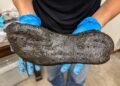
Exceptionally large Roman shoes discovered at Magna fort near Hadrian’s Wall

Exceptionally large Roman shoes discovered at Magna fort near Hadrian’s Wall

Cut marks on 1.6-million-year-old bones reveal early humans moved and processed meat in Kenya

Cut marks on 1.6-million-year-old bones reveal early humans moved and processed meat in Kenya

May 13, 2026
280 ancient stone burial monuments found in Sudan reveal lost cattle-herding culture in the Sahara

280 ancient stone burial monuments found in Sudan reveal lost cattle-herding culture in the Sahara

May 13, 2026
Rare Bronze Age burial in Sweden reveals unusual pair of Wendel neck rings and complex ritual landscape near Norrköping

Rare Bronze Age burial in Sweden reveals unusual pair of Wendel neck rings and complex ritual landscape near Norrköping

May 12, 2026
Kasta Tomb in Amphipolis fully revealed as restoration uncovers largest burial mound in Macedonia

Kasta Tomb in Amphipolis fully revealed as restoration uncovers largest burial mound in Macedonia

May 12, 2026
Rare Roman villa threatened by farming damage reveals rare mosaic and bathhouse remains in Devon

Rare Roman villa threatened by farming damage reveals rare mosaic and bathhouse remains in Devon

May 12, 2026

Archaeology News online magazine

Archaeology News is an international online magazine that covers all aspects of archaeology.


Categories

  • Academics
    • Books
    • Conferences
    • Universities
  • Articles
  • Download
  • Game
  • News
    • Anthropology
    • Archaeology
    • Paleontology
  • Quiz
  • Tours

Subscribe to our newsletter

© 2024 - Archaeology News Online Magazine. All Rights Reserved.

  • About
  • Privacy Policy
  • Terms of Use
  • Donation
  • Contact

Manage Consent
To provide the best experiences, we use technologies like cookies to store and/or access device information. Consenting to these technologies will allow us to process data such as browsing behavior or unique IDs on this site. Not consenting or withdrawing consent, may adversely affect certain features and functions.
Functional Always active
The technical storage or access is strictly necessary for the legitimate purpose of enabling the use of a specific service explicitly requested by the subscriber or user, or for the sole purpose of carrying out the transmission of a communication over an electronic communications network.
Preferences
The technical storage or access is necessary for the legitimate purpose of storing preferences that are not requested by the subscriber or user.
Statistics
The technical storage or access that is used exclusively for statistical purposes. The technical storage or access that is used exclusively for anonymous statistical purposes. Without a subpoena, voluntary compliance on the part of your Internet Service Provider, or additional records from a third party, information stored or retrieved for this purpose alone cannot usually be used to identify you.
Marketing
The technical storage or access is required to create user profiles to send advertising, or to track the user on a website or across several websites for similar marketing purposes.
  • Manage options
  • Manage services
  • Manage {vendor_count} vendors
  • Read more about these purposes
View preferences
  • {title}
  • {title}
  • {title}
  • Home
  • News
    • Archaeology
    • Anthropology
    • Paleontology
  • Academic
    • Books
    • Conferences
    • Universities
  • Articles
  • VR Tours
  • Quiz & Game
  • Download
  • Encyclopedia
  • Forum

About  .  Contact  .  Donation

© 2024 - Archaeology News Online Magazine. All Rights Reserved