
Archaeologists in Egypt have identified the remains of a rare temple linked to Pelusius, a local god once worshipped in the ancient city of Pelusium. The structure was found at Tell el-Farama in North Sinai, near the eastern edge of the Nile Delta, a region known for its long military, commercial, and religious history.
Pelusium stood near the mouth of the Nile and served as one of Egypt’s eastern gateways for centuries. During pharaonic times, the city worked as a defensive fortress. Later, under Roman rule, Pelusium became an active customs center and port, connecting Egypt with trade networks across the Mediterranean.
The newly studied sanctuary dates back about 2,200 years. Archaeologists traced its earliest construction to the second century BCE. Evidence from soil layers shows the building stayed in use until the sixth century CE, giving the site a life span of nearly 800 years.
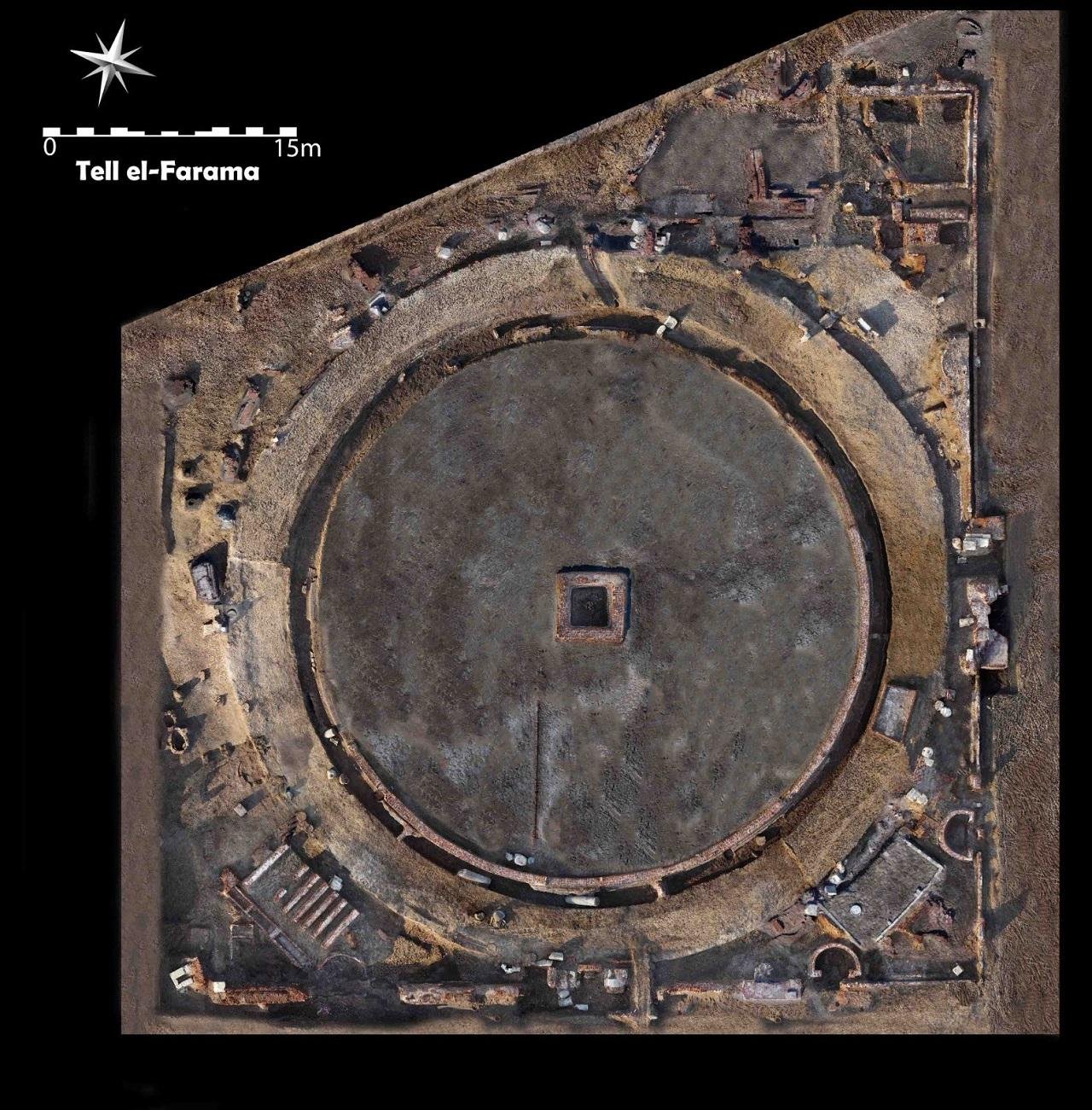
At the center of the complex lies a large circular basin measuring around 35 meters, or 115 feet, across. A square platform stands in the middle and likely once supported a statue of Pelusius. The basin connected directly to the Pelusiac branch of the Nile.
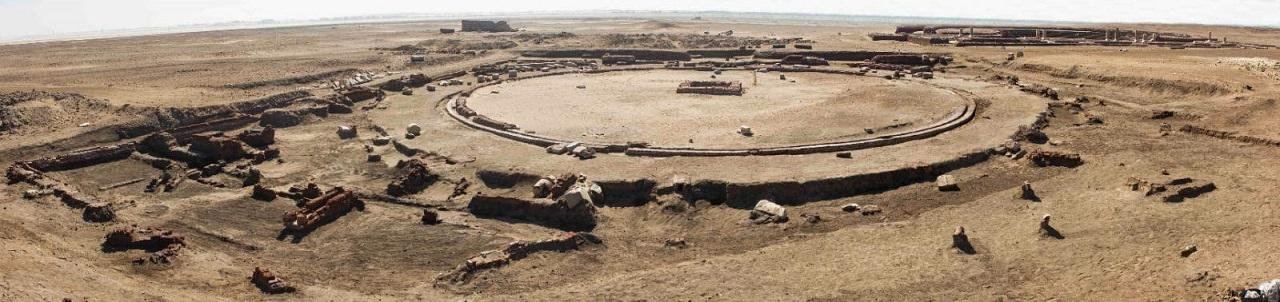
Researchers found water and Nile silt inside the basin. This detail appears linked to the identity of the god. The name Pelusius comes from the Greek word pelos, meaning mud or silt. Ancient worship at the site likely focused on water rituals tied to the Nile and its annual flooding.
Around the basin, archaeologists uncovered an organized hydraulic system with channels, reservoirs, and drainage lines. These features suggest the building served ritual functions linked to water movement and purification.
The project began years ago with a different interpretation. In 2019, archaeologists uncovered only part of a red-brick circular structure. Since only about one quarter of the building was visible, researchers first thought they had found the city’s senate building or civic council chamber.
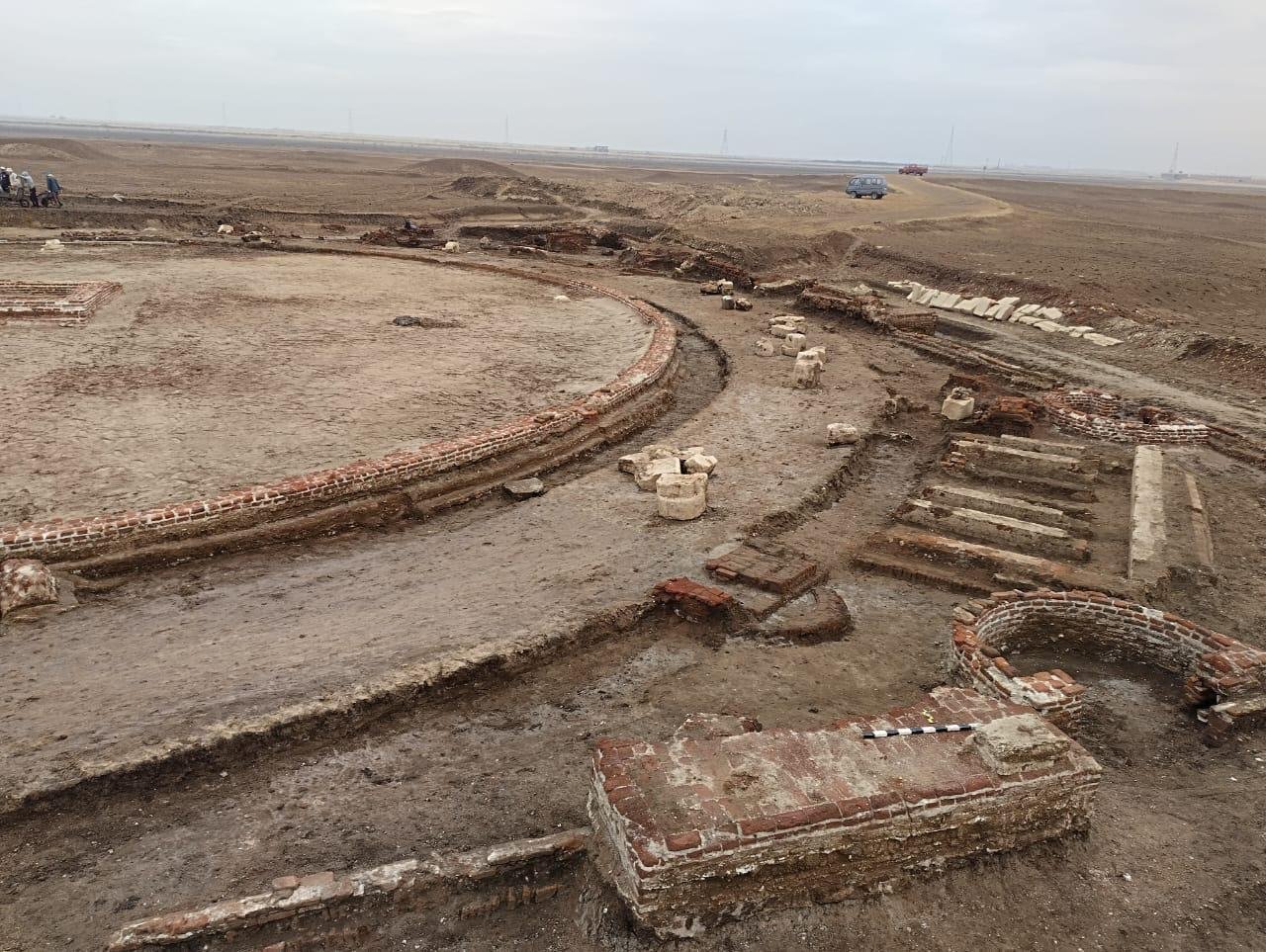
Further excavation changed this view. As the full layout became visible, the building no longer matched a political or administrative structure. Instead, the circular design, water systems, and central pedestal pointed toward religious activity.
Researchers compared the architecture with similar buildings from the Hellenistic and Roman periods outside Egypt. These studies, along with discussions involving archaeology specialists from several institutions, supported a new conclusion: the monument functioned as a sacred hydraulic sanctuary.
The temple also reflects the mixed cultural setting of ancient Pelusium. Its design combines Egyptian religious traditions with Greek and Roman architectural ideas. This blend fits the history of a city shaped by trade, migration, and imperial rule.
Tell el-Farama has produced several important finds in recent years. In 2022, archaeologists uncovered a pink granite temple dedicated to Zeus at the same site. The new temple adds another layer to the religious history of Pelusium and suggests local cults remained active alongside wider Mediterranean traditions.
The find changes earlier ideas about the city. Pelusium was more than a military border town or trade center. Archaeological evidence now points to a local religious center built around rituals connected to Nile water, mud, and the identity of a regional god.
More information: Egyptian Ministry of Tourism and Antiquities



Disclaimer: This website is a science-focused magazine that welcomes both academic and non-academic audiences. Comments are written by users and may include personal opinions or unverified claims. They do not necessarily reflect the views of our editorial team or rely on scientific evidence.
Comment Policy: We kindly ask all commenters to engage respectfully. Comments that contain offensive, insulting, degrading, discriminatory, or racist content will be automatically removed.